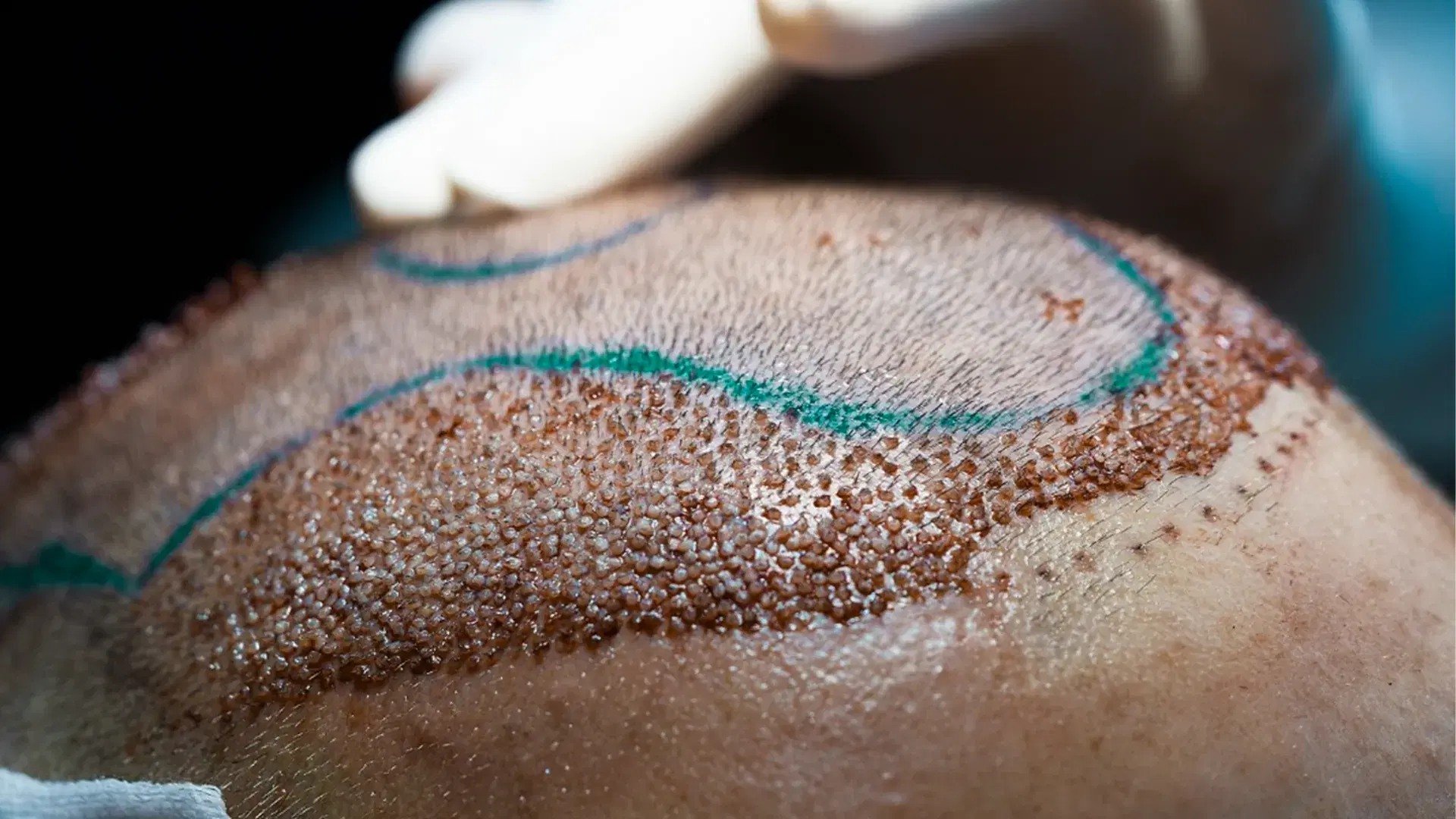
What Is a Hair Transplant?
A hair transplant is surgery that moves healthy hair follicles from a donor area to thin or bald areas.
The surgeon usually takes hair from the back or sides of the scalp because these areas often maintain stronger growth. The medical team then implants the follicles into the hairline, crown or other areas affected by hair loss. The transplanted follicles can continue producing hair after they settle into their new positions.
A hair transplant can improve a receding hairline, thinning crown and selected types of permanent hair loss. However, the procedure does not suit every patient.
How is Hair Transplantat Done?
Surgeons usually take follicles from the back or sides of the head. These areas often resist pattern hair loss.
Donor area assessment: The specialist examines hair density, follicle quality and scalp condition before planning treatment.
Hairline design: The surgeon creates a hairline that suits the patient’s age, facial structure and natural growth pattern.
Graft preparation: The team sorts and protects the extracted follicles before implantation.
Recipient area preparation: The surgeon creates small channels or uses an implanter device to prepare the thinning area.
Graft implantation: The surgeon places each follicle at the correct angle, direction and depth to create a natural appearance.
Healing period: Patients may experience temporary redness, swelling, crusting and sensitivity after the procedure.
Hair growth process: Transplanted hairs often shed during the first few weeks. New growth usually begins gradually over the following months.
Why Is Turkey Popular for Hair Transplant Procedures?
Many visitors choose Turkey for clear treatment planning, hotel, VIP transfers, translator support, and aftercare guidance. This package-based approach makes the process easier for people traveling from abroad. Turkey also stands out with methods such as FUE, DHI, and Sapphire FUE. Quality depends on hairline design, donor area planning, graft handling, hygiene standards, and follow-up care.
Some common reasons people choose Turkey for hair transplant procedures include:
More affordable pricing compared to some countries
Availability of FUE and DHI techniques
Clinics focused specifically on hair transplantation
Short waiting times for appointments
Medical tourism services for international patients
Why Esthetic Hair?
At Esthetic Hair, we focus on personalized hair transplant planning based on each patient’s hair structure and expectations. We use techniques such as FUE and DHI to create treatment plans suited to individual needs.
Before the procedure, we evaluate factors such as hair loss level, donor area condition. The areas planned for transplantation. This helps us prepare a more suitable and balanced treatment approach for each patient.
Our process includes:
Personalized hair transplant planning
FUE and DHI techniques
Pre-procedure consultation
Post-operation care guidance
Support for international patients
Medical Tourism and Hotel Options
Medical tourism in Turkey makes hair transplant travel more practical, comfortable, and easier to organize for international visitors. At Esthetic Hair, packages can include hotel, VIP transfers, translator support, and aftercare guidance. This helps guests focus on their treatment journey without managing every travel detail alone. Istanbul also adds value to the experience with its cultural and historic atmosphere.
Visitors may explore Hagia Sophia, Blue Mosque, Topkapi Palace, Grand Bazaar, Galata Tower, or the Bosphorus before treatment.
Who Is a Suitable Candidate for a Hair Transplant Turkey?
A suitable candidate for a hair transplant in Turkey is usually an adult. They often have permanent, pattern-related hair loss and enough healthy donor hair. Hair transplantation is common for men and women with pattern hair loss. This includes receding hairlines, thinning crowns, or gradual loss of density.
It may suit you when your hair loss has become stable. It also helps if the donor area has enough healthy follicles. The donor area is usually at the back or sides of the scalp.
A successful hair transplant Turkey also depends on the quality and density of the donor hair. Strong donor follicles can help create natural-looking coverage in thinning or bald areas.
Good general health is another important factor. Candidates should not have untreated scalp conditions, uncontrolled medical issues, or types of hair loss that may continue. A detailed assessment helps determine whether techniques such as FUE hair transplant or DHI hair transplant are appropriate.
How Many Graft Needed for Hair Transplant Turkey?
The number of grafts needed for a hair transplant Turkey depends on the thinning area size. It also depends on donor hair strength, hair type, and your desired coverage level.
A graft is a small natural unit of hair follicles, and each graft may contain one or more hairs. Because every patient has a different hair loss pattern, there is no fixed graft number that suits everyone. A receding hairline may require fewer grafts than extensive hair loss affecting the front, mid-scalp and crown.
As a general guide:
Small hairline correction: 1000 to 1500 grafts
Front hairline and temples: 1500 to 2500 grafts
Frontal area with mid-scalp thinning: 2500 to 3500 grafts
Crown restoration: 1500 to 3000 grafts
Advanced hair loss across several areas: 3500 to 5000+ grafts
Hair Transplant Recovery Timeline in Turkey
The hair transplant recovery timeline in Turkey usually begins with a short healing period. Followed by temporary shedding and gradual new hair growth over several months.
First 1–3 Days
After an FUE hair transplant or DHI hair transplant, mild redness, swelling, sensitivity. Will small scabs may appear around the transplanted area. Patients should avoid touching, scratching or rubbing the grafts. Sleeping with the head slightly elevated may help reduce swelling.
Days 4–10
During this stage, the grafts begin to settle. Patients usually follow gentle washing instructions provided by the clinic. Scabbing gradually improves, and many people feel comfortable returning to light daily activities.
Weeks 2–4
Most visible redness and scabbing have usually reduced. The transplanted hairs may begin to shed during this period.
Months 3–4
New hair growth often begins to appear. Early hairs may look fine, soft or uneven at first. Growth can vary between patients, depending on the donor area, hair type and individual healing process.
Months 5–8
Hair growth becomes more noticeable, with improved coverage and density in the treated areas. The new hair may begin to thicken and blend more naturally with existing hair.
Months 10–18
The final result of a hair transplant Turkey develops gradually. By this stage, patients can usually see fuller density, improved hairline definition and a more mature appearance.
Hair Transplant Turkey Cost 2026
Depending on the method and quantity of grafts, the usual cost of a hair transplant Turkey in 2026 will be between $1650 to $5500.
Because many Istanbul clinics use package pricing, not per-graft fees, hair transplants in Turkey often cost less. They are often cheaper than in the UK, Europe, or the USA.
Frequently Asked Questions
When Can You Fly Home After a Hair Transplant Turkey?
You can usually fly home two or three days after a hair transplant Turkey procedure. This timing allows space for initial rest, first washing guidance, and basic recovery checks before travel. Flying too early may feel uncomfortable because mild swelling, redness, or scalp sensitivity can appear during the first days. A short recovery stay in Turkey helps you travel with clearer instructions and better comfort.
Is the Procedure Performed or Supervised by a Doctor?
Hair transplant Turkey procedure planned and followed under licensed medical supervision. At Esthetic Hair, doctors perform hair transplantation by taking safety and comfort into consideration at every stage.
Are Patient Reviews and Reviews Trustworthy?
Patient reviews and reviews can help visitors understand the Esthetic Hair journey more realistic. Trustpilot currently lists Esthetic Hair Turkey with a 4.3 score from 160 reviews. Google data listed shows a 4.8 rating from 829 reviews.
Does a Hair Transplant Hurt?
Most people feel small needle touches during anesthesia, then pressure or movement rather than sharp pain. After the procedure, mild tenderness, tightness, swelling, or itching can appear for a few days.
Can a Hair Transplant Fail?
Poor donor area use, weak graft handling, infection risk, smoking, and missed aftercare steps can affect growth. Unrealistic density planning may also create an uneven or unnatural result over time.