
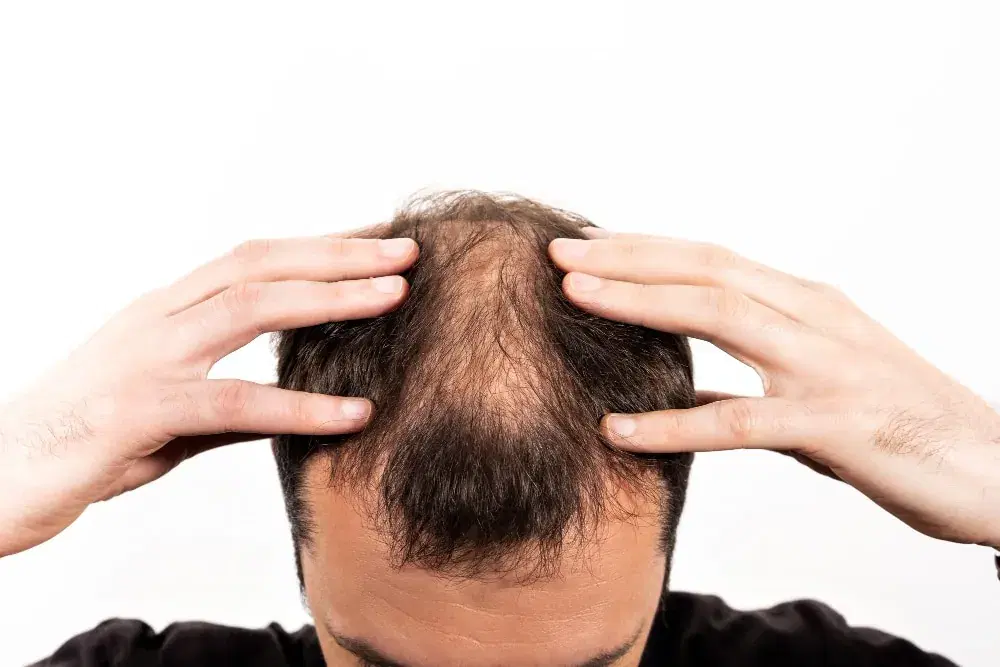
Can Ozempic, Wegovy or Mounjaro Cause Hair Loss?
Hair loss can occur while using Ozempic, Wegovy, or Mounjaro, although several factors may contribute to the shedding rather than one direct mechanism alone. Hair-loss events have been reported with these medications, while rapid weight reduction can independently disturb the normal hair-growth cycle.
Many people eat substantially less after starting treatment, which can reduce calorie, protein, iron, and micronutrient intake. The body may respond to this metabolic change by shifting more follicles into a resting phase.
This pattern often causes diffuse shedding across the scalp rather than creating one sharply defined bald area.
Why Does Hair Loss Happen During GLP-1 Weight Loss Treatment?
Hair loss during GLP-1 treatment often develops because rapid metabolic change, reduced calorie intake, nutritional gaps, and weight loss can temporarily disrupt the hair-growth cycle. The body may redirect energy away from hair production when food intake drops significantly or body weight changes quickly.
Hair follicles respond to physiological stress with a delay, so shedding may not begin immediately after treatment starts. Instead, more follicles can enter the resting phase before releasing their hairs several weeks later.
This explains why hair loss may appear after successful weight reduction has already occurred. The medication, weight change, nutrition, and individual susceptibility can all influence the final pattern.
Is Rapid Weight Loss the Main Cause of Hair Shedding?
Rapid weight loss is an important trigger for diffuse hair shedding because substantial changes in energy balance can push more hair follicles into their resting phase. The effect does not require complete nutritional deficiency, although low protein or micronutrient intake can make the problem more pronounced.
People who lose weight quickly may notice increased shedding during washing, brushing, or styling several weeks later. Hair density can look reduced even though the follicles remain present beneath the scalp.
The speed and magnitude of weight change matter, but they are not the only factors. Illness, stress, thyroid problems, iron deficiency, and existing pattern hair loss can produce similar symptoms.
What Is Telogen Effluvium After Weight Loss?
Telogen effluvium is a temporary form of diffuse hair shedding that can develop after rapid weight loss, illness, nutritional stress, or another significant physical change. The trigger causes more growing hairs than usual to enter the resting phase before they eventually shed.
Because the hair cycle moves slowly, shedding often begins weeks or months after the original trigger. People may therefore connect the hair loss with the medication rather than the earlier period of rapid weight change.
Telogen effluvium usually affects the scalp broadly instead of producing isolated bald patches. The follicles generally remain capable of producing new hairs once the triggering condition settles.
When Does Hair Loss Usually Start After Beginning Treatment?
Hair shedding often becomes noticeable several weeks to a few months after significant weight loss or nutritional change rather than immediately after the first medication dose. This delay reflects how the hair cycle responds to physical stress.
A follicle may leave its active growth phase first, remain in a resting stage, and only later release the visible hair shaft. As a result, the timing of shedding does not always match the timing of the trigger.
Someone who starts losing hair after several months of treatment may therefore be experiencing the delayed effect of earlier weight reduction. Tracking weight changes, diet, illness, and medication timing can help clarify the pattern.
How Long Does Hair Loss Last After Ozempic, Wegovy or Mounjaro?
Hair shedding related to rapid weight loss often improves over several months once weight, calorie intake, and nutritional status become more stable. The shedding phase may continue for some time because individual follicles enter and leave the resting stage at different points.
A person may notice heavy shedding first, followed by gradual reduction rather than an abrupt stop. New short hairs can begin appearing while older resting hairs are still falling.
Recovery therefore does not happen in a single step. Persistent shedding beyond the expected recovery period may indicate another contributor, such as iron deficiency, thyroid dysfunction, pattern hair loss, or ongoing nutritional stress.
Does Hair Grow Back After GLP-1 Related Hair Loss?
Hair commonly grows back when shedding mainly results from temporary telogen effluvium and the underlying weight-loss or nutritional trigger becomes stable. The follicle usually remains alive, so it can return to active growth after leaving the resting phase.
Regrowth initially appears as short, fine hairs that may be difficult to notice. Those hairs gradually lengthen and become more visible over the following months.
Full density takes longer because hair grows slowly and individual follicles follow different schedules. If shedding also reveals underlying genetic pattern hair loss, however, the scalp may not return completely to its previous density without addressing that separate condition.
Can Not Eating Enough Protein Cause Hair Loss During Treatment?
Low protein intake can contribute to hair shedding during Ozempic, Wegovy, or Mounjaro treatment because appetite reduction may make adequate daily nutrition harder to maintain. Hair production requires a continuous supply of amino acids, even though the body prioritizes essential organs when intake becomes limited.
Someone eating much smaller meals may unintentionally reduce both total calories and protein. That combination can amplify the metabolic stress created by rapid weight loss.
Protein intake should remain appropriate for overall health, body size, kidney function, and individual dietary needs. Simply adding excessive protein does not guarantee faster hair growth, but avoiding prolonged undernutrition supports normal follicle function.
Which Nutrient Deficiencies Can Increase Hair Shedding?
Several nutritional deficiencies can worsen diffuse hair shedding during rapid weight loss, particularly when reduced appetite leads to an increasingly restricted diet.
Important factors can include:
Iron deficiency
Low ferritin stores
Inadequate protein intake
Zinc deficiency
Vitamin B12 deficiency
Folate deficiency
Vitamin D deficiency in some individuals
Overall calorie restriction
Not every person with hair loss has a deficiency, so taking multiple supplements without evidence can create unnecessary problems. The more useful approach is identifying whether intake has become inadequate and testing relevant nutrients when the shedding pattern or medical history suggests a deficiency.
Does a Higher Dose Cause More Hair Loss?
A higher medication dose does not automatically cause more hair loss, although stronger appetite suppression and faster weight reduction could indirectly increase shedding in some people. The relationship is therefore not as simple as dose increasing and hair density decreasing.
Two people using the same dose can experience very different rates of weight loss, calorie intake, nausea, and nutritional adequacy. Those differences may influence the hair cycle more than the dose alone.
Increasing medication should not be judged through hair symptoms without considering the broader treatment plan. If shedding begins after a dose increase, the timing of weight loss and food intake should also be reviewed.
Can Ozempic Cause Hair Loss Without Major Weight Loss?
Hair loss can occur during Ozempic treatment even when weight loss does not appear dramatic, because several factors besides total kilograms lost can affect the hair cycle. Ozempic prescribing information includes alopecia among reported postmarketing reactions, although such reports cannot establish frequency or prove direct causation.
Reduced appetite may still alter protein, iron, or calorie intake without producing striking changes on the scale. Diabetes, thyroid disease, illness, stress, and genetic hair loss can also influence shedding.
For that reason, hair loss appearing during treatment should not automatically be attributed to one mechanism. The entire pattern and timing matter.
Is Hair Loss Different With Wegovy and Mounjaro?
Hair shedding with Wegovy and Mounjaro can look similar because both treatments may accompany substantial appetite reduction, weight loss, and metabolic change. Wegovy clinical data specifically recorded hair-loss events associated with weight reduction, while alopecia has also been reported after Mounjaro use.
That does not mean every case develops through the same mechanism. Some people may experience classic telogen effluvium, while others may uncover previously subtle genetic thinning during weight loss.
The visible pattern provides useful clues. Diffuse shedding across the scalp fits telogen effluvium more closely than progressive thinning concentrated at the temples, hairline, or crown.
How Can You Tell Telogen Effluvium From Pattern Hair Loss?
Telogen effluvium usually causes relatively diffuse shedding across the scalp, while pattern hair loss produces gradual thinning in genetically characteristic areas. Telogen effluvium often begins after a recognizable trigger such as rapid weight loss, illness, surgery, or major nutritional change.
Pattern hair loss usually progresses more slowly and can concentrate around the crown, temples, frontal region, or central part. Both conditions can occur at the same time.
Rapid shedding can make pre-existing pattern hair loss suddenly more obvious because the temporary loss removes some of the density that previously concealed it. Scalp examination and the distribution of thinning help separate these patterns.
Can GLP-1 Medications Make Existing Hair Loss More Noticeable?
Rapid weight loss during GLP-1 treatment can make existing pattern hair loss more noticeable when temporary shedding reduces the density surrounding already miniaturized follicles. Someone with mild genetic thinning may not notice it until additional telogen shedding exposes more scalp.
The medication does not necessarily create the underlying pattern. Instead, temporary loss can reveal a process that had been developing slowly for years.
As telogen effluvium improves, some density may return, although genetically miniaturized hairs may remain thin. This distinction matters because waiting alone can improve temporary shedding but may not reverse progressive androgenetic hair loss that was already present.
Should You Stop Ozempic, Wegovy or Mounjaro Because of Hair Loss?
Hair loss alone should not automatically lead someone to stop Ozempic, Wegovy, or Mounjaro without reviewing the benefits, risks, nutrition, and shedding pattern with the prescribing clinician. These medications may be treating important metabolic conditions, so abrupt changes can create problems unrelated to hair.
The first step is usually determining whether the shedding resembles temporary telogen effluvium and whether weight loss has become unusually rapid. Nutritional intake and other medical causes should also be considered.
When treatment changes become appropriate, they should form part of the overall medical plan rather than a reaction to shedding alone.
What Can Help Reduce Hair Shedding During Weight Loss?
Reducing hair shedding during weight loss starts with avoiding unnecessary nutritional restriction while maintaining adequate protein, calories, vitamins, minerals, and hydration within the prescribed treatment plan. Weight loss should support overall health rather than depend on chronically inadequate food intake.
Meals can become smaller during treatment, so nutrient density becomes more important. Regular sources of protein, iron-containing foods, vegetables, and varied whole foods help reduce avoidable nutritional stress.
Hair care also matters because fragile shedding hair can appear worse after aggressive brushing, heat styling, or tight hairstyles. These measures cannot prevent every case of telogen effluvium, but they can reduce additional stress.
Can Minoxidil Help With Hair Loss During GLP-1 Treatment?
Minoxidil may support hair growth in selected people, particularly when temporary shedding occurs alongside androgenetic hair loss, but it is not automatically necessary for every episode of telogen effluvium. Temporary shedding can recover naturally once its trigger resolves.
Minoxidil works by influencing follicle growth activity rather than correcting inadequate nutrition or rapid weight loss. Therefore, it should not replace investigation of iron deficiency, insufficient protein, thyroid problems, or other contributors.
Starting treatment can also produce temporary early shedding in some users. The decision becomes more relevant when hair loss persists, follows a pattern distribution, or reveals previously unnoticed miniaturization.
When Should Blood Tests Be Considered for Hair Loss?
Blood tests can be useful when hair shedding becomes persistent, unusually heavy, or occurs alongside symptoms suggesting nutritional, thyroid, or systemic problems. The choice of tests should follow the person’s medical history rather than a fixed panel for everyone.
Assessment may include blood count, iron status, thyroid function, vitamin B12, folate, or other nutrients when the history supports them. Rapid weight loss and prolonged appetite suppression can make nutritional assessment particularly relevant.
Testing helps distinguish temporary shedding from problems that require direct correction. Supplementing nutrients without confirming a need may fail to address the real cause and can occasionally create new imbalances.
When Should Hair Loss After Weight Loss Be Evaluated?
Hair loss after weight loss should be evaluated when shedding continues for several months, creates visible thinning, forms bald patches, or occurs with scalp symptoms or other health changes. Diffuse temporary shedding often improves, but persistent progression deserves closer examination.
Earlier evaluation also makes sense when hair loss affects the temples or crown in a clear pattern, because genetic thinning may be occurring alongside telogen effluvium. Scalp pain, inflammation, scaling, or scarring requires a different assessment.
Other warning signs include marked fatigue, menstrual changes, cold intolerance, or symptoms suggesting nutritional deficiency. These clues can indicate that hair shedding represents more than weight-loss stress alone.
How Long Does Hair Take to Recover After Weight Stabilizes?
Hair usually needs several months to show visible recovery after weight and nutritional intake stabilize because follicles must complete their resting phase before producing new growth. Reduced shedding often appears before noticeable density returns.
New hairs begin short and fine, then gradually lengthen as growth continues. This means the scalp can still look thin even after the original shedding process has slowed considerably.
Visible improvement commonly develops over several months, while fuller recovery may take longer because hair grows gradually. If density continues declining despite stable weight and adequate nutrition, another form of hair loss may be contributing and should be considered separately.