
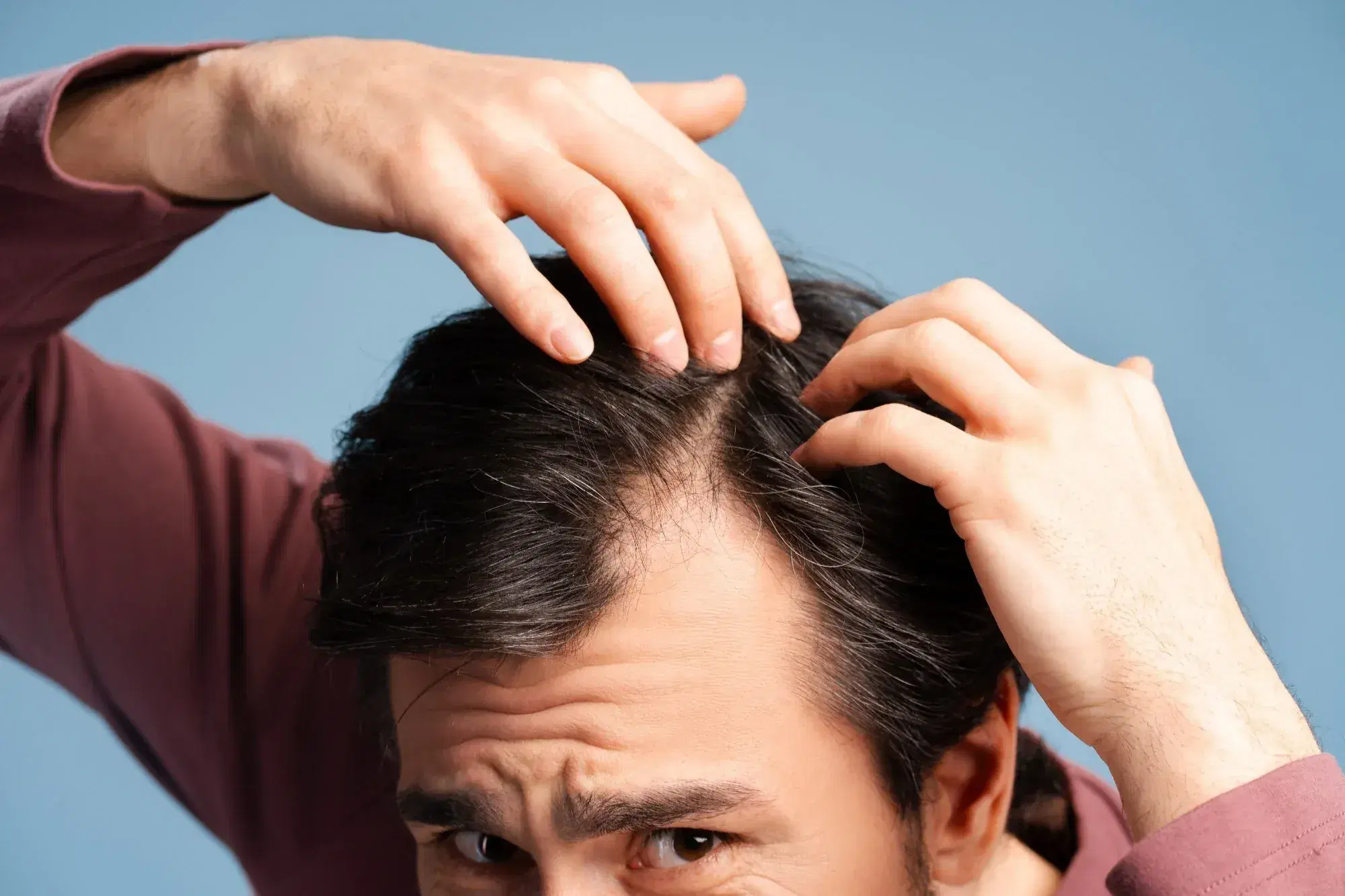
Current scientific evidence does not show that creatine causes hair loss, increases baldness risk, or damages hair follicles when taken at commonly recommended doses. Although an earlier study raised concerns about creatine and DHT levels, more recent clinical research has found no significant relationship between creatine supplementation and measurable changes in hair growth.
What Is Creatine and How Does It Work?
Creatine is a naturally occurring compound that helps the body produce energy during short periods of intense physical activity. The body synthesizes creatine primarily through processes involving the liver and kidneys, while foods such as meat and fish provide additional amounts through the diet.
Most creatine is stored in skeletal muscles, where it helps regenerate adenosine triphosphate, or ATP, the molecule responsible for supplying cellular energy. Increasing muscle creatine stores through supplementation can improve strength, power, and performance during activities such as weightlifting and sprinting.
Creatine monohydrate is the most extensively studied supplemental form, with substantial evidence supporting its effectiveness for exercise performance. However, questions about its potential effects on hormones have created concerns among people who already experience hair thinning or have a family history of baldness.
Why Is Creatine Linked to Hair Loss?
The concern surrounding creatine and hair loss originates primarily from research examining dihydrotestosterone, commonly called DHT. This hormone plays an important role in androgenetic alopecia, the most common cause of progressive hair loss in men.
DHT develops when the enzyme 5-alpha reductase converts testosterone into a more potent androgen. In genetically susceptible individuals, DHT interacts with receptors in certain scalp follicles and contributes to a gradual process called follicular miniaturization.
During miniaturization, previously thick hair strands become progressively shorter, finer, and less visible. Over time, this process can produce a receding hairline, thinning around the crown, and increasingly noticeable scalp exposure.
Because one early investigation identified increased DHT concentrations after creatine supplementation, researchers began questioning whether the supplement could influence androgen-related hair loss. Nevertheless, an increase in circulating hormone levels does not independently demonstrate that hair follicles have been damaged.
What Does Scientific Research Say About Creatine and Hair Loss?
Research examining creatine and hair health has developed considerably since the first concerns emerged. Understanding the difference between hormone measurements and direct assessments of hair growth is particularly important when interpreting the findings.
The 2009 Study That Raised Concerns About DHT
A small study published in 2009 investigated the hormonal effects of creatine supplementation in 20 college-aged male rugby players. Participants received 25 grams of creatine daily during a seven-day loading period, followed by 5 grams daily for another 14 days.
Researchers reported that DHT concentrations increased by approximately 56% after the initial loading period and remained around 40% above baseline after the maintenance period. Testosterone levels did not show a comparable increase.
Although these findings attracted attention, the investigation had significant limitations. It involved a small group of participants, lasted only three weeks, and measured circulating hormones rather than actual changes in hair density or follicular health.
Most importantly, the study did not demonstrate hair loss among participants. Its findings suggested a possible hormonal effect that required further investigation rather than establishing a causal relationship between creatine and baldness.
The 2025 Clinical Trial Examining Hair Growth Directly
A randomized controlled trial published in 2025 provided more directly relevant evidence by measuring hair characteristics alongside hormone concentrations.
The investigation initially enrolled 45 resistance-trained men between 18 and 40 years old, with 38 participants completing the study. Researchers compared daily supplementation with 5 grams of creatine monohydrate against a placebo over 12 weeks.
Unlike the earlier investigation, this trial evaluated hair density, follicular unit counts, hair thickness, and growth-cycle characteristics. It also measured testosterone and DHT concentrations to identify possible hormonal changes.
The results showed no statistically significant differences between the creatine and placebo groups in DHT levels or measured hair growth characteristics.
These findings challenge the assumption that creatine supplementation causes hair thinning. However, the relatively short study period, limited participant numbers, and absence of female participants mean that further research would be valuable for understanding long-term outcomes.
Does Creatine Increase DHT Levels?
The available evidence does not consistently demonstrate that creatine increases DHT levels in healthy adults. Although the 2009 investigation reported a substantial increase, subsequent research has not established a reproducible hormonal response.
The 2025 randomized trial found no significant difference in DHT concentrations between participants using creatine and those receiving a placebo. Testosterone changes also occurred independently of supplementation, suggesting that creatine did not meaningfully alter the measured androgen profile.
It is also important to distinguish circulating DHT concentrations from the sensitivity of individual scalp follicles. Androgenetic alopecia can progress even when blood hormone levels remain within normal ranges because genetic susceptibility strongly influences follicular responses.
Can Creatine Accelerate Male Pattern Baldness?
There is currently insufficient evidence to conclude that creatine accelerates male pattern baldness, including among individuals with a genetic predisposition to androgenetic alopecia.
Male pattern hair loss develops gradually as susceptible follicles respond to androgen activity over time. Family history, age, and individual follicular sensitivity contribute to how quickly thinning progresses and which areas of the scalp become affected.
Someone who starts taking creatine during the early stages of hereditary hair loss may notice further recession or thinning in the following months. However, observing these changes after beginning supplementation does not establish that creatine caused them.
The existing clinical findings are reassuring, but they do not completely exclude the possibility of effects that would require longer studies involving genetically susceptible participants to detect.
Does Creatine Cause Hair Loss in Women?
Research specifically examining creatine supplementation and female hair loss remains limited. The most directly relevant randomized trial investigated male participants, so its findings cannot establish every possible effect in women.
Female pattern hair loss also involves genetic and hormonal influences, although its presentation often differs from male pattern baldness. Women commonly develop widening along the central part and reduced density across the upper scalp rather than pronounced temple recession.
Current evidence does not demonstrate that creatine causes female pattern hair loss or increases androgen-related follicular miniaturization in women. However, studies directly measuring hair outcomes in female creatine users are still needed.
Hair thinning associated with menstrual changes, thyroid disorders, nutritional deficiencies, or other hormonal conditions should not automatically be attributed to exercise supplements.
Can Creatine Cause Temporary Hair Shedding?
Temporary hair shedding differs from progressive pattern baldness because the follicles may remain healthy while a larger proportion of hairs enters the resting phase.
This process, known as telogen effluvium, can develop after significant physiological stress, illness, rapid weight loss, nutritional restriction, or major changes in health.
There is no convincing evidence that creatine itself triggers telogen effluvium. However, people beginning a new exercise routine may simultaneously change their calorie intake, increase training intensity, or introduce several dietary supplements.
These accompanying changes can complicate the interpretation of new shedding. For example, a substantial calorie deficit during an intensive training program may contribute to temporary hair loss independently of creatine consumption.
Does Creatine Loading Increase the Risk of Hair Loss?
Creatine loading typically involves consuming approximately 20 grams daily for five to seven days before transitioning to a maintenance dose of 3 to 5 grams per day. This approach increases muscle creatine stores more rapidly than taking a smaller daily amount from the beginning.
The original study reporting increased DHT used a loading protocol, which contributed to speculation that higher doses might create additional hair loss risks.
However, the study did not measure hair loss, and current research does not establish that a loading phase causes follicular damage.
Loading is also not essential for achieving increased muscle creatine stores. Consuming approximately 3 to 5 grams daily without an initial loading period can raise muscle creatine concentrations more gradually.
Neither approach has been demonstrated to cause baldness, although research specifically comparing their long-term effects on scalp hair remains limited.
Why Might Hair Fall Out After Starting Creatine?
When someone notices increased shedding after beginning creatine supplementation, several factors deserve consideration before assuming a direct connection.
Changes in exercise intensity, reduced calorie consumption, inadequate protein intake, and recent illness can influence hair growth independently of supplementation. Hair shedding may also become noticeable several months after a triggering event, making the timing difficult to interpret.
Some individuals begin using creatine at the same age when hereditary hair thinning naturally becomes more apparent. In these circumstances, the supplement and the onset of hair loss may occur together without sharing a causal relationship.
Examining the complete supplement routine is equally important. Certain products contain additional vitamins, minerals, or other ingredients that may have different effects when consumed excessively.
Should You Stop Taking Creatine if You Notice Hair Thinning?
Discontinuing creatine is not an established treatment for hair loss because research has not demonstrated that ordinary supplementation causes follicular miniaturization.
However, unexplained thinning deserves appropriate evaluation, especially when shedding becomes persistent or the hairline progressively recedes. Identifying whether the condition involves androgenetic alopecia, telogen effluvium, or another cause is more useful than attributing every change to a single supplement.
Reviewing the timing of hair loss, family history, dietary habits, medications, and additional supplements can help identify relevant contributing factors.
If hair loss develops alongside scalp inflammation, patchy bald areas, or other unusual symptoms, medical assessment becomes particularly important.
Will Hair Grow Back After Stopping Creatine?
There is no reliable scientific evidence showing that stopping creatine directly restores lost hair, primarily because creatine has not been established as a cause of hair loss.
If shedding results from a temporary condition such as nutritional restriction or physiological stress, hair may gradually recover after the underlying trigger resolves. This improvement should not automatically be attributed to discontinuing creatine.
Hereditary hair loss behaves differently because follicles undergo progressive miniaturization. Stopping a supplement that has no demonstrated causal role would not necessarily interrupt this process.
Consequently, understanding why hair is thinning provides a more reliable basis for recovery expectations than assuming supplement withdrawal will reverse baldness.
Frequently Asked Questions About Creatine and Hair Loss
The following questions address common concerns about creatine supplementation, genetic baldness, and long-term hair health.
Does taking 5 grams of creatine daily cause hair loss? A 2025 randomized controlled trial examining 5 grams of creatine monohydrate daily for 12 weeks found no significant changes in DHT concentrations, hair density, or hair thickness compared with placebo. These results provide reassuring evidence for short-term use at this dose, although they cannot establish every possible long-term effect.
Can creatine cause a receding hairline if baldness runs in the family? A family history of androgenetic alopecia increases the likelihood of hereditary hair thinning, but current research has not demonstrated that creatine accelerates this process. Progressive recession may develop independently of supplement use because genetically sensitive follicles respond to androgen activity over time.
Is creatine safe for people who already have thinning hair? Existing evidence does not identify creatine as a proven cause of worsening hair loss, and commonly recommended doses are generally well tolerated by healthy adults. However, people with kidney disease or other relevant medical conditions should discuss supplementation with a healthcare professional, while ongoing hair thinning should receive an evaluation based on its underlying cause.
Final Thoughts: Does Creatine Really Cause Hair Loss?
Current research does not support the claim that creatine causes hair loss, increases DHT consistently, or accelerates male pattern baldness. Although an early investigation identified hormonal changes, a more recent randomized trial found no significant differences in DHT levels or measurable hair growth characteristics after 12 weeks of supplementation.
The evidence remains limited regarding longer-term use and certain populations, but the available findings are reassuring for healthy adults using standard creatine doses.
Rather than assuming creatine is responsible for every instance of thinning, identifying genetic, nutritional, hormonal, and other medical factors provides a more reliable understanding of hair loss and its potential treatment.