
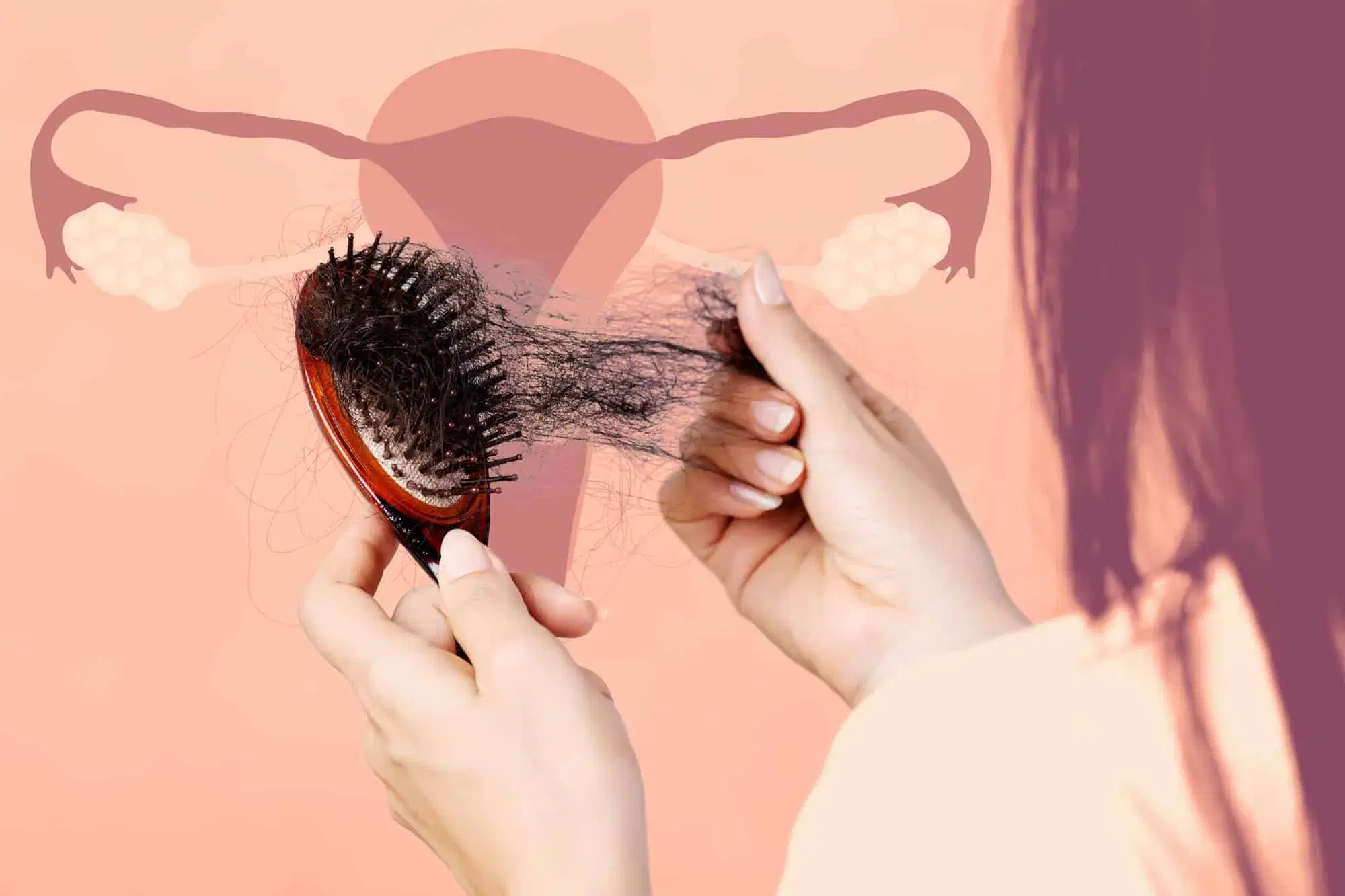
Polycystic ovary syndrome, or PCOS, can cause thinning hair on the scalp because of its effect on hormones, particularly androgens. This guide explains why the condition affects hair, how the thinning usually looks, which tests and treatments doctors consider and what role lifestyle and hair restoration can play.
Can PCOS Cause Hair Loss?
PCOS can cause hair loss, most often as a gradual thinning of the hair on the top of the scalp rather than sudden bald patches. Many women with the condition notice that their parting looks wider, their ponytail feels thinner or more scalp shows through under bright light.
This type of hair loss is closely linked to hormonal changes in PCOS, especially higher levels or stronger effects of androgens. Not every woman with PCOS experiences hair thinning, and some notice other symptoms first, such as irregular periods, acne or unwanted hair growth on the face and body.
Since hair loss can have several causes, including thyroid problems, iron deficiency and stress, a proper medical assessment helps confirm whether PCOS is the main factor or whether something else is contributing.
Why Does PCOS Lead to Hair Thinning?
PCOS leads to hair thinning mainly through androgens, a group of hormones that includes testosterone, which affect hair follicles on the scalp. Insulin resistance, a common feature of PCOS, can also influence hormone levels and make the effect stronger.
The Role of Androgens
Women naturally produce small amounts of androgens, but in PCOS the ovaries and sometimes the adrenal glands may produce more than usual. In hair follicles that are sensitive to these hormones, androgens gradually shrink the follicle through a process called miniaturization. Over time, the affected follicles produce thinner, shorter and lighter hairs, and some eventually stop producing visible hair. This process resembles the pattern hair loss seen in men, although it usually looks different on the scalp.
Insulin Resistance and Hormone Balance
Many women with PCOS have insulin resistance, which means the body needs more insulin to keep blood sugar under control. Higher insulin levels can encourage the ovaries to produce more androgens and lower the levels of sex hormone-binding globulin, a protein that normally binds to androgens and limits their activity. This combination can increase the amount of active androgen in the body, which may make hair thinning more likely.
What Does PCOS-Related Hair Loss Look Like?
PCOS-related hair loss usually follows a recognizable pattern, which helps doctors distinguish it from other causes:
A widening central parting, where the line of scalp along the part becomes broader over time.
Diffuse thinning on the top of the head, while the hair at the sides and back often stays fuller.
A preserved front hairline in many cases, unlike typical male pattern hair loss.
Finer, shorter hairs, which grow back thinner than before and may not reach their previous length.
Gradual progression, with changes developing over months or years rather than suddenly.
Why Can PCOS Cause Both Hair Loss and Unwanted Hair Growth?
PCOS can cause both hair loss on the scalp and unwanted hair growth elsewhere because androgens affect hair follicles differently depending on where they are on the body. On the scalp, sensitive follicles respond to androgens by shrinking, which leads to thinning.
On the face, chest, abdomen and back, androgens have the opposite effect, encouraging fine, light hair to become thicker and darker. This unwanted growth, called hirsutism, is one of the most recognizable signs of PCOS.
Experiencing both changes at the same time can feel frustrating, but it reflects the same underlying hormonal imbalance. Treatments that address androgens can often help with both concerns.
How Is PCOS-Related Hair Loss Diagnosed?
PCOS-related hair loss is diagnosed by combining a diagnosis of PCOS itself with an assessment of the hair and scalp. Doctors commonly diagnose PCOS when a woman has at least two of three features: irregular or absent ovulation, signs of excess androgens in symptoms or blood tests, and a characteristic appearance of the ovaries on ultrasound. They also rule out other conditions that can cause similar symptoms.
To assess the hair loss, a dermatologist examines the scalp, looks at the pattern of thinning and may use a magnified scalp examination called trichoscopy. This helps confirm androgen-related thinning and identify other contributing causes.
Since PCOS involves several body systems, diagnosis often involves more than one specialist, such as a gynecologist, an endocrinologist and a dermatologist.
Which Tests Might Your Doctor Recommend?
A doctor may recommend several tests to confirm PCOS and identify other factors that could affect your hair:
Hormone tests, including testosterone and other androgens, to look for signs of androgen excess.
Sex hormone-binding globulin, which helps show how much androgen is active in the body.
Thyroid function tests, since thyroid problems can cause hair thinning and irregular periods.
Iron studies, including ferritin, as low iron stores can contribute to hair loss.
Blood sugar and insulin markers, to check for insulin resistance or diabetes risk.
Your doctor may also recommend a pelvic ultrasound and other tests depending on your symptoms and medical history.
Which Treatments Can Help With PCOS Hair Loss?
Treatments for PCOS hair loss usually aim to reduce the effect of androgens on the hair follicles and support regrowth. The approach depends on your symptoms, health and plans for pregnancy, so a doctor needs to guide your choice.
Hormonal Treatments
Combined oral contraceptive pills are often used in PCOS because they can regulate periods and lower androgen activity. Doctors may also prescribe anti-androgen medications such as spironolactone, which can reduce the effect of androgens on hair follicles. These medications are not suitable during pregnancy and usually require reliable contraception, so discussing your plans with your doctor is essential. Results tend to appear gradually, often over several months.
Topical and Supporting Treatments
Topical minoxidil is widely used for female pattern hair loss and may help support hair growth, whatever the cause of the androgen excess. It requires ongoing use, and some people notice temporary shedding when they first start. If insulin resistance plays a significant role, your doctor may discuss treatment to improve insulin sensitivity as part of managing PCOS overall. Other options, such as low-level laser therapy and platelet-rich plasma, are sometimes discussed, but evidence for them is still developing.
Can Lifestyle Changes Improve PCOS Hair Loss?
Lifestyle changes can support the management of PCOS and may help improve hormone balance, although they rarely resolve hair loss on their own. For women with PCOS who are carrying extra weight, even a modest reduction in weight can improve insulin sensitivity and lower androgen levels.
A balanced diet that supports stable blood sugar, regular physical activity and good sleep all contribute to better metabolic and hormonal health. Managing stress also matters, since long-term stress can affect hormones and may contribute to shedding.
Ensuring adequate intake of protein, iron and other nutrients supports healthy hair growth. Before taking supplements marketed for hair or PCOS, speak with your doctor, since many lack strong evidence and some may interact with medications.
Is Hair Loss From PCOS Permanent?
Hair loss from PCOS is not always permanent, especially when treatment starts early. Follicles that have shrunk but remain active can often produce thicker hair again once androgen activity is controlled and supporting treatments are in place.
Follicles that have been affected for many years may lose their ability to regrow hair, which is why early assessment and treatment matter. The goal of treatment is often to stop further thinning first, with some regrowth as a possible additional benefit.
Since PCOS is a long-term condition, treatment for hair loss usually needs to continue over time. Stopping treatment may allow thinning to return.
Is a Hair Transplant an Option for Women With PCOS?
A hair transplant can be an option for some women with PCOS, but it is usually considered only after the condition and the hair loss have been medically treated and stabilized. Since PCOS-related thinning is often diffuse, a surgeon needs to assess whether the donor area at the back and sides of the head remains strong enough to provide healthy grafts.
If androgen activity continues unchecked, the native hair around the transplanted area may keep thinning, which can affect the long-term result. Many surgeons recommend continuing medical treatment after a transplant to protect both transplanted and existing hair.
A thorough assessment by a hair restoration surgeon, ideally working alongside your dermatologist or endocrinologist, helps determine whether a transplant is suitable and what results are realistic.
How Does PCOS Hair Loss Affect Emotional Wellbeing?
PCOS hair loss can have a significant emotional impact, affecting confidence, body image and how women feel in social and professional settings. Combined with other PCOS symptoms such as acne, weight changes and unwanted hair growth, it can feel overwhelming.
Understanding the cause of the hair loss and knowing that treatment options exist often helps reduce anxiety. Hairstyles, volumizing products and cosmetic options such as hair fibers or toppers can also help while treatment takes effect.
If hair loss or other PCOS symptoms affect your mood, relationships or daily life, consider speaking with your doctor or a mental health professional. Support groups for women with PCOS can also offer understanding and practical advice.