
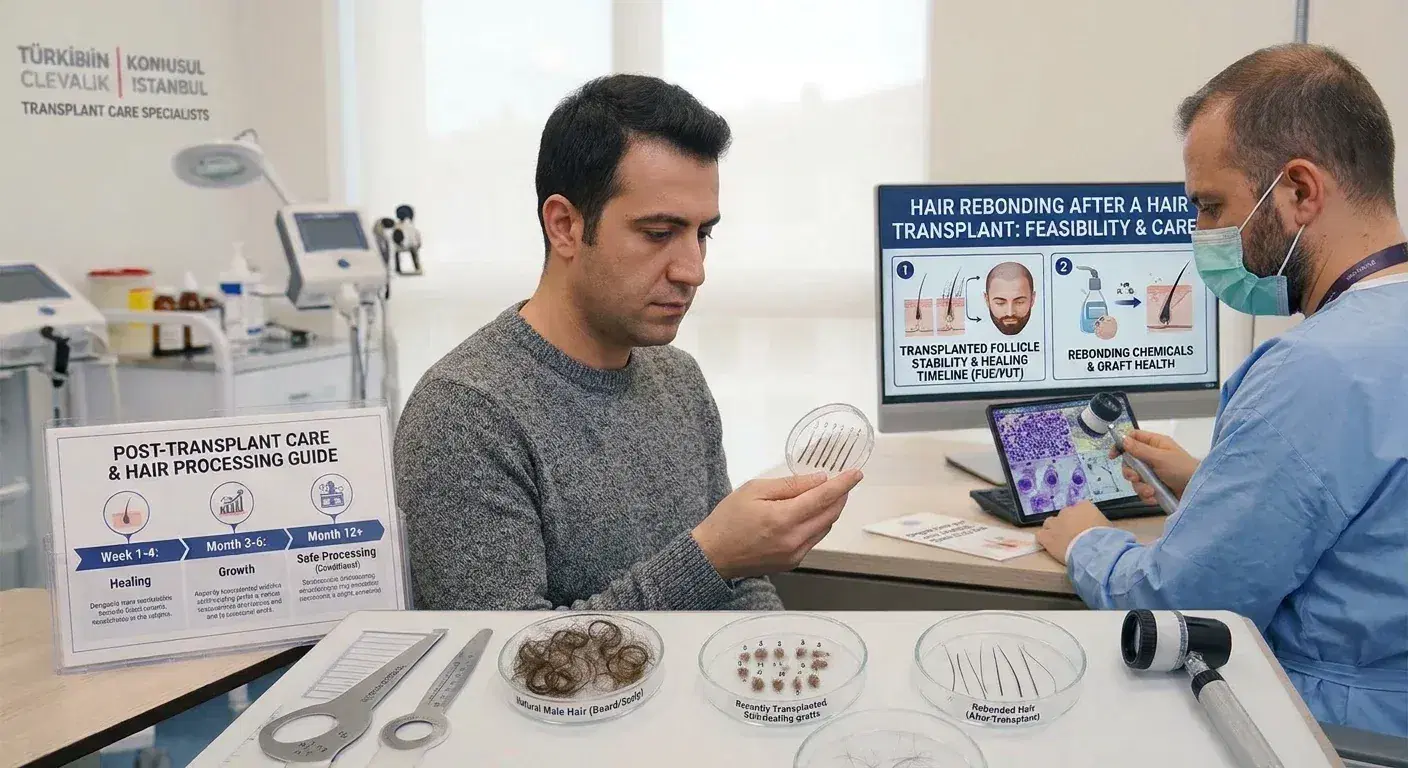
Hair rebonding after a hair transplant should generally be postponed for at least three months, with a waiting period closer to six months offering a more cautious approach to chemical straightening. Although transplanted hair can eventually undergo styling treatments, the scalp must heal completely before exposure to strong chemicals, high temperatures, and the mechanical tension involved in rebonding.
Can You Rebond Your Hair After a Hair Transplant?
Hair rebonding is possible after a hair transplant once the scalp has recovered and the transplanted follicles have become established. However, returning to chemical straightening requires more patience than resuming ordinary washing or gentle styling because rebonding involves substances that permanently alter the structure of the hair shaft.
During transplantation, healthy follicles are extracted from the donor region and implanted into areas affected by hair loss. The process creates small surgical wounds, leaving the scalp temporarily sensitive to chemical exposure, pressure, and friction.
Even after the surface wounds close, the treated skin may continue recovering beneath the surface. Introducing aggressive hair treatments during this period can cause unnecessary irritation and may compromise the condition of the surrounding hair.
A conservative approach allows sufficient time for healing before introducing chemical processing, particularly when the procedure involves both strong straightening solutions and heated styling equipment.
What Is Hair Rebonding and How Does It Work?
Hair rebonding is a chemical straightening treatment designed to transform naturally curly or wavy hair into a straighter texture. Unlike ordinary blow-drying or flat ironing, which temporarily changes the appearance of hair, rebonding alters chemical bonds within the hair shaft.
The treatment generally begins with a chemical solution that breaks selected disulfide bonds responsible for maintaining the hair's natural shape. The hair is then straightened, often using heated tools, before a neutralizing product helps establish the new structure.
The treated section remains relatively straight until it is cut or replaced through natural hair growth. New hair emerging from the follicle retains its original characteristics, meaning the roots may eventually develop a different texture from the previously treated lengths.
Although rebonding can create a smooth appearance, the process also places considerable stress on the hair fiber. This becomes particularly important when the scalp has recently undergone surgery.
How Long After a Hair Transplant Can You Rebond Your Hair?
Chemical hair rebonding is best postponed until the scalp has fully healed, with approximately three to six months providing a cautious planning window. This interval is a practical precaution rather than a universally established clinical deadline, since direct research identifying an exact safe rebonding date after transplantation remains limited.
First Two Weeks: Avoid Chemical Hair Treatments
The first fourteen days are particularly important for protecting newly implanted grafts. Small crusts develop around the follicles, while the scalp may remain red, swollen, or sensitive as the surgical openings close.
Rebonding solutions should not come into contact with these healing areas because strong chemicals may cause burning, inflammation, or damage to the skin barrier. The brushing, sectioning, and pulling involved in straightening also introduce unnecessary mechanical stress.
During this period, hair care should focus on gentle washing and protecting the scalp from friction rather than changing the texture of the hair.
Weeks Three to Eight: Continue Gentle Styling
By the third or fourth week, many patients experience substantial improvement in superficial healing. Crusts have generally disappeared, and ordinary hair care gradually becomes easier.
Nevertheless, the disappearance of visible wounds does not mean that aggressive chemical treatments are immediately appropriate. The scalp may still experience tenderness, residual redness, or sensitivity to unfamiliar products.
Hair rebonding should remain postponed during this stage, especially because transplanted hair commonly begins shedding as the follicles enter a temporary resting phase.
Months Three to Six: Considering Chemical Straightening
Between the third and sixth months, the scalp has generally progressed well beyond the initial wound-healing period. Transplanted follicles may also begin producing new strands, although hair density and length remain incomplete.
Chemical rebonding can be considered only when the recipient and donor areas have healed completely, without persistent redness, inflammation, crusting, or unusual sensitivity.
Waiting closer to six months offers a more cautious approach, particularly when the treatment requires strong chemical solutions, repeated combing, and high-temperature straightening.
Even then, sufficient hair length and the condition of the existing strands should be assessed before proceeding.
Why Is Early Hair Rebonding Risky After a Transplant?
The primary concern with premature rebonding is the effect of chemical processing on recently operated tissue. Hair straightening products are designed to alter the structure of keratin within the hair shaft, not to treat damaged or healing skin.
When these substances contact sensitive scalp tissue, they may cause irritation, contact dermatitis, or chemical burns. Severe inflammation can interfere with normal healing and, in more serious cases, create conditions that threaten follicular health.
Mechanical tension presents another concern. Rebonding requires repeated handling of the hair, often involving combing, separating sections, and holding strands under tension during straightening.
Although transplanted follicles become more secure as the scalp heals, unnecessary pulling during early recovery remains undesirable.
The safest approach is to avoid combining recent surgical healing with aggressive chemical processing.
Can Hair Rebonding Damage Transplanted Hair Follicles?
Hair rebonding primarily affects the visible hair shaft rather than the follicle located beneath the skin. Once the scalp has completely healed, chemical straightening does not automatically destroy established transplanted follicles.
However, the treatment can still create problems when chemicals contact the scalp or when excessive heat damages the surrounding skin. Chemical burns and significant inflammation may harm the tissue supporting normal follicular activity.
Rebonding can also weaken the hair shaft itself. Repeated chemical processing reduces structural strength, making strands more vulnerable to dryness, splitting, and breakage.
This distinction matters because broken hair and failed graft survival are not the same condition. A transplanted follicle may remain healthy even when the visible hair shaft becomes damaged through cosmetic processing.
Does Rebonding Affect New Hair Growth After Transplantation?
Hair rebonding does not directly accelerate or improve the biological growth cycle of transplanted follicles. Its purpose is to alter the appearance of existing strands, not to stimulate new hair production.
Following transplantation, many visible hair shafts shed during the first several weeks. New growth often begins around the third or fourth month, with density developing gradually over the following months.
Early transplanted hairs may appear thin, short, or uneven because individual follicles do not restart growing simultaneously. Attempting to rebond these newly emerging strands can be impractical because they may not have enough length for safe and controlled chemical processing.
For cosmetic consistency, waiting until more of the transplanted hair has grown may provide a better result than straightening the existing hair while the recipient area remains sparse.
Hair Rebonding vs Keratin Treatment After a Hair Transplant
Hair rebonding and keratin smoothing treatments are sometimes discussed together, but they work differently and should not be considered interchangeable.
Rebonding uses chemical processes to restructure the bonds responsible for the hair's natural shape. Keratin smoothing treatments generally aim to reduce frizz and create a smoother appearance, often combining chemical formulations with high-temperature flat ironing.
Some smoothing products release formaldehyde or related substances when heated, creating additional exposure concerns beyond scalp irritation.
Neither treatment should be applied to a recently transplanted scalp. A keratin product marketed as gentle or restorative may still contain ingredients unsuitable for sensitive skin.
The product's complete formulation, required temperature, and potential scalp contact matter more than the treatment's commercial description.
When Can You Use a Hair Straightener After a Hair Transplant?
Temporary straightening with a flat iron differs from chemical rebonding because it does not require a strong chemical solution to permanently reshape the hair.
However, heated styling tools still introduce risks during recovery. High temperatures can irritate sensitive skin, while pulling hair through heated plates may create unnecessary tension around the follicles.
Flat ironing should be avoided during the initial healing weeks. Once the scalp has healed and the hair is long enough for controlled styling, occasional straightening at a low or moderate temperature may be considered.
The heated plates should remain away from the scalp, and the hair should be completely dry before application. Repeated high-temperature styling can damage the hair shaft even when the transplanted follicles themselves remain healthy.
Does FUE or DHI Change the Waiting Period for Rebonding?
Both FUE and DHI involve extracting and implanting living follicles, meaning the scalp undergoes similar biological healing processes.
FUE refers to the method of extracting individual follicular units, while DHI generally involves placing those units using a specialized implantation instrument.
Neither technique eliminates the need to protect the recipient and donor areas during early recovery. The scalp still requires time to close its surgical openings and restore normal barrier function.
The choice of transplantation method therefore does not establish a separate universal timetable for chemical straightening. Complete skin healing remains the essential requirement before considering rebonding.
How to Prepare Your Hair for Rebonding After Transplantation
Before returning to chemical straightening, the condition of both the scalp and hair shafts should be carefully assessed.
The recipient area should no longer contain crusts, open wounds, persistent redness, or uncomfortable sensitivity. Hair should also have sufficient length to allow the straightening product to be applied without unnecessary scalp contact.
Inform the stylist about the previous hair transplant, including which areas received grafts and where the donor follicles were extracted. The treatment should avoid excessive tension and direct chemical exposure to the scalp.
Product instructions, suitable skin sensitivity testing, appropriate processing times, and thorough neutralization are essential safety considerations.
Additional information about hair transplant aftercare and scalp protection can help clarify why chemical treatments should remain separate from the early healing period.
Can You Rebond and Dye Transplanted Hair Together?
Combining chemical straightening with hair coloring can place additional stress on the hair shaft, particularly when permanent dyes or bleaching products are involved.
Rebonding changes structural bonds within the hair, while coloring and bleaching can alter pigmentation and affect the outer protective layers. Performing several chemical processes close together increases the risk of dryness, fragility, and breakage.
Recently transplanted hair may also be at different stages of growth, creating uneven lengths and textures that complicate cosmetic processing.
Allowing adequate time between treatments helps reduce unnecessary stress, while the specific product instructions should guide any minimum separation period.
The article on dyeing transplanted hair after surgery provides further information about coloring timelines, scalp sensitivity, and precautions associated with chemical treatments.
What Are Safer Alternatives to Rebonding During Recovery?
Patients who prefer a straighter hairstyle during recovery can choose gentler approaches while avoiding chemical restructuring.
Once ordinary styling becomes appropriate, careful blow-drying with a cool or low-temperature setting may help manage frizz without exposing the scalp to aggressive chemical solutions.
Conditioners and suitable leave-in products can also improve manageability and reduce tangling, provided they do not irritate the recovering skin.
Loose styling techniques are preferable to tight hairstyles that place continuous tension on the hairline. Excessive brushing, repeated flat ironing, and strong styling products should remain limited while the hair and scalp regain their normal condition.
These alternatives cannot reproduce the permanent straightening effect of rebonding, but they may improve appearance without introducing the same level of chemical exposure.
What If Your Scalp Becomes Irritated After Rebonding?
Burning, redness, swelling, or persistent tenderness following chemical straightening can indicate scalp irritation or a chemical injury.
If discomfort develops during application, the procedure should stop immediately and the product should be removed according to its safety instructions. Continuing treatment despite a burning sensation can increase the risk of significant skin damage.
Persistent pain, blistering, discharge, or areas of damaged-looking skin require prompt medical evaluation.
Hair breakage after rebonding should also be distinguished from postoperative shedding. Chemical damage often produces shorter broken fragments, while natural shedding releases complete hair shafts as follicles progress through the growth cycle.
Frequently Asked Questions About Hair Rebonding After a Hair Transplant
The following questions address common concerns about waiting periods, chemical safety, and the long-term appearance of transplanted hair.
Can I rebond my hair three months after a hair transplant? Three months may represent the earliest point for considering chemical rebonding after complete scalp healing, but it should not be treated as an automatic safe date. Waiting closer to six months is a more cautious approach, especially when new transplanted hairs remain short or the treatment involves strong chemical solutions and substantial heat.
Will rebonding cause transplanted hair to fall out? Rebonding performed on fully healed skin does not automatically cause transplanted follicles to fail, but chemical exposure, excessive heat, and aggressive handling can damage hair shafts or irritate the scalp. Significant chemical burns may create additional risks, making careful application and avoiding direct contact with the scalp important.
Will transplanted hair stay straight after rebonding? Rebonding can permanently straighten the treated portion of a hair shaft, but newly growing hair retains the natural characteristics of its original follicle. Since transplanted follicles generally preserve many donor-hair traits, new growth may develop a different texture from the chemically straightened lengths and eventually require additional styling.
Final Thoughts on Hair Rebonding After a Hair Transplant
Hair rebonding after a hair transplant is possible, but chemical straightening should remain postponed until the scalp has completely healed and the transplanted hair is sufficiently developed for safe styling. A cautious waiting period of approximately three to six months helps avoid unnecessary exposure during the most sensitive stages of recovery, although no single interval guarantees that every scalp is ready for treatment.
Protecting the recipient and donor areas from chemical irritation, excessive heat, and mechanical tension remains essential. Allowing adequate recovery time and choosing careful styling techniques can help preserve scalp health while supporting the natural development of transplanted hair.