
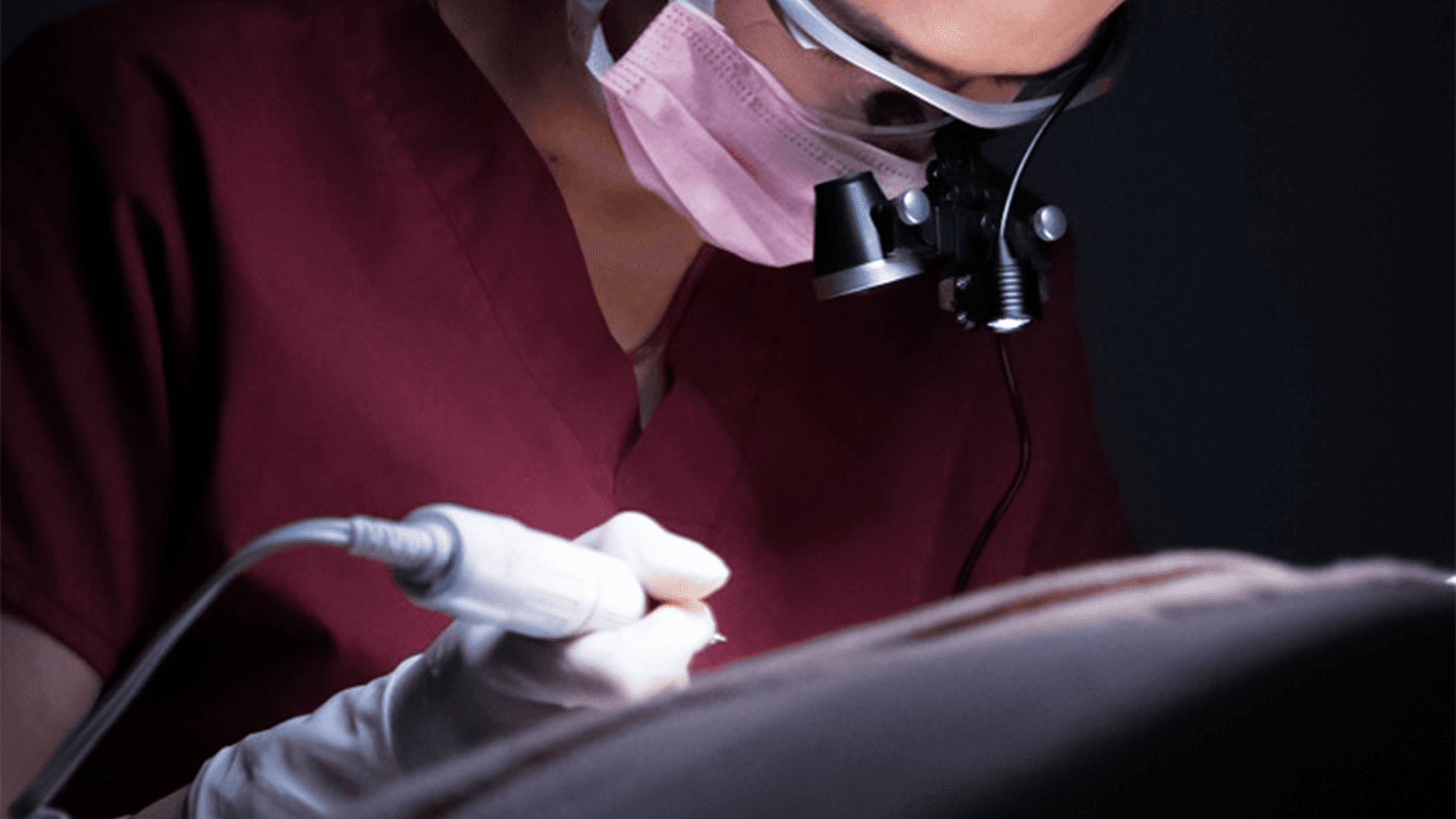
Sapphire FUE is a modern hair transplant approach that combines follicular unit extraction with recipient-site incisions made using sapphire-tipped blades. The term can sound as if the sapphire component changes the entire procedure, but the main difference usually appears during channel creation rather than follicle extraction itself. Clinics often promote Sapphire FUE as a more precise or advanced version of FUE, yet the final result still depends heavily on donor quality, graft handling, hairline design, implantation angle and long-term planning. So, what exactly is Sapphire FUE, how does it work, and does it offer meaningful advantages over standard hair transplantation?
What Is Sapphire FUE?
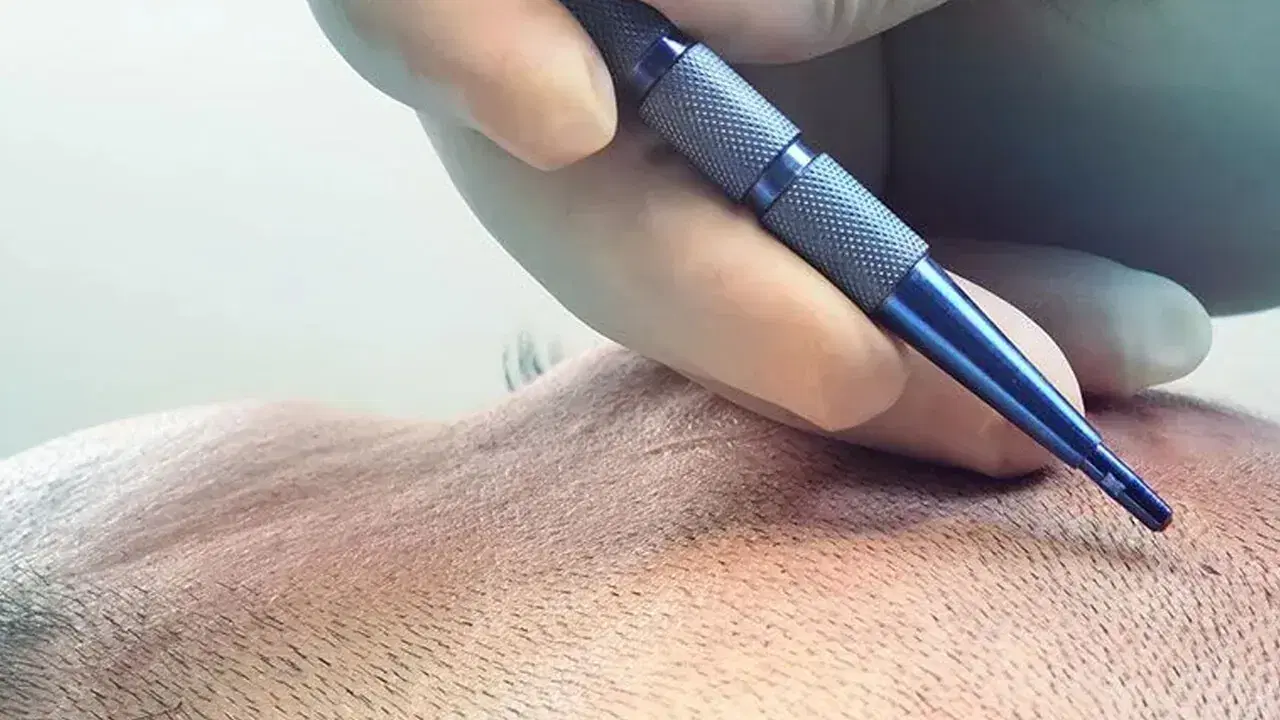
Sapphire FUE is a hair transplant method in which follicular units are usually extracted with standard FUE techniques and recipient sites are created using blades made from synthetic sapphire.
The name sometimes creates confusion because sapphire does not normally perform the follicle extraction itself.
Hair follicles are still removed individually from the donor area, usually with a small circular punch. After extraction, the surgeon creates tiny recipient openings in the thinning or bald area.
In Sapphire FUE, those openings are made with sapphire-tipped blades rather than conventional steel blades.
The distinction therefore lies mainly in recipient-site creation.
The biological principles of transplantation remain unchanged: healthy follicles are moved from a donor region to another area of the scalp.
How Does Sapphire FUE Work?
Sapphire FUE follows the same broad stages as other modern FUE procedures, with the sapphire blade entering the process during recipient-site creation.
A typical procedure involves:
Assessing the pattern of hair loss and donor capacity
Designing the hairline and treatment zones
Trimming or shaving selected donor hair when necessary
Applying local anesthesia
Extracting follicular units individually with an FUE punch
Sorting and preserving the grafts
Creating recipient sites with sapphire blades
Implanting grafts according to the planned direction and density
Cleaning and protecting the treated scalp
Providing postoperative washing and recovery instructions
The quality of extraction and implantation remains just as important as the material used to create the channels.
What Does the Sapphire Blade Actually Do?
The sapphire blade creates the small recipient-site openings into which extracted follicular units are later placed.
These openings determine several important features of the final transplant.
Their angle influences the direction in which the hair emerges. Their position influences spacing and apparent density. Their size should also match the grafts being implanted.
Synthetic sapphire can be manufactured with a smooth, sharp cutting edge, allowing the surgeon to create small incisions with controlled dimensions.
This does not mean sapphire automatically creates better hair growth.
The blade is a surgical instrument. Results depend on how accurately it is used, how well grafts are protected and whether the overall design suits the patient's anatomy.
Is Sapphire FUE Different From Standard FUE?
Sapphire FUE differs mainly in the material used for recipient-site creation rather than in the fundamental extraction method.
In standard FUE, grafts are extracted individually and recipient channels may be created using steel blades or needles.
In Sapphire FUE, the same general extraction process is followed, but sapphire blades are used for the recipient sites.
This distinction is important because marketing can make Sapphire FUE sound like a completely separate extraction technology.
It is more accurate to describe it as a variation of FUE hair transplantation.
A well-performed conventional FUE procedure can produce excellent results, while poorly planned Sapphire FUE can still look unnatural.
The instrument does not replace surgical judgment.
Is Sapphire FUE Better Than DHI?
Sapphire FUE is not automatically better than DHI, because the two approaches mainly differ in how recipient placement is organized.
DHI usually involves placing grafts with implanter pens, often without creating all recipient sites in advance.
Sapphire FUE typically creates recipient channels first and implants grafts afterward.
Both methods can produce natural results.
DHI may be useful when precise implantation between existing hairs is desired, while Sapphire FUE can offer an efficient workflow for larger treatment areas.
However, technique names often receive more attention than they deserve.
Donor management, graft survival, angle control and realistic density usually matter more than whether a clinic uses a sapphire blade or an implanter pen.
What Are the Potential Advantages of Sapphire FUE?
Sapphire FUE may offer practical advantages when sharp, appropriately sized blades allow controlled recipient-site creation with limited tissue disruption.
Potential benefits can include:
Precise recipient-site dimensions
Controlled implantation angles
Efficient treatment of larger areas
Small recipient incisions
Potentially less unnecessary tissue trauma when used properly
Flexible density planning
Suitability for hairline, mid-scalp and crown work
Compatibility with large FUE sessions
Ability to match different blade sizes to different graft types
Predictable channel creation before implantation
These advantages should not be interpreted as proof that sapphire blades always produce better growth than steel.
Technique execution remains more important than the blade material alone.
Are There Any Disadvantages?
Sapphire FUE has limitations, and the procedure should not be considered superior simply because a clinic uses sapphire instruments.
One disadvantage is marketing-driven overstatement.
Some providers imply that sapphire blades guarantee faster healing, denser growth or better graft survival, although such outcomes depend on many variables beyond blade material.
Another limitation is that the procedure still requires accurate FUE extraction.
If follicles are damaged during harvesting, the use of sapphire blades later cannot correct that problem.
The same applies to poor hairline design, excessive donor harvesting or incorrect implantation direction.
Sapphire FUE also remains surgery, with normal risks such as swelling, temporary numbness, folliculitis, bleeding, infection and unsatisfactory cosmetic results.
Who Is a Good Candidate for Sapphire FUE?
A good candidate for Sapphire FUE usually has a suitable donor area, a stable or understandable pattern of hair loss and realistic expectations about density.
Candidacy depends more on hair biology than on the sapphire technique itself.
Important factors include age, donor density, hair caliber, scalp condition, future hair-loss risk and the size of the area requiring treatment.
Patients with androgenetic alopecia often make up the largest group.
Some people with previous transplant surgery may also qualify if enough safe donor hair remains.
Temporary diffuse shedding should be evaluated carefully before surgery.
A transplant redistributes permanent follicles but does not treat every cause of hair loss.
How Many Grafts Can Be Transplanted?
The number of grafts transplanted with Sapphire FUE depends on donor capacity, treatment area and surgical duration rather than on the sapphire blade itself.
A small frontal procedure may require around 1,500 to 2,000 grafts.
A broader front and mid-scalp restoration may need approximately 2,500 to 3,500 grafts.
Advanced cases can require 4,000 grafts or more, sometimes across multiple sessions.
The maximum should not become the goal.
Removing too many grafts from the donor area can create visible thinning or permanent overharvesting.
A conservative procedure that leaves adequate donor reserve may provide a better long-term result than a very large one-session transplant.
Can Sapphire FUE Create Higher Density?
Sapphire FUE can support dense recipient-site planning, but the technique does not remove the biological limits of scalp blood supply or donor availability.
Small blades may allow recipient sites to be positioned efficiently in selected cases.
However, creating more incisions does not automatically mean more usable density.
The scalp must safely support the grafts, while the donor area must provide enough healthy follicular units.
Excessively dense placement can increase trauma and may compromise graft survival if surgical planning is poor.
The best density is therefore not the highest number technically possible.
It is the density that creates a convincing visual result without overusing donor hair or unnecessarily stressing the recipient area.
Is Sapphire FUE Suitable for the Hairline?
Sapphire FUE can be suitable for frontal hairline restoration when recipient sites are created with appropriate angles, spacing and irregularity.
The hairline is one of the most visually sensitive areas in transplantation.
Single-hair grafts are generally preferred along the leading edge because large multi-hair grafts can create a plug-like appearance.
The surgeon also needs to avoid drawing an unnaturally straight line.
Sapphire blades can create small, controlled incisions, but they cannot decide the correct hairline shape on their own.
Facial proportions, age, expected future loss and donor reserve should guide the design.
A natural hairline depends primarily on planning and graft selection.
Can Sapphire FUE Be Used for the Crown?
Sapphire FUE can be used successfully for crown restoration, but the crown requires careful management because it can consume large numbers of grafts.
Hair in the vertex grows around a whorl, so recipient sites must follow changing angles rather than one uniform direction.
The sapphire blade can help create these sites precisely, but recreating the natural spiral remains a design challenge.
Crown density should also be planned conservatively.
If a young patient still has progressive frontal or mid-scalp loss, using thousands of grafts in the crown too early may leave too little donor hair for more visible areas later.
The long-term distribution of grafts matters more than the blade material.
Is Sapphire FUE Suitable for Curly or Afro-Textured Hair?
Sapphire FUE can be used for curly and Afro-textured hair, but the extraction stage may require greater technical expertise because curved follicles can be harder to harvest safely.
This is another example of why the sapphire part should not receive all the attention.
The main challenge in tightly curled hair often occurs before recipient-site creation.
A follicle may curve beneath the skin, increasing the risk of transection during FUE extraction.
Once healthy grafts have been harvested, sapphire blades can be used to create recipient sites in the usual way.
The surgeon still needs to respect curl direction, hairline texture and donor density.
Experience with curved follicles is therefore more important than simply offering Sapphire FUE.
What Happens on the Day of Surgery?
A Sapphire FUE procedure usually begins with final hairline planning, photography, trimming and local anesthesia before donor extraction starts.
The surgical team then removes follicular units individually from the donor region.
These grafts are counted, inspected and preserved in appropriate solution while the recipient area is prepared.
The surgeon creates recipient channels with sapphire blades according to the planned density and growth direction.
Grafts are then inserted into those openings.
Large sessions can take many hours, so short breaks may occur during the day.
The scalp is usually cleaned before discharge, and the donor area may receive a light dressing depending on the protocol.
Most patients return to their accommodation the same day.
What Does Recovery Look Like?
Recovery after Sapphire FUE generally follows the same biological timeline as other FUE hair transplants.
During the first several days, mild swelling, redness, tenderness and crusting can occur.
Small crusts form around the transplanted hairs and usually begin clearing with the recommended washing routine.
The donor area may feel tight or mildly sore at first.
Most crusts disappear within roughly 7 to 10 days, although residual redness can persist longer in some people.
The transplanted hair shafts may then shed over the following weeks.
This temporary shedding is expected.
The follicles remain beneath the skin and later begin producing new hairs during the growth phase.
When Do Transplanted Hairs Start Growing?
New growth usually begins gradually several months after Sapphire FUE rather than immediately after surgery.
Many transplanted shafts shed during the first few weeks.
Early new hairs may begin appearing around the third or fourth month, though growth is often uneven at first.
Density becomes more noticeable between approximately six and nine months.
Further thickening and maturation can continue for 12 months or longer.
Crown growth may take even more time to look complete.
The sapphire blade does not eliminate this biological timeline.
Patients should therefore be cautious with advertisements suggesting dramatically faster growth simply because sapphire instruments were used.
The follicle must still pass through its normal growth cycle.
Can Sapphire FUE Fail?
Sapphire FUE can produce disappointing results if grafts are damaged, donor planning is poor or recipient-site design is inaccurate.
Possible reasons for an unsatisfactory outcome include:
Excessive graft transection during extraction
Poor graft storage
Prolonged time outside the body
Incorrect implantation angles
Low graft survival
Overharvesting of the donor area
Unnatural hairline design
Insufficient graft numbers
Continuing native hair loss
Inadequate postoperative care
Smoking or other factors that impair healing
Infection or significant inflammation
Unrealistic patient expectations
Poor candidate selection
The use of sapphire blades cannot compensate for weaknesses elsewhere in the procedure.
How Should Patients Compare Sapphire FUE Clinics?
Patients should compare Sapphire FUE providers by surgical planning, medical involvement and documented results rather than by the blade material alone.
Important questions include:
Who designs the hairline?
Who performs follicle extraction?
Who creates the recipient sites?
Who implants the grafts?
How is donor density measured?
How is overharvesting avoided?
How many grafts are realistically needed?
Are single-hair grafts reserved for the frontal edge?
How is ongoing hair loss considered?
What happens if fewer grafts can be safely extracted?
How are grafts stored during surgery?
What postoperative support is available?
Are results shown under consistent lighting and angles?
Does the clinic explain limitations as clearly as benefits?
A sophisticated instrument should support a good surgical plan, not replace one.
Is Sapphire FUE Worth It?
Sapphire FUE can be a reasonable option for patients who are suitable for FUE and want recipient sites created with sapphire blades, but the label itself should not determine the decision.
The technique can offer precise channel creation and can work well for hairline, mid-scalp and crown restoration.
Its value depends on the people using it.
A highly experienced team performing conventional FUE can achieve a better result than an inexperienced team advertising premium Sapphire FUE.
Patients should therefore focus on donor preservation, natural design, graft handling and surgeon involvement.
Sapphire blades can be useful tools, but successful hair transplantation still depends far more on planning, anatomy and technique than on the material of the blade.