
Thai massage is one of the most tempting parts of a trip to Thailand, but its deep pressure, stretching and changes of position can put fresh grafts and a healing donor area at risk. This guide explains how Thai massage differs from other treatments, how long to wait after a hair transplant and which gentler options may suit the early weeks of recovery.
Can You Have a Thai Massage After a Hair Transplant?
You can have a Thai massage after a hair transplant, but a traditional full-body session usually needs to wait until your scalp has healed and your surgeon confirms it is safe. In the early weeks, the grafts are still settling, the donor area is tender and the strong pressure and stretching typical of Thai massage can cause problems.
Some gentler treatments, such as a seated foot massage, may be possible earlier, as long as they do not involve your head, neck or upper back and do not cause you to overheat or sweat heavily. The key is to choose the type of massage carefully and to tell the therapist about your procedure.
Your surgeon's aftercare instructions should guide every decision, since they take into account the technique used, the size of your procedure and how your scalp is healing.
How Is Thai Massage Different From Other Massages?
Thai massage differs from many other massages because it combines deep pressure with assisted stretching and frequent changes of body position. Therapists usually work on a mat on the floor, with the client fully clothed, and they use their palms, thumbs, elbows, knees and sometimes feet to apply pressure along the body.
A typical session moves the client through several positions, including lying face down, on the back and on each side, and sometimes sitting up for stretches of the back, shoulders and neck. Many sessions also finish with work on the head, neck and shoulders.
These features make Thai massage energizing and effective for muscle tension, but they also explain why it needs extra caution after a hair transplant. The pressure, twisting movements and head contact that make it distinctive are the same elements that can affect a healing scalp.
Why Can Thai Massage Be Risky During Early Recovery?
Several features of traditional Thai massage can create problems for a healing scalp in the first weeks:
Face-down positions, where the forehead and front of the head rest on a pillow or mat near the transplanted hairline.
Neck and shoulder stretching, which can strain the donor area and pull on a healing FUT wound.
Deep pressure and vigorous movement, which can raise blood pressure and increase swelling or bleeding.
Head and scalp work, often included at the end of a session, which can disturb grafts directly.
Shared mats and pillows, which can expose healing skin to bacteria if they are not cleaned between clients.
How Long Should You Wait Before a Thai Massage?
Most people wait several weeks after a hair transplant before having a full traditional Thai massage, and they return to it gradually. The timeline below reflects common practice, but your surgeon's guidance should always come first.
The First Days
In the first days after surgery, it is best to avoid all forms of massage. The grafts are fragile, swelling usually peaks, and you may be taking medications that make you drowsy. Rest, gentle walking and following your aftercare instructions matter far more during this period.
The First Weeks
Once the grafts have become more secure and the scabs have started to clear, some surgeons may allow a gentle seated foot massage or a light leg massage that does not involve your head, neck or upper back. Avoid lying face down, any stretching of the neck and shoulders, and anything that makes you sweat.
Returning to Full Thai Massage
A full traditional Thai massage, with stretching and changes of position, usually needs to wait until your scalp and donor area have fully healed. Even then, ask the therapist to avoid your head and to use moderate pressure for the first few sessions. Head massage is usually the last element to return.
Which Massage Options Are Gentler in the Early Weeks?
If you want to enjoy massage during your stay, some options place much less strain on a healing scalp:
Seated foot massage, where you stay upright and the therapist works only on your feet and lower legs.
Light leg massage, focused on the calves and thighs, with gentle pressure and no changes of position.
Hand and arm massage, which can relax you without any contact near the head.
Back massage in a seated position, later in recovery and only if your surgeon approves, avoiding the neck and upper shoulders.
Is a Thai Foot Massage Safe After a Hair Transplant?
A Thai foot massage is often one of the first massage options that may become suitable after a hair transplant, because you usually sit upright in a reclining chair and the therapist focuses on your feet and lower legs. This keeps your head away from pressure and contact.
Even so, it is best to wait until your surgeon gives approval, usually after the first days. Make sure the chair does not recline so far that your head rests against the cushion, and keep the session at a gentle, relaxing pressure.
Choose a shop with air conditioning to avoid sweating, and ask the therapist not to massage your shoulders or head at the end of the session, which is common in many foot massage treatments.
What About Oil Massage and Herbal Compress Treatments?
Oil massage and herbal compress treatments are usually best kept for later in recovery. Oil massages often take place on a table with the client lying face down, which can put pressure on the front of the head, and oils can reach the scalp and irritate healing skin.
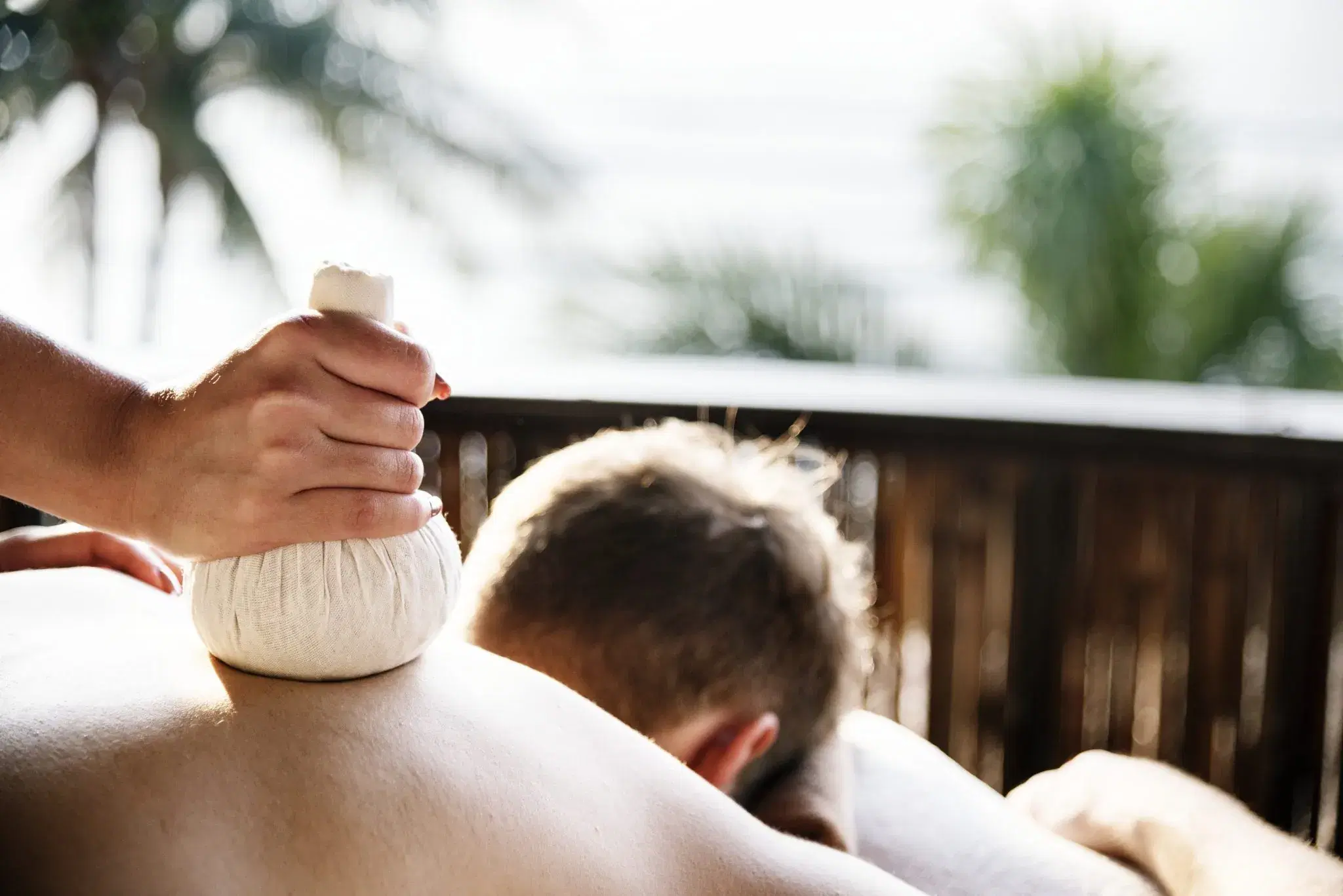
Herbal compress treatments, known locally as luk pra kob, use heated bundles of herbs pressed against the body. The heat can increase sweating and swelling, and some therapists also apply the compress near the neck and shoulders.
Aromatherapy oils and herbal products may also contain ingredients that irritate sensitive skin. Wait until your scalp has fully healed, and tell the therapist to keep oils and compresses away from your head and neck.
When Can You Have a Thai Head Massage?
A Thai head massage, or any treatment that involves the scalp, usually needs to wait the longest, often until your surgeon confirms that the grafts are fully secure and the skin has healed. Direct pressure and rubbing on the scalp can dislodge grafts or irritate the recipient and donor areas in the early weeks.
When you do return to head massage, start with very light pressure, avoid oils on the scalp until your surgeon approves them and ask the therapist to avoid pulling the hair.
Many people find that gentle scalp massage feels pleasant once healing is complete, but it should never be rushed. Waiting a little longer protects the result you traveled for.
Does FUT Require More Caution Than FUE?
FUT usually requires more caution than FUE, because it leaves a stitched wound at the back of the head that needs time to heal without tension. Thai massage often includes neck stretches, shoulder pulls and positions that place weight on the back of the head, all of which can strain this wound.
FUE leaves many tiny wounds across the donor area, which generally heal faster, although the area can still feel tender in the first weeks. The recipient area needs the same protection in both techniques.
If you had FUT, ask your surgeon specifically when you can resume massages that involve neck and shoulder work, and avoid lying on your back with pressure on the donor scar until it has healed.