
Hitting your head after a hair transplant does not automatically mean the grafts are damaged, but the risk depends heavily on how soon the impact occurs and how hard the transplanted area is struck. A mild bump several days into recovery is very different from scraping or hitting the recipient area on the first night after surgery. Fresh bleeding, visible tissue displacement, wound opening or a direct blow to newly implanted grafts creates more concern than a brief touch without scalp changes. The safest response is to avoid repeated inspection, photograph the area and contact the transplant team when the impact happens early or produces obvious symptoms.
Can Hitting Your Head Damage Hair Transplant Grafts?
Hitting your head can damage transplanted grafts if the impact is strong enough and occurs before the follicles become securely anchored. The greatest concern is direct trauma to the recipient area during the first few postoperative days.
A light touch or accidental brush does not usually cause the same level of risk as a hard knock, scrape or fingernail injury. The scalp also becomes progressively more stable as healing advances.
The exact outcome depends on timing, force and location. A bump to the forehead that does not contact the transplanted zone may cause no graft damage at all, while direct trauma to the hairline on the first night is more concerning.
When Are Hair Transplant Grafts Most Vulnerable?
Hair transplant grafts are most vulnerable during the first several days after implantation because they have not yet become firmly incorporated into the scalp. Mechanical forces such as rubbing, scratching or impact can therefore dislodge them more easily during this period.
Risk gradually falls as the recipient sites heal.
By around seven to ten days, grafts are usually much more secure, although patients should still follow postoperative precautions and avoid unnecessary trauma.
The most useful way to think about recovery is not that grafts suddenly become safe on one exact day. Security develops gradually, so an impact on day one deserves more concern than the same impact during the second week.
What Happens If You Hit Your Head on the First Day?
A direct impact on the first day after a hair transplant carries a higher risk of graft displacement because the grafts are still sitting within very fresh recipient sites. Even moderate friction can matter more at this stage than it would later.
If the transplanted area is scraped against a car roof, door frame or headboard, look for fresh bleeding and visible disruption without repeatedly touching the scalp.
Some redness or tenderness is expected after surgery, so the presence of postoperative redness alone does not prove damage.
A significant impact on the first day should generally be reported to the transplant team, especially if bleeding, tissue loss or obvious disruption occurs.
What If You Hit Your Head 2 to 3 Days After Surgery?
A head bump two or three days after surgery still deserves caution because the grafts remain relatively vulnerable. Healing has started, but they are not yet as secure as they will be later in the first week.
The level of concern depends on whether the contact was a brief bump or a forceful scrape.
If there is no bleeding, no wound opening and no visible change in the recipient area, major graft loss is less likely. Fresh bleeding after direct contact creates more concern.
Patients should avoid pressing or pulling at the area to see whether grafts are loose. That kind of self-checking can cause more irritation than the original bump.
What If You Hit Your Head After 7 Days?
A mild head bump after about seven days is less likely to dislodge grafts than the same event during the first few postoperative days. By this point, the recipient sites are more firmly healed.
That does not mean the scalp is completely normal. Crusting, redness and tenderness may still be present, and forceful trauma can still injure the skin.
A scrape strong enough to break the skin can create bleeding regardless of whether the grafts themselves remain intact.
When there is no fresh bleeding or obvious tissue damage, patients generally have less reason to suspect significant graft loss at this stage.
What If You Hit Your Head After 10 to 14 Days?
By roughly 10 to 14 days, transplanted grafts are usually much more securely incorporated into the scalp, making accidental mechanical displacement far less likely. At this point, ordinary washing and gentle contact should not pull healthy grafts out.
A strong head injury can still damage skin, cause swelling or create a wound, but that is different from simply knocking loose newly implanted grafts.
Patients may also see hairs or crusts come away around this time. That usually reflects normal healing rather than follicles being physically removed.
The later the impact occurs, the less likely it is that a simple bump will affect the long-term transplant result.
What Signs Suggest a Graft May Have Been Dislodged?
A graft may have been displaced when early trauma is followed by fresh bleeding and visible tissue coming from the recipient area.
More concerning signs include:
Fresh bleeding immediately after impact
A visible piece of tissue leaving a newly transplanted site
A deep scrape across the recipient area
Several disturbed graft sites in one region
Wound edges that appear opened
Repeated bleeding after the same spot is touched
A noticeable gap where tissue was clearly removed
Severe pain after significant trauma
Impact during the first two or three postoperative days
A hard object striking directly across the hairline
These signs still do not allow patients to diagnose graft loss with certainty at home. Clinical review or clear photographs are more useful.
Does Bleeding Mean the Grafts Are Damaged?
Bleeding after a head impact increases concern but does not automatically mean transplanted grafts were lost. Healing scalp tissue can bleed from relatively superficial trauma.
Timing and the amount of force matter.
A small spot of blood after disturbing a crust late in recovery is different from fresh bleeding immediately after striking the recipient area on the first postoperative day.
If bleeding is mild, the patient should follow the postoperative instructions given by the surgical team. Repeated rubbing, cleaning or pressing should be avoided unless specifically recommended.
Persistent or significant bleeding warrants medical advice, especially when the injury happened soon after surgery.
Can a Mild Bump Ruin a Hair Transplant?
A mild bump is unlikely to ruin an entire hair transplant, particularly when it occurs after the first several days and does not cause bleeding or visible injury. Thousands of grafts are usually distributed across the recipient area, so one minor event rarely destroys the whole result.
Patients often become anxious after touching a doorway, car ceiling or pillow.
The practical questions are whether the transplanted area was directly struck, whether there was enough force to scrape the skin and whether fresh bleeding followed.
A brief touch without visible change is usually much less concerning than a forceful direct impact.
Final transplant success should not be judged from one small postoperative accident.
Can Swelling Increase After Hitting Your Head?
Swelling can increase after head trauma because even a minor impact may irritate recently operated tissue. The scalp and forehead are already in an inflammatory healing phase during the first few days after transplantation.
Mild swelling alone does not prove graft damage.
More concerning changes include rapidly increasing swelling, severe pain, expanding bruising, wound opening or neurological symptoms such as dizziness, confusion or persistent headache after a significant impact.
Those symptoms shift the concern from the transplant itself toward head injury more broadly.
If the trauma is substantial, medical assessment should not be delayed simply because the patient is focused on protecting grafts.
What If You Scratch or Scrape the Recipient Area?
Scratching or scraping can be more damaging than a simple blunt bump because it creates direct friction across newly implanted grafts. Fingernails can catch on grafts and crusts, especially during the first week.
Itching is common during healing, but aggressive scratching should be avoided.
If a scrape occurs, patients should look for fresh bleeding and visible wound disruption rather than trying to inspect each graft individually.
A dry crust attached to a hair is not automatically a lost follicular unit.
If several sites appear disturbed or the scrape occurred very early after surgery, the transplant team should be contacted for advice.
What If You Hit the Donor Area?
Hitting the donor area usually does not threaten transplanted grafts because those follicles have already been removed. The concern is instead wound healing, bleeding, bruising or irritation at the extraction sites.
After FUE, the donor area contains many small extraction wounds that gradually close over the first several days. A scrape can reopen some of them.
After FUT, trauma to the donor area may place tension on the linear incision or sutures.
Significant bleeding, wound separation or severe pain should be assessed.
A mild bump to the donor area is generally less likely to affect the transplant result itself than direct trauma to the fresh recipient area.
Can a Hat Cause Damage After a Head Bump?
A hat can cause additional friction if it is tight or if the fabric presses directly against a freshly injured recipient area. This is especially relevant during the first few postoperative days.
Headwear should only be used according to the clinic's instructions.
If the patient has just bumped or scraped the scalp, placing a tight hat over the area to hide swelling or redness is not ideal.
Loose, approved headwear may be acceptable later in recovery, but it should not catch on crusts or newly implanted grafts.
Safety helmets and other necessary protective equipment may require individualized timing because proper fit cannot always be altered around a recent transplant.
What Should You Do Immediately After Hitting Your Head?
The best immediate response is to stop touching the area, assess whether there is bleeding and document what happened without repeatedly manipulating the scalp.
Useful steps include:
Do not rub the transplanted area
Avoid scratching or removing crusts
Check whether there is fresh bleeding
Take clear photographs under good lighting
Note how many days have passed since surgery
Remember exactly where the impact occurred
Record whether the blow was mild or forceful
Follow the clinic's instructions for minor bleeding
Contact the transplant team after significant early trauma
Avoid applying unapproved creams or antiseptics
Do not try to push suspicious tissue back into the scalp
Seek medical care for severe head-injury symptoms
Keeping the area undisturbed is usually more helpful than repeatedly checking for missing grafts.
Should You Apply Ice After Hitting the Transplanted Area?
Ice should not usually be placed directly onto freshly transplanted grafts because pressure, moisture and very low temperature can irritate the recipient area. Postoperative swelling management should follow the clinic's instructions.
Some protocols allow cold packs on the forehead or nearby non-transplanted regions, but not directly on grafts.
After a head impact, patients may instinctively press an ice pack onto the injured area. That can add pressure to tissue that should remain undisturbed.
If swelling develops, the transplant team can advise where cooling is appropriate.
A significant head injury should also be medically assessed rather than managed solely with ice because neurological symptoms require separate evaluation.
Can Lost Grafts Be Reimplanted?
A suspected lost graft should not be reinserted at home. Successful graft placement requires sterile technique, correct orientation, appropriate recipient-site depth and careful tissue handling.
Once a graft has been outside the scalp and exposed to drying or contamination, its viability can fall quickly.
If obvious graft loss occurs immediately after surgery and the patient is still near the clinic, the surgical team can decide whether reimplantation is realistic.
Most patients, however, cannot reliably identify an intact graft simply by examining a loose hair or crust.
Trying to push tissue back into the scalp can cause infection, trauma or injury to neighbouring grafts.
Will One Damaged Graft Affect the Final Result?
One damaged or lost graft is unlikely to create a noticeable cosmetic difference after a procedure involving hundreds or thousands of follicular units. Final density comes from the combined contribution of many transplanted grafts.
The impact becomes more relevant when a larger cluster is lost from the same small area.
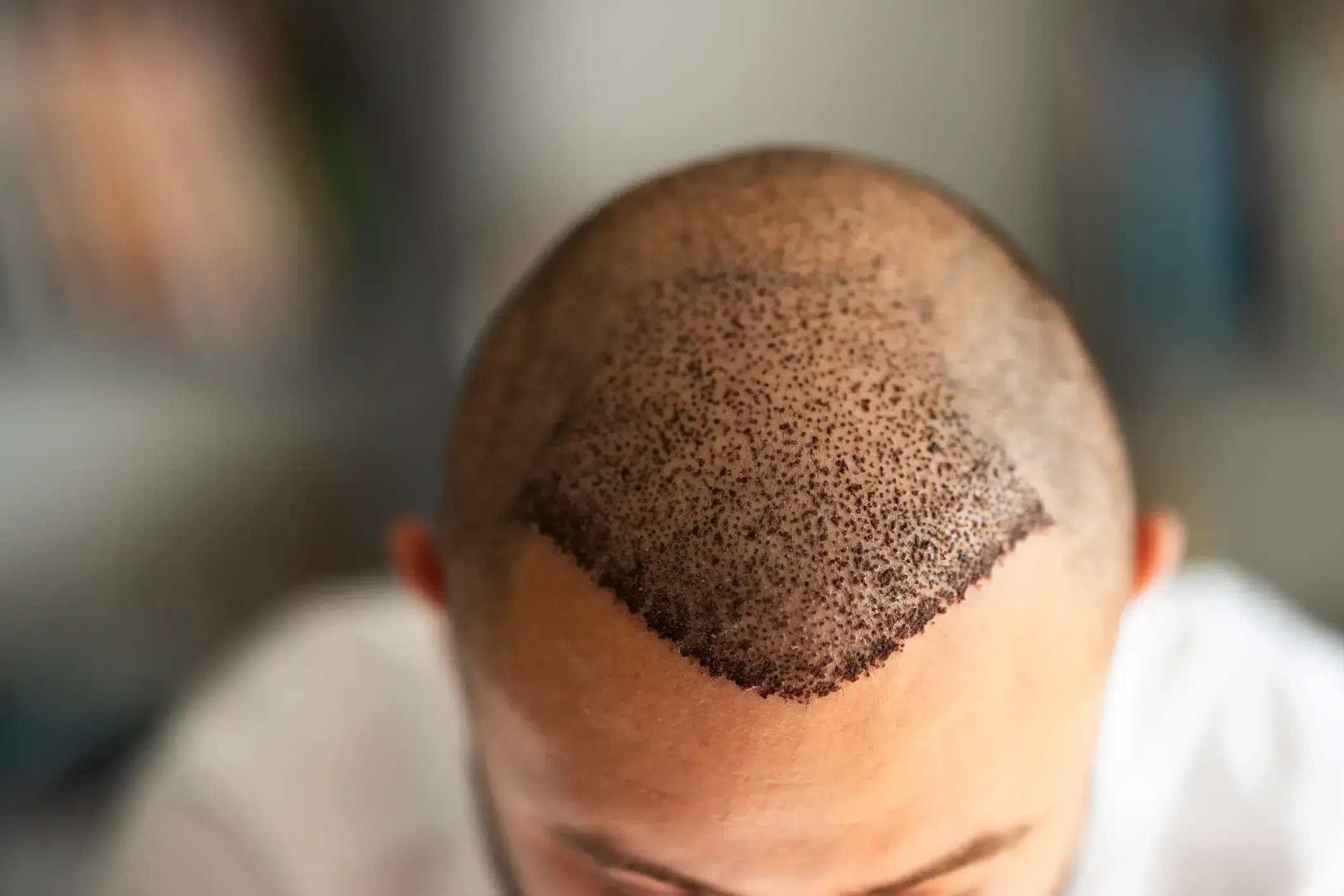
Even then, early photographs can exaggerate the apparent problem because redness, crusting and swelling make the scalp difficult to judge.
Hair calibre, hairs per graft and future growth all influence the final appearance.
Patients should therefore avoid assuming that one small postoperative accident has ruined the procedure before healing and regrowth have occurred.
Can Head Trauma Cause Shock Loss?
A significant impact could potentially contribute to local shedding by creating inflammation or trauma, but ordinary minor bumps are not a common cause of widespread shock loss after transplantation.
Postoperative shedding is already expected.
Transplanted hair shafts often fall out during the first several weeks while the follicles remain beneath the scalp. Native hairs can also temporarily shed after surgery, particularly when they were already weak or miniaturized.
This process can occur even when no head trauma happened at all.
A patient who experiences shedding weeks after a minor bump should therefore not automatically assume the impact caused permanent follicle damage.
How Can You Avoid Hitting Your Head During Recovery?
Most accidental bumps happen during ordinary daily movements rather than strenuous activity, so awareness during the first week can reduce unnecessary risk.
Helpful precautions include:
Enter cars slowly and watch the roofline
Be careful around low door frames and cabinets
Avoid bending suddenly beneath shelves
Sleep in the recommended position
Keep pets away from the head during early recovery
Avoid crowded situations where the scalp may be bumped
Take care when putting on shirts or jackets
Do not pull tight clothing over the head
Follow instructions regarding hats
Avoid contact sports during early healing
Move carefully when getting in and out of bed
Do not scratch itching grafts with fingernails
Keep children from accidentally grabbing the scalp
The aim is simple mechanical protection while the recipient sites become secure.
When Should You Contact Your Hair Transplant Clinic?
You should contact your hair transplant clinic when the head impact occurs during the early postoperative period and causes fresh bleeding, obvious wound disruption or concern that several grafts were displaced.
Medical advice is also appropriate if pain, redness or swelling becomes progressively worse instead of settling.
Urgent medical evaluation is more important when the impact causes symptoms beyond the scalp, such as loss of consciousness, confusion, vomiting, severe persistent headache, vision changes, unusual drowsiness or neurological weakness.
For a mild bump without bleeding or visible injury, significant graft damage is less likely, particularly later in the first week or during the second week.
The most useful response is usually to leave the area alone, photograph it and allow the transplant team to assess the event in context. The timing of the impact, the amount of force and the presence or absence of fresh bleeding provide far more information than seeing a loose hair or crust.