
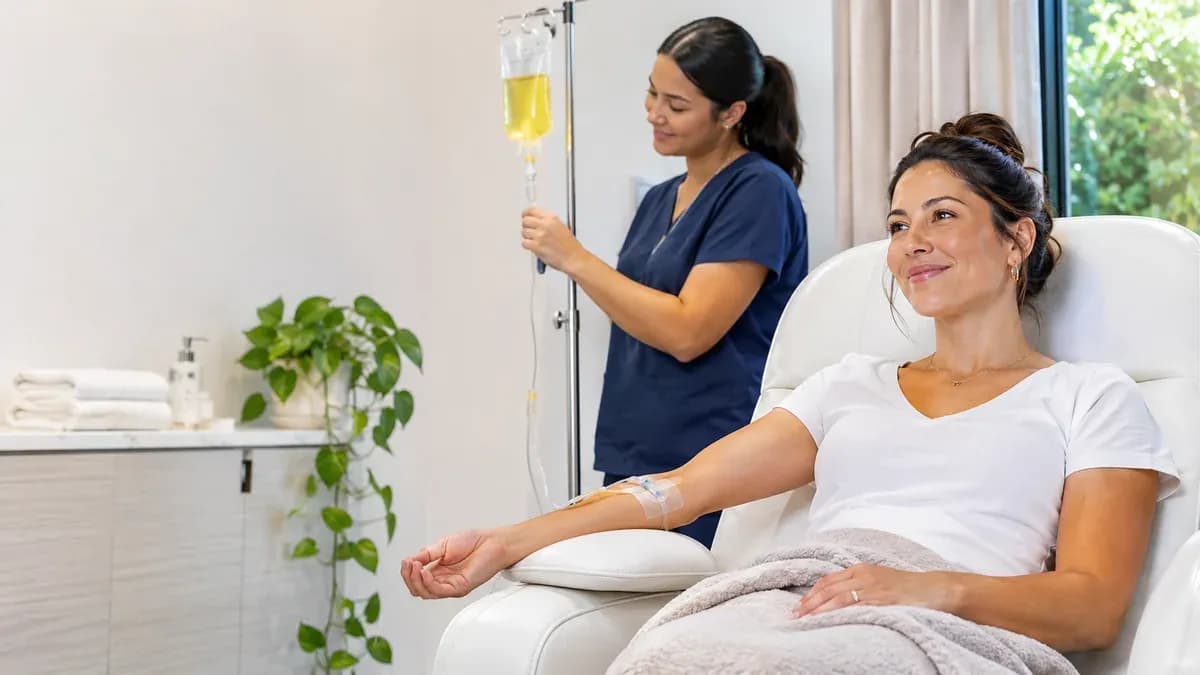
IV drip and vitamin therapy delivers fluids, vitamins and minerals directly into a vein through a thin tube. The body absorbs them quickly because they bypass digestion. Esthetic Hair Thailand offers IV therapy in Phuket after a doctor consultation, with a nurse supervising every session.
What Is IV Drip Therapy?
An intravenous drip uses a small catheter in the arm to deliver a sterile solution over a set time. The solution contains water and salts, and it can include vitamins, minerals and other ingredients that the doctor selects.
Doctors have used IV fluids for decades to treat dehydration. Vitamin drips extend the same method to nutrient support.
Who Might Benefit?
- People with dehydration from heat, illness or travel.
- Travelers recovering from long flights and jet lag.
- People with vomiting or diarrhea who cannot keep fluids down.
- Athletes and active visitors after heavy exercise in hot weather.
- People with low vitamin levels confirmed by a test.
- People with poor appetite or digestion problems.
- Guests who feel unwell after a night of heavy drinking and need fluids.
What Can a Drip Contain?
The doctor chooses ingredients that match your needs and health. Common components include the following.
- Saline or balanced fluids: Restore body water and salts.
- Vitamin C: Supports general well-being and immune function.
- B-complex vitamins: Support energy metabolism.
- Magnesium: Supports muscles and nerves.
- Electrolytes: Replace salts lost through sweat or illness.
- Anti-nausea or pain relief medicine: Added when symptoms call for it.
Are IV Drips Right for Everyone?
IV therapy is helpful in clear situations, such as dehydration. For many healthy people, a balanced diet and drinking water give enough nutrients. The doctor tells you honestly whether a drip suits your situation and does not promise cures.
Some conditions need caution, including heart or kidney disease, certain allergies and pregnancy. The doctor reviews your history first.
How Does a Session Work?
- Consultation: The doctor asks about symptoms, medicine and allergies and examines you.
- Selection: The doctor chooses the drip that fits your needs.
- Cannula placement: The nurse places a thin tube in a vein in your arm.
- Infusion: The solution runs slowly while you rest in a comfortable chair or bed.
- Monitoring: The nurse checks you throughout the session.
- Finish: The nurse removes the tube and covers the site.
Most sessions last about thirty to sixty minutes, depending on the drip.