
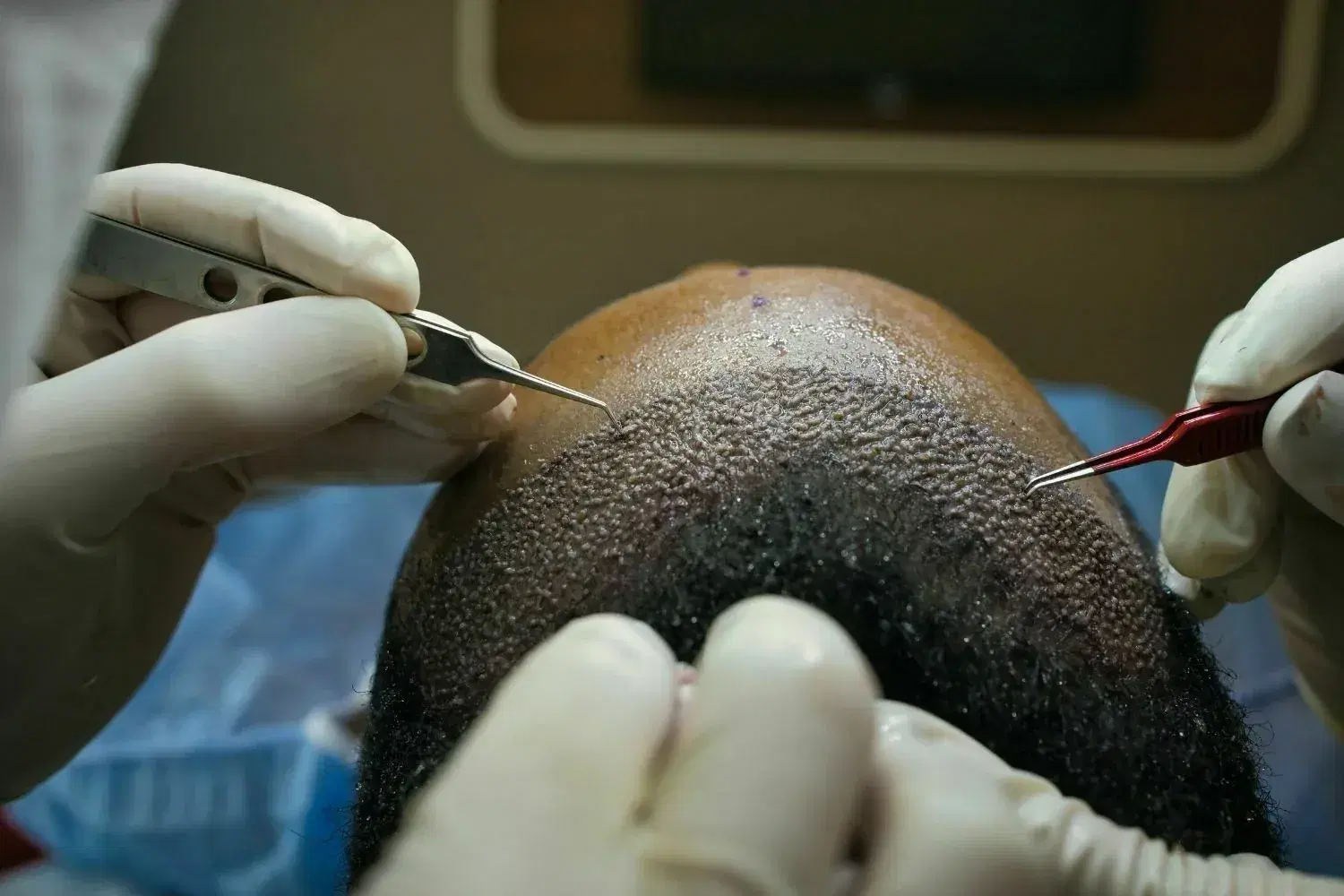
Health insurance in the United States generally does not cover hair transplants performed to treat hereditary baldness or improve appearance because insurers classify these procedures as cosmetic. However, coverage may be possible in certain reconstructive cases involving permanent hair loss caused by an injury, burn or medical condition, provided the procedure meets the requirements of the insurance policy.
Why Are Hair Transplants Usually Not Covered by Health Insurance?
Hair transplantation is a surgical procedure that moves healthy follicles from a donor area into parts of the scalp affected by hair loss. It can restore coverage, reshape the hairline and improve the appearance of areas where natural hair growth has declined. Despite these benefits, most health insurance policies do not consider routine hair restoration a medically necessary treatment.
The distinction comes from how American health insurance separates cosmetic procedures from treatments intended to address illness, injury or impaired physical function. Hair transplants performed for male pattern baldness, female pattern hair loss or age-related thinning generally fall into the cosmetic category because their primary purpose is to change appearance.
This classification does not mean hair loss has no emotional or psychological impact. Hair thinning can significantly affect confidence and quality of life, but emotional distress alone usually does not establish medical necessity under an insurance policy.
For most people considering transplantation for hereditary hair loss, paying for the procedure privately remains the expected financial arrangement.
Cosmetic vs Reconstructive Hair Transplant Surgery
Understanding the difference between cosmetic and reconstructive surgery is essential when investigating hair transplant insurance coverage. Although the surgical technique may look similar in both situations, the medical reason for performing the procedure can change how an insurer evaluates it.
Cosmetic Hair Transplantation
Cosmetic transplantation usually involves restoring a receding hairline, increasing crown density or addressing general thinning associated with androgenetic alopecia. The goal is to improve hair coverage in an area affected by a common pattern of hair loss.
Even when the thinning is advanced, most insurers continue to classify the procedure as elective. The extent of baldness or number of grafts required does not automatically change its insurance status.
Reconstructive Hair Transplantation
Reconstructive transplantation aims to restore hair in an area permanently damaged by trauma, surgery, burns or certain diseases. In these circumstances, the procedure may form part of treatment for an acquired deformity rather than an elective appearance change.
Some US insurance policies recognize hair transplantation as medically necessary when permanent hair loss is clearly caused by disease or injury. However, that possibility should not be interpreted as guaranteed coverage, since exclusions, documentation requirements and specific benefit rules still apply.
When Might Insurance Cover Hair Transplant Surgery?
Insurance coverage becomes more plausible when hair loss results from an identifiable injury or medical event that has permanently damaged the follicles. The strongest cases generally involve documented tissue damage rather than gradual hereditary thinning.
Hair Loss After Burns or Accidents
Severe burns and traumatic injuries can destroy follicles and leave permanent hairless scars on the scalp, eyebrows or other hair-bearing areas. Once the tissue has healed, transplantation may help restore a more normal appearance in selected cases.
Certain reconstructive surgery policies recognize follicular transplantation following burns or traumatic injuries, particularly when treatment addresses a significant defect. However, the insurer must still determine whether the proposed procedure qualifies under the specific policy.
Photographs, injury records and an explanation of the reconstructive objective can help establish why the procedure is being requested.
Scarring Following Medical Surgery
Hair loss can also occur after operations that require incisions through hair-bearing skin. A scalp procedure to remove a tumor, for example, may leave a permanent scar where follicles no longer grow.
Transplantation into a healed surgical scar may be considered reconstructive when the underlying condition and resulting defect meet the policy's criteria. The availability of coverage depends on more than the presence of a scar, since a small cosmetic concern may not satisfy medical necessity requirements.
Does Insurance Cover Hair Transplants for Alopecia?
The term alopecia describes hair loss rather than one specific disease, so insurance decisions depend on the underlying condition and proposed treatment. Androgenetic alopecia, alopecia areata and scarring alopecia involve different biological processes and are not treated identically.
Hereditary hair loss is generally excluded from surgical coverage because transplantation is considered cosmetic. Alopecia areata, an autoimmune condition that causes patchy hair loss, usually requires medical treatment rather than transplantation while the disease remains active.
Scarring alopecia presents a different situation because inflammation can permanently destroy follicles. Even so, a medical diagnosis does not automatically establish that reconstructive transplantation is covered or appropriate. Active disease may also damage newly implanted follicles, making disease control essential before surgery is considered.
Hair loss following chemotherapy introduces another distinction. Although cancer treatment and associated medical care may be covered, transplantation for persistent hair loss does not automatically receive the same coverage. Many patients experience regrowth after treatment, while cases involving permanent loss require separate evaluation.
Do Private Health Insurance Plans Cover Hair Transplants?
Most employer-sponsored and individually purchased health plans exclude cosmetic hair transplantation. However, private insurers do not all use identical definitions of reconstructive surgery, and some policies allow consideration of permanent hair loss directly caused by injury or disease.
The most reliable information appears in the specific plan's coverage documents. A general description of benefits may mention reconstructive surgery without establishing that follicular transplantation is included.
It is important to distinguish an insurer's broad medical policy from the benefits contained in an individual contract. A procedure described as potentially medically necessary may still be excluded by the patient's particular plan.
Before arranging surgery, patients should request confirmation of the applicable coverage provisions and whether prior authorization is required. A written determination provides more useful financial information than a general verbal statement that reconstructive procedures may be covered.
Does Medicare Pay for Hair Transplants?
Original Medicare generally excludes cosmetic surgery, including hair transplantation performed solely to improve appearance. People seeking treatment for age-related thinning or male pattern baldness should therefore expect these procedures to be self-funded.
Medicare recognizes limited exceptions for certain reconstructive operations, particularly those associated with accidental injuries or correcting functional problems. Some regional coverage policies also identify specific hair transplantation procedures that may be considered reconstructive following burns, trauma or tumor removal.
These exceptions do not create a universal benefit for all scar-related hair loss. The relevant medical indication, applicable coverage rules and proposed surgical service must be evaluated together.
Medicare Advantage plans may offer benefits beyond Original Medicare, but patients should not assume this includes cosmetic hair restoration. The plan's actual coverage documents determine whether any additional benefit applies.
Does Medicaid Cover Hair Restoration Surgery?
Medicaid coverage varies across states because each program operates within federal requirements while maintaining state-specific benefit rules. As a general principle, surgery performed solely for cosmetic improvement is not covered.
Some state programs allow medically necessary reconstructive procedures, which may include treatment following serious injuries or disease-related deformities. However, this does not mean every state Medicaid program covers follicular hair transplantation for these circumstances.
Prior authorization may be required, and certain procedures can remain excluded even when a medical professional recommends them. Patients should therefore review their state's applicable rules before treating Medicaid eligibility as evidence that the surgery will be paid for.
Coverage for medical evaluation or treatment of a scalp disease should also be considered separately from coverage for surgical hair restoration.
What Is Required to Get a Hair Transplant Covered by Insurance?
When a reconstructive indication may qualify for coverage, the next step involves establishing exactly what the insurer needs to make a determination. Medical necessity must be supported by records that connect the permanent hair loss to a recognized injury, disease or surgical event.
Relevant documentation may include the original diagnosis, previous treatment records, photographs of the affected area and an assessment explaining why the follicles cannot recover naturally. The proposed surgical plan should identify the treatment area and describe the reconstructive purpose.
The insurer may also request information about alternative treatments and whether they have been considered. This helps distinguish a procedure intended to repair lasting damage from one primarily intended to enhance appearance.
Submitting documentation before surgery is particularly important because retrospective requests for payment may be harder to resolve after an elective procedure has already taken place.
How to Check Hair Transplant Insurance Coverage Before Surgery
The first step is to review the policy's sections addressing cosmetic surgery, reconstructive procedures, exclusions and prior authorization. These provisions often provide a clearer answer than the plan's general summary of medical benefits.
When contacting the insurance company, patients should describe the actual medical reason for transplantation rather than simply asking whether hair restoration is covered. A request involving permanent hair loss after a burn injury may be evaluated differently from one involving genetic baldness.
It is also important to confirm whether the proposed surgeon and treatment facility participate in the insurance network. Even if the procedure qualifies for coverage, network restrictions, deductibles and coinsurance can affect the amount the patient must pay.
A preauthorization decision can clarify coverage before treatment, although authorization should not automatically be interpreted as a guarantee of payment. Final reimbursement remains subject to applicable benefits and claim requirements.
What Happens if an Insurance Claim Is Denied?
A denied hair transplant claim does not always mean the review process has ended. Many US health plans provide an internal appeal procedure through which patients can request reconsideration and submit additional medical information.
The written denial should explain whether the insurer considers the procedure cosmetic, medically unnecessary or excluded from the policy. These reasons matter because evidence supporting reconstructive necessity may help address one type of denial but cannot necessarily override an explicit contractual exclusion.
For many qualifying private health plans, an internal appeal must be filed within 180 days of receiving the denial notice. Eligible disputes involving medical judgment may also proceed to an independent external review after the applicable internal process.
An appeal should focus on the actual policy criteria and documented medical circumstances rather than relying only on the personal impact of hair loss.
How Much Does a Hair Transplant Cost Without Insurance in the US?
When health insurance does not cover transplantation, patients generally pay the full procedure cost themselves. Hair transplant prices in the United States commonly reach several thousand dollars, with a broad illustrative range of approximately $4,000 to $15,000 or more for many procedures.
The total expense reflects the amount of hair restoration required, the surgical technique, operating costs and the services included in the treatment plan. A limited hairline procedure generally involves different resources from an extensive transplant covering the frontal scalp and crown.
Some providers charge according to the number of grafts, while others offer packaged treatment prices. The initial estimate should clarify whether evaluation, medications, follow-up appointments and postoperative products are included.
Patients comparing self-funded options can review hair transplant pricing and treatment packages to better understand the components that contribute to the total expense.
Does Insurance Cover FUE, FUT or DHI Differently?
FUE, FUT and DHI describe different approaches used during hair transplantation, but the technique alone rarely determines insurance eligibility. Insurers generally focus first on whether the procedure qualifies as a covered medical service.
FUE involves extracting individual follicular units, while FUT removes a strip of donor tissue that is divided into grafts. DHI commonly refers to implantation using a specialized instrument. These technical distinctions affect surgical planning but do not automatically transform cosmetic hair restoration into reconstructive care.
An insurer reviewing a potentially covered case may consider the specific procedure codes, treatment details and medical justification. However, choosing a different extraction or implantation method does not bypass an exclusion for cosmetic hair transplantation.
For a clearer explanation of the procedures themselves, the article on choosing a hair transplant method examines the considerations involved in comparing surgical approaches.
Can You Use an HSA or FSA to Pay for a Hair Transplant?
Health Savings Accounts and Flexible Spending Accounts can provide tax advantages for eligible medical expenses, but ordinary cosmetic hair transplantation generally does not qualify. Having money available in one of these accounts does not make every healthcare-related purchase eligible.
Federal tax rules specifically identify cosmetic hair transplantation as an expense that is usually excluded from qualified medical costs. An exception may apply when surgery is necessary to correct a deformity directly related to a congenital abnormality, accidental injury or disfiguring disease.
This distinction is separate from insurance coverage. A procedure might meet the tax rules for qualified medical expenses without automatically being covered by an insurance plan, or an insurer may require additional documentation before making a payment decision.
Patients considering HSA or FSA funds should verify eligibility with their account administrator and obtain appropriate tax guidance before using those funds.
Are Other Hair Loss Treatments Covered by Insurance?
Although hair transplantation is usually excluded, some medical evaluations and treatments related to hair loss may qualify for coverage. For example, an appointment to investigate unexplained shedding, scalp inflammation or a suspected autoimmune condition may fall under ordinary medical benefits.
Blood tests, biopsies and prescription treatments can also be covered when they are medically indicated and included in the plan. However, coverage for diagnosing a hair disorder does not establish coverage for transplanting follicles into the affected region.
Medications used for hereditary hair loss may be excluded or subject to different prescription benefit rules. Cosmetic scalp treatments and non-surgical restoration procedures may also require private payment.
Separating medical treatment from cosmetic hair restoration helps patients understand which portions of their overall care might be reimbursed and which expenses they should plan to pay themselves.
Does US Health Insurance Cover Hair Transplants Abroad?
Patients sometimes explore hair transplantation outside the United States because treatment prices can be lower in certain destinations. However, international travel does not change the cosmetic classification of a procedure that is already excluded from a domestic insurance policy.
Most standard US health plans provide limited or no coverage for planned elective treatment abroad, particularly when the procedure is cosmetic. Even in a potentially reconstructive case, overseas treatment would need to meet the policy's specific international coverage requirements.
Anyone considering surgery outside the country should account for travel, accommodation, postoperative care and the possibility of needing follow-up treatment after returning home.
A lower initial procedure price should be evaluated alongside the total cost of care, rather than being treated as the only factor in the decision.