
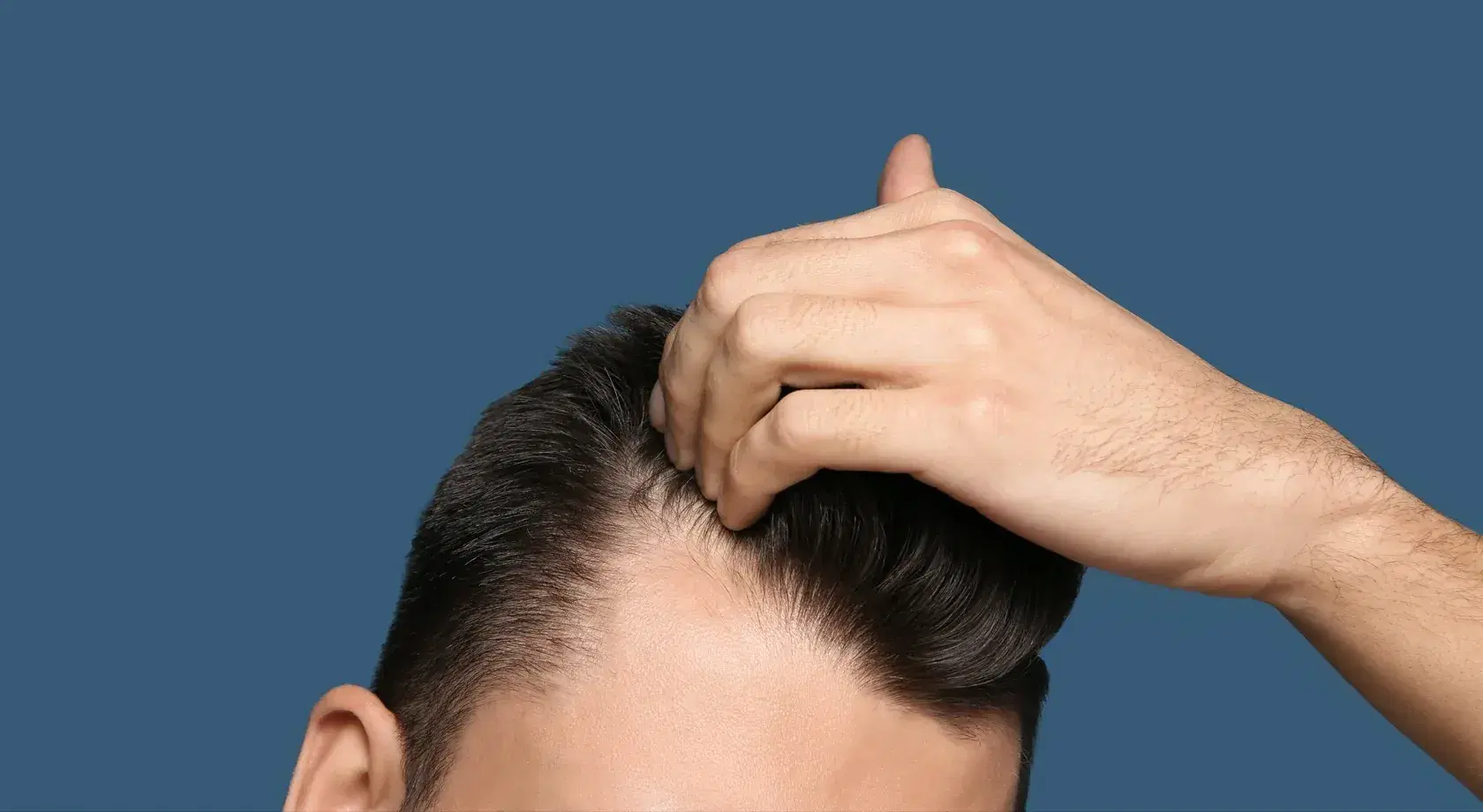
Does Testosterone Directly Cause Hair Loss?
Testosterone does not usually cause hair loss directly, but its conversion into DHT can contribute to androgenetic alopecia in genetically sensitive hair follicles. DHT binds to androgen receptors in susceptible follicles and gradually shortens their growth phase. Over time, affected follicles produce thinner, shorter, and less visible hairs.
This process is known as follicular miniaturization. Not every person with high testosterone experiences hair loss because genetic sensitivity matters greatly. Some people with normal hormone levels still develop significant pattern hair loss. The relationship therefore depends more on follicle sensitivity to androgens than on testosterone levels alone.
How Does Testosterone Affect Hair Follicles?
Testosterone can affect hair follicles after being converted into DHT, which interacts with androgen receptors in genetically sensitive areas of the scalp.
This effect is strongest in follicles that are naturally vulnerable to androgen activity. The frontal hairline, temples, and crown are common examples. DHT can shorten the active growth phase and cause each new hair cycle to produce a finer strand. The follicle gradually becomes smaller, although it may remain present for years. Testosterone itself also influences body and facial hair differently. The same hormones can support beard growth while contributing to scalp hair miniaturization in susceptible individuals.
What Is DHT and Why Does It Matter for Hair Loss?
DHT is a potent androgen produced from testosterone and is one of the main hormonal factors associated with pattern hair loss.
An enzyme called 5-alpha reductase converts a portion of testosterone into DHT. DHT then binds strongly to androgen receptors in susceptible scalp follicles. In genetically predisposed individuals, this process gradually reduces follicle size. The growth phase becomes shorter, while the resting phase becomes relatively longer. New hairs therefore become finer over repeated cycles. DHT does not affect every follicle equally, which explains why pattern hair loss commonly targets the temples, frontal scalp, and crown.
Does High Testosterone Mean You Will Lose Hair?
High testosterone does not automatically mean you will lose hair because genetic sensitivity to androgens is more important than the hormone level alone.
Some people have relatively high testosterone and maintain dense scalp hair throughout life. Others develop androgenetic alopecia despite having hormone levels within the normal range. The difference lies partly in how strongly scalp follicles respond to DHT. Receptor sensitivity, local enzyme activity, and family history all influence this response. Hormone levels can still matter, especially when they change significantly. However, high testosterone should not be treated as a direct predictor of future baldness.
Can Normal Testosterone Levels Still Cause Hair Loss?
Normal testosterone levels can still be associated with hair loss when scalp follicles are genetically sensitive to DHT.
Androgenetic alopecia often occurs without any abnormal hormone test result. In these cases, the problem is not excessive testosterone production. Instead, affected follicles react strongly to normal androgen exposure over many years. Local conversion of testosterone into DHT also plays a role. This explains why someone can develop a receding hairline or crown thinning despite normal blood tests. Hair loss therefore cannot be ruled out simply because testosterone falls within a standard reference range.
Is Hair Loss More Related to Testosterone or DHT?
Pattern hair loss is more closely linked to DHT than to testosterone itself because DHT has a stronger effect on susceptible scalp follicles.
Testosterone acts as the precursor hormone from which DHT is produced. Once converted, DHT binds more strongly to androgen receptors and has a greater influence on follicular miniaturization. This process is central to male pattern hair loss and can also contribute to female pattern hair loss. However, DHT levels alone do not determine the outcome. Genetic sensitivity still decides how strongly each follicle responds. The most accurate explanation therefore combines androgen exposure with inherited follicle susceptibility.
How Does Genetics Affect Testosterone-Related Hair Loss?
Genetics strongly influences testosterone-related hair loss because inherited follicle sensitivity determines how scalp hair responds to DHT.
People with a family history of pattern hair loss may have follicles that miniaturize more readily under normal androgen exposure. This inherited sensitivity can come from either side of the family. The timing and severity of hair loss may still differ between relatives. Genetics also influences which scalp areas become affected first. Some people begin with temple recession, while others notice crown thinning. Testosterone and DHT therefore act within a biological system that is heavily shaped by inherited characteristics.
What Are the Signs of Androgenetic Alopecia?
Androgenetic alopecia usually causes gradual thinning in a recognizable pattern rather than sudden loss of large amounts of hair.
Common signs include:
Recession at the temples
A gradually rising frontal hairline
Thinning around the crown
Finer hairs in affected areas
Reduced density across the top of the scalp
Progressive widening of the central part in women
Uneven contrast between the top and sides
Slow progression over months or years
These changes develop because susceptible follicles become smaller over repeated growth cycles. Early recognition can make long-term hair loss easier to evaluate.
Can Testosterone Cause a Receding Hairline?
Testosterone can contribute to a receding hairline indirectly when it is converted into DHT and the frontal follicles are genetically sensitive.
The temples and frontal hairline are among the most androgen-sensitive areas of the scalp. DHT gradually shortens the growth phase in susceptible follicles. New hairs become finer and shorter until the hairline appears to move backward. This pattern often develops slowly and may begin with slight temple recession. The rate of progression varies considerably between individuals. A receding hairline is therefore usually related to androgen sensitivity rather than simply having a high testosterone level.
Can Testosterone Cause Crown Hair Loss?
Testosterone can contribute to crown hair loss through DHT-related follicular miniaturization in people who are genetically predisposed.
The crown is a common area for androgenetic alopecia because many follicles there are sensitive to DHT. Early thinning may appear as a widening circular area around the natural hair whorl. Over time, scalp visibility can increase as individual hairs become finer. Crown loss may progress independently from the frontal hairline or develop alongside it. The speed of change differs from person to person. Hormone levels alone cannot predict how quickly crown thinning will develop.
Can Testosterone Cause Diffuse Hair Thinning?
Testosterone-related hair loss can sometimes appear diffuse, although classic androgenetic alopecia usually follows a recognizable pattern.
In men, thinning often remains more noticeable across the frontal scalp, mid-scalp, and crown. In women, hormonal hair loss may appear as broader thinning across the central scalp. Other causes can also produce diffuse shedding, including nutritional problems, illness, stress, and thyroid disorders. For this reason, widespread thinning should not automatically be blamed on testosterone. The distribution, speed of onset, and condition of individual hair shafts provide important clues when distinguishing androgen-related loss from other forms of shedding.
Does Testosterone Cause Hair Loss in Women?
Testosterone and other androgens can contribute to hair loss in women when follicles are sensitive or androgen levels become relatively elevated.
Female pattern hair loss commonly appears as progressive thinning across the central scalp rather than complete bald areas. Hormonal changes can influence this pattern, especially when accompanied by other signs of androgen excess. However, many women with female pattern hair loss have hormone levels within normal ranges. As in men, follicle sensitivity plays a major role. Hair loss in women can also have several non-hormonal causes, so testosterone should not be assumed to be responsible without considering the broader pattern.
Can Low Testosterone Cause Hair Loss?
Low testosterone is not a typical direct cause of androgenetic alopecia, although broader hormonal imbalance can sometimes affect hair growth.
Hair follicles depend on a complex interaction between hormones, nutrition, circulation, and the normal growth cycle. Low testosterone may occur alongside other health changes that affect hair quality or shedding. However, classic male pattern hair loss is more strongly linked to DHT sensitivity than testosterone deficiency. A person with low testosterone can still develop androgenetic alopecia if their follicles remain sensitive to available androgens. Hair loss should therefore be assessed by pattern and overall context rather than testosterone level alone.
Can Testosterone Replacement Therapy Cause Hair Loss?
Testosterone replacement therapy can accelerate hair loss in people who are genetically predisposed because additional testosterone may increase androgen exposure and DHT production.
The effect is not universal. Some people notice no meaningful change in scalp hair after beginning TRT. Others experience faster recession or crown thinning if susceptible follicles were already present. Increased testosterone can provide more substrate for conversion into DHT. This may intensify miniaturization in androgen-sensitive scalp areas. The response depends on genetics, baseline hair loss, hormone levels, and individual sensitivity. New shedding after starting TRT should therefore be evaluated in the context of the existing hair pattern.
Does TRT Always Cause Hair Loss?
TRT does not always cause hair loss because many people receiving testosterone therapy do not have strongly androgen-sensitive scalp follicles.
The likelihood of hair loss depends heavily on genetic predisposition. Someone with a strong family history of androgenetic alopecia may be more likely to notice progression. Another person with resistant follicles may maintain stable hair despite increased testosterone exposure. TRT can also reveal a hair loss process that was already developing slowly. This can make the change seem sudden even though follicular miniaturization began earlier. The relationship should therefore be viewed as individual rather than inevitable.
Can Hair Loss Start After Beginning Testosterone Therapy?
Hair loss can become more noticeable after beginning testosterone therapy if increased androgen exposure accelerates an existing tendency toward pattern hair loss.
The change may appear as faster temple recession, increased crown visibility, or reduced density across the top. This does not necessarily mean testosterone created the predisposition. More often, the follicles were already genetically vulnerable. Additional androgen exposure may simply increase the rate of miniaturization. Timing is important when evaluating the connection. Hair shedding that begins soon after a hormonal change should be considered alongside other possible causes, including stress, illness, and nutritional changes.
Can Testosterone-Related Hair Loss Be Reversed?
Testosterone-related pattern hair loss can sometimes be slowed and partially improved, especially when treatment begins before follicles become severely miniaturized.
Hair follicles that still produce visible strands may respond better than follicles that have remained inactive for a long period. Treatments aimed at reducing DHT activity or supporting the growth phase can help preserve existing density. Regrowth is not guaranteed, and results vary according to the stage of hair loss. Advanced areas with significant follicle loss may not respond as strongly. Early identification matters because preserving functioning follicles is generally easier than restoring areas that have been thin for many years.
Does Blocking DHT Reduce Hair Loss?
Reducing DHT activity can slow androgenetic hair loss in many people because DHT is a major driver of follicular miniaturization.
DHT-focused treatments work by reducing hormone conversion or limiting its effect on susceptible follicles. This can help extend the growth phase and preserve existing hair. Some people also notice improved thickness over time. However, treatment response varies and may take months to become visible. DHT reduction also has potential side effects and is not appropriate for everyone. Decisions about hormonal treatment should therefore consider the individuals health, hair loss pattern, and expected benefits rather than focusing only on hormone suppression.
Does High DHT Always Cause Hair Loss?
High DHT does not always cause hair loss because follicles must also be genetically sensitive to its effects.
Some people have substantial androgen activity yet maintain strong scalp hair. Others develop significant pattern loss despite having DHT levels within expected ranges. Local follicle sensitivity and receptor activity help explain this difference. The scalp can also convert testosterone into DHT locally, which means blood levels do not always reflect what happens inside individual follicles. DHT is therefore an important part of androgenetic alopecia, but it is not a standalone predictor. Genetics remains a crucial part of the overall process.
Can Exercise Increase Testosterone and Cause Hair Loss?
Normal exercise does not usually raise testosterone enough to cause hair loss by itself in people without a genetic predisposition.
Resistance training can temporarily change hormone levels, but these short-term increases are not equivalent to sustained hormonal exposure. The more important factor is whether scalp follicles are sensitive to DHT. Someone already predisposed to androgenetic alopecia may continue losing hair while exercising, but exercise is not necessarily the cause. Physical activity also supports general health and circulation. Hair loss that becomes noticeable during a new training routine should be evaluated alongside stress, diet, weight changes, supplements, and genetic pattern.
Can Bodybuilding Cause Testosterone-Related Hair Loss?
Bodybuilding itself does not directly cause pattern hair loss, but certain hormone-altering practices may increase androgen exposure and accelerate loss in susceptible individuals.
Intense resistance training alone is unlikely to create permanent androgenetic alopecia without genetic vulnerability. However, the use of exogenous androgens can significantly alter hormone levels. This may increase DHT activity and speed follicular miniaturization. Rapid dieting, nutritional changes, and physical stress can also trigger temporary shedding. Hair loss in bodybuilders can therefore involve more than one mechanism. The pattern and timing of the thinning help distinguish androgen-related loss from temporary shedding.
Does Stress Make Hormonal Hair Loss Worse?
Stress can make existing hair loss more noticeable by triggering additional shedding on top of an underlying androgenetic pattern.
Androgenetic alopecia and stress-related shedding are different processes, but they can occur at the same time. Significant physical or emotional stress may push more hairs into the resting phase. This can create diffuse shedding several weeks or months later. If pattern hair loss is already present, the additional loss may make the scalp appear suddenly thinner. The underlying androgen sensitivity still remains important. Managing stress may reduce temporary shedding, but it does not remove the genetic tendency toward DHT-related miniaturization.
How Can You Tell If Hair Loss Is Hormonal?
Hormonal hair loss is more likely when thinning follows a recognizable pattern and develops gradually around androgen-sensitive areas of the scalp.
Men often notice temple recession, frontal thinning, or crown loss. Women may develop widening of the central part with preserved frontal hairline structure. Rapid diffuse shedding, patchy bald spots, scalp inflammation, or sudden breakage may suggest another process. Additional hormonal symptoms can also provide clues. However, appearance alone cannot identify every cause. Hair loss can involve several overlapping factors, so the pattern, timeline, medical history, and scalp condition should be considered together.
What Tests May Be Considered for Hormonal Hair Loss?
Hormonal hair loss may be evaluated with blood tests when symptoms suggest an endocrine problem rather than straightforward genetic pattern loss.
Possible testing can include testosterone, thyroid markers, iron status, and other hormones depending on the symptoms. Women with irregular menstrual cycles, acne, or increased facial hair may require broader hormonal evaluation. Not every person with pattern hair loss needs extensive blood testing. Typical androgenetic alopecia often occurs with normal laboratory results. Testing becomes more useful when hair loss is sudden, diffuse, unusual, or accompanied by other physical changes. The goal is to identify whether another condition may be contributing.
When Should You Take Testosterone-Related Hair Loss Seriously?
Testosterone-related hair loss deserves attention when thinning progresses steadily, the hairline recedes, or crown visibility increases over several months.
Early pattern changes are important because follicular miniaturization is gradual. Hairs often become finer before they disappear completely. Monitoring photographs can make subtle progression easier to recognize. Sudden shedding, scalp pain, redness, or patchy loss should be evaluated differently because these signs are not typical of simple androgenetic alopecia. Hair loss that begins after a major hormonal change also deserves closer assessment. Early evaluation can help distinguish progressive pattern loss from temporary or reversible shedding.
What Can You Do If Testosterone Is Contributing to Hair Loss?
If testosterone is contributing to hair loss, the main options involve reducing androgen effects, supporting hair growth, and preserving follicles before miniaturization becomes advanced.
Management may include DHT-focused medication, growth-supporting treatments, or a combination approach. The right strategy depends on the pattern and stage of hair loss. People using testosterone therapy should not change or stop treatment without medical guidance. Hair restoration procedures may become relevant when permanent thinning has already developed. Early action is generally more useful because existing follicles can often be preserved more effectively than completely inactive areas can be restored.