
Can You Get a Fade Haircut After a Hair Transplant?
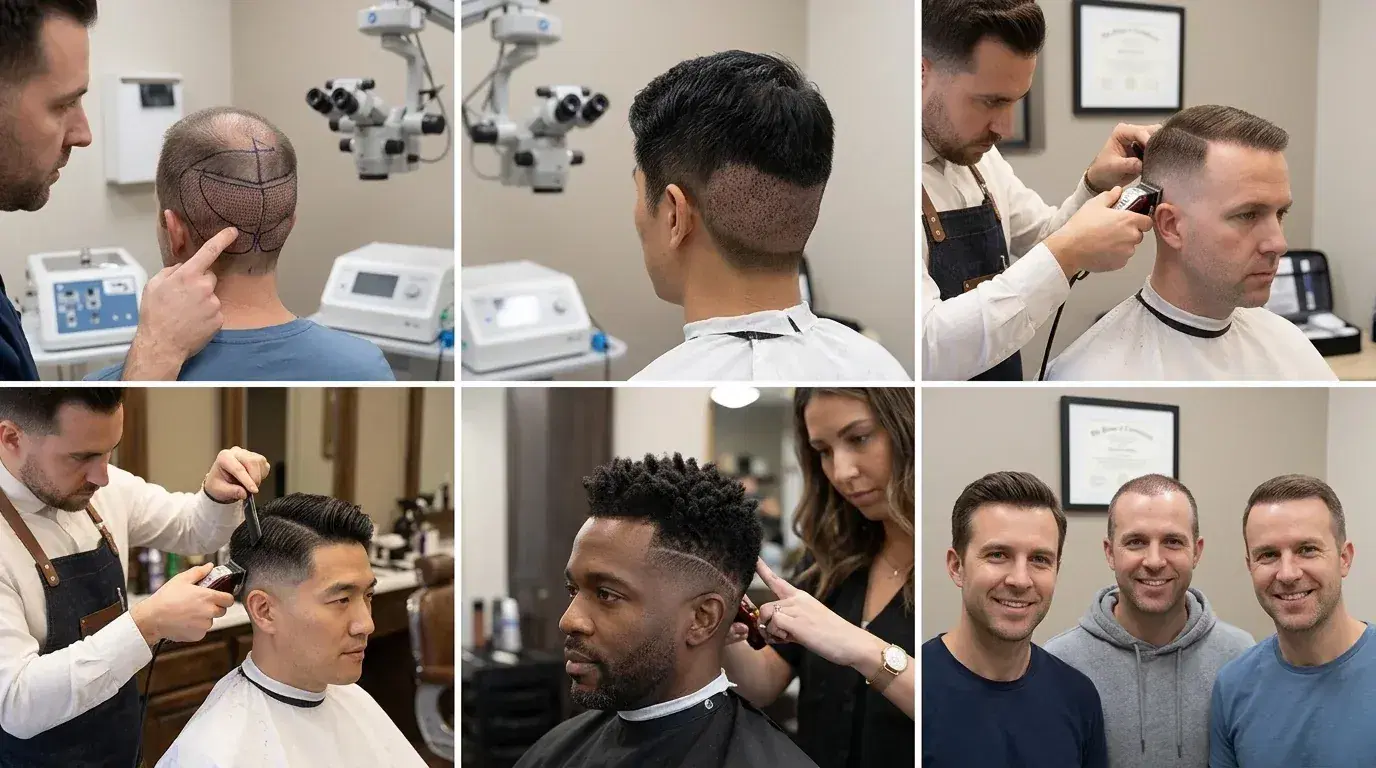
Getting a fade haircut after a hair transplant is possible once the scalp has healed sufficiently, but the final appearance deserves careful consideration. Fade haircuts gradually transition from shorter hair around the sides and back to longer hair higher on the head, which can expose areas where follicles were previously extracted.
The donor area usually sits across the back and sides of the scalp, where hair follicles are collected for transplantation. Although this region normally retains enough hair to conceal extraction marks, very short haircuts reduce that coverage and may reveal changes that remain invisible with longer hairstyles.
The important question is not simply whether a fade is possible. It is whether the intended fade length will provide enough coverage to keep the donor area looking natural. Someone who prefers a subtle taper may have different expectations from a person who regularly wears a skin fade.
Why Does the Donor Area Become Visible With Short Hair?
Hair transplantation redistributes existing follicles rather than creating additional ones. When follicles are extracted from the donor region, they no longer produce hair in their original positions, leaving the surrounding strands responsible for maintaining visual coverage.
Longer hair can overlap nearby extraction sites and conceal small scars or differences in density. As the hair becomes shorter, this overlap decreases, allowing more of the underlying scalp to show through.
Bright lighting, wet hair and the angle from which the head is viewed can make these differences more noticeable. A donor region that looks completely natural with a longer haircut may reveal scattered marks when trimmed to a very short length.
This change does not necessarily indicate that the transplantation was unsuccessful. It reflects the relationship between hair length, remaining follicular density and the permanent marks created during extraction.
Will FUE Hair Transplant Scars Show With a Fade?
Follicular unit extraction, commonly known as FUE, removes individual follicular units through small circular openings in the donor area. These extraction sites heal with tiny scars that are generally less noticeable than the continuous incision associated with strip harvesting.
However, FUE is not a scarless technique. Small pale marks may become visible when the surrounding hair is clipped very short, particularly if the skin contrasts strongly with the scars or a large number of grafts were extracted.
With a moderate fade, remaining hair may provide enough coverage to conceal most extraction sites. A skin fade presents a greater challenge because it removes almost all visible hair from selected sections of the scalp, leaving little opportunity for surrounding strands to disguise the marks.
The appearance also depends on how evenly follicles were removed. A carefully distributed extraction pattern may be less noticeable than one that leaves concentrated areas of reduced density.
FUT vs FUE: Which Is Better for Men Who Wear Fades?
FUT, also known as strip harvesting, involves removing a narrow section of hair-bearing scalp from the donor region. The remaining skin is closed, leaving a linear scar that usually extends across part of the back of the head.
This scar can remain well concealed when surrounding hair has sufficient length. However, a high fade or close buzz cut may expose the incision line, particularly if the scar becomes wider during healing.
FUE avoids a continuous donor scar but creates multiple small extraction marks instead. For someone who routinely wears the back and sides very short, distributed FUE scars may be easier to accommodate than a prominent linear scar, although their visibility cannot be ruled out.
Neither method guarantees an invisible donor area. The most appropriate choice requires balancing the desired haircut against donor density, existing hair loss and the need to preserve follicles for possible future restoration.
Low Fade, Mid Fade or Skin Fade: Which Conceals the Donor Area Best?
Not all fade haircuts expose the same amount of scalp, and the position of the shortest section can influence how visible extraction marks become.
Low Fade Haircuts After Hair Transplantation
A low fade concentrates the shortest hair near the neckline and lower sides before gradually increasing length farther up the head. This can preserve more coverage across the main donor region, especially when the extracted follicles were collected higher on the scalp.
However, a low fade does not automatically hide every scar. Extraction patterns vary, and some individuals have donor marks extending into areas that become exposed by a closely tapered neckline.
Mid and High Fade Haircuts
Mid and high fades bring shorter lengths farther up the sides and back, increasing the likelihood of exposing previously harvested areas. A high fade may remove much of the coverage that normally conceals extraction scars across the occipital region.
The result can look uneven if one section of the donor area contains substantially fewer remaining hairs. Keeping a slightly longer guard through the most heavily harvested sections may produce a smoother appearance without abandoning the fade entirely.
Skin Fades and Zero-Guard Cuts
A skin fade removes nearly all visible hair from the shortest sections, offering minimal natural concealment. Individual FUE scars, differences in skin pigmentation and areas affected by donor depletion can therefore become more apparent.
Patients who strongly prefer skin fades should consider this limitation before transplantation rather than assume that every extraction mark will disappear once healing is complete.
How Donor Hair Density Affects Your Fade Haircut
Donor density refers to the number of follicular units within a particular area of the scalp. It plays a major role in determining how much hair can be extracted while preserving a natural appearance at the back and sides.
Someone with relatively high donor density may retain substantial coverage after a carefully planned procedure. A person with naturally sparse donor hair has less coverage available to conceal the same number of extraction sites.
Hair thickness also matters. Coarser strands can provide greater visual coverage, while finer hair may reveal more scalp even when the follicular-unit count is similar. Curl and wave patterns can further influence how effectively remaining strands overlap.
For this reason, graft numbers alone cannot predict how a fade will look. A meaningful donor assessment should consider follicular density, strand characteristics and the haircut length the patient intends to maintain.
The guide to hair transplant donor area assessment explains why donor quality and preservation are central to both the restoration and the appearance of the remaining hair.
Can Overharvesting Make the Donor Area Look Patchy?
Overharvesting occurs when too many follicles are removed from the donor region or extractions become overly concentrated in particular sections. It can leave visible gaps, irregular density and a patchy appearance that becomes especially noticeable with short hair.
Unlike temporary postoperative shedding, permanent donor depletion involves the removal of follicles that will not regenerate in their original positions. Allowing the remaining hair to grow longer may conceal the problem, but it does not restore the missing follicles.
An uneven extraction pattern can also create distinct zones where the scalp is more visible than in neighboring areas. A fade haircut may emphasize these differences because it exposes a larger proportion of the skin.
Preventing overharvesting requires planning around the donor supply rather than pursuing the largest possible graft count. Further information about the causes and consequences of donor area overharvesting helps explain why preserving even density is particularly important for people who prefer short hairstyles.
Does the Donor Area Grow Back After a Hair Transplant?
The remaining hair in the donor region continues growing after transplantation, but the follicles that were extracted do not normally return to their original locations. This distinction explains why the donor area can regain a fuller appearance as existing strands lengthen without actually recovering the follicles removed during surgery.
Early postoperative thinning can also reflect temporary shedding or the effects of shaving the donor area before extraction. These changes may improve over the following months as surrounding hair resumes normal growth.
Permanent extraction scars behave differently. Their visibility may decrease as the skin matures and surrounding hair provides greater coverage, but the scar tissue itself does not become a new hair-producing follicle.
If the donor region remains unusually sparse after healing, an examination can help distinguish temporary changes from permanent depletion. This is particularly important before choosing a very short haircut or considering another transplant session.
When Can You Get a Fade Haircut After a Hair Transplant?
Haircut timing depends on the condition of the donor and recipient areas and the amount of contact involved in the intended style. During the first two weeks, the scalp is still healing, and clippers or other tools should not be passed across fresh extraction sites or newly implanted grafts.
After approximately one month, a gentle scissor trim may be suitable when the wounds have closed and sensitivity has improved. A guarded clipper cut places more direct contact against the scalp, so a cautious return over the following months is preferable to immediately requesting a close fade.
Skin fades and razor shaving deserve particular attention because they involve repeated contact with the skin. Waiting several months before attempting very close clipping gives the donor region more time to recover and allows temporary postoperative changes to settle.
There is no single haircut date that guarantees freedom from irritation or visible scarring. The condition of the skin, the cutting tool and the depth of the fade matter more than following an exact calendar day.
How to Explain Your Hair Transplant to Your Barber
A barber does not need extensive surgical knowledge to provide a suitable haircut, but they should understand which areas underwent follicular extraction. Showing the location of the donor region helps prevent unnecessary pressure from clipper guards, combs or razors.
For the first few haircuts, beginning with a longer guard is often more useful than immediately recreating a previous skin fade. This makes it possible to assess the appearance of the donor area before additional hair is removed.
The barber can also adjust the fade transition to preserve coverage where extraction marks are most visible. A slightly different blend may look more natural than following a standard fade pattern that cuts through a heavily harvested section.
Clean, properly maintained equipment remains important, especially while the scalp is recovering. Any area with persistent redness, tenderness or incomplete healing should be left undisturbed rather than concealed through aggressive clipping.
Can You Hide Donor Scars With Scalp Micropigmentation?
Scalp micropigmentation can reduce the visibility of selected donor scars by placing pigment into the skin to resemble short hair or reduce contrast between scars and surrounding tissue. It is sometimes considered when a person wants to maintain a short haircut but has visible extraction marks.
The treatment does not restore the follicles removed during surgery. Instead, it changes the appearance of the underlying skin, which may make certain scars less conspicuous under ordinary lighting.
Results can be less predictable in scar tissue because the texture and pigment retention may differ from unaffected skin. Color changes, uneven pigmentation and the need for future adjustments are also important considerations.
Micropigmentation is best considered after the donor area has healed completely and the permanent pattern of scarring is clear. Treating the scalp too early may obscure temporary changes that would otherwise improve without intervention.
Can Visible Donor Scars Be Corrected With Another Hair Transplant?
Corrective transplantation may improve selected donor scars by placing additional follicular units into hairless scar tissue. However, this approach has limitations because scars may contain a reduced or irregular blood supply, making graft survival less predictable than in healthy scalp.
The remaining donor supply creates another concern. If the original procedure already removed too many follicles, collecting additional grafts from the same region may worsen overall thinning.
Some patients may benefit from a combination of carefully selected graft placement, scar revision or cosmetic camouflage. The objective should be to improve the visible donor appearance without creating another area of depletion.
Corrective surgery cannot guarantee that a person will be able to wear a zero-guard haircut without any visible marks. Realistic expectations remain essential, particularly when the original damage involves extensive scarring rather than one narrow, isolated area.
How to Plan a Hair Transplant if You Prefer Fade Haircuts
Haircut preferences should be part of the initial transplant plan, not an issue considered only after the donor area has healed. Someone who wears a skin fade every two weeks has different cosmetic priorities from someone who normally keeps several centimeters of hair around the back and sides.
Bringing photographs of the preferred haircut can help identify which donor regions will remain exposed. These images should include the back and both sides rather than only the frontal hairstyle.
Planning should also account for future hair loss. If additional transplantation becomes necessary, repeated extraction can further reduce donor coverage, potentially changing which fade lengths remain visually acceptable.
Preserving the donor area's appearance is therefore part of achieving a successful overall result. A natural-looking hairline loses some of its cosmetic value if the back of the scalp becomes noticeably sparse whenever the hair is cut short.
Frequently Asked Questions About Fade Haircuts After Hair Transplantation
The following questions address common concerns about short hairstyles, FUE scars and the long-term appearance of the donor area.
Can you get a skin fade after an FUE hair transplant? A skin fade may be possible after complete healing, but it can expose small extraction scars or areas of reduced donor density because almost no hair remains to conceal the skin. The final appearance depends on scar visibility, remaining follicular coverage and how closely the haircut passes over the harvested regions.
Will FUE donor scars disappear completely? FUE extraction sites heal with small scars that may become difficult to notice when surrounding hair provides sufficient coverage. However, the scars do not necessarily disappear entirely, and close shaving, strong lighting or differences in skin pigmentation can make them more visible.
Can the donor area look normal with short hair after a transplant? Many people retain a natural-looking donor region when extraction is carefully distributed and enough follicles remain to provide coverage. Very short cuts can still reveal scars or density changes, so a slightly longer fade may offer a better balance between the preferred hairstyle and the appearance of the donor area.