
How Does Hair Transplant Financing Work in the US?
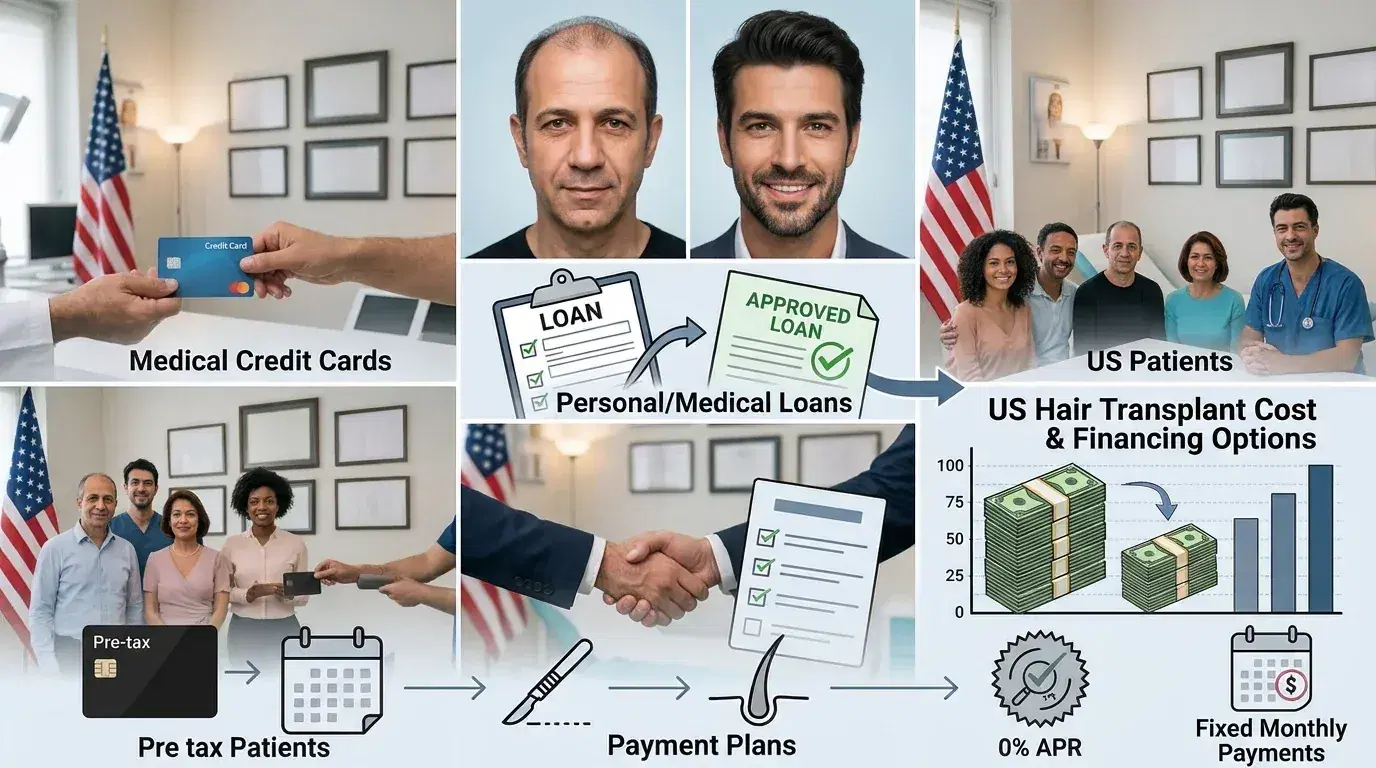
Hair transplant financing allows patients to pay for a surgical procedure over an agreed period, usually through a lender or a payment arrangement offered by the treatment provider. Rather than covering the full procedure cost before surgery, the patient makes scheduled payments according to the financing agreement.
Most financing arrangements begin with a treatment estimate that establishes the amount to be paid. The patient then applies for credit or agrees to an installment schedule, with the available terms determined by factors such as income, credit history and the amount being financed.
An important distinction is that financing does not reduce the underlying cost of hair transplantation. It changes when the patient pays, and borrowing may increase the total expense when interest or additional charges apply. Understanding this difference helps patients evaluate affordability without focusing exclusively on an attractive monthly payment.
How Much Does a Hair Transplant Cost in the United States?
Hair transplant prices in the United States frequently range from approximately $4,000 to $15,000, although smaller procedures may cost less and extensive restoration can exceed this range. The total depends on the number of grafts required, the surgical technique, geographic location and the services included in the treatment package.
A patient restoring a limited section of the frontal hairline generally requires fewer grafts than someone seeking coverage across the hairline, mid-scalp and crown. More extensive treatment can involve longer surgical sessions and additional resources, increasing the overall expense.
Some providers calculate prices according to the number of follicular units transplanted, while others offer comprehensive packages. Before considering monthly payments, patients should establish the complete treatment cost rather than relying on an advertised starting price.
Reviewing hair transplant costs in Miami can provide additional context for the expenses involved in US hair restoration and the factors influencing surgical pricing.
What Types of Hair Transplant Payment Plans Are Available?
Several financing arrangements can help patients distribute the cost of hair restoration. Although these options serve a similar purpose, they differ in how interest is calculated, who provides the credit and what happens if payments are delayed.
In-House Hair Transplant Payment Plans
An in-house payment plan is an arrangement made directly with the treatment provider rather than through an independent bank or credit company. Some arrangements allow patients to make payments before surgery, while others permit installments over an agreed period.
A prepayment schedule can be useful for patients who want to avoid borrowing. For example, someone planning surgery several months ahead may make regular deposits until the treatment cost is covered.
However, direct payment arrangements are not automatically interest-free or available for every procedure. Patients should confirm when the full balance becomes due, whether deposits are refundable and what happens if the surgery is postponed.
Third-Party Medical Financing
Third-party financing involves an external company providing credit for the procedure. Once approved, the lender pays the treatment provider according to the financing arrangement, and the patient repays the lender over time.
These plans may offer fixed monthly payments, promotional financing or longer repayment periods. The agreement creates a financial obligation between the borrower and lender, which generally remains important even if the treatment provider is no longer involved in collecting payments.
The actual repayment terms should be reviewed before accepting the offer, particularly when the advertised monthly amount does not clearly explain the total interest payable.
Can You Use a Personal Loan for a Hair Transplant?
An unsecured personal loan is another option for financing cosmetic hair surgery. Patients can apply through banks, credit unions or online lenders and use the approved funds to cover eligible treatment expenses.
Personal loans commonly have fixed repayment periods and scheduled monthly payments. When the interest rate is fixed, this structure makes it easier to calculate how much the borrower will pay throughout the loan.
However, personal loans may include origination fees or other charges that increase the true cost of borrowing. Some lenders deduct an origination fee before releasing the funds, meaning the amount received may be lower than the original loan amount.
Comparing the annual percentage rate, repayment term, total payments and amount actually received provides a more accurate assessment than comparing advertised interest rates alone.
How Do Medical Credit Cards Work for Hair Transplants?
Medical credit cards are financing products designed for eligible healthcare and cosmetic expenses. They can offer convenient payment options for patients whose procedures are not covered by health insurance.
Unlike a fixed installment loan, a medical credit card generally operates as a revolving credit account. The available credit can be used for eligible purchases, while repayment follows the account's stated interest rates, promotional terms and minimum payment requirements.
Some medical credit cards offer promotional periods during which interest can be avoided if the entire qualifying balance is paid before a specified deadline. These offers can be useful, but the conditions require careful attention.
Medical credit cards are not automatically less expensive than personal loans. Their regular interest rates may be substantial, particularly when promotional conditions are not satisfied or an unpaid balance remains.
Understanding Zero-Interest and Deferred-Interest Financing
Promotional financing is often presented as an attractive solution for patients who want to avoid interest. However, a genuine introductory 0% APR offer and a deferred-interest arrangement work differently.
With a qualifying 0% introductory APR offer, interest generally does not accumulate on the promotional balance during the introductory period. If a balance remains afterward, the standard interest rate normally applies to the outstanding amount from that point forward, subject to the agreement.
Deferred-interest financing creates a different risk. Interest may accumulate from the original purchase date, but the borrower avoids paying it by clearing the entire promotional balance before the deadline.
If even a small amount remains when the promotion expires, the accumulated interest may be added to the account. Paying only the required minimum each month may therefore be insufficient to avoid a substantial additional charge.
How Much Are Monthly Payments for a Hair Transplant?
The monthly cost of financing depends on the amount borrowed, interest rate and repayment period. A lower monthly payment may seem more manageable, but extending the loan can increase the amount paid in interest.
Consider an illustrative hair transplant costing $8,000, financed through a fixed-rate installment loan with a 12% annual interest rate and no additional fees.
Over 24 months, the payment would be approximately $377 per month, producing total payments of about $9,039. Extending the same loan to 36 months would reduce the monthly payment to approximately $266 but increase the total repayment to about $9,566.
The longer arrangement makes the monthly obligation smaller while adding more than $500 to the overall borrowing cost.
These figures are mathematical examples rather than available financing offers. Actual loan terms, fees and annual percentage rates depend on the specific agreement. When comparing options, the total amount repaid deserves as much attention as the monthly installment.
What Credit Score Is Needed for Hair Transplant Financing?
Hair transplant financing does not have one universal minimum credit score because lenders use different underwriting requirements. Approval may depend on credit history, income, existing debt obligations and other indicators of repayment ability.
Applicants with stronger credit profiles may qualify for more favorable interest rates, while those with limited or damaged credit histories may receive higher-cost offers or face rejection.
Some financing companies allow applicants to check potential eligibility through prequalification. This process may involve a soft credit inquiry that does not affect the credit score, although submitting a formal application can lead to a hard inquiry.
Before applying to several lenders, it is useful to confirm whether the initial eligibility check affects credit records. Receiving approval should also be distinguished from being able to afford the payments comfortably alongside ordinary living expenses.
What Should a Hair Transplant Financing Quote Include?
A financing agreement should be based on an accurate treatment estimate. If the original quote excludes necessary expenses, the approved loan may not cover the complete cost of surgery.
Patients should establish whether the price includes consultation, follicular extraction, implantation, anesthesia, postoperative medication and follow-up care. Additional treatments should be identified separately, particularly when they are optional rather than essential to the transplantation procedure.
Travel expenses can also affect the total budget, especially when patients undergo surgery outside their home state. Accommodation, transportation and time away from work may create additional costs that are not reflected in the surgical quotation.
A clear understanding of package inclusions makes financing comparisons more meaningful. The hair transplant pricing and package guide provides further information about the services that may be included in a treatment estimate.
Hidden Fees and Financial Risks to Check Before Applying
One of the most common financing mistakes is evaluating an agreement solely by its monthly payment. Fees, promotional deadlines and repayment conditions can increase the total expense even when the advertised installment initially appears affordable.
Origination fees, late-payment charges and administrative costs deserve particular attention. Patients should also check whether the interest rate is fixed or variable, since variable rates can affect future payments.
Cancellation and refund terms are equally important. When a third-party lender has already funded a procedure, cancelling surgery does not necessarily cancel the loan automatically. The borrower should understand how refunds are processed and whether the financing balance will be adjusted.
Reading the agreement before signing is especially important for elective surgery because there is usually more opportunity to compare payment methods than there would be during an unexpected medical emergency.
Should You Choose a Shorter or Longer Repayment Period?
A shorter repayment period generally increases the monthly payment but reduces the amount of time interest can accumulate. This can make the overall financing cost lower, provided the payments fit comfortably within the patient's budget.
A longer loan spreads the expense across more months, which may improve short-term cash flow. However, lower installments can conceal a substantial increase in total interest, particularly when the annual percentage rate is relatively high.
The choice should reflect more than the desire to obtain treatment as soon as possible. Rent, mortgage payments, existing loans, household expenses and emergency savings should all remain manageable after the financing commitment begins.
If the available installments would create persistent financial pressure, delaying an elective procedure while building savings may provide a more sustainable alternative.
Does Health Insurance Cover Hair Transplant Financing Costs?
Most US health insurance policies do not cover hair transplantation performed for hereditary baldness or cosmetic hairline restoration. As a result, patients frequently need to pay privately or use financing to cover the procedure.
Limited exceptions may exist for reconstructive procedures associated with serious injuries, burns or certain medical conditions. However, a possible reconstructive indication does not guarantee payment, and coverage must be established under the relevant insurance policy.
Financing and insurance serve different purposes. Insurance coverage may reduce an eligible medical expense, whereas financing creates a repayment obligation for costs the patient must pay.
Patients should also avoid assuming that Health Savings Account or Flexible Spending Account funds can be used for ordinary cosmetic transplantation. Under federal tax rules, cosmetic hair transplants are generally not qualified medical expenses, although narrowly defined reconstructive exceptions may apply.
Can US Patients Finance Hair Transplants Abroad?
Some American patients consider treatment abroad because surgical packages may cost less than comparable procedures in the United States. International hair restoration can involve a different overall financial calculation, particularly when accommodation and transportation are included in a package.
However, a lower procedure price does not automatically mean the complete treatment journey will cost less. Flights, additional hotel nights, travel insurance, time away from work and potential follow-up visits should be included in the budget.
Financing arrangements may also differ when the procedure takes place outside the United States. A domestic personal loan may provide greater flexibility than a medical credit product restricted to participating healthcare providers.
Before borrowing for international surgery, patients should confirm the payment currency, any foreign transaction fees and the arrangements for follow-up care after returning home.
How to Choose a Hair Transplant Financing Plan Responsibly
Choosing financing should begin with the medical treatment plan, not the amount a lender is willing to approve. A large credit limit can make extensive surgery appear financially accessible, but borrowing capacity does not establish that the treatment is necessary or that repayments will remain comfortable.
Once the full surgical cost is clear, patients can compare financing offers using consistent criteria. The most useful figures are the annual percentage rate, monthly payment, repayment duration, fees and total amount payable.
Promotional conditions deserve particular care because missing a repayment deadline can change the financial outcome dramatically. Automatic payments may help avoid missed due dates, but they do not guarantee that a deferred-interest balance will be cleared before the promotional period ends.
A sensible arrangement also leaves room for ordinary expenses and unexpected financial changes. Hair transplantation is elective in most cases, so there is value in making the decision without creating unnecessary long-term debt.
Frequently Asked Questions
The following questions address common concerns about financing eligibility, interest-free payment options and the effect of borrowing on credit records.
Can you finance a hair transplant with bad credit?
Some lenders consider applicants with limited or poor credit histories, although approval may be more difficult and the available interest rates may be higher. Reviewing prequalification options, reducing the amount borrowed or saving toward a larger down payment may help limit borrowing costs without committing to an unaffordable agreement.
Are there interest-free hair transplant payment plans?
Certain payment arrangements and promotional credit offers may allow patients to avoid interest when the stated conditions are met. However, deferred-interest financing is different from a genuine 0% APR promotion because failing to clear the balance by the deadline can result in interest charges dating back to the original purchase.
Does financing a hair transplant affect your credit score?
Applying for financing may involve a hard credit inquiry, while an approved loan or credit account can affect credit utilization, payment history and outstanding debt. Consistent on-time payments support responsible credit management, whereas missed payments and unpaid balances may damage a borrower's credit profile.