
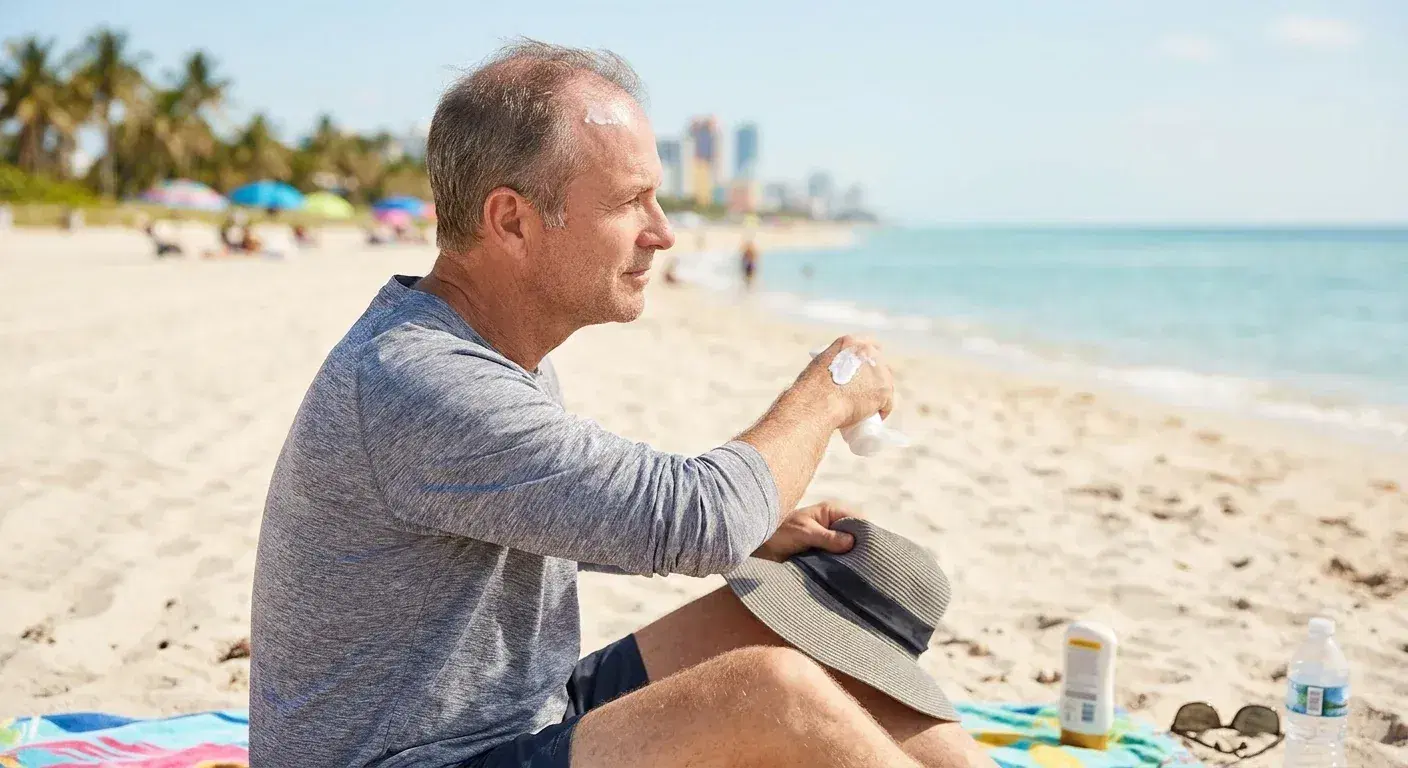
Sun protection for a thinning scalp in Florida is essential because reduced hair density leaves more skin exposed to ultraviolet radiation, increasing the risk of sunburn and long-term skin damage. Using broad-spectrum SPF 30 or higher, protective headwear and appropriate scalp care can help protect vulnerable areas during Florida's sunny weather throughout the year.
Why Is Sun Protection Important for a Thinning Scalp in Florida?
Florida's subtropical climate, abundant sunshine and outdoor lifestyle make scalp protection particularly important for people experiencing hair thinning. Whether spending time at the beach, walking through Miami, or enjoying outdoor activities in Orlando, exposed areas of the scalp can receive substantial ultraviolet radiation.
Healthy hair provides some natural protection by partially blocking sunlight from reaching the underlying skin. As hair density decreases, more of the scalp becomes exposed, particularly around the crown, temples and widening hair part.
Unlike facial skin, the scalp is frequently overlooked during daily sunscreen application. Someone may carefully protect their face and neck while leaving a thinning crown exposed for several hours.
Repeated unprotected exposure can contribute to sunburn, premature skin aging and conditions associated with accumulated ultraviolet damage. Protecting the scalp therefore becomes an important part of maintaining skin health rather than simply preventing temporary discomfort.
How Does Thinning Hair Increase Scalp Sun Exposure?
Hair density influences how much sunlight reaches the scalp. When follicles produce fewer visible strands or progressively thinner hairs, the protective coverage created by the hair decreases.
Androgenetic alopecia, commonly known as pattern hair loss, gradually causes susceptible follicles to produce finer and shorter strands. In men, thinning frequently affects the frontal hairline and crown, while women may notice widening along the central part and reduced density across the upper scalp.
These changes can expose skin that previously remained largely protected beneath thicker hair. Even when some hair remains, gaps between strands may allow direct sunlight to reach the scalp throughout the day.
People noticing early thinning can learn more about identifying hair loss and its underlying causes, since recognizing changes in density also helps identify areas requiring greater sun protection.
Can Sun Exposure Cause Hair Loss or Damage Hair Follicles?
Ordinary sunlight has not been established as a direct cause of androgenetic alopecia, which primarily involves genetic susceptibility and hormonal influences on hair follicles. However, excessive ultraviolet exposure can damage scalp skin and affect the condition of exposed hair shafts.
Ultraviolet radiation contributes to changes in skin cells and the surrounding tissue. Repeated exposure may cause inflammation, irritation and sunburn, particularly in areas where thinning hair offers limited coverage.
Hair shafts can also experience weathering from prolonged sunlight, resulting in changes to texture, color and structural strength. Chemically treated or already damaged hair may become more prone to dryness and breakage.
Severe scalp burns can cause significant inflammation, but routine outdoor exposure should not be confused with a proven cause of permanent follicular miniaturization. Protecting the scalp remains important because preventing skin damage offers clear health benefits regardless of the underlying cause of hair loss.
What Is the Best Sunscreen for a Thinning Scalp?
The best sunscreen for a thinning scalp provides broad-spectrum protection against UVA and UVB radiation, has an SPF of at least 30 and can be applied comfortably to exposed skin.
Choose Broad-Spectrum SPF 30 or Higher
SPF measures protection primarily against UVB radiation, which contributes to sunburn. Broad-spectrum products also protect against UVA radiation, which penetrates deeper into the skin and contributes to long-term skin damage.
SPF 30 filters approximately 97% of UVB radiation when applied correctly, while higher SPF values provide somewhat greater protection. However, no sunscreen blocks all ultraviolet radiation, and a higher SPF does not eliminate the need for reapplication.
For Florida's outdoor conditions, a water-resistant formulation is especially practical because heat, sweating and swimming can reduce sunscreen coverage.
Select a Formula Suitable for Hair and Scalp
Traditional sunscreen lotions can be difficult to distribute through existing hair, particularly when thinning occurs in scattered areas rather than a completely bald region.
Lightweight gels, fluid formulations and scalp-friendly lotions may be easier to apply without leaving substantial residue. Mineral sunscreens containing zinc oxide or titanium dioxide can be suitable for sensitive skin, although some formulations leave a visible cast on dark hair.
The most useful product is one that provides adequate coverage and can be reapplied consistently without causing irritation or excessive buildup.
How to Apply Sunscreen to a Thinning Scalp
Applying sunscreen to a thinning scalp requires more attention than covering a completely hairless area because existing strands can prevent the product from reaching the skin.
Begin by identifying exposed regions, including the central part, crown, frontal hairline and temples. Separate the hair into manageable sections and apply sunscreen directly to the visible scalp, gently spreading the product until the skin receives even coverage.
Sunscreen should generally be applied approximately fifteen minutes before going outdoors. When spending extended periods outside, reapplication every two hours is important, with additional applications after swimming or heavy sweating according to the product instructions.
The hairline, ears and back of the neck should also receive attention because these areas frequently remain exposed even when the upper scalp has some natural coverage.
Are Scalp Sunscreen Sprays and Powders Effective?
Scalp sunscreen sprays can offer convenient application around thinning hair, but their effectiveness depends on whether enough product reaches the skin. A light mist across the surface of the hair may leave underlying areas insufficiently protected.
When using a spray, follow the label instructions carefully and avoid inhaling the product. Spraying near the face or into strong wind should be avoided, and coverage must be sufficient to protect the exposed skin rather than simply coat the hair.
Powder sunscreens may appeal to people who dislike oily formulations, particularly when their hair becomes flat after applying traditional lotions. However, achieving reliable coverage with powder alone can be difficult.
For extended Florida sun exposure, a properly applied sunscreen lotion, gel or fluid offers a more dependable primary approach than relying exclusively on a light dusting of powder.
What Type of Hat Offers the Best Scalp Sun Protection?
A wide-brimmed hat provides a practical physical barrier against sunlight and can protect the scalp, forehead, ears and parts of the neck simultaneously.
Hats made from tightly woven materials offer better protection than loosely constructed fabrics that allow substantial light penetration. Clothing and headwear carrying an ultraviolet protection factor, or UPF, rating provide additional information about the fabric's ability to block ultraviolet radiation.
UPF 50-rated materials, for example, allow approximately one-fiftieth of the relevant ultraviolet radiation to pass through under test conditions.
Baseball caps can protect the upper scalp and forehead, but they often leave the ears and sides of the head exposed. For prolonged outdoor activities, a wide-brimmed hat or additional sunscreen on uncovered areas provides more complete protection.
Comfort is also important in Florida's warm climate. Breathable, lightweight materials make protective headwear easier to wear consistently during long periods outdoors.
Protecting a Thinning Scalp at Florida Beaches
Florida's beaches create additional sun protection challenges because visitors often spend several hours outdoors while swimming, relaxing or walking near reflective surfaces.
Water and sand can reflect ultraviolet radiation, increasing exposure even when someone sits near an umbrella. Beach umbrellas provide useful shade, but sunlight may still reach the scalp from the sides or through reflected radiation.
For someone with thinning hair, combining a wide-brimmed hat, broad-spectrum sunscreen and regular breaks in shaded areas provides more comprehensive protection than relying on one measure alone.
Beachgoers should also remember that a wet scalp can expose thinning areas more clearly because hair strands become grouped together. Reapplying suitable sunscreen after swimming helps restore protection that may have been reduced during time in the water.
How to Protect Your Scalp During Outdoor Exercise in Florida
Running, cycling, golf and other outdoor activities can involve prolonged sun exposure, particularly when performed around midday. Sweat and repeated movement create additional challenges for maintaining sunscreen coverage.
Water-resistant sunscreen is useful during exercise, but water resistance does not mean that a product remains effective indefinitely. Products labeled as water resistant generally specify either 40 or 80 minutes of resistance during swimming or sweating.
Cyclists and other athletes wearing protective helmets should remember that helmet ventilation openings may allow sunlight to reach exposed scalp areas. Protective equipment should remain properly fitted, while sunscreen can be applied to uncovered skin.
Planning exercise for the early morning or later afternoon may reduce exposure to the strongest sunlight. Even during these periods, ultraviolet protection remains relevant when spending extended time outdoors.
Does Your Scalp Need Sunscreen During Florida Winters?
Florida's relatively mild winters can create the impression that sun protection becomes unnecessary when temperatures decrease. However, ultraviolet radiation remains present throughout the year, even when the air feels comfortable.
The amount of UV exposure changes with season, time of day and weather conditions, but cool temperatures do not prevent sunlight from damaging exposed skin.
People with thinning hair should therefore maintain consistent protection during winter walks, outdoor dining, sporting activities and other daytime routines.
Cloud cover also does not provide complete protection. Ultraviolet radiation can penetrate clouds, meaning a bright but overcast afternoon may still produce meaningful exposure.
Checking the daily UV index offers a more reliable way to assess sun intensity than judging conditions solely by temperature or cloud cover.
Building a Daily Sun Protection Routine for Thinning Hair
An effective routine should fit naturally into daily life rather than require complicated products or constant attention. The first step involves identifying which parts of the scalp remain visible when the hair is styled normally.
For short outdoor activities, applying sunscreen to exposed areas before leaving home may provide useful protection. When spending longer periods outside, carrying a portable product makes reapplication easier.
People who work indoors should also consider their daily commute, lunch breaks and time spent walking between locations. Repeated short exposures can contribute to cumulative ultraviolet damage when protection is consistently overlooked.
Maintaining the same hair part every day may also leave one narrow area repeatedly exposed. Changing the part can redistribute exposure, although it should complement sunscreen and headwear rather than replace them.
Does Sun Protection Differ for Men and Women With Thinning Hair?
The biological risks associated with ultraviolet exposure apply to both men and women, but the patterns of hair loss can influence where protection is needed.
Men experiencing pattern baldness commonly develop thinning around the temples, frontal scalp and crown. These regions may receive direct sunlight throughout the day, especially when the hair is kept short.
Women with diffuse thinning often notice increased scalp visibility along the central part. A narrow exposed line may initially appear insignificant, but repeated sunlight can affect the same skin over many days.
Different hairstyles may also influence product application. Longer hair can make reaching the scalp more difficult, while closely cropped hair may leave larger areas exposed.
The most important factor is the amount of visible skin rather than the individual's sex or hairstyle.
How to Care for a Sun-Exposed and Sensitive Scalp
A scalp exposed to Florida's heat and humidity may accumulate sweat, sunscreen and styling products throughout the day. Gentle cleansing helps remove this buildup without unnecessarily disrupting the skin's protective barrier.
A mild shampoo can be used to clean the scalp according to individual needs, while excessively hot water and aggressive scrubbing should be avoided when irritation is present.
If the scalp becomes mildly dry or sensitive, a suitable fragrance-free moisturizer may improve comfort. However, persistent redness, scaling or itching should not automatically be attributed to ordinary sun exposure.
When sunburn develops, the scalp should be protected from further sunlight while the affected skin recovers. Cool compresses may relieve discomfort, but blistered or severely burned areas require appropriate medical attention.
Sun Protection After a Hair Transplant in Florida
People who have recently undergone hair transplantation need additional precautions because the recipient and donor areas contain healing surgical wounds. During this period, the scalp can be especially sensitive to sunlight, heat and friction.
Direct sun exposure should be avoided during the initial healing phase, and sunscreen should not be rubbed onto fresh grafts or areas that still contain crusts. Suitable headwear becomes an option when it can be worn without pressing against or disturbing the transplanted follicles.
Once the skin has healed sufficiently, gentle sunscreen application can form part of longer-term outdoor protection. Patients considering beach activities can also review when to return to the beach after a hair transplant for more detailed information about healing, seawater and sun exposure.
Long-term sun protection remains important after transplantation because restored hair density may not completely cover every part of the scalp.
Can Scalp Sun Damage Increase the Risk of Skin Cancer?
Long-term ultraviolet exposure can damage the genetic material within skin cells, increasing the risk of precancerous changes and certain types of skin cancer. The scalp is a particularly important area to monitor when thinning hair leaves skin repeatedly exposed.
One condition associated with cumulative sun exposure is actinic keratosis, which may appear as a rough, scaly or persistent patch. These lesions frequently develop on sun-exposed areas, including the balding scalp, forehead and ears.
Some actinic keratoses can progress to squamous cell carcinoma, making early identification important. New or changing growths, persistent sores, bleeding patches or areas that repeatedly crust should receive dermatological assessment.
Regular scalp examinations are especially valuable when existing hair makes certain areas difficult to inspect. Using a mirror or asking someone to examine the crown can help identify changes that might otherwise go unnoticed.
Common Mistakes When Protecting a Thinning Scalp
One frequent mistake involves applying sunscreen only to the forehead while overlooking the crown or exposed hair part. Even when the scalp contains substantial hair, visible gaps may receive enough ultraviolet exposure to require protection.
Another mistake is assuming that a higher SPF allows unlimited time outdoors. Sunscreen protection decreases through sweating, swimming, rubbing and ordinary wear, making reapplication essential.
Relying exclusively on cosmetic hair fibers or scalp concealers can also create a false sense of protection. Unless a product provides tested and clearly labeled sun protection, it should not be considered a substitute for sunscreen.
Finally, avoiding protective headwear because it feels uncomfortable in the heat may leave large areas exposed. Choosing breathable materials and an appropriate fit can make consistent protection more practical throughout the year.