
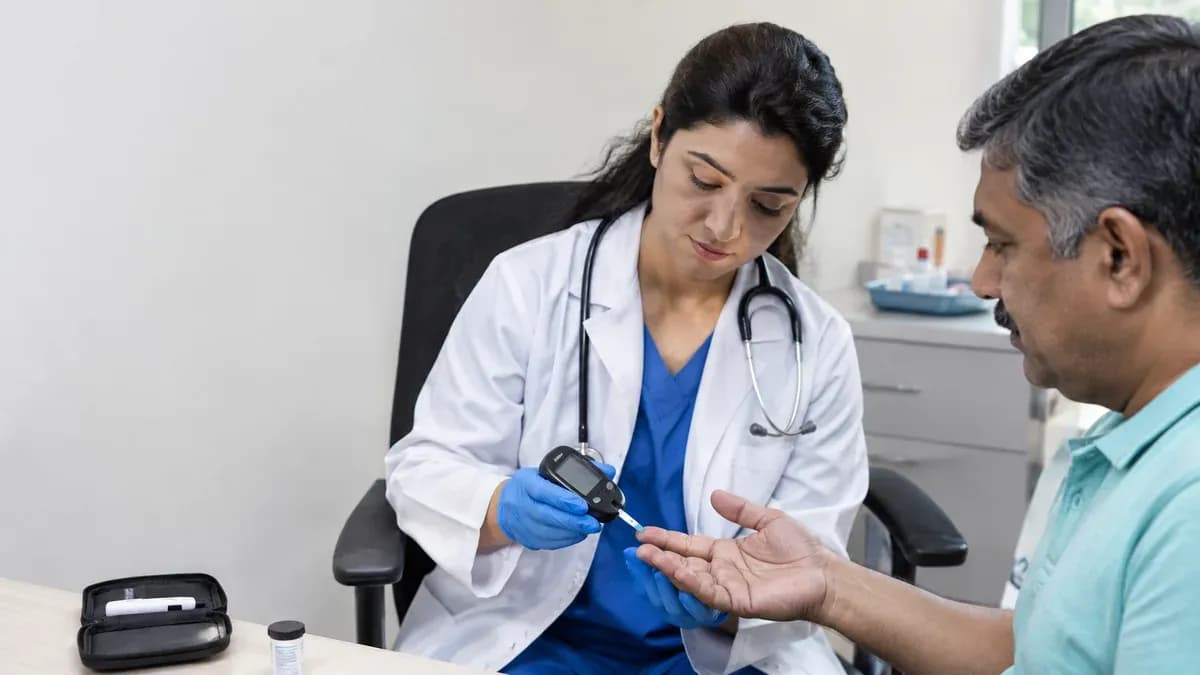
The FBS and HbA1c tests are two blood tests that measure your blood sugar control. FBS shows your glucose level right now after fasting, while HbA1c shows your average level over the past two to three months. Together, they detect diabetes and prediabetes early.
What Is the FBS Test?
FBS stands for fasting blood sugar. You give a blood sample after at least eight hours without food or caloric drinks. The laboratory measures the glucose in that sample.
Fasting gives a clean baseline. Food raises glucose within minutes, so a fasting reading shows how well the body manages sugar when no meal interferes.
What Is the HbA1c Test?
Glucose attaches to hemoglobin inside red blood cells. HbA1c measures the share of hemoglobin that carries this sugar. Red blood cells live for about three months, so the result reflects your average glucose over that period.
You do not need to fast for this test. A single day of careful eating does not hide the long-term pattern, which makes HbA1c a reliable view of your habits.
How Do the Two Tests Differ?
- FBS: Shows glucose at one moment and needs fasting.
- HbA1c: Shows the average over about three months and needs no fasting.
- FBS use: Screening, diagnosis and day-to-day review.
- HbA1c use: Diagnosis and long-term monitoring of control.
Doctors often order both. One test can look normal while the other shows a problem, so the pair gives the clearest picture.
Who Should Have These Tests?
Doctors recommend testing in several situations.
- You are over 35, or younger with extra risk factors.
- You have excess weight, especially around the waist.
- A parent, brother or sister has diabetes.
- You have high blood pressure or high cholesterol.
- You have had gestational diabetes in the past.
- You notice constant thirst, frequent urination, blurred vision or unexplained weight loss.
- You already live with diabetes and need to track your control.
Many people with raised blood sugar feel no symptoms at first. Regular testing finds the problem before it harms the eyes, kidneys, nerves or heart.
How Does the Testing Work?
- Consultation: The doctor reviews your history, symptoms and medication.
- Sample collection: A nurse draws a small blood sample.
- Laboratory analysis: The laboratory measures glucose and HbA1c.
- Results and advice: The doctor explains the values and the next step.