
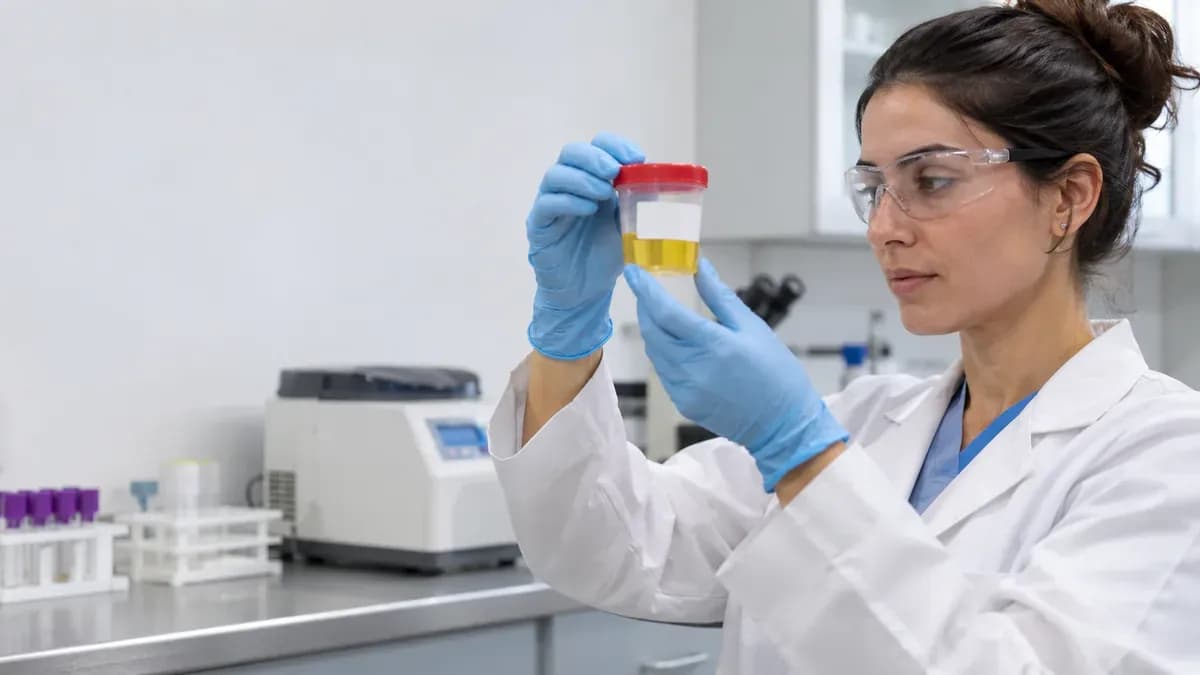
Urinalysis, or UA, is a urine test that checks the color, clarity, chemistry and cell content of your urine. It helps detect urinary tract infection, kidney problems, diabetes and other conditions. The test is painless, quick and useful for both symptoms and routine screening.
What Is a Urinalysis?
Urine carries the waste that the kidneys filter from the blood. Its makeup reflects how the kidneys, bladder and other organs work. A urinalysis examines this fluid in three steps.
- Visual check: The laboratory notes color and clarity.
- Chemical strip test: A strip measures substances such as glucose, protein, blood, ketones and acidity.
- Microscopic review: The laboratory looks for cells, crystals and bacteria when needed.
Why Is the Test Important?
Many urinary and kidney conditions begin quietly. Protein in the urine can be an early sign of kidney stress. Sugar in the urine can point to high blood glucose. Blood or white cells can signal infection or stones.
Because the test is simple and low-cost, doctors use it as a first step. A normal result is reassuring, while an abnormal one guides the next test.
What Symptoms Lead to a Urinalysis?
- Burning or pain when urinating.
- A strong need to urinate often.
- Cloudy, dark or bloody urine.
- Strong-smelling urine.
- Pain in the lower abdomen, side or back.
- Fever with urinary symptoms.
- Swelling in the legs or around the eyes.
Who Should Have the Test?
- People with the symptoms listed above.
- People with diabetes or high blood pressure, who face a higher risk of kidney damage.
- People with a history of kidney stones or urinary infections.
- Pregnant women, as part of routine care.
- People preparing for surgery.
- Anyone who wants a complete annual health review.
What Does the Test Look For?
- Glucose: Appears in urine when blood sugar is very high.
- Protein: A small amount is normal, while a larger amount suggests kidney stress.
- Blood: May come from infection, stones or other urinary tract conditions.
- Leukocytes and nitrites: Suggest infection.
- Ketones: Appear during fasting, illness or poorly controlled diabetes.
- pH and specific gravity: Show urine acidity and concentration.
- Bilirubin: Can point to a liver or bile problem.
How Does the Testing Work?
- Consultation: The doctor reviews your symptoms and history.
- Sample collection: You give a midstream urine sample in a clean container.
- Laboratory analysis: The laboratory runs the strip and, when needed, the microscope review.
- Results and advice: The doctor explains the findings and the next step.