
Exosome therapy may support scalp healing after a hair transplant. Current evidence does not prove that it improves graft survival or final density. Graft quality, surgical technique and aftercare still decide your result. Exosomes work best as an optional support, not as a replacement for good care.
What Is Exosome Therapy?
Exosomes are tiny vesicles that cells release to communicate with each other. They carry proteins, lipids and other signaling molecules that influence how nearby cells behave.
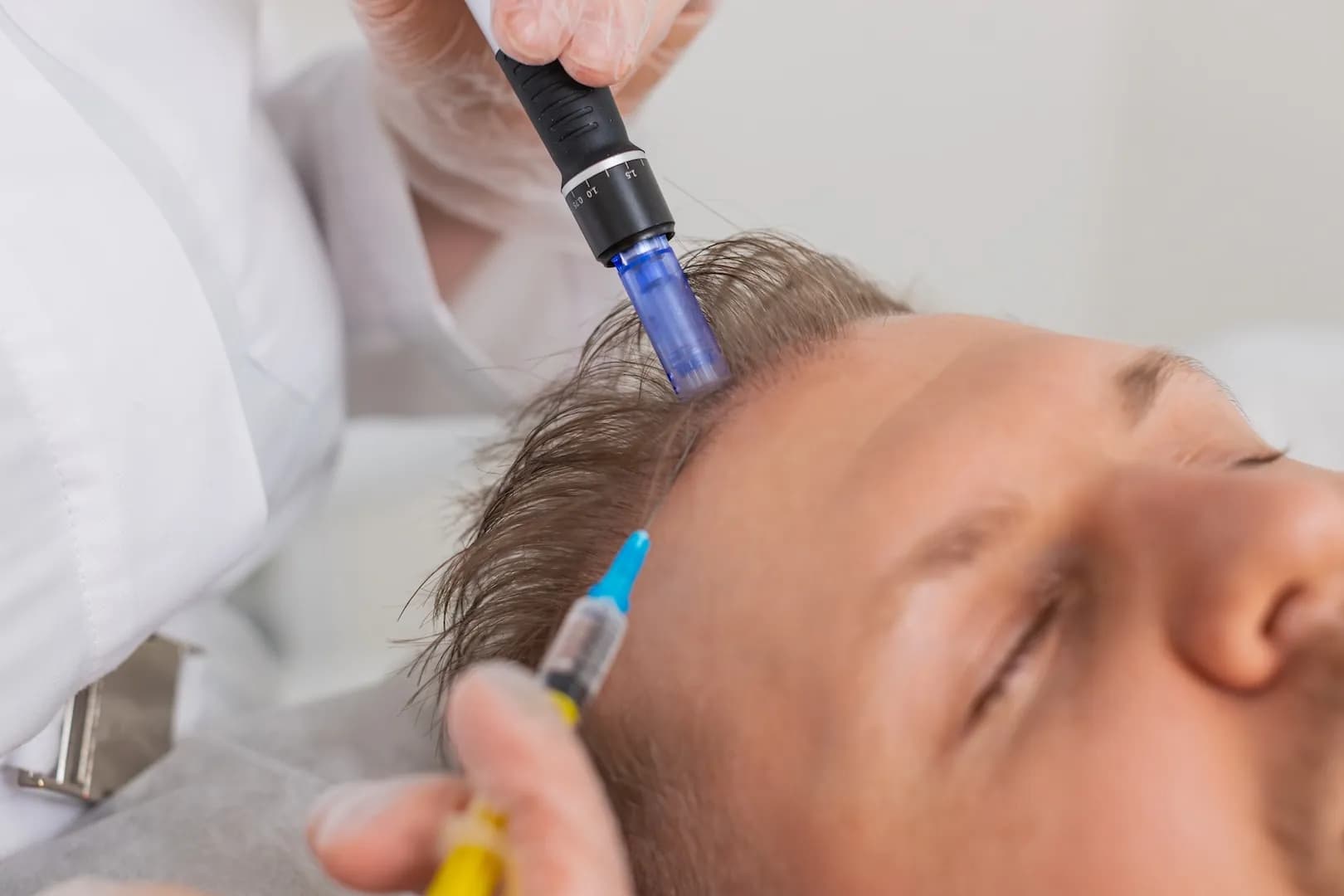
In hair treatments, exosome products are applied to the scalp or delivered into it with micro-needling or microinjections. The goal is to support the environment around the follicles. Clinics usually offer this as a cosmetic add-on.
Why Do Patients Consider Exosomes After a Hair Transplant?
A transplant leaves the scalp red, tender and busy with repair. Patients naturally look for ways to speed recovery and protect the new grafts.
Supporters of exosome therapy point to three possible benefits:
- Faster skin recovery: Signaling molecules may support tissue repair in the recipient area.
- Calmer scalp: Some formulations aim to reduce irritation and redness.
- Healthier follicle environment: The treatment may support follicles that struggle during the first months.
These ideas are reasonable, yet they remain mostly theoretical in hair transplant care. Early studies are small, and results differ between products.
Does Exosome Therapy Improve Hair Transplant Results?
No product has shown a guaranteed improvement in graft survival. Grafts survive when the surgeon handles them gently. They also need a short time outside the body and placement at a suitable depth and angle.
Exosome therapy may help the scalp feel and look better during recovery. It does not change donor hair, and it does not add follicles. A patient who expects thicker results than the donor area can provide will be disappointed, with or without exosomes.
For this reason, ask for realistic information before you pay for any add-on. A clear explanation of what the treatment may and may not do is a sign of an honest team.
When Is Exosome Therapy Used?
Teams that offer exosomes apply them at two points.
- During the procedure: The product is applied to the recipient area after implantation.
- During recovery: Sessions follow once the scalp has closed and the crusts have fallen.
Do not apply any product to a fresh recipient area without your doctor's approval. Open channels are delicate, and the wrong product can cause irritation or infection.
Exosomes and PRP: What Is the Difference?
Platelet-rich plasma comes from your own blood. The sample is spun to concentrate the platelets, which carry growth factors.
Exosomes come from cell cultures, not from your blood. They carry signals from a different source and need no blood draw.
PRP has a longer history in hair care and more published experience. Exosomes are newer, so there is less long-term data. Neither one replaces a transplant, and neither one stops genetic hair loss.
Is Exosome Therapy Safe?
Safety depends on the product, its source and how the clinic handles it. Quality control matters, because poorly made products can cause reactions.
Possible effects include:
- Temporary redness or tenderness
- Mild swelling
- Itching
- Allergic reactions, which are rare
Tell your doctor about allergies, skin conditions and current medication before you consider any scalp treatment. Our article on scalp inflammation explains which symptoms deserve a medical check.
What Matters More Than Exosomes
Several factors have a clearer effect on your result than any add-on.
- Donor quality: Healthy, dense donor hair gives the best base.
- Surgical technique: Careful extraction and placement protect each graft. You can read about FUE hair transplant, Sapphire FUE and DHI hair transplant to compare methods.
- Aftercare: Gentle washing, sleeping with your head raised and avoiding sun and sweat protect the grafts in the first days.
- Follow-up: Regular checks let your team spot problems early.
- Health habits: Good sleep, balanced meals and no smoking support healing.
Our hair transplant operation steps guide shows how the day unfolds, and the pre-hair transplantation guide explains how to prepare.
Exosomes as Part of a Wider Plan
Some patients combine a transplant with other treatments to support hair health. Our guide on combining a hair transplant with other cosmetic procedures covers how timing and sequence matter.
If you consider exosomes, ask your doctor these questions first:
- What do you expect this treatment to do in my case?
- When is the safest time to start?
- How many sessions do I need, and what does each one cost?
- What product do you use, and where does it come from?
- What side effects should I watch for?
Clear, specific answers help you decide with confidence. Vague promises should make you cautious.
Cost and Value
Exosome sessions add to the cost of treatment, and several sessions may be suggested. Compare that spending with the benefits you can reasonably expect.
Many patients get more value from investing in a skilled team and a thorough aftercare plan. Our hair transplant price page explains what a treatment package includes, so you can judge any extra service against it.
Exosome Questions at Esthetic Hair Thailand
At Esthetic Hair Thailand, the medical team examines the scalp and reviews the donor area. It then explains which steps support a strong result. You receive honest guidance on what each option can and cannot do.
We use only your own donor hair and design a natural hairline. After surgery, you receive written aftercare instructions covering washing, sleeping position, activity and follow-up.
Frequently Asked Questions
Does exosome therapy help hair grow after a transplant?
It may support scalp healing, but evidence for better graft growth is limited. Surgical quality and aftercare matter more.
When can I have exosome therapy after a hair transplant?
Only your doctor can set the timing. Products usually wait until the scalp has closed and the crusts have fallen.
Is exosome therapy the same as PRP?
No, PRP comes from your own blood, while exosomes come from cell cultures. They carry different signals and have different research histories.
Can exosome therapy replace a hair transplant?
No, it cannot restore areas where follicles have been lost. It supports existing follicles at best.
Is exosome therapy painful?
Most patients feel mild discomfort from micro-needling or injections. Numbing cream can reduce it.
Do I need exosome therapy for a good result?
No, a good result depends on donor hair, technique and aftercare. Exosomes are an optional extra.
Final Thoughts on Exosome Therapy After a Hair Transplant
Exosome therapy may help the scalp recover, but it has not been proven to improve transplant results. Treat it as an optional support, never as a guarantee.
Choose a skilled team, follow your aftercare plan and ask clear questions before you add any treatment. Those steps protect your grafts far more than any extra product.