
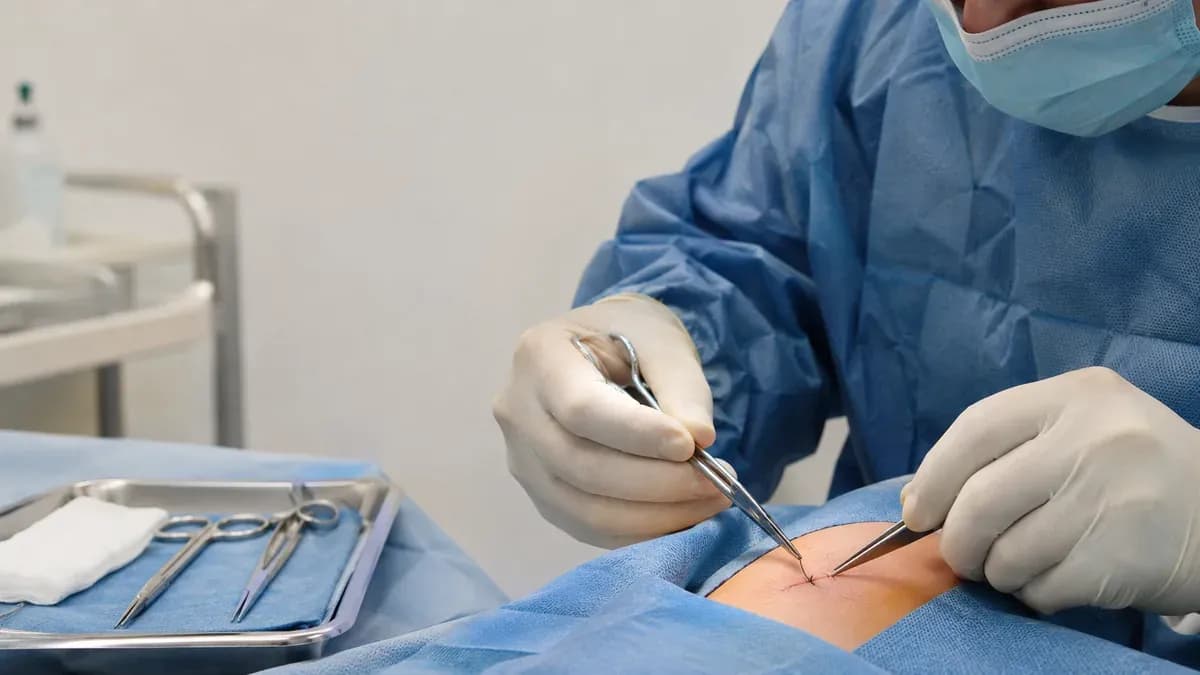
Minor surgery covers small procedures that a doctor performs under local anesthesia, such as draining an abscess, closing a cut with stitches or removing a small skin lesion. You go home the same day. Esthetic Hair Thailand provides minor surgery, incision and drainage, and suturing in Phuket.
What Is Minor Surgery?
Minor surgery uses local anesthesia, which numbs only the treated area. You stay awake, you do not need an operating theatre and recovery is quick. The doctor performs the procedure in a clean treatment room with sterile equipment.
Which Procedures Do We Perform?
Incision and Drainage
An abscess is a painful collection of pus under the skin. It rarely clears with creams or tablets alone. The doctor numbs the area, makes a small cut, drains the pus and cleans the cavity. Relief often starts right away.
Suturing
Deep or gaping cuts need closure so they heal well and avoid infection. The doctor cleans the wound, numbs the skin and closes it with stitches, staples or skin glue, depending on the wound.
Other Minor Procedures
- Removal of small cysts, lumps or skin growths.
- Removal of splinters, thorns and foreign objects.
- Treatment of infected cuts and bites.
- Dressing and stitch removal after healing.
When Do You Need Stitches?
Consider stitches if any of these apply.
- The cut is deeper than a few millimeters or the edges gape.
- The wound is on the face, hand or a joint.
- Bleeding continues after ten minutes of firm pressure.
- Fat or muscle shows inside the wound.
- The cut was caused by a clean, sharp object.
Early closure gives the best result. Wounds are usually best closed within several hours, so visit soon after the injury.
When Do You Need Drainage?
- A hot, red, painful lump that keeps growing.
- Pus or a soft, fluid-filled center.
- Fever or chills with a skin lump.
- A boil that does not improve after a few days.
- A swollen area near the anus, groin or armpit with pain.
How Does a Procedure Work?
- Assessment: The doctor examines the area, checks your health history and explains the procedure.
- Numbing: The doctor injects local anesthetic. This causes a brief sting.
- Procedure: The doctor drains, closes or removes the problem tissue.
- Dressing: The nurse covers the area with a clean dressing.
- Instructions: The team gives written aftercare and tells you when to return.
Most procedures take a short time, and you walk out afterward.