
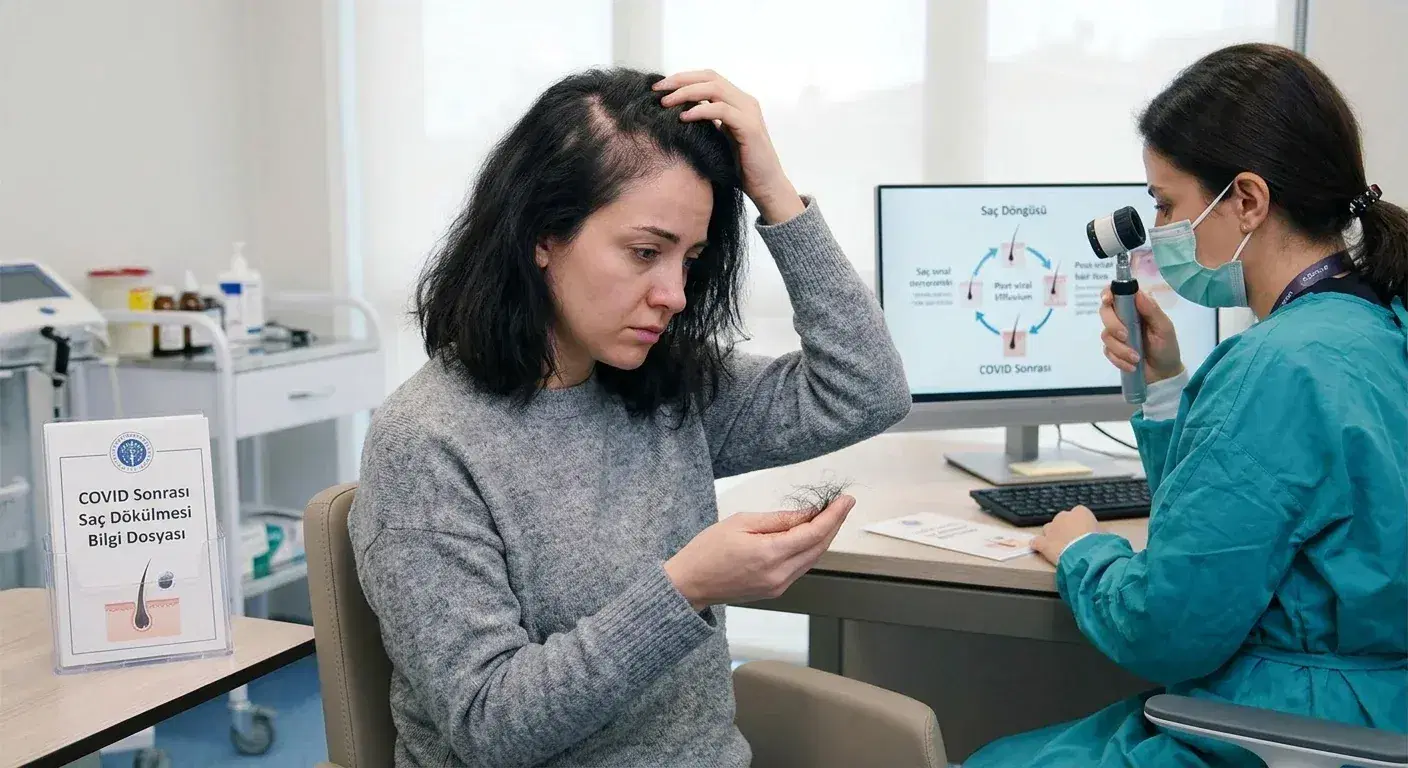
Hair loss after COVID-19 is commonly caused by telogen effluvium, a temporary shedding condition that develops when illness and physical stress disrupt the natural hair growth cycle. Increased shedding typically begins two to three months after infection, with most affected individuals experiencing gradual recovery as their follicles return to normal growth.
Why Does Hair Loss Occur After COVID-19?
Recovering from COVID-19 does not always mean that every biological process immediately returns to its previous state. Even after respiratory symptoms, fever, and fatigue improve, the body's response to infection can continue affecting tissues that are particularly sensitive to physiological stress, including hair follicles.
Hair follicles constantly produce new cells during their active growth phase, making them responsive to changes in inflammation, metabolism, and general health. When the body experiences significant stress, some follicles can leave the active growth phase earlier than expected and enter a resting period.
This interruption does not necessarily damage the follicles permanently. Instead, it changes the timing of hair shedding, which explains why someone may begin losing noticeably more hair several weeks after recovering from COVID-19.
Telogen Effluvium: The Main Cause of Post-COVID Hair Loss
Telogen effluvium is the most frequently reported form of hair loss following COVID-19 infection. It develops when an unusually large number of follicles enter the resting phase, known as telogen, within a relatively short period.
Under ordinary circumstances, approximately 85% to 90% of scalp hairs remain in the active growth phase. The remaining follicles move through transitional and resting stages before releasing their existing strands and beginning another growth cycle.
A significant illness can temporarily disrupt this balance, causing more hairs to shed around the same time. The result is usually widespread thinning rather than a clearly defined bald patch.
The condition can appear dramatic because hundreds of strands may become visible during washing or brushing, even when the scalp itself remains healthy.
Understanding telogen effluvium and its recovery process helps explain why sudden shedding after an illness often differs from permanent hair loss.
How Does COVID-19 Affect the Hair Growth Cycle?
Several mechanisms may contribute to hair shedding after coronavirus infection, although researchers have not established that every case develops through exactly the same process.
Fever and Physical Stress
Fever represents a significant physiological challenge, particularly when accompanied by dehydration, reduced appetite, or prolonged fatigue. During illness, the body prioritizes essential functions, and normal hair production may temporarily become less active.
This response can push additional follicles toward the resting phase, causing visible shedding after the person has otherwise recovered.
Inflammation and Immune Activity
COVID-19 triggers an immune response that involves inflammatory signaling molecules. Researchers have investigated how these signals influence follicular cells and the biological pathways responsible for maintaining active hair growth.
Inflammation may contribute to disturbances in the hair cycle, although the precise relationship between individual immune responses and subsequent shedding remains under investigation.
Nutritional Changes During Recovery
Illness can also affect appetite, dietary intake, and nutritional status. Significant weight loss or inadequate protein consumption during recovery may create additional stress for growing follicles.
These factors do not necessarily explain every case of post-COVID hair loss, but they can contribute when the body experiences multiple challenges within the same period.
When Does Hair Loss Start After COVID?
Post-COVID hair shedding most commonly begins approximately six to twelve weeks after infection, with two to three months representing a typical timeframe.
This delay occurs because follicles do not release their hair shafts immediately after entering the resting phase. Instead, the existing strands remain attached for several weeks before shedding becomes noticeable.
Research involving patients who experienced COVID-related telogen effluvium has reported an average onset of approximately 56 to 74 days after infection, although some people develop symptoms earlier.
The timing can make the relationship difficult to recognize. Someone may feel completely recovered from COVID-19 before noticing unusually large amounts of hair in the shower, on a pillow, or during brushing.
What Does Hair Loss After COVID Look Like?
The most recognizable feature of COVID-related telogen effluvium is diffuse shedding across the scalp. Rather than affecting only the temples or crown, the condition often causes an overall reduction in hair volume.
Many people first notice a thinner ponytail, a more visible central part, or additional scalp exposure under bright lighting. Hair may also collect in larger amounts around the shower drain or hairbrush.
Some individuals experience scalp sensitivity or discomfort, sometimes described as trichodynia. However, pronounced redness, persistent scaling, or painful inflammation may indicate another scalp condition.
Post-COVID shedding usually affects full-length hair strands released from the follicles, whereas hair breakage produces shorter fragments. Distinguishing these patterns can help identify whether reduced volume results from increased shedding or damage to the hair shaft.
Can Mild COVID Cause Hair Loss?
Post-COVID hair shedding can develop even after a relatively mild infection. Hospitalization or severe respiratory symptoms are not necessary for the hair growth cycle to respond to illness.
Clinical observations have identified telogen effluvium in people who experienced fever, fatigue, or other temporary symptoms without requiring intensive medical treatment.
However, severe illness may introduce additional contributors, including prolonged inflammation, nutritional problems, major weight changes, and physical stress associated with hospitalization.
The intensity of the original infection therefore does not provide a reliable prediction of how much hair someone will lose. Individual susceptibility and the presence of additional triggers also matter.
How Long Does Hair Loss After COVID Last?
For many people, excessive shedding improves within three to six months after it begins. Hair regrowth may start before shedding has completely stopped, which means short new strands can appear while older resting hairs continue falling out.
First Three Months of Shedding
During the early months, increased hair fall may remain noticeable during daily grooming. Hair volume can decline gradually, particularly when a large proportion of follicles entered the resting phase around the same time.
Although this stage may cause concern, the affected follicles often retain their ability to produce new hair.
Months Three to Six
Shedding commonly begins decreasing as more follicles resume active growth. Short hairs may become visible near the hairline or along the central part, providing early signs of recovery.
Because hair grows slowly, noticeable improvements in density can lag behind the biological return to normal follicular activity.
Six to Twelve Months
Many people regain substantial hair coverage during the following months, although restoring the previous hair length and overall volume can take longer.
Persistent shedding beyond six months may represent chronic telogen effluvium or another contributing condition that requires further investigation.
Is Hair Loss After COVID Permanent?
COVID-related telogen effluvium is generally temporary because the affected follicles remain capable of producing hair. Unlike scarring alopecia, the condition does not normally destroy the structures required for future growth.
However, recovery may be complicated when another form of hair loss was already developing before infection. Androgenetic alopecia, for example, gradually causes susceptible follicles to produce thinner and shorter strands.
A sudden episode of telogen effluvium can make previously subtle hereditary thinning considerably more noticeable. Once temporary shedding resolves, the underlying pattern hair loss may still be present.
This distinction explains why some people regain their previous density while others continue experiencing thinning despite recovering from the initial illness.
Post-COVID Hair Loss vs Male and Female Pattern Baldness
Post-COVID shedding and androgenetic alopecia can produce similar concerns about reduced density, but their typical patterns differ.
Telogen effluvium generally develops suddenly and affects hair throughout the scalp. Male pattern baldness more commonly causes progressive temple recession or crown thinning, while female pattern hair loss often produces a widening central part and reduced upper-scalp density.
Hereditary hair loss also involves follicular miniaturization, meaning individual strands gradually become thinner over repeated growth cycles.
Both conditions can occur simultaneously. Someone experiencing substantial shedding after COVID-19 may therefore benefit from a closer assessment when visible thinning continues after the expected recovery period.
Can COVID-19 Trigger Alopecia Areata?
Although telogen effluvium is the most common explanation for increased shedding, COVID-19 has also been associated with the development or worsening of alopecia areata in some individuals.
Alopecia areata is an autoimmune condition in which immune activity disrupts hair production, often creating clearly defined round or oval bald patches.
This appearance differs from the widespread shedding typically seen with telogen effluvium. Some patients may also experience eyebrow or eyelash involvement.
The relationship between viral infections, immune activity, and alopecia areata remains an area of investigation. Sudden patchy hair loss should receive medical assessment because its treatment and recovery expectations differ from those of ordinary post-illness shedding.
How to Stop Hair Shedding After COVID
There is no established treatment that immediately stops post-COVID telogen effluvium. In many cases, shedding gradually settles as the body recovers and affected follicles complete their resting phase.
The most useful approach involves addressing ongoing factors that could interfere with recovery, including inadequate nutrition, significant weight changes, or untreated medical conditions.
Maintain Adequate Nutrition
Hair follicles require sufficient protein, energy, iron, zinc, and other essential nutrients to support normal production. A varied diet containing protein-rich foods, vegetables, fruits, whole grains, and healthy fats provides a foundation for recovery.
However, taking additional supplements without a confirmed deficiency does not necessarily accelerate regrowth. Excessive intake of certain nutrients can also produce unwanted effects.
Avoid Aggressive Hair Care
Gentle handling can reduce unnecessary breakage while hair density remains temporarily reduced. Avoid tight hairstyles, excessive heat, aggressive brushing, and chemical treatments that place additional stress on fragile strands.
Regular washing does not cause telogen effluvium, although it may release hairs that were already ready to shed.
Support General Recovery
Adequate sleep, balanced meals, and a gradual return to physical activity can support recovery following illness. These measures do not instantly restart dormant follicles, but they help address ongoing physiological stress.
Does Minoxidil Help Hair Loss After COVID?
Minoxidil is used to support hair growth in certain hair loss conditions, particularly androgenetic alopecia. However, uncomplicated acute telogen effluvium often improves without medication once the original trigger has resolved.
There is limited evidence that minoxidil consistently shortens the recovery period for temporary post-COVID shedding. It may be considered when hair loss becomes persistent or when androgenetic alopecia occurs alongside telogen effluvium.
Minoxidil can also cause temporary increased shedding when treatment begins, which may complicate the interpretation of an already active shedding episode.
For this reason, identifying the underlying hair loss pattern is more useful than automatically introducing medication after noticing increased hair fall.
How Is Post-COVID Hair Loss Diagnosed?
Diagnosis usually begins with reviewing the timing of hair shedding and any significant illnesses, medications, dietary changes, or physiological stressors during the preceding months.
A scalp examination can help identify whether the pattern involves diffuse shedding, follicular miniaturization, inflammation, or localized bald patches.
When appropriate, blood tests may investigate anemia, iron deficiency, thyroid abnormalities, or other medical conditions that contribute to persistent hair loss.
Several conditions can produce sudden thinning, so attributing all shedding to a previous coronavirus infection may delay the identification of another treatable cause.
A broader review of common reasons for sudden hair loss can help clarify why the timing and distribution of shedding matter during evaluation.
Is a Hair Transplant Necessary After COVID-Related Hair Loss?
Hair transplantation is not normally recommended for uncomplicated post-COVID telogen effluvium because the follicles are usually still present and capable of regrowth.
A transplant redistributes existing follicles from a donor area to regions affected by permanent hair loss. It does not directly correct the temporary disturbance responsible for post-infectious shedding.
Considering surgery before the hair growth cycle has stabilized may also make it difficult to evaluate the actual extent of long-term thinning.
Hair restoration surgery becomes more relevant when a separate, established form of permanent hair loss is present and sufficient healthy donor follicles are available.