
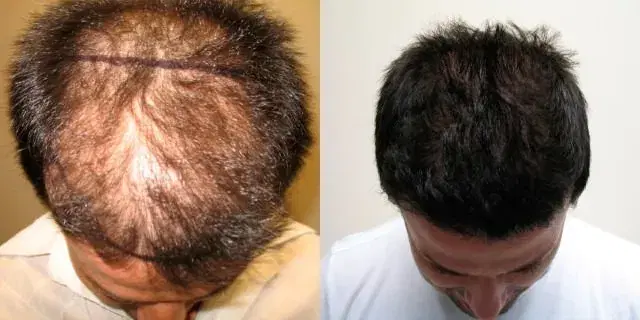
What Should Hair Transplant Results Look Like After 5 Years?
Five years after a hair transplant, the initial healing and growth stages are long finished. Transplanted follicles that established themselves successfully should have passed through several normal hair growth cycles, producing strands that can be washed, cut and styled like other hair.
A well-preserved result generally shows a recognizable hairline, established coverage and a natural relationship between transplanted and surrounding hair.
However, the fifth-year appearance may differ from photographs taken twelve months after surgery. The important question is whether those differences come from the transplanted follicles themselves or from changes elsewhere on the scalp.
Does Transplanted Hair Remain Permanent After Five Years?
Hair transplantation relies on donor dominance, the tendency of follicles to retain characteristics associated with their original location after being moved.
Follicles from suitable regions at the back and sides of the scalp are generally more resistant to the hormonal process responsible for androgenetic alopecia.
Once successfully transplanted, many continue producing hair for years and potentially decades.
However, describing every transplanted follicle as permanently immune to hair loss oversimplifies the biology. Donor regions can change with age, and some follicles may gradually weaken.
The more accurate expectation is long-lasting growth from appropriately selected donor hair, rather than an absolute guarantee that every graft will survive unchanged for life.
Why Can Natural Hair Continue Thinning After a Transplant?
Hair transplantation redistributes follicles but does not stop the underlying process of hereditary hair loss.
Consider someone who underwent frontal hairline restoration at age thirty. By thirty-five, the transplanted hairline may remain recognizable while the natural hair immediately behind it has become noticeably finer.
This happens because susceptible native follicles can continue responding to dihydrotestosterone, or DHT, by gradually producing thinner strands.
Over successive growth cycles, some hairs become so fine that they contribute little visible coverage.
A transplant does not alter the genetic sensitivity of these untransplanted follicles. Long-term results therefore depend partly on what happens to the hair that surgery never moved.
Can Transplanted Hair Follicles Also Weaken Over Time?
Transplanted hair can undergo changes in thickness and growth as a person ages.
Donor dominance provides a meaningful degree of resistance to androgen-related miniaturization, but it is not an absolute biological barrier.
Follicles harvested from unstable donor regions may be especially vulnerable to future thinning.
Some long-term observations have also reported reduced apparent density in previously transplanted areas. Establishing whether this reflects changes in the grafts themselves, surrounding native hair or both can be difficult.
A significant decline should therefore be investigated rather than automatically attributed to ordinary aging.
The distinction matters because the appropriate response depends on whether functioning follicles remain.
What Does Clinical Research Reveal About Long-Term Hair Transplant Results?
Long-term evidence is less extensive than the number of short-term postoperative photographs might suggest.
Many hair transplant studies assess results during the first year, when growth and cosmetic maturation become apparent.
One observational study followed 112 patients after follicular unit transplantation and compared photographs taken approximately one and four years after surgery. Many showed some reduction in apparent transplanted-area density.
However, photographic grading has limitations. It cannot always separate the loss of transplanted follicles from continued thinning of nearby native hair.
The study therefore raises important questions about durability without establishing that most transplanted follicles fail.
There is no reliable universal percentage describing exactly how much transplanted hair every patient retains after five years.
Why Can the Hairline Stay Full While the Hair Behind It Thins?
A frontal hair transplant often places relatively stable donor follicles directly along a previously receding hairline.
If native hair behind that new border continues to miniaturize, an unusual contrast can develop: a strong frontal edge followed by a visibly thinner mid-scalp.
This pattern can create the impression that the transplant has become artificial, even when the grafts along the hairline remain healthy.
A very low or unusually dense hairline may exaggerate that separation.
This is one reason long-term planning considers future hair loss rather than designing the frontal border around the amount of hair present on the day of surgery.
How Does Crown Coverage Change Five Years After Surgery?
The crown presents a different challenge from the frontal hairline because its hairs follow a circular growth pattern and cover a relatively broad surface.
Even a substantial number of transplanted grafts may create moderate rather than complete visual density.
If native crown hair continues thinning after surgery, more scalp can become visible between the transplanted strands.
Overhead lighting often makes this change particularly noticeable.
The crown can therefore appear less full five years later without every transplanted graft having been lost.
Assessing the original graft distribution, current shaft thickness and progression of native hair loss helps determine whether additional treatment would provide meaningful improvement.
Can a Hair Transplant Look Less Dense Without Losing Grafts?
Visible fullness is influenced by more than the number of surviving follicles.
Hair shaft diameter, strand length, curl pattern and the contrast between hair and scalp all affect perceived density.
A person who previously wore longer hair may notice substantially more scalp after switching to a short haircut.
Similarly, fine straight hair tends to provide less overlapping coverage than thicker or wavier strands.
Gradual thinning of natural hair between transplanted units can further change the appearance without reducing the number of grafts originally placed.
This explains why a photograph alone cannot reliably measure follicular survival.
A convincing assessment requires examining both hair density and the characteristics of the individual strands.
Do Aging and Hair Color Changes Affect Transplant Results?
Transplanted hair remains living hair and continues to participate in normal aging.
Over time, strands may lose pigment, change in diameter or grow differently as the donor follicles themselves age.
Graying can also alter the visual contrast between hair and scalp. In some people, lighter hair makes thinning less noticeable, while changes in texture create a different styling appearance.
These developments do not necessarily indicate surgical failure.
A transplant performed at age thirty should not be expected to look entirely identical at fifty.
Long-term aesthetic success means that the restored hair continues to fit naturally with the person's evolving appearance, rather than remaining frozen at its first-year presentation.
Does FUE or FUT Produce Better Results After Five Years?
Follicular Unit Extraction and Follicular Unit Transplantation differ mainly in how donor follicles are harvested.
FUE removes individual follicular units through small extraction sites. FUT removes a strip of hair-bearing scalp that is subsequently divided into grafts.
Once healthy follicles have established growth in the recipient area, their long-term behavior is not determined solely by whether they were obtained through FUE or FUT.
Neither technique has been conclusively shown to provide universally superior five-year follicular survival.
The more important variables include donor follicle stability, damage during harvesting, graft handling and the original surgical design.
Donor-area scarring and remaining donor reserves may differ more noticeably between the techniques.
What Happens to the Donor Area Five Years After a Hair Transplant?
By the fifth year, the donor area has long completed its initial surgical healing.
Its appearance primarily reflects how many follicles were removed, how harvesting was distributed and whether the remaining hair has stayed stable.
FUE may leave numerous small extraction marks, while FUT typically leaves a linear scar.
If harvesting was concentrated too heavily in one region, permanent uneven thinning may remain visible.
Long-term donor quality also determines whether another procedure remains feasible.
Do Removed Donor Follicles Regrow Over Time?
A follicular unit completely extracted from the donor area does not normally regenerate at its original location.
The unit has been transferred to another part of the scalp, permanently reducing the donor region's follicular supply.
Surrounding hairs may grow longer or provide better coverage after recovery, making the extracted area look fuller.
That visual improvement should not be confused with regeneration of the removed follicles.
Five years after surgery, the donor region cannot be expected to replenish the grafts used during the original operation.
This biological limitation becomes especially relevant when considering corrective procedures or another transplant to address continuing hair loss.
Can Hair Transplant Scars Become More Visible After Five Years?
Surgical scars remain present even when they are barely noticeable beneath surrounding hair.
FUE scars may appear as scattered pale dots, particularly after closely shaving the donor area. A FUT scar may become more visible if the surrounding hair thins or is cut very short.
Scars can also look different as skin texture and hair coverage change over time.
A scar that has healed normally does not necessarily become progressively larger during the fifth year.
However, worsening hair loss around the area may expose markings that were previously concealed.
The long-term appearance therefore depends on both scar formation and how much healthy donor hair remains around it.
Can a Transplanted Hairline Look Unnatural as You Get Older?
A transplanted hairline can maintain its graft density while becoming less harmonious with the surrounding hair.
For example, a very low, sharply defined hairline may appear proportionate shortly after surgery but look less natural if the temples and mid-scalp continue receding.
The issue is often not the survival of the transplanted hairs. It is the changing relationship between a fixed frontal design and progressive native hair loss.
A natural-looking hairline usually benefits from subtle irregularities, suitable temple recession and enough flexibility to remain convincing as the face and remaining hair change.
Planning for future appearance is as important as producing a strong immediate result.
How Should You Compare One-Year and Five-Year Hair Transplant Photos?
Photographs are useful for assessing long-term changes, but comparisons become misleading when hair length, lighting or camera position differs.
Match the lighting: Compare images taken under similar illumination, including overhead light, rather than contrasting a bright five-year photograph with a softly lit early result.
Use comparable hair lengths: Shorter hair reveals more scalp, so significant differences in length can exaggerate apparent thinning.
Reproduce the same viewpoints: Frontal, side and crown photographs should use consistent angles and head positions to show changes accurately.
Examine separate regions: Assess the transplanted hairline, mid-scalp, crown and donor area individually instead of judging the entire result from one photograph.
Can Finasteride Help Preserve Hair Transplant Results?
Finasteride can help selected men maintain hair affected by androgenetic alopecia by reducing the conversion of testosterone into DHT.
Its principal value after transplantation is slowing further miniaturization of susceptible native follicles.
Five-year controlled research has demonstrated sustained benefits in male pattern hair loss compared with untreated progression.
However, those findings relate to medical treatment of androgenetic alopecia, not a guarantee that every transplanted graft will survive.
Finasteride is not appropriate for everyone and requires consideration of possible adverse effects, medical history and reproductive circumstances.
Its role is best understood as management of the continuing hair-loss condition rather than maintenance of surgically transferred follicles alone.
Does Minoxidil Help Maintain Hair Density After Transplantation?
Minoxidil can support hair growth in certain forms of pattern hair loss and may help maintain the appearance of thinning native hair.
It does not create additional transplanted follicles or replace grafts lost through unsuccessful implantation.
Topical minoxidil typically requires consistent use over months before meaningful changes can be assessed.
Oral minoxidil is another option in selected circumstances, but it requires medical assessment because of possible systemic effects, including changes in blood pressure, swelling and unwanted hair growth.
Neither formulation should be viewed as a universal requirement after transplantation.
The relevant question is whether ongoing miniaturization is present and whether the expected benefit justifies continued treatment.
What Happens When Hair Loss Medication Is Stopped?
Treatments used to manage androgenetic alopecia generally provide benefits while their effects are maintained.
When finasteride is discontinued, its suppression of DHT gradually reverses. Susceptible follicles may resume the process of miniaturization.
Similarly, stopping minoxidil can lead to the gradual loss of hair growth benefits that depended on continued treatment.
A person may then notice less density around a previously transplanted hairline.
This does not necessarily mean the transplanted follicles have failed.
The loss may involve natural hair that medication had been helping to preserve.
Changes to prescription treatment should account for the original diagnosis, tolerability and the possibility of renewed progression.
Is Sudden Hair Shedding Five Years After a Transplant Normal?
A sudden increase in hair shedding after five years should not automatically be attributed to the old transplant.
The temporary shock shedding associated with surgery usually occurs during the early postoperative period, not for the first time several years later.
An abrupt change may instead reflect telogen effluvium following illness, significant physiological stress, weight loss or another disturbance of the hair growth cycle.
Nutritional deficiencies, thyroid disorders and inflammatory scalp conditions can also contribute to shedding.
Because both transplanted and natural follicles participate in ordinary growth cycles, either population may be affected by a separate hair-loss condition.
Identifying the cause is more useful than assuming the transplant has suddenly stopped working.
How Can You Tell Whether Transplanted or Native Hair Is Thinning?
The original transplant records provide an important starting point because they show where grafts were placed and how they were distributed.
If new thinning appears mainly between previously transplanted zones, continued native hair loss may be responsible.
However, grafts and natural follicles can become closely mixed, making visual identification difficult.
Trichoscopy allows magnified examination of follicular density, hair shaft diameter and miniaturization patterns.
Comparing these findings with donor-area measurements and earlier photographs can clarify whether the change represents progressing androgenetic alopecia, altered graft growth or another disorder.
The diagnosis should precede any decision to use additional donor follicles.
Which Changes Five Years After a Hair Transplant Require Medical Attention?
Not every variation in density signals a serious problem, but some changes need assessment rather than cosmetic concealment.
Rapid or extensive shedding: A sudden increase in hair loss, particularly across several scalp regions, may indicate a new medical or hair-cycle disturbance.
Painful or inflamed patches: Persistent redness, pustules, crusting or tenderness can suggest an inflammatory or infectious scalp condition.
Smooth expanding bald areas: Loss of visible follicular openings, shiny skin or progressive scarring requires evaluation for conditions that can permanently damage follicles.
Unexpected donor-area thinning: Noticeable loss at the back or sides of the scalp may indicate donor miniaturization or a separate hair-loss disorder that affects future treatment options.
Is a Second Hair Transplant Necessary After Five Years?
A second hair transplant may be considered when natural hair loss has progressed enough to create new areas requiring coverage.
This does not necessarily indicate failure of the first operation.
For example, a successful frontal restoration may still look natural while a newly thinned crown becomes the main concern five years later.
Another procedure might also address an irregular hairline, insufficient density or an earlier technical problem.
However, surgery should not be the first response to every change.
Determining whether the hair loss is active, medically manageable or associated with inflammation helps establish whether additional transplantation would provide a lasting benefit.
What If the Donor Area Has Limited Hair Remaining?
A second transplant must rely on follicles that remain available after the first procedure.
When the donor reserve has been significantly reduced, removing additional grafts can create visible thinning at the back or sides of the head.
A larger recipient area does not make the donor supply expand.
In selected situations, beard or body hair may supplement scalp grafts, although differences in texture, growth patterns and survival can limit their usefulness.
Preserving the donor area may be more important than attempting to correct every visible gap.
Can Scalp Micropigmentation or Styling Improve Five-Year Results?
A thinner appearance does not always require another surgical procedure.
Scalp micropigmentation uses small pigment deposits to reduce the contrast between hair and skin, which may improve the appearance of sparse areas or donor scars.
It does not increase actual follicular density or stop further hair loss.
Hairstyle changes can also make a difference. Adjusting length, direction or texture may allow existing strands to overlap more effectively.
These options can be useful when the remaining donor reserve is limited or when further transplantation would offer only modest improvement.
The most appropriate choice depends on whether the priority is improving visible coverage or treating an actively progressing hair-loss condition.
Which Factors Have the Greatest Influence on Long-Term Results?
Five-year results reflect decisions made before surgery as well as changes that occur afterward.
Stable donor follicles: Grafts harvested from appropriately assessed donor regions have better prospects of maintaining useful growth as the surrounding scalp ages.
Conservative hairline planning: A balanced frontal design is less likely to become visually isolated if natural hair continues receding behind it.
Management of progressive hair loss: Identifying and treating androgenetic alopecia when appropriate helps protect native hair that transplantation does not make resistant to DHT.
Preservation of donor reserves: Avoiding excessive harvesting maintains natural coverage at the back of the scalp and leaves greater flexibility for future restoration.
How Can You Maintain Hair Transplant Results Beyond Five Years?
Maintaining a hair transplant is less about protecting an operation completed years ago and more about managing the scalp that continues to change around it.
Regular photographs taken under consistent conditions can reveal gradual loss of density that may otherwise go unnoticed.
When androgenetic alopecia remains active, appropriate medical treatment may help preserve susceptible natural hair. Good scalp care and prompt assessment of persistent inflammation also support healthy follicular function.
Donor hair should be treated as a limited resource, particularly when another transplant is being considered.
The most durable results combine stable transplanted follicles with realistic hairline design and ongoing attention to native hair loss.
Five years is therefore not an expiration point for a transplant. It is a useful stage at which to distinguish what surgery has preserved, what the underlying hair-loss condition has changed and what should be protected for the years ahead.