
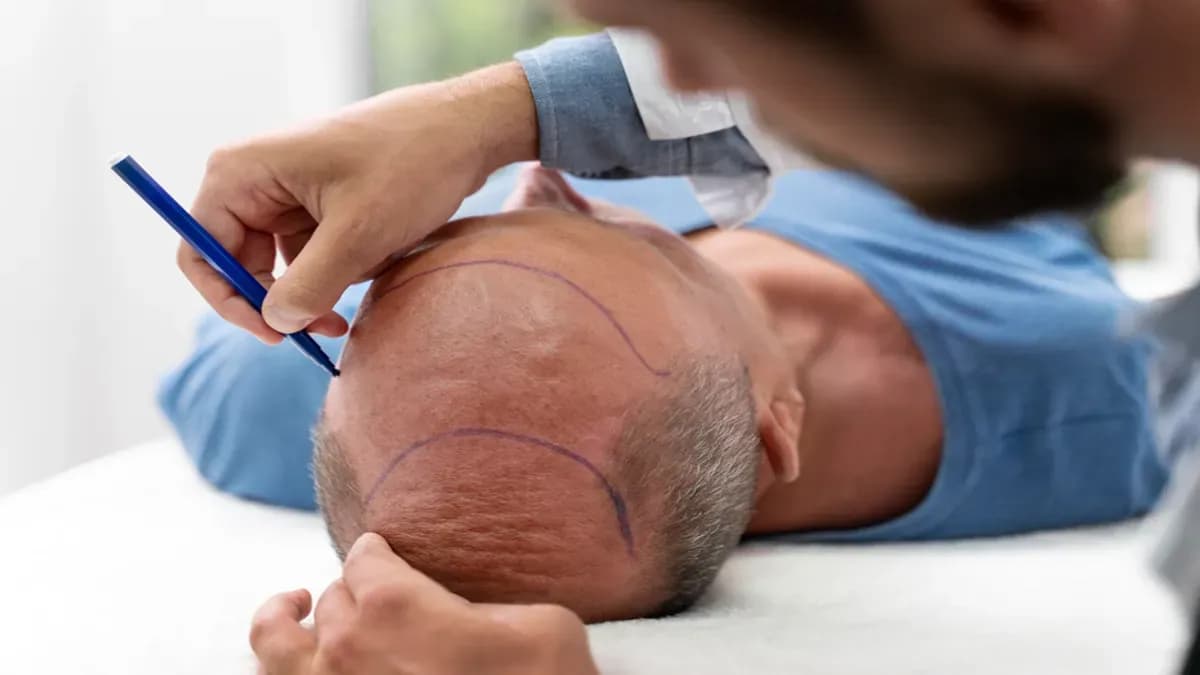
A hair transplant that uses your own hair is not considered haram by most contemporary Islamic scholars.
The procedure moves healthy follicles from one area of your scalp to another. It adds no foreign hair and creates nothing new. Many scholars treat hair loss as a condition that a person may lawfully address. The rulings that prohibit hair extensions concern attaching someone else's hair, which a hair transplant does not involve. Questions about intention, wudu and fasting still matter, and this guide answers each of them clearly.
Why Muslims Ask Whether a Hair Transplant Is Haram
Many patients want their treatment to match their faith. A hair transplant is a surgical procedure, and it changes how a person looks. That combination naturally raises religious questions before patients make a decision.
Two concerns come up most often. The first is the prohibition on changing the creation of Allah. The second is the prohibition on attaching false hair. Both concerns deserve a careful answer, because they shape how scholars view the procedure.
What Happens During a Hair Transplant?
Understanding the procedure helps explain the religious ruling. In a hair transplant, the team removes follicular units from the donor area. This is usually the back and sides of the head. The team then places these follicles into thinning or bald areas.
The transplanted follicles are your own. They keep growing in their new location and behave like the rest of your hair. You can cut, wash, dye and style them as usual. No synthetic fibre and no hair from another person enters your scalp.
This point is central to the discussion. The procedure relocates what Allah has already given you. It does not add something that was never part of your body.
Does a Hair Transplant Change the Creation of Allah?
The Quran warns against changing the creation of Allah. Scholars have long discussed where this warning applies and where it does not. Most draw a clear line between treating a defect and altering a healthy body for vanity.
Restoring what illness, ageing or genetics has taken away falls into the first group for many scholars. Hair loss changes a person's natural appearance. A transplant aims to return that appearance to a familiar state, not to create a new one.
Medical treatment is encouraged in Islam. The well-known teaching that Allah has sent a cure for every disease supports seeking treatment for physical conditions. Many scholars place hair restoration within this framework, especially when hair loss causes real distress.
Scholars are more cautious about procedures that pursue an exaggerated or unnatural look. A natural hairline that suits your age and face respects this concern. An extreme design with no basis in your natural features moves closer to the area scholars warn against.
Is a Hair Transplant the Same as Hair Extensions?
No, the two are different in both method and ruling. The hadith that curses the woman who joins hair to her hair refers to attaching hair from another source. This practice, known as wasl, adds false hair to create an impression that is not real.
A hair transplant does not attach anything from outside the body. The hair already belongs to you and simply grows in a different place. For this reason, many scholars conclude that the prohibition on wasl does not cover a transplant using your own follicles.
The ruling changes when the material changes. Hair taken from another person raises serious religious concerns. Synthetic hair implants also attract caution from many scholars. These options differ from a standard FUE, Sapphire FUE or DHI procedure, which uses only your own donor hair.
When Could a Hair Transplant Be Considered Haram?
Certain conditions can change the ruling, even when the procedure itself is permissible. Scholars commonly highlight the following points:
Hair from another person: Using hair or follicles from someone else falls under the prohibition on attaching foreign hair.
Unjustified harm: A procedure that carries serious risk without a real benefit conflicts with the duty to protect the body.
Deception: Using a changed appearance to mislead someone, for example in a marriage proposal, raises ethical concerns.
Imitating the opposite sex: A hairline or style that deliberately imitates the opposite sex conflicts with clear religious guidance.
Extreme or unnatural results: Designs that aim for an exaggerated look move away from restoring a natural state.
A carefully planned transplant avoids all of these concerns. It uses your own hair, protects your donor area and aims for a hairline that matches your natural features.
Hair Transplant and Intention
Intention, or niyyah, carries weight in Islamic ethics. Many patients seek a hair transplant because hair loss affects their confidence, comfort or well-being. Scholars generally view this kind of motivation as legitimate.
Seeking a normal, healthy appearance differs from seeking attention or pride. Reflecting on your intention before the procedure helps you approach the decision with a clear conscience.
Is a Hair Transplant Halal for Women?
The same principles apply to women. Female hair loss can result from genetics, hormonal changes or other conditions. A transplant that uses a woman's own follicles to restore thinning areas follows the same reasoning scholars apply to men.
The prohibition on wasl is often discussed in relation to women. However, it concerns attaching foreign hair, not relocating a woman's own hair. Women who choose a transplant should keep a natural hairline and respect the usual guidance on modesty during treatment.
Wudu, Ghusl and Prayer After a Hair Transplant
Transplanted hair is part of your body, so it does not create a barrier for wudu or ghusl. Water reaches the scalp and the hair in the normal way. This differs from hair systems or wigs, which can prevent water from reaching the skin.
The first days after surgery need extra care. The recipient area is sensitive, and your care instructions may limit direct washing. Scholars generally allow wiping over a dressing or a protected area when washing could cause harm. Once your team allows normal washing, you can return to your usual routine.
You can continue to pray after a hair transplant. During the first days, take care that the recipient area does not press against the prayer mat. Your post-operative instructions explain how to protect the grafts during prostration.
Can You Have a Hair Transplant During Ramadan?
Many patients prefer to schedule their procedure outside Ramadan. The operation involves local anaesthetic injections and medication, and scholars hold different views on how injections affect the fast. Post-operative medication and hydration also matter during the first days of recovery.
Planning the procedure after Ramadan removes these questions. If you still wish to proceed during the month, discuss the medical plan and the religious ruling first.
What About Hajj and Umrah?
Pilgrims often shave or trim their hair at the end of Hajj or Umrah. Transplanted hair can be shaved like the rest of your hair once the grafts have settled. In the early recovery period, however, the scalp needs protection.
If you plan a pilgrimage, allow enough time between the procedure and your journey. This gives the grafts time to heal and lets you complete the rites without concern.
Our Approach at Esthetic Hair
Many of our patients share these questions before treatment. We welcome them and answer them openly during the consultation.
We use only the patient's own donor hair in FUE, Sapphire FUE and DHI procedures. We design hairlines that suit each patient's age, face and natural features. We also protect the donor area, so the result looks natural and the scalp stays healthy.
For a detailed religious ruling on your personal situation, you can consult a scholar you trust. We are happy to share medical details about the procedure to support that conversation.
Frequently Asked Questions
Is a hair transplant haram in Islam?
Most contemporary scholars consider a hair transplant permissible when it uses your own hair. The procedure relocates existing follicles and adds no foreign hair.
Is a hair transplant considered changing the creation of Allah?
Many scholars view it as restoring a natural state, not changing creation. The aim is to treat hair loss, not to create an unnatural appearance.
Is it haram to use hair from another person?
Yes, scholars widely consider using another person's hair impermissible. This falls under the prohibition on attaching foreign hair.
Does transplanted hair affect wudu or ghusl?
No, transplanted hair is your own and lets water reach the scalp. During early recovery, wiping over a protected area is generally allowed.
Can women have a hair transplant in Islam?
Yes, the same principles apply to women. A transplant using a woman's own follicles follows the same reasoning as for men.
Can I pray normally after a hair transplant?
Yes, you can continue to pray. During the first days, follow your post-operative instructions to protect the grafts during prostration.