
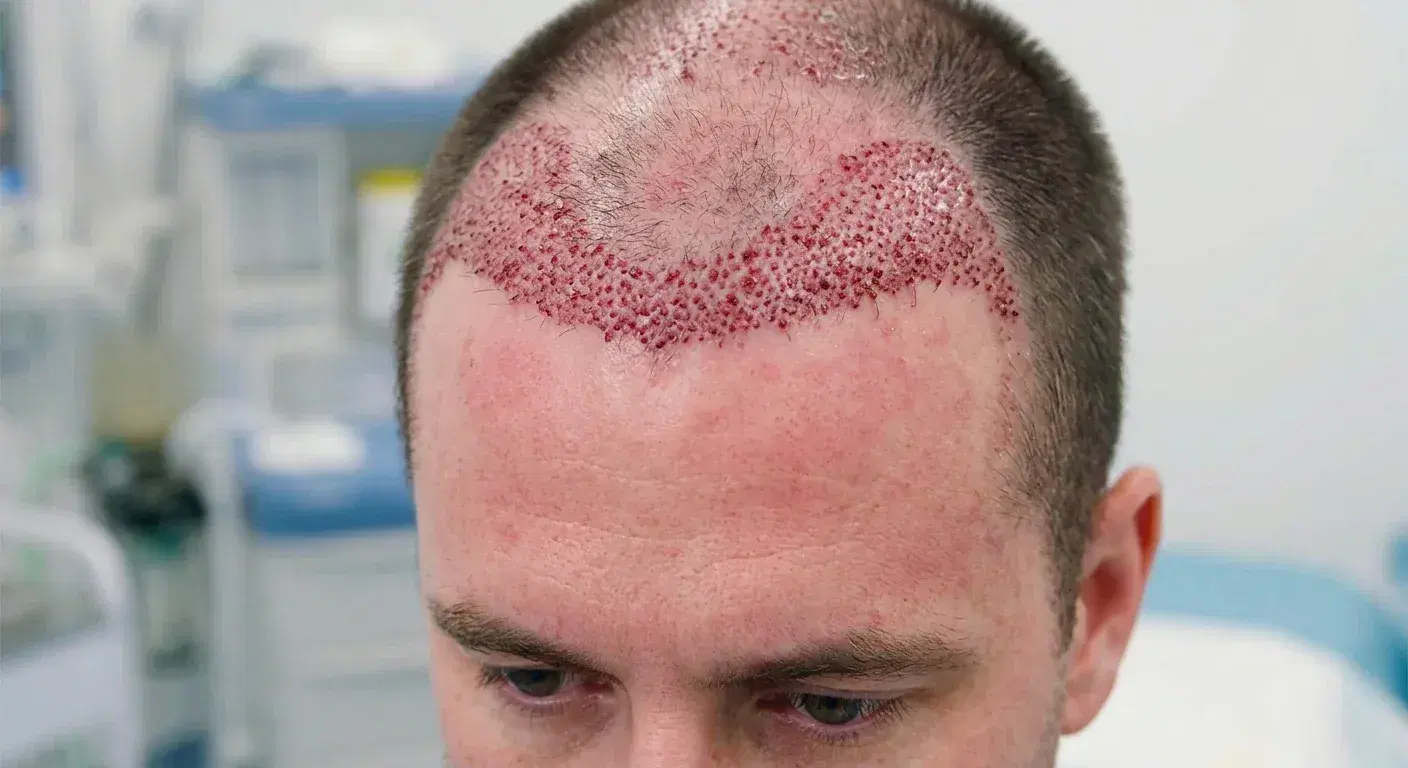
Redness after a hair transplant is a common part of scalp healing and usually begins fading within the first two weeks, although it can remain visible for two to four weeks or longer. The redness develops as the skin responds to follicular extraction and implantation, with some patients experiencing a pink scalp for several months before their natural skin tone returns.
Is Redness Normal After a Hair Transplant?
A red or pink scalp is an expected reaction after hair transplant surgery because the procedure creates numerous small openings in the skin. These openings allow healthy follicles to be extracted from the donor area and implanted into regions affected by hair loss, temporarily triggering the body's natural inflammatory response.
Immediately after surgery, the recipient area may appear noticeably red, particularly around the newly implanted grafts. The donor region can also develop redness, tenderness, and small healing marks. These changes generally become less prominent as the surface wounds close and the surrounding tissue recovers.
The important factor is how the redness develops over time. Mild discoloration that gradually fades is usually consistent with ordinary healing, whereas redness accompanied by increasing pain, warmth, or discharge may indicate a complication requiring attention.
Why Does the Scalp Turn Red After Hair Transplant Surgery?
Scalp redness primarily develops through inflammation and increased blood circulation associated with wound healing. When surgical instruments create small incisions, the body directs blood and immune cells toward the affected tissues to support repair and protect the damaged skin.
This process causes temporary changes in the appearance of the scalp, often producing pink or reddish areas around individual follicles. The medical term for this visible discoloration is erythema, which describes redness associated with increased blood flow in superficial skin vessels.
As healing progresses, inflammation gradually decreases and the protective skin barrier begins functioning normally again. However, the visible redness does not necessarily disappear at the same time as crusting or tenderness, since changes in the superficial blood vessels may remain apparent after the wounds have closed.
How Long Does Redness Last After a Hair Transplant?
Most postoperative scalp redness improves significantly within two to four weeks, although mild pinkness can persist for several months. Understanding the different stages of healing helps explain why the scalp may continue looking irritated even when there are no signs of infection.
Days 1–3: Immediate Redness and Inflammation
During the first three days, the transplanted area commonly appears red because the skin has recently undergone thousands of small surgical openings. Mild swelling and tenderness may accompany the discoloration, while small crusts begin developing around the implanted follicles.
The donor region may also show scattered red marks where follicles were extracted. At this early stage, the scalp requires protection from scratching, rubbing, and unnecessary pressure.
Days 4–14: Redness Begins to Fade
During the first two weeks, the superficial wounds gradually close and crusts begin separating from the scalp. Redness often becomes less intense during this period, particularly as swelling decreases and the skin regains its protective function.
Some patients notice that the donor area improves more quickly than the recipient region. However, a pink appearance may remain noticeable after the crusts have disappeared, especially around the frontal hairline.
Weeks 3–4: Persistent Pinkness
By the third or fourth week, many patients experience substantial improvement in scalp color. The skin may look nearly normal in some areas while remaining slightly pink around individual transplanted follicles.
This pattern can occur even when healing is progressing normally. However, redness that continues to intensify or becomes associated with painful bumps should be assessed rather than assumed to be an ordinary postoperative reaction.
Months 2–3: Lingering Scalp Redness
Some patients continue experiencing mild scalp redness for two or three months. The discoloration may remain more noticeable on lighter skin or in areas with limited existing hair coverage.
Persistent pinkness does not automatically mean that grafts have failed. Nevertheless, redness lasting beyond the expected initial recovery period deserves attention, particularly when accompanied by itching, tenderness, or visible inflammation.
Why Does Redness Last Longer in Some People?
Several factors influence how long postoperative redness remains visible. Skin sensitivity, baseline skin tone, the extent of surgical manipulation, and the presence of underlying scalp conditions can all affect the appearance of the healing area.
People with fair skin often notice redness more clearly because superficial blood vessels contrast more strongly with their natural complexion. In darker skin tones, postoperative inflammation may instead produce discoloration that appears brown, purple, or darker than the surrounding skin.
The size of the recipient area also matters. Extensive transplantation creates more healing sites, which can make inflammation and visible discoloration more widespread.
Pre-existing conditions such as seborrheic dermatitis, psoriasis, or contact sensitivity can further complicate recovery when they cause additional scalp inflammation.
Redness in the Donor Area vs Recipient Area
The donor and recipient regions undergo different forms of surgical manipulation, so their healing patterns are not always identical.
During FUE transplantation, the donor area develops numerous small extraction sites that gradually close. Redness commonly appears as scattered dots or a more diffuse pink area, particularly when the surrounding hair has been shaved short.
The recipient region develops redness around the implanted follicles because each graft is placed into a prepared opening. These areas can remain visibly pink even after the surface crusts have disappeared.
Temporary redness in both regions is expected, but persistent inflammation accompanied by pain or discharge requires evaluation regardless of where it occurs.
Does FUE, DHI or Sapphire FUE Cause More Redness?
FUE, DHI, and Sapphire FUE all involve surgical manipulation of the scalp, meaning temporary redness can occur after each technique.
With conventional FUE, follicular units are extracted individually and placed into prepared recipient sites. Sapphire FUE uses sapphire-tipped blades for channel creation, while DHI commonly uses an implanter instrument during graft placement.
Although the instruments and implantation methods differ, each approach disrupts the skin barrier and triggers a healing response. There is insufficient evidence that choosing a particular technique completely prevents postoperative redness.
The amount of tissue manipulation, graft distribution, and condition of the scalp are more relevant than assuming one method guarantees faster disappearance of discoloration.
How to Reduce Redness After a Hair Transplant
Reducing postoperative redness involves protecting the scalp while allowing its natural healing processes to continue. There is no reliable method that instantly eliminates inflammation, but appropriate aftercare can help prevent unnecessary irritation.
Wash the Scalp Gently
Gentle washing removes accumulated oil, skin debris, and loose crusts without exposing newly implanted grafts to excessive friction. During early recovery, strong water pressure, aggressive massage, and scratching can disturb healing areas.
Use the cleansing products recommended for postoperative care and avoid introducing unfamiliar shampoos while the scalp remains sensitive.
Following appropriate hair transplant aftercare guidelines helps maintain scalp hygiene and minimize avoidable irritation throughout the recovery period.
Avoid Scratching and Removing Scabs
Scabs form naturally as small surgical wounds heal. Removing them prematurely can reopen sensitive areas, increase inflammation, and potentially interfere with graft protection.
Itching may become noticeable as the scalp recovers, but rubbing or scratching should be avoided. Keeping the area clean and following the recommended moisturizing routine can help maintain comfort without unnecessary mechanical irritation.
Protect the Scalp From Heat and Sunlight
Recently transplanted skin may be more sensitive to sunlight because its protective barrier is still recovering. Prolonged ultraviolet exposure can aggravate redness and contribute to unwanted pigmentation changes.
During early healing, avoiding direct midday sunlight and excessive heat is preferable. Once the scalp has healed adequately, suitable sun protection can be introduced without irritating the recipient area.
Can Minoxidil or Hair Products Make Redness Worse?
Certain topical hair products can irritate a scalp that has not fully recovered from transplantation. Minoxidil solutions containing alcohol or propylene glycol, for example, may produce stinging, dryness, or contact irritation in susceptible individuals.
Applying these products prematurely can make existing redness more noticeable. Fragranced shampoos, concentrated essential oils, and strong scalp exfoliants may create similar problems.
Hair growth treatments should therefore be restarted according to postoperative instructions rather than immediately after surgery. Introducing multiple products simultaneously also makes it harder to identify the cause if irritation develops.
Normal Redness vs Infection After a Hair Transplant
Postoperative redness and infection can share certain visible characteristics, but their progression often differs.
Normal healing-related redness generally decreases over time and may occur alongside mild tenderness or itching. The skin gradually becomes more comfortable as crusts separate and swelling resolves.
An infection may instead produce expanding redness, increasing warmth, worsening pain, or discharge from the affected area. Fever, unusual swelling, or rapidly deteriorating skin changes also require prompt medical assessment.
Although infections after modern hair transplantation are relatively uncommon, they remain possible because the procedure creates numerous small wounds.
Understanding the potential risks and complications of hair transplant surgery helps distinguish expected recovery symptoms from changes that should not be ignored.
Can Folliculitis Cause Persistent Redness?
Folliculitis involves inflammation around hair follicles and can develop during the weeks following transplantation. It may appear as small red bumps, tender spots, or pustules in the recipient or donor area.
Not every case of folliculitis involves bacterial infection. Some reactions develop when emerging hairs become trapped beneath the skin or when local inflammation affects the follicular openings.
However, painful or persistent bumps should not be squeezed or treated aggressively at home. Proper assessment can distinguish sterile inflammation from infection and identify whether treatment is necessary.
Does Redness Affect Hair Transplant Results?
Mild postoperative redness does not automatically indicate poor graft survival or an unsuccessful hair transplant. The visible color of the scalp reflects skin healing, while hair growth depends on the activity and survival of the transplanted follicles.
Many transplanted hair shafts shed during the first several weeks, even as scalp redness begins fading. New growth commonly becomes noticeable around the third or fourth month, with density improving over subsequent months.
However, significant or persistent inflammation can sometimes be associated with complications that may affect follicular growth. This makes it important to distinguish uncomplicated pinkness from ongoing folliculitis, infection, or other inflammatory conditions.
The final result cannot be evaluated from the appearance of redness alone.
Can You Cover Hair Transplant Redness With a Hat or Concealer?
Visible redness around the hairline may create concerns about returning to work or social activities. However, cosmetic coverage should never interfere with early graft protection.
Tight hats can produce friction and pressure against recently implanted follicles, particularly when removed or adjusted. Headwear should only be introduced when it can be used without disturbing the healing scalp.
Hair fibers, makeup, and scalp concealers should also be avoided over fresh surgical wounds. Once the skin has fully healed, suitable cosmetic products may help reduce the visibility of lingering pinkness.
The priority during the initial recovery period remains protecting the transplanted area rather than concealing every visible sign of surgery.
When Should You Seek Medical Attention for Scalp Redness?
Redness that gradually fades without increasing discomfort is generally consistent with ordinary postoperative recovery. However, certain symptoms suggest that the scalp requires medical assessment.
Spreading redness, increasing pain, unusual warmth, persistent discharge, fever, or the development of dark and damaged-looking skin should be evaluated promptly. These changes may indicate infection, tissue injury, or another complication requiring treatment.
Even without severe symptoms, redness that remains pronounced for several months or develops alongside persistent itching and bumps deserves further investigation.
Early assessment can help identify treatable inflammatory conditions before they interfere with comfortable healing.