
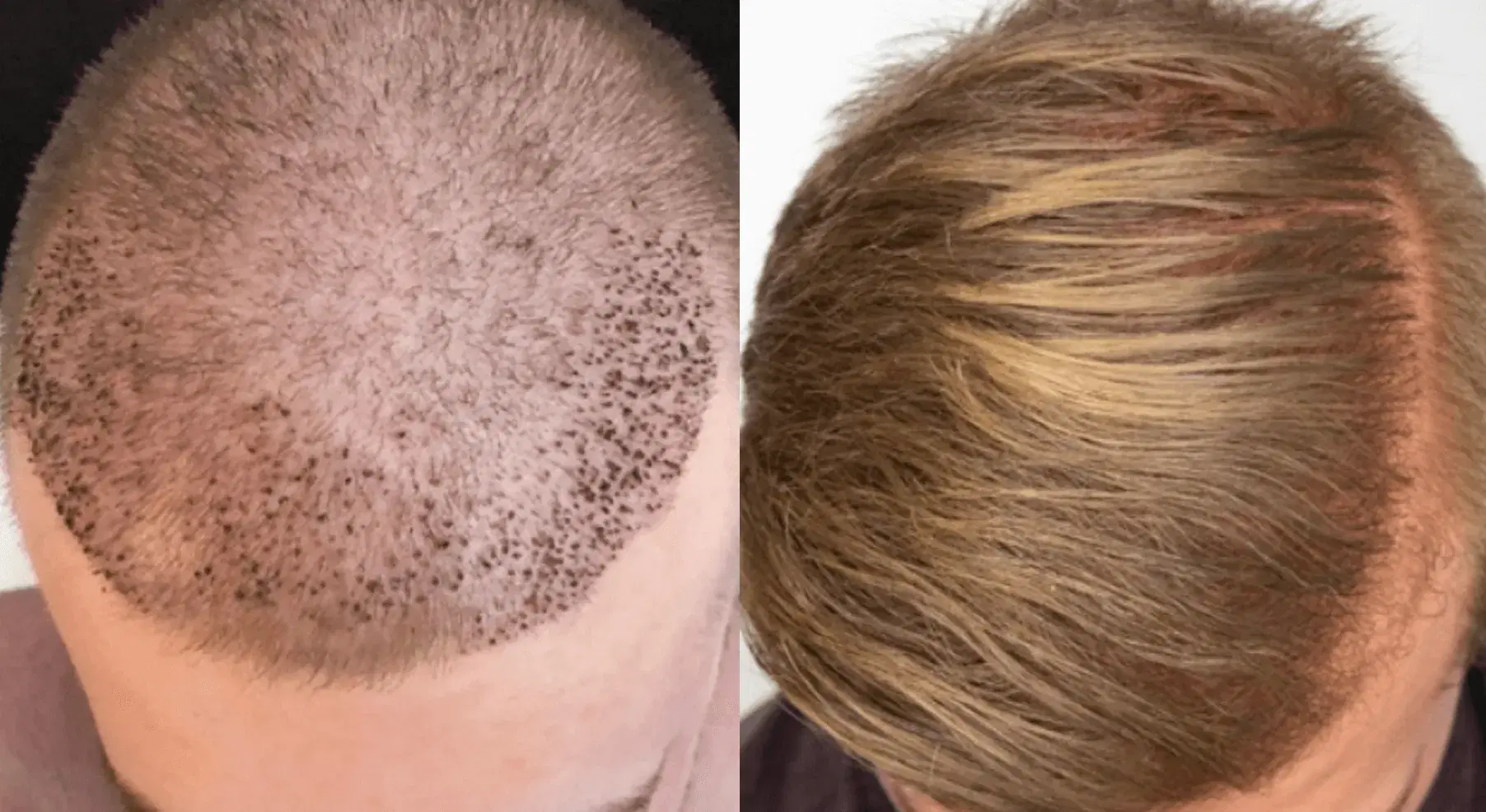
The ugly duckling phase after a hair transplant is a temporary stage when transplanted hair sheds, scalp coverage decreases, and the treated area may look thinner than it did before surgery. This period typically develops during the first few months of recovery, before new hair growth gradually improves density and creates a more natural appearance.
What Is the Ugly Duckling Phase After a Hair Transplant?
The ugly duckling phase describes the period between the initial healing of the scalp and the appearance of meaningful new hair growth. During this stage, the visible results of transplantation may seem disappointing because the newly implanted hair shafts begin to fall out before replacement strands emerge.
Immediately after surgery, the recipient area often appears noticeably fuller because the transplanted follicles still contain their original hair shafts. Although this early appearance can create positive expectations, it does not represent the final result. As the follicles adjust to their new environment, many of these visible strands shed, leaving the scalp temporarily exposed.
The contrast between the early appearance and subsequent thinning explains why this period can feel particularly discouraging. However, shedding does not automatically indicate unsuccessful transplantation, and the follicles beneath the skin can remain capable of producing healthy new hair.
Why Does Hair Look Worse Before It Gets Better?
Hair transplantation creates a temporary interruption in the normal activity of transplanted follicles. During surgery, follicular units are removed from the donor area and placed into small openings within the recipient scalp. Although the procedure relocates living follicles, the process creates physical stress that can influence their growth cycle.
Following implantation, many follicles enter a resting phase known as telogen. The existing hair shafts eventually detach, while the follicles remain beneath the scalp and prepare for another period of growth.
The visible changes can become more pronounced when surrounding native hair also sheds in response to surgical stress. Consequently, the recipient area may appear less dense than it did before transplantation.
Residual redness, uneven hair lengths, and differences between the transplanted area and surrounding hair can further emphasize this temporary appearance. These changes often occur even when the scalp is progressing through an otherwise normal recovery.
When Does the Ugly Duckling Phase Start?
The ugly duckling phase commonly begins between the second and fourth weeks after a hair transplant, when the first noticeable shedding occurs. It often becomes most apparent during the second and third months, as many transplanted follicles remain in their resting phase.
First Month: Initial Healing and Hair Shedding
During the first two weeks, the scalp gradually heals from the transplantation procedure. Small crusts form around implanted follicles, while temporary swelling, redness, and mild sensitivity may remain visible.
As the crusts disappear, the transplanted hair can initially create the impression of greater density. However, shedding commonly begins between weeks two and eight, making the recipient area increasingly sparse.
By the end of the first month, some transplanted strands may already have fallen out, although the underlying follicles can remain intact.
Second Month: The Most Noticeable Thinning
The second month frequently represents one of the most challenging stages of hair transplant recovery. A substantial proportion of transplanted hair shafts may have shed, while new growth has not yet become visible.
This can expose areas of the scalp that appeared covered shortly after surgery. Some people also experience temporary shedding of surrounding native hair, making the difference in appearance more noticeable.
Although this stage can create concerns about graft survival, visible hair density at two months provides little reliable information about the eventual transplantation result.
Third Month: Early Signs of New Growth
Around the third month, some transplanted follicles begin returning to the active growth phase. Fine, short hairs may emerge gradually, although they often remain difficult to notice without close inspection.
Growth rarely occurs uniformly across the entire recipient area. Certain sections may develop visible strands earlier, while neighboring follicles remain temporarily inactive.
This uneven pattern can produce a patchy appearance, but it commonly reflects the gradual restarting of individual follicular growth cycles.
Fourth and Fifth Months: Gradual Improvement
During the fourth and fifth months, new hair typically becomes easier to recognize. Early strands continue gaining length, and additional follicles begin contributing to scalp coverage.
The hair may initially feel finer or have a different texture from the surrounding strands. As growth progresses, some hairs become thicker and more manageable.
Although the recipient area may still appear uneven, the overall appearance generally begins moving away from the sparse conditions associated with the ugly duckling phase.
Is Hair Shedding During the Ugly Duckling Phase Normal?
Shedding after hair transplantation is an expected biological response that affects many transplanted follicles. The process primarily involves the visible hair shaft rather than the permanent loss of the entire follicular structure.
Each hair follicle follows a growth cycle consisting of anagen, catagen, telogen, and shedding. Surgical transplantation can temporarily influence this cycle, causing the hair shaft to detach before the follicle begins producing another strand.
This distinction is essential because a hair that falls out during recovery does not necessarily represent a lost graft. Once the follicle resumes active growth, it can produce a new strand that gradually emerges through the scalp.
However, shedding alone cannot confirm that every transplanted follicle has survived. The overall result becomes clearer as new growth develops over the following months.
Shock Loss vs Transplanted Hair Shedding
Although the terms are sometimes used interchangeably, native hair shock loss and transplanted hair shedding describe related but distinct processes.
Transplanted hair shedding occurs when relocated follicles release their existing shafts after surgery. Native hair shock loss affects hair that was already growing in the recipient area before transplantation.
Native follicles can respond to local inflammation and surgical trauma by temporarily interrupting their normal growth cycle. As a result, some existing strands may shed alongside the transplanted hair.
Many affected native follicles recover, but severely miniaturized hairs associated with progressive androgenetic alopecia may not regain their previous thickness.
How Long Does the Ugly Duckling Phase Last?
The most noticeable part of the ugly duckling phase generally lasts until approximately the third or fourth month after transplantation. However, its conclusion does not mean that the transplanted hair has reached its final density.
New hair growth typically becomes more visible between months three and five, while substantial improvements in coverage often develop between the sixth and ninth months.
By approximately twelve months, much of the cosmetic improvement is usually apparent. Further maturation may continue for twelve to eighteen months, especially in the crown, where visible density can develop more slowly.
The important distinction is between the end of the unattractive shedding stage and completion of the hair transplant result. The scalp may begin looking considerably better months before the hair reaches its mature appearance.
Why Does Transplanted Hair Grow Unevenly?
Uneven growth is a common feature of early hair transplant recovery because transplanted follicles do not restart their active growth phase simultaneously.
Some follicles begin producing new strands relatively early, while others remain in the resting phase for several additional weeks. This creates temporary differences in hair length and density throughout the recipient area.
Newly emerging strands may also appear thin, slightly curled, or different in texture from the original donor hair. These characteristics can change as the follicles continue producing hair through successive growth cycles.
Hair thickness plays an important role in the visual result. As individual strands gain diameter, they provide greater scalp coverage even without a dramatic increase in the number of visible hairs.
For this reason, early patchiness should not automatically be interpreted as evidence of uneven graft placement or permanent follicular failure.
Can the Ugly Duckling Phase Affect the Donor Area?
Although attention usually focuses on the recipient area, temporary changes can also develop where the follicles were extracted.
Following follicular unit extraction, the donor region contains numerous small healing points that can remain noticeable when the surrounding hair is short. Temporary inflammation or localized shedding of existing donor hair may further affect its appearance.
This donor-area shedding can develop several weeks after surgery and often improves as the remaining follicles resume normal growth.
However, temporary shock loss should be distinguished from permanent density reduction caused by the removal of follicles. Hair follicles extracted during transplantation do not regenerate in their original positions, making donor-area planning important for long-term appearance.
How to Manage the Ugly Duckling Phase After a Hair Transplant
Managing this stage involves protecting the recovering scalp while allowing the transplanted follicles to complete their natural growth cycle. There is no established method that can instantly eliminate the resting phase or guarantee accelerated regrowth.
Maintain Gentle Scalp Care
Proper scalp hygiene helps prevent unnecessary irritation during recovery. Gentle washing removes accumulated oil and skin debris without placing excessive mechanical stress on healing areas.
Scratching, forcefully removing crusts, or applying aggressive exfoliating products can irritate the scalp and interfere with comfortable healing.
Once the scalp has recovered sufficiently, a consistent washing routine helps maintain cleanliness without requiring complicated hair care treatments.
Choose Hairstyles That Reduce Visible Contrast
The difference between short transplanted hair and longer surrounding strands can make temporary thinning more noticeable. Maintaining a balanced hairstyle may reduce this contrast and create a more uniform appearance.
Existing hair can sometimes be arranged to provide additional coverage, particularly around the frontal hairline and upper scalp.
Cosmetic concealers or hair fibers may also help disguise thinning after the scalp has fully healed and product use is medically appropriate. Applying these products over open wounds, crusts, or inflamed areas should be avoided.
Avoid Unnecessary Hair Growth Products
The lack of visible growth during the second or third month may encourage people to introduce multiple supplements, oils, or scalp treatments.
However, adding products without an established need does not guarantee faster follicular activation and may expose the recovering scalp to unnecessary irritation.
Hair growth medications can have a role in maintaining native hair or supporting longer-term treatment, but they should not be confused with an immediate solution to postoperative shedding.
How to Track Hair Transplant Progress Without Daily Worry
Hair growth develops slowly enough that meaningful improvements may be difficult to recognize from one day to the next. Frequent mirror checks can therefore create a misleading impression that the appearance has stopped changing.
Monthly progress photographs provide a more useful comparison when taken under consistent conditions. Using the same lighting, camera angles, hair length, and styling approach makes gradual changes in coverage easier to identify.
Photographs taken under harsh overhead lighting can exaggerate exposed scalp, especially when the emerging strands remain short and fine.
Comparing the second month directly with the eighth month is generally more informative than comparing consecutive days. The purpose of monitoring is to recognize long-term development rather than evaluate every newly visible hair.
Does FUE or FUT Affect the Ugly Duckling Phase?
Both follicular unit extraction (FUE) and follicular unit transplantation (FUT) relocate living follicles from a donor region into areas affected by hair loss.
Although the techniques differ in how they collect follicular units, transplanted hair generally follows the same biological pattern of temporary shedding, resting, and gradual regrowth.
The type of extraction does not eliminate the possibility of an ugly duckling phase. Both methods may produce temporary changes in recipient-area density, while donor-area healing and scar appearance differ between the techniques.
The main reason for postoperative shedding remains the follicle's response to transplantation rather than the name of the surgical method.
When Should You Be Concerned About Hair Transplant Recovery?
Temporary shedding, uneven early growth, and mild residual redness can occur during ordinary recovery. However, not every change should automatically be attributed to the ugly duckling phase.
Increasing scalp pain, spreading redness, persistent swelling, fever, or discharge may indicate infection or another complication requiring prompt medical assessment.
Large painful bumps, unexpected bleeding, or significant changes in the donor area also deserve attention.
A lack of visible growth during the second or third month is usually too early to establish treatment failure. Nevertheless, persistent absence of growth well beyond the expected recovery period should be evaluated rather than dismissed indefinitely as normal shedding.
Frequently Asked Questions About the Ugly Duckling Phase
The following questions address common concerns about temporary thinning, the timing of visible improvement, and the relationship between shedding and graft survival.
Can the ugly duckling phase make hair look worse than before surgery? The recipient area can appear thinner than its original condition when transplanted shafts shed alongside surrounding native hair affected by temporary shock loss. This reduction in visible density commonly occurs during the early months and does not necessarily reflect the final outcome, since many follicles remain beneath the scalp and gradually return to active growth.
Does everyone experience the ugly duckling phase after a hair transplant? Transplanted hair shedding is common, although the degree of visible thinning differs depending on existing hair coverage, the amount of shedding, and how the surrounding hair blends with the treated region. Some people experience a pronounced period of patchiness, while others notice relatively modest cosmetic changes during the same biological recovery stages.
Can the ugly duckling phase last longer than four months? Temporary unevenness can remain noticeable beyond the fourth month because transplanted follicles do not begin growing simultaneously and early strands may provide limited coverage. Although the most prominent shedding stage usually improves during the first several months, gradual thickening and maturation commonly continue throughout the first year and sometimes into the eighteenth month.
Final Thoughts on the Ugly Duckling Phase After a Hair Transplant
The ugly duckling phase is a temporary part of hair transplant recovery during which shedding, reduced density, and uneven early growth can make the scalp appear worse before noticeable improvement begins. Although the visual changes may be discouraging, they commonly reflect the natural response of transplanted follicles as they transition into a new growth cycle.
Understanding the recovery timeline, distinguishing normal shedding from potential complications, and monitoring gradual improvements can make this stage easier to manage. Meaningful results develop over months rather than weeks, with new hair progressively gaining the length, thickness, and density needed for a more natural appearance.