
Can Minoxidil Regrow Hairline?
Can minoxidil regrow hairline? This is one of the most common questions people ask when they first notice thinning around the temples, a higher forehead, or a softer front edge where the hair once looked stronger. The honest answer is that minoxidil may help improve hair density in the hairline area for some people, but results depend on the cause of hair loss, how early treatment begins, follicle activity, consistency, and individual response.
A receding hairline can develop slowly. At first, it may look like a slight change near the temples. Later, styling becomes harder, the forehead appears larger, and the front hair may feel thinner than the rest of the scalp. This change can be stressful because the hairline frames the face. Even mild thinning in this area can affect confidence.
Minoxidil is often discussed as a topical option for hair growth support. It is widely used for pattern hair loss and can help some follicles produce thicker, stronger-looking hair over time. Still, it is not a magic solution, and it does not work equally well for every type of hairline recession. Understanding what it can and cannot do is the key to making a realistic decision.
How Minoxidil Works For Hair Growth?
Minoxidil supports hair growth by influencing the hair cycle. Hair follicles naturally move through growth, transition, rest, and shedding phases. When follicles become weaker or miniaturized, the growth phase may shorten. Hair then becomes finer, shorter, and less visible.
Minoxidil may help extend the active growth phase and support thicker hair shafts in follicles that are still alive. This is especially important in early thinning, where follicles are weakened but not completely inactive. In simple terms, minoxidil does not create brand-new follicles. It works with follicles that still have the ability to respond.
This is why timing matters. If the hairline has been fully bare for many years, the chance of visible regrowth is usually lower. If the area still has small, fine, or weak hairs, there may be a better possibility of improvement. These tiny hairs are often called miniaturized hairs, and they can sometimes become thicker with regular treatment.
Can Minoxidil Regrow A Receding Hairline?
Minoxidil can help some people improve a receding hairline, but the response is often more limited than in other scalp areas. Many people notice better results on the crown or mid-scalp than at the temples. The hairline, especially the temple area, can be more resistant because follicles there are often more sensitive to genetic and hormonal influences.
That does not mean minoxidil is useless for the hairline. Some users do see small new hairs, improved density, or slower recession. The most noticeable changes usually happen when treatment starts early, before the hairline becomes completely smooth or shiny. If there are still fine hairs along the front edge, minoxidil has more to work with.
The goal should be realistic. Minoxidil may thicken existing weak hair and help maintain the current hairline. It may also produce modest regrowth in some cases. However, it is less likely to restore a mature or deeply receded hairline to a teenage position. Expecting a full reversal can lead to disappointment.
Hairline Regrowth Depends On The Cause
Not every receding hairline has the same cause. The most familiar reason is pattern hair loss, which usually develops gradually and often affects the temples, crown, or frontal scalp. In this case, minoxidil may be part of a long-term routine.
Hairline thinning may also be linked to tight hairstyles, traction, stress-related shedding, postpartum changes, nutritional issues, scalp inflammation, harsh chemical treatments, or certain health changes. If the cause is not pattern hair loss, the best approach may be different.
For example, if tight hairstyles are pulling on the front hairline, minoxidil alone will not solve the problem unless the tension stops. If shedding is related to a temporary trigger, the hairline may improve once the underlying issue settles. If there is scarring or long-standing inflammation, regrowth may be much harder. This is why identifying the reason behind the hairline change matters before relying on any product.
How Long Does Minoxidil Take To Work On The Hairline?
Hair growth is slow, and the hairline usually requires patience. Most people should not expect a clear change in the first few weeks. In fact, some may notice temporary shedding after starting minoxidil. This can feel alarming, but it may happen as older hairs shed and follicles shift into a new cycle.
Early changes may appear after three to four months, though they are often subtle. Better evaluation usually takes six months or more. For hairline areas, progress may be slower and less dramatic than expected. Taking monthly photos in the same lighting can help track small changes that are easy to miss in the mirror.
Consistency is essential. Skipping applications, stopping after a few weeks, or changing products too often can reduce the chance of seeing improvement. Minoxidil is not a one-time repair. It needs steady use to support the follicles over time.
What Kind Of Hairline Results Are Realistic?
A realistic result may include less shedding, slightly thicker front hair, improved texture, and better coverage when styling. Some people notice short new hairs along the hairline. These may become thicker if the follicles respond well. Others may only maintain what they have, which can still be valuable if the hairline was actively thinning.
A less realistic expectation is a completely new, dense, low hairline in a short period. Minoxidil works gradually and depends on follicle condition. If the hairline has already receded far back, or if the temples have been bare for a long time, visible regrowth may be limited.
It is also important to understand that fine new hairs do not always become thick terminal hairs. Some remain light, short, or soft. Even then, they can improve the visual edge of the hairline slightly. Small changes may matter a lot in the frontal area because the hairline shapes the face.
How To Use Minoxidil For Hairline Support?
Minoxidil should be applied to the scalp, not just the hair. This matters because the product needs contact with the skin where the follicles are located. For the hairline, careful application is especially important to avoid dripping onto the forehead or face.
The scalp should usually be dry before application. After applying, the product should be allowed to absorb. Washing it off too soon may reduce its effect. Using more than recommended does not usually improve results and may increase irritation.
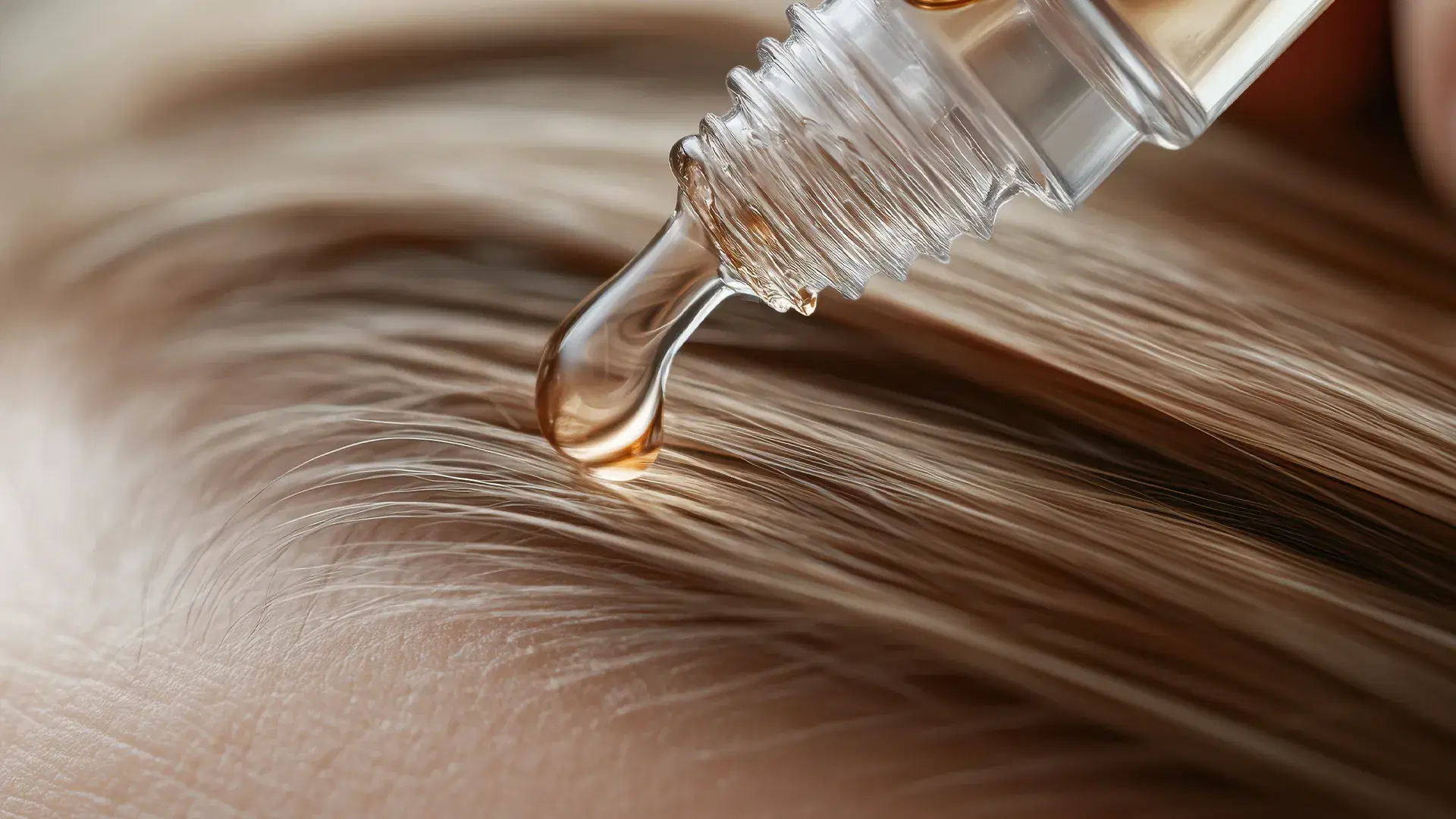
Some people prefer foam because it may feel less greasy and may be easier to control around the hairline. Others prefer liquid because it can be placed precisely with a dropper. The better choice depends on scalp sensitivity, styling habits, and comfort with daily use.
Common Mistakes When Using Minoxidil On The Hairline
One common mistake is applying minoxidil only to the visible hair strands. The target is the scalp. Another mistake is using it irregularly. A few applications per week may not be enough for meaningful progress.
Applying too much is also a problem. More product does not mean faster regrowth. It can cause dryness, flaking, itching, and unwanted spread to nearby skin. If minoxidil runs down the forehead, it may increase the risk of unwanted facial hair growth in sensitive individuals.
Another mistake is stopping as soon as shedding begins. Temporary shedding can happen early in the process. Of course, severe irritation or unusual symptoms should not be ignored, but mild early shedding does not always mean the treatment is failing.
Does Minoxidil Work Better With Other Hair Loss Treatments?
For some people, minoxidil works better as part of a broader plan. Pattern hair loss often involves more than one process, so supporting growth while also addressing the cause of thinning may be helpful. However, the right combination depends on the person.
A healthy scalp routine can also make a difference. Gentle cleansing, reducing harsh styling, avoiding tight hairstyles, managing dandruff or irritation, and maintaining balanced nutrition all support the environment where hair grows. These steps may not replace minoxidil, but they can help reduce extra stress on the hairline.
Adding too many products at once is not always wise. If irritation develops, it becomes difficult to know which product caused it. A simple and consistent routine is usually easier to maintain than an aggressive routine filled with multiple scalp treatments.
What Happens If You Stop Minoxidil?
If minoxidil helps your hairline and you stop using it, the benefits may gradually fade. Hair that was maintained or thickened with minoxidil can become thinner again over time. This is especially true in pattern hair loss, where the underlying tendency continues.
This long-term commitment is one reason people should think carefully before starting. Minoxidil can be useful, but it requires patience and maintenance. It is not a short course that permanently changes the hairline after a few months.
If someone stops because of irritation, inconsistent use, cost, or lifestyle reasons, the hairline may slowly return to the pattern it would have followed without support. For this reason, a routine should be realistic from the beginning.
Who Is More Likely To See Hairline Improvement?
People in the early stages of thinning may have a better chance of seeing improvement. A hairline with fine, weak hairs is usually more promising than an area that has been completely bare for a long time. Younger follicles that are still active often respond better than follicles that have been inactive for years.
Consistency also matters. Someone who applies minoxidil correctly for six to twelve months is more likely to judge the result fairly than someone who uses it on and off for a few weeks. Scalp tolerance is another factor. If irritation prevents regular use, results may suffer.
People with advanced recession, smooth bare temples, or scarring hair loss may see less improvement. In those cases, other options may need to be considered depending on the goal and the condition of the scalp.
Can Minoxidil Restore The Original Hairline?
Minoxidil may improve the appearance of the hairline, but it usually does not fully restore the original hairline in advanced recession. Its strongest value is often maintaining existing hair, thickening miniaturized hair, and creating modest regrowth where follicles are still responsive.
For someone with early temple thinning, this may be enough to make the hairline look stronger. For someone with a long-standing receded hairline, the improvement may be smaller. The best results usually come from early action, realistic expectations, and steady use.
The question can minoxidil regrow hairline does not have a simple yes or no answer. It can help in some cases, especially when hair follicles are still active. It may slow further thinning and improve density along the front edge. But it is not guaranteed, and it is not equally effective for everyone.