
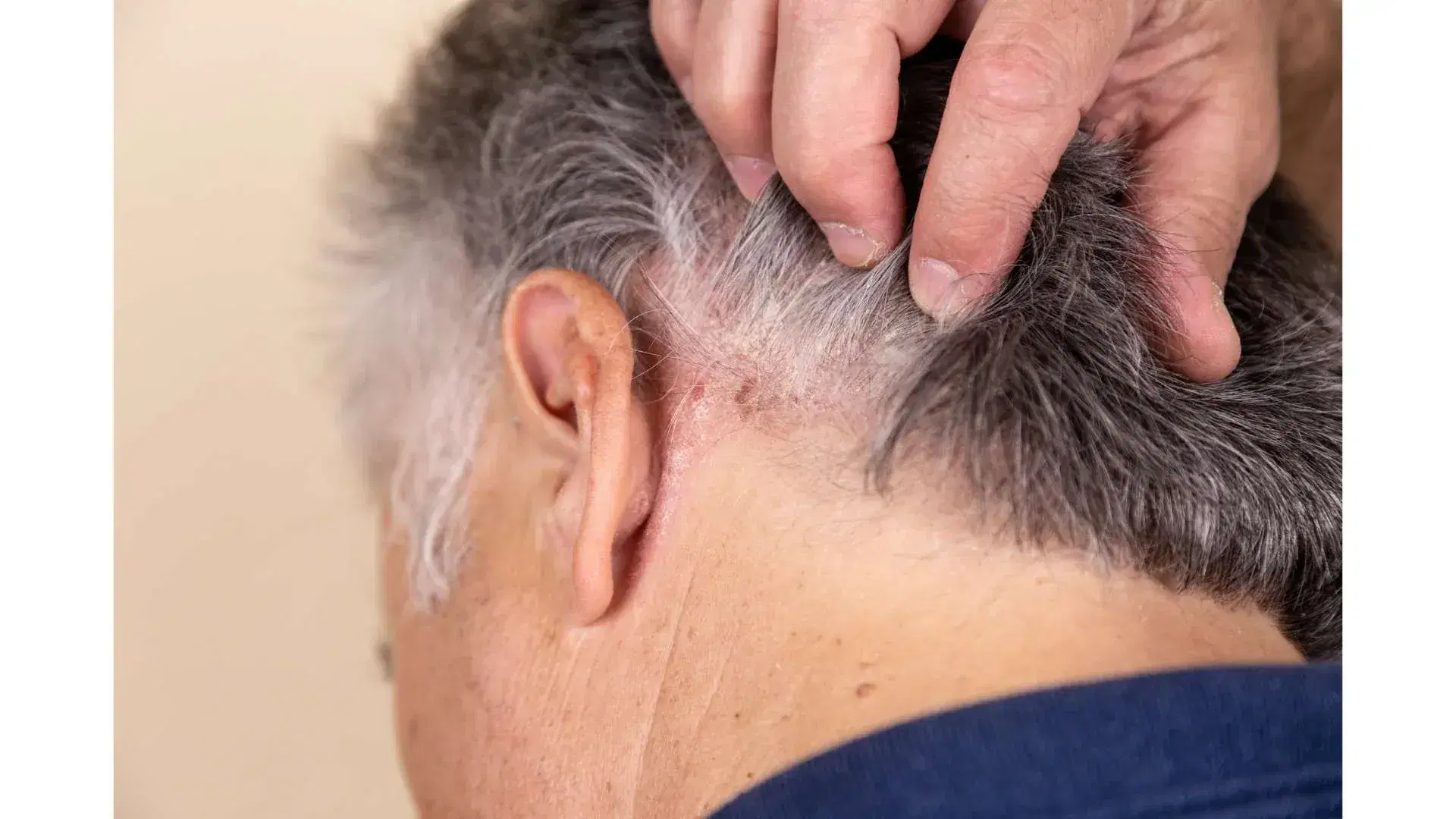
Scalp folliculitis and hair loss can occur together when inflammation affects the hair follicles, causing itchy bumps, tenderness, crusting and changes in hair density. While mild folliculitis often resolves without permanent damage, deeper or recurring inflammatory conditions can destroy follicles and cause scarring, making accurate diagnosis and timely treatment essential for protecting hair growth.
What Is Scalp Folliculitis?
Scalp folliculitis is an inflammatory condition affecting the hair follicles, the small structures within the skin responsible for producing hair.
It commonly appears as small red bumps or pustules around individual hairs. These lesions may itch, become tender or develop crusts, particularly when scratching irritates the surrounding skin.
Some cases involve only a few follicles near the hairline, while others affect larger areas of the scalp.
Although scalp folliculitis often resembles acne, the two conditions are not necessarily identical. Several infections, inflammatory disorders and physical irritants can produce similar-looking bumps.
Recognizing the underlying cause is particularly important when scalp inflammation occurs alongside noticeable hair thinning.
Can Scalp Folliculitis Cause Hair Loss?
Scalp folliculitis can contribute to hair loss, but the risk of permanent damage depends largely on how deeply and persistently the follicles are affected.
Mild superficial folliculitis usually heals without scarring. Temporary shedding or hair breakage may occur when the scalp becomes inflamed, irritated or repeatedly scratched.
More aggressive conditions can damage the follicle itself. If inflammation destroys the structures responsible for producing new hair, scar tissue may replace the follicle and prevent further growth.
This distinction explains why some people notice normal hair growth returning after their scalp clears, while others develop persistent bald patches.
Not every episode of scalp pimples leads to permanent hair loss.
How Does Follicle Inflammation Affect Hair Growth?
Each hair follicle follows a growth cycle that includes active growth, transition and resting phases. Inflammation can disturb the local environment in which this process takes place.
When the skin surrounding a follicle becomes swollen or infected, hair may become more vulnerable to shedding or mechanical damage.
Repeated scratching can also break hair shafts, creating the appearance of reduced density without necessarily destroying the follicles beneath them.
Deep inflammation is more concerning because it can damage the structures required for continued hair production.
Once substantial scarring replaces a follicle, ordinary hair growth treatments cannot restore its original function.
The depth and duration of inflammation therefore matter more than the appearance of an isolated pimple.
What Causes Scalp Folliculitis?
Scalp folliculitis can develop when microorganisms, irritation or inflammatory skin processes disturb the hair follicles.
Bacteria, including Staphylococcus aureus, are responsible for certain infections. Other scalp eruptions involve Cutibacterium acnes, yeasts such as Malassezia, or reactions to organisms that normally live on the skin.
Physical factors can also contribute. Close shaving, friction from headwear and irritating hair products may aggravate follicular inflammation.
Some chronic scalp disorders involve abnormal inflammatory responses rather than a straightforward, short-lived infection.
For this reason, scalp folliculitis should not automatically be interpreted as evidence of poor hygiene. Washing more aggressively does not necessarily resolve the underlying problem.
Is Scalp Folliculitis Always a Bacterial Infection?
Folliculitis describes inflammation around a hair follicle, not necessarily the presence of bacteria.
Bacterial infections are a common cause, but yeast-related inflammation, ingrown hairs, physical irritation and certain chronic inflammatory disorders can produce similar symptoms.
This distinction affects treatment. Antibiotics may help when bacterial infection is present, but they are not the correct solution for every itchy scalp eruption.
Some conditions require antifungal therapy, while others need treatments aimed primarily at controlling inflammation.
Repeated antibiotic use without confirming the likely cause can also contribute to antimicrobial resistance or alter the balance of microorganisms on the skin.
Persistent symptoms should therefore prompt a more specific diagnosis rather than repeated treatment based solely on appearance.
What Are the Early Symptoms of Scalp Folliculitis?
Early scalp folliculitis often produces small, raised bumps centered around individual hairs. Some develop a white or yellow pustule, while others remain red and inflamed.
Itching is common and can be particularly troublesome around the frontal hairline. Tenderness or a mild burning sensation may also occur.
When pustules open, they can leave small crusts attached to nearby hairs.
The surrounding scalp may look red, although redness can be less noticeable in darker skin tones.
Hair loss is not always present at the beginning. In some cases, scalp discomfort develops well before a change in density becomes obvious.
Persistent pustules or recurrent crusting deserve attention, especially when they repeatedly affect the same area.
What Are the Warning Signs of Folliculitis-Related Hair Loss?
Changes in hair density accompanied by persistent scalp inflammation may indicate that the condition is affecting more than the skin surface.
Patchy thinning: Hair becomes noticeably sparse in an area where pustules, pain or crusts repeatedly appear, suggesting ongoing follicular involvement.
Smooth or scarred patches: Shiny areas without visible follicular openings may indicate that follicles have been replaced by scar tissue.
Tufted hairs: Several hair shafts emerging together from what appears to be one enlarged opening can occur in certain inflammatory scarring disorders.
Progressive tenderness and crusting: Increasing discomfort, repeated discharge or expanding inflamed patches alongside hair loss raises concern for deeper disease.
What Is the Difference Between Temporary Hair Loss and Scarring Alopecia?
Temporary, non-scarring hair loss occurs when follicles remain capable of producing new hair despite a period of inflammation or shedding.
Once the underlying condition improves, affected follicles may gradually resume normal growth.
Scarring alopecia develops when inflammation permanently damages the follicular structures responsible for producing hair. Scar tissue replaces the damaged area, preventing hair from growing normally.
A smooth patch with missing follicular openings is more concerning than a mildly inflamed area where individual hairs are still visible.
Early diagnosis matters because treatment can protect surviving follicles even when previously scarred areas cannot recover naturally.
What Is Folliculitis Decalvans?
Folliculitis decalvans is a chronic inflammatory disorder that causes progressive scarring hair loss, most commonly affecting the crown and surrounding scalp.
It may produce recurring pustules, yellowish crusts, tenderness and irregular patches of permanent hair loss.
One characteristic finding is hair tufting, where several hairs appear to emerge through a shared opening.
The condition has been associated with an abnormal inflammatory response involving Staphylococcus aureus, although its exact cause remains incompletely understood.
Treatment focuses on controlling inflammation, reducing flare-ups and protecting follicles that have not yet been destroyed.
Because the condition can relapse over many years, the disappearance of visible pustules does not always indicate that long-term monitoring is unnecessary.
What Is Dissecting Cellulitis of the Scalp?
Dissecting cellulitis is an uncommon but potentially severe inflammatory scalp condition that can lead to permanent scarring alopecia.
Unlike superficial folliculitis, it often produces deep, painful nodules, abscesses and areas of swelling that may release fluid.
Inflamed regions can become connected beneath the skin, allowing the disorder to affect increasingly extensive areas of the scalp.
Temporary hair loss may develop early, followed by permanent bald patches if inflammation destroys the follicles.
The condition requires medical treatment aimed at suppressing inflammation and preventing progression.
Ordinary acne shampoos or attempts to drain the lesions at home are not adequate substitutes for appropriate assessment.
Can Fungal Scalp Infections Resemble Folliculitis?
Fungal infections can produce scalp symptoms that resemble folliculitis, particularly when inflammation causes pustules, scaling and hair loss.
Tinea capitis, commonly called scalp ringworm, may cause broken hairs, patchy bald areas and flaky skin. More severe inflammatory cases can produce a swollen lesion known as a kerion.
Unlike many superficial yeast-related eruptions, scalp ringworm generally requires prescription antifungal medication taken by mouth. Shampoo alone is not sufficient to clear an established infection within the hair shafts.
Malassezia yeast can also contribute to itchy follicular eruptions, although its clinical pattern differs from dermatophyte infection.
Distinguishing these conditions is essential because antibacterial treatment will not adequately address a fungal cause.
Can Dandruff Be Confused With Scalp Folliculitis?
Dandruff and seborrheic dermatitis can produce itching, flaking and redness that resemble some symptoms of scalp folliculitis.
However, dandruff typically causes diffuse flakes rather than individual pustules centered around hair follicles.
Seborrheic dermatitis may create greasy scales and inflamed patches, particularly in areas with higher oil production.
Both conditions can occur alongside folliculitis, making the scalp appear more irritated than either problem would cause alone.
Scratching due to persistent itching may also damage hair shafts and produce additional crusting.
When pustules, painful bumps or patchy hair loss are present, the symptoms should not automatically be attributed to ordinary dandruff.
How Is Scalp Folliculitis Diagnosed?
Diagnosis begins with examining the scalp, reviewing the symptoms and assessing how the condition has changed over time.
The distribution of pustules, presence of crusts, degree of tenderness and pattern of hair loss provide important clues.
A dermatologist may use trichoscopy, a magnified examination of the scalp and hair follicles, to identify signs of inflammation, broken hairs, scarring or unusual hair tufting.
Previous treatments, shaving habits and exposure to potentially irritating products can also help explain recurring symptoms.
The aim is to determine whether the condition is superficial, infectious or part of a deeper inflammatory disorder.
Identifying the correct category helps avoid treatments that fail to address the underlying cause.
When Are a Scalp Culture or Biopsy Necessary?
Mild, uncomplicated folliculitis can sometimes be recognized through examination alone.
A bacterial culture may be useful when pustules recur, infection appears severe or previous antibiotic treatment has failed. Laboratory testing can help identify the responsible organism and guide appropriate medication selection.
When fungal infection is suspected, hair samples or scalp scrapings may be examined for fungal organisms.
A biopsy becomes particularly important when unexplained hair loss raises concern for scarring alopecia or another inflammatory scalp disease.
The procedure allows affected tissue to be examined microscopically.
Not every patient needs all these investigations, but persistent symptoms with progressive hair loss should not be managed indefinitely without establishing a diagnosis.
How Is Mild Scalp Folliculitis Treated?
Mild scalp folliculitis may improve with gentle cleansing, reduced friction and avoidance of activities that irritate inflamed follicles.
Warm compresses can provide temporary relief from tenderness, provided they are applied carefully and do not cause additional irritation.
Some cases benefit from an appropriate antimicrobial cleanser or a prescription topical treatment.
However, medicated products should match the likely cause of the inflammation. An excessively strong antiseptic or aggressive acne treatment can make a sensitive scalp more uncomfortable.
Pustules should not be squeezed or scratched because damaged skin can become more inflamed.
When mild symptoms persist, spread or recur, further assessment is more appropriate than repeatedly introducing new products.
How Are Persistent or Bacterial Cases Treated?
Bacterial folliculitis may require topical antibiotics, while more extensive or deeper infections can require medication taken by mouth.
Treatment should reflect the severity of the infection and, when appropriate, laboratory findings.
Recurrent cases may involve bacterial carriage, an underlying skin condition or repeated irritation that continues to trigger inflammation.
Chronic inflammatory disorders such as folliculitis decalvans require a different long-term strategy. Management may involve prescription anti-inflammatory treatments, systemic antibiotics or other medications aimed at controlling disease activity.
The primary objective in scarring conditions is preventing further follicular destruction rather than simply clearing visible pustules.
Antibiotics should not be used repeatedly without a clear indication, since unnecessary treatment can encourage resistance and delay recognition of another cause.
When Can Antifungal Treatments Help?
Antifungal treatment becomes relevant when scalp inflammation is linked to yeast overgrowth or a dermatophyte infection.
Certain Malassezia-associated eruptions may respond to appropriately selected antifungal shampoos or topical medication. Persistent cases sometimes require additional treatment.
Tinea capitis behaves differently because the fungal infection affects the hair and follicles. Prescription oral antifungal therapy is generally required to clear it.
This distinction is important when hair loss accompanies scaling, broken strands or inflamed scalp patches.
Treating an undiagnosed fungal infection with corticosteroid products alone can sometimes worsen the condition or obscure its appearance.
Accurate identification of the organism helps determine the appropriate treatment and reduce the likelihood of continued hair loss.
Which Habits Can Make Scalp Folliculitis Worse?
Everyday habits may prolong irritation when follicles are already inflamed, particularly if they increase friction or damage the skin.
Picking or squeezing scalp bumps: Opening lesions can worsen inflammation, introduce additional microorganisms and increase the risk of crusting or deeper infection.
Very close shaving: Razors and aggressive clipping can irritate follicular openings, particularly along the hairline and back of the scalp.
Repeated friction: Tight headwear, helmets and collars may aggravate sensitive areas, especially when sweat and moisture remain trapped.
Harsh chemical treatments: Strong hair dyes, irritating scalp products and vigorous scrubbing can damage the skin barrier and prolong discomfort.
Can You Wash Your Hair While You Have Folliculitis?
Hair washing can continue during most episodes of scalp folliculitis, provided the cleansing routine does not irritate the affected skin.
A mild shampoo can help remove sweat, oil and product residue without requiring aggressive scrubbing.
There is no universal rule that washing less frequently allows inflamed follicles to heal faster. In some situations, excessive buildup can increase discomfort.
The appropriate frequency should support cleanliness while maintaining scalp comfort.
When medicated shampoos are recommended, they should be used according to their intended instructions rather than applied excessively.
Gently drying the scalp and avoiding repeated scratching are also useful measures.
Washing cannot replace appropriate medical treatment when a deep infection or scarring inflammatory disorder is present.
Do Hair Oils and Styling Products Affect Folliculitis?
Heavy oils, waxes and occlusive styling products may aggravate certain follicular eruptions by increasing residue and reducing airflow around the skin.
Fragrances and other cosmetic ingredients can also trigger irritation or contact dermatitis in susceptible individuals.
However, not every hair oil causes folliculitis, and the presence of bumps does not automatically establish a product-related problem.
A useful approach is to review products introduced shortly before symptoms appeared.
Temporarily simplifying the routine may help identify whether a particular formulation contributes to irritation.
Scalp discomfort should not be managed by repeatedly applying heavy oils to inflamed pustules, particularly when an infection has not been excluded.
How Long Does Scalp Folliculitis Take to Clear?
The recovery time depends on the cause, depth and persistence of inflammation.
Uncomplicated superficial folliculitis may improve over several days and clear within approximately one to two weeks, particularly when the contributing irritation or infection is addressed.
Deeper infections can require longer treatment and additional healing time.
Chronic conditions such as folliculitis decalvans and dissecting cellulitis follow a different course, with possible flare-ups and remissions over months or years.
The disappearance of pustules does not necessarily mean that hair density will immediately return.
Hair growth follows a slower biological cycle, so visible recovery may continue for months after scalp inflammation has settled.
Will Hair Grow Back After Scalp Folliculitis?
Hair may grow back after scalp folliculitis when the follicles remain structurally intact.
In mild cases, shedding or hair breakage can improve once inflammation subsides and normal growth resumes. Visible density recovery may take several months because new strands must grow long enough to become noticeable.
Permanent scarring changes the outlook.
When conditions such as folliculitis decalvans destroy the follicular structures, the affected areas can no longer produce new hair naturally.
This is why early treatment focuses on preserving follicles before irreversible damage develops.
The most useful question is not simply how much hair has been lost, but whether active follicles remain within the thinning area.
Can Hair Growth Products Help After Folliculitis?
Hair growth products may have a role after folliculitis when surviving follicles remain capable of producing hair and a separate cause of thinning is present.
However, products intended for hereditary hair loss do not directly treat a bacterial infection or chronic inflammatory scarring disorder.
Applying irritating growth solutions to an actively inflamed scalp may increase discomfort.
Similarly, cosmetic shampoos can improve hair appearance without repairing destroyed follicles.
Treatment should first establish whether ongoing inflammation, another form of alopecia or both are contributing to reduced density.
Once the scalp condition is controlled, hair regrowth treatments can be considered for appropriate indications.
Is Hair Transplantation Possible After Scarring Folliculitis?
Hair transplantation may be considered in selected cases where scarring folliculitis has become inactive and permanent bald patches remain.
However, transplanting hair into an area with ongoing inflammation can place grafts at risk and may worsen an unstable condition.
Scar tissue can also differ from healthy scalp in blood supply and structural characteristics, affecting graft survival.
For these reasons, transplantation is generally considered only after a sustained period of disease control and careful assessment of the recipient area.
The procedure does not cure folliculitis decalvans or other underlying inflammatory disorders.
When active disease continues, protecting the remaining natural follicles is a higher priority than attempting immediate surgical restoration.
Which Symptoms Require Prompt Medical Attention?
Scalp folliculitis should be assessed promptly when symptoms suggest spreading infection, deeper inflammation or potential damage to hair follicles.
Rapidly worsening infection: Expanding redness, pronounced swelling, severe pain or fever may indicate infection extending beyond individual follicles and requires urgent medical assessment.
Painful nodules or drainage: Deep, tender lumps, abscesses or repeatedly draining areas can indicate a more destructive inflammatory process.
Progressive bald patches: Hair loss accompanied by persistent pustules, crusts, shiny skin or missing follicular openings raises concern for scarring alopecia.
Persistent or recurrent symptoms: Folliculitis that repeatedly returns, spreads or fails to improve with appropriate treatment requires further investigation rather than prolonged self-treatment.
How Can Recurrent Scalp Folliculitis Be Prevented?
Prevention begins with identifying the factor responsible for repeated inflammation.
Gentle scalp cleansing, avoiding unnecessary friction and keeping personal grooming equipment clean may reduce aggravation.
People who develop bumps after close shaving may benefit from changing their haircut or shaving technique.
Where a specific microorganism contributes to repeated infections, medical treatment may also address an underlying source of recurrence.
However, chronic inflammatory conditions cannot always be prevented through hygiene changes alone.
Regular assessment is particularly important when previous episodes have caused hair loss, scarring or persistent discomfort.
Preventing recurrence may require both a manageable daily routine and appropriate treatment of the underlying scalp disorder.
What Is the Best Approach to Scalp Folliculitis and Hair Loss?
Managing scalp folliculitis and hair loss starts with distinguishing mild inflammation from conditions capable of permanently destroying hair follicles.
A few superficial pustules may resolve with appropriate scalp care or limited medical treatment. Recurrent crusting, painful nodules and progressive hair loss require a more detailed evaluation because the underlying condition may be chronic or scarring.
When infection is present, treatment should target the responsible organism. When an inflammatory disorder threatens follicular survival, reducing disease activity becomes the main priority.
Hair regrowth is possible when follicles remain intact, but scarred areas cannot reliably recover through ordinary shampoos or hair growth products.
The central goal is therefore twofold: resolve the inflammation causing scalp discomfort and protect the follicles that can still produce healthy hair. Early recognition offers the best opportunity to prevent a temporary scalp problem from developing into lasting hair loss.