Esthetic Hair Clinic logo

Can a Vegan Diet Cause Hair Loss?

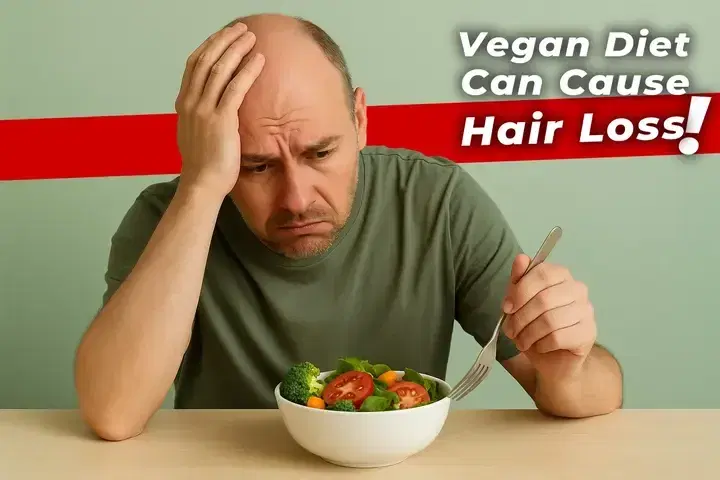
A vegan diet doesn’t directly cause hair loss, but poor planning and nutrient deficiencies can lead to shedding.
Dr. Nadiye HACIÖMEROĞLUPhysician
·
5 min read
·
December 3, 2025
About Us Esthetic Hair

Can a Vegan Diet Cause Hair Loss?

Switching to a vegan diet can offer many health and ethical benefits, but it also raises questions about nutrition, especially when it comes to hair health. Some people notice increased hair shedding after adopting a plant-based diet and wonder whether their eating habits are responsible. The short answer is that a vegan diet does not directly cause hair loss. However, nutritional deficiencies resulting from an unbalanced vegan diet may contribute to increased shedding and reduced hair quality. Understanding which nutrients support healthy hair growth can help reduce this risk while maintaining a vegan lifestyle.
Ready to restore your hair confidence?
Contact Esthetic Hair Clinic for a free consultation today!

Can a Vegan Diet Cause Hair Loss?

Switching to a vegan diet can offer many health and ethical benefits, but it also raises questions about nutrition, especially when it comes to hair health. Some people notice increased hair shedding after adopting a plant-based diet and wonder whether their diet is responsible. The short answer is that a vegan diet does not directly cause hair loss. However, an unbalanced vegan diet may lead to nutritional deficiencies that can affect the normal hair growth cycle. Understanding these potential nutrient gaps can help support healthy hair while following a vegan lifestyle.

Why Vegan Diet Cause Hair Loss

Does Vegan Shampoo Cause Hair Loss?

No, vegan shampoo itself does not cause hair loss. Hair loss is usually linked to factors such as genetics, hormonal changes, medical conditions, stress, or nutritional deficiencies rather than whether a shampoo contains animal-derived ingredients.

However, not every vegan shampoo is suitable for every hair and scalp type. Some products may contain ingredients that cause dryness, irritation, or product buildup in sensitive individuals. When scalp irritation develops, hair breakage or temporary shedding may become more noticeable.

Choosing a shampoo that matches your scalp condition and hair needs is important. Many people prefer gentle formulas that are free from harsh sulfates and unnecessary irritants. If persistent shedding continues despite changing hair products, other underlying causes should be evaluated.

What Is the Best Vegan Shampoo for Hair Loss?

The best vegan shampoos for hair loss are designed to support scalp health, hydration, and overall hair quality. While shampoo alone cannot stop genetic or nutritional hair loss, certain ingredients may help create a healthier environment for hair growth and reduce breakage.

  • Biotin: May help improve hair strength and reduce breakage.

  • Aloe Vera: Helps moisturize the scalp and soothe irritation.

  • Argan Oil: Contains antioxidants and vitamin E that support hair and scalp conditioning.

  • Tea Tree Oil: Helps maintain scalp cleanliness and may reduce excess oil buildup.

Consistency is important when using any hair care product. A vegan shampoo can support scalp health, but addressing factors such as nutrition, stress, and underlying medical conditions is often necessary when dealing with ongoing hair loss.

How to Reverse Vegan Hair Loss

Reversing hair loss associated with a vegan diet usually involves identifying and correcting the nutritional imbalance contributing to the problem. In many cases, hair growth improves once nutrient levels return to a healthy range.

  1. Improve Dietary Intake: Include nutrient-dense foods such as lentils, beans, quinoa, tofu, tempeh, chia seeds, flaxseeds, nuts, and dark leafy greens.

  2. Consider Targeted Supplements: Vitamin B12 is commonly recommended for vegans. Iron, zinc, and vitamin D supplementation may also be necessary when deficiencies are confirmed.

  3. Use Gentle Hair Care Practices: Limit excessive heat styling, harsh chemical treatments, and aggressive brushing that may increase hair breakage.

  4. Seek Professional Advice: A healthcare professional or registered dietitian can assess nutrient levels and provide personalized recommendations.

When hair loss is related to nutritional deficiencies, improvement is often possible after the underlying cause is addressed. Because hair grows slowly, visible changes may take several months to appear.

Vegan Hair Loss and Nutritional Deficiency

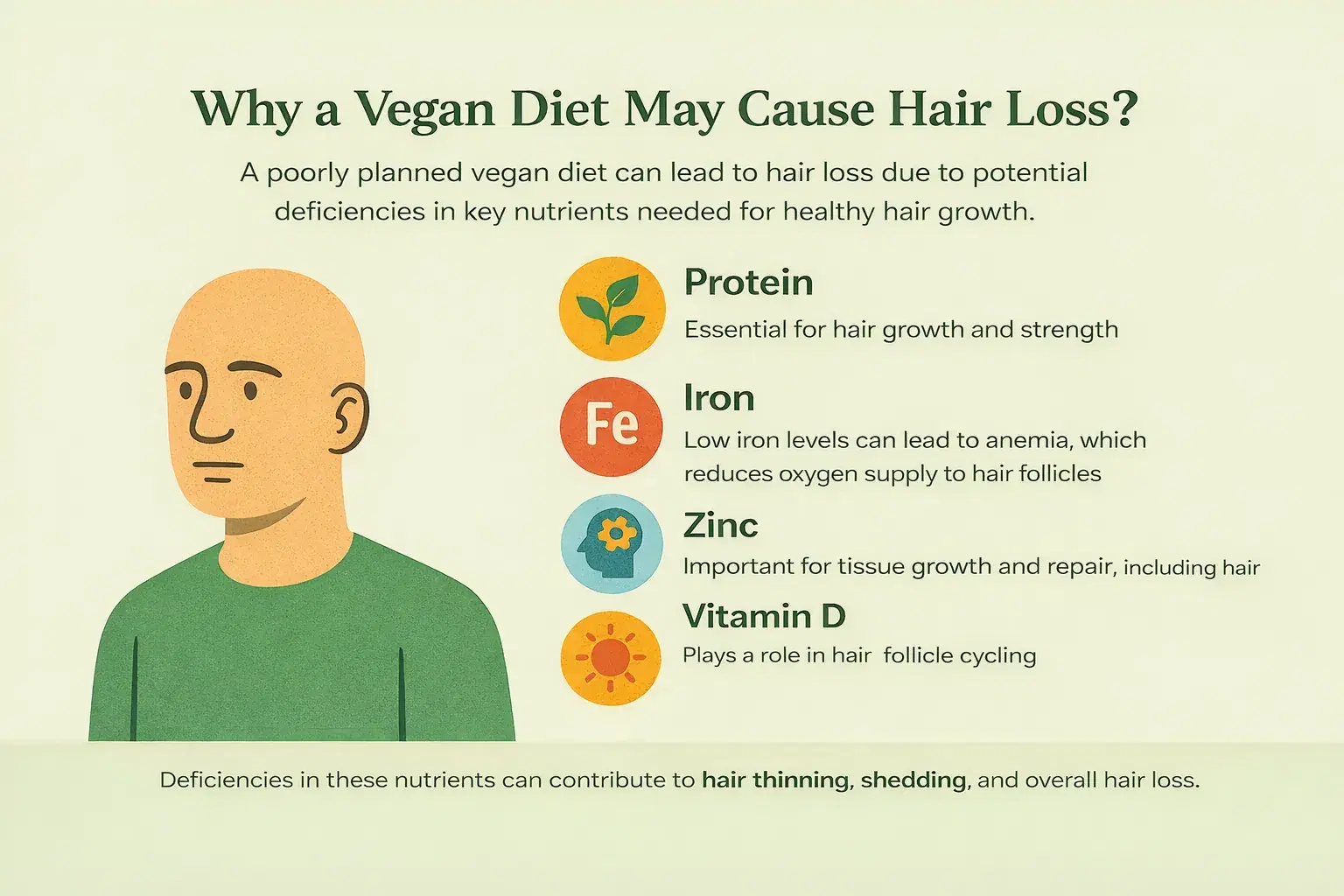
Nutritional deficiencies are among the most common reasons some vegans experience increased hair shedding. A diet may provide enough calories while still lacking key nutrients required for normal hair growth. Insufficient intake of protein, iron, zinc, vitamin B12, or vitamin D can affect the hair growth cycle and contribute to thinning, reduced density, or excessive shedding over time.

Because hair follicles are highly sensitive to nutritional changes, even mild deficiencies may affect hair quality. Regular blood testing, balanced meal planning, and appropriate supplementation when needed can help identify and address potential deficiencies before they impact long-term hair health.

Does Vegan Protein Powder Cause Hair Loss?

No, vegan protein powder does not cause hair loss. In fact, it may help support healthy hair growth by contributing to adequate daily protein intake. Protein is an essential component of hair structure, and insufficient protein consumption can contribute to increased shedding and weaker hair over time.

Many vegan protein powders are made from sources such as peas, rice, hemp, soy, or blended plant proteins. These products can be particularly useful for active individuals, athletes, or those who struggle to meet their protein needs through food alone.

When choosing a vegan protein supplement, look for products with a balanced amino acid profile and minimal unnecessary additives. While protein powder can support overall nutrition, it should be part of a well-rounded diet that also provides sufficient iron, zinc, vitamin B12, vitamin D, and other nutrients important for hair health.

Final Thoughts

A vegan lifestyle and healthy hair are absolutely compatible. Hair loss is not caused by veganism itself, but by nutritional gaps that can occur if the diet isn’t well planned. By eating a diverse range of plant foods, supplementing wisely, and caring for your scalp and hair, you can maintain strong, healthy hair while enjoying the benefits of a plant-based diet.