
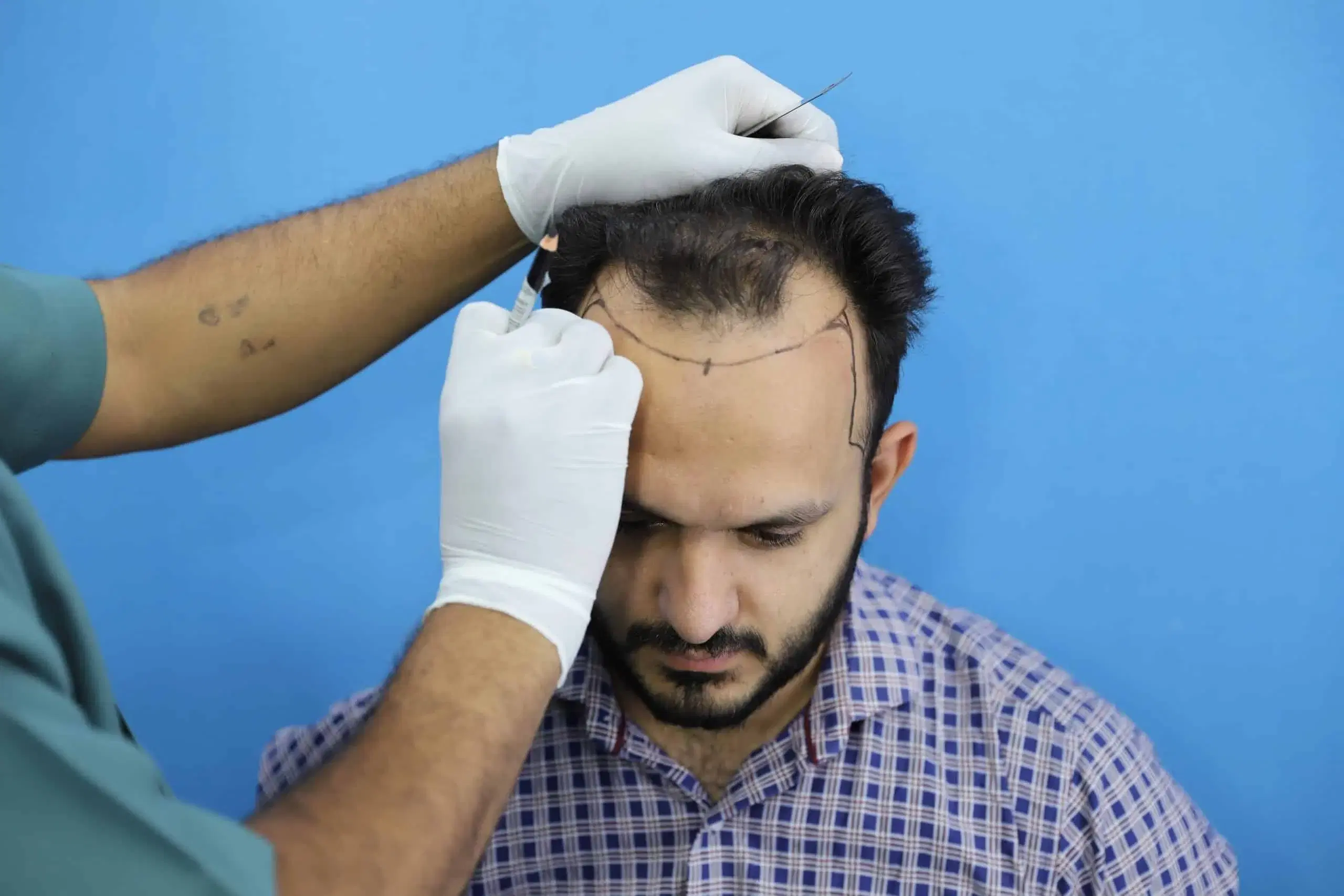
Long-distance travel does not usually harm transplanted hair once the grafts are properly secured, but the timing and conditions of the journey can influence early recovery. Flights, long car journeys and train travel do not directly stop follicles from growing, yet dehydration, swelling, accidental scalp contact and disrupted aftercare can make the first postoperative days less comfortable. The greatest concern is therefore not the distance itself but travelling before the scalp has settled enough to tolerate the journey. So, when is long-distance travel safe after a hair transplant, and what precautions actually matter?
Can Long-Distance Travel Damage Transplanted Hair?
Long-distance travel does not normally damage transplanted follicles once they have become stable in the scalp.
The main risks during early travel are mechanical rather than biological. Bumping the head against luggage compartments, rubbing the recipient area against a seat, scratching the scalp or placing tight headwear over fresh grafts can create unnecessary trauma.
A plane, train or car does not make transplanted follicles fall out simply because the journey lasts several hours.
Timing matters most during the first few postoperative days, when the recipient area is still vulnerable and swelling may be developing. Once this early phase has passed, travelling becomes progressively easier.
How Soon Can You Travel After a Hair Transplant?
Many patients can travel within one or two days after a hair transplant, but waiting several days often makes a long journey more comfortable.
People travelling internationally frequently remain near the treatment centre for the first wash or postoperative review before returning home.
That approach has practical advantages. The scalp can be checked, early crusting can be assessed and the patient can receive washing instructions before beginning a long journey.
Someone facing a short direct flight may travel earlier than a person requiring multiple connections and 15 hours of airport time.
The ideal departure date therefore depends on journey complexity, recovery and the availability of early postoperative follow-up.
Can You Fly After a Hair Transplant?
Flying is generally possible after a hair transplant because commercial air travel does not directly interfere with graft survival.
Many international hair transplant patients fly home within the first several days.
The journey becomes easier when the patient can avoid rushing through terminals, lifting heavy luggage and repeatedly adjusting bags above the head.
A direct flight is usually more convenient than several connections during early recovery.
Travellers should also consider how long they can remain upright and comfortable. Forehead swelling, scalp tightness and donor-area tenderness can make a very long flight unpleasant even when the transplanted follicles themselves remain secure.
Does Cabin Pressure Affect Hair Grafts?
Normal commercial aircraft cabin pressure does not pull transplanted grafts out of the scalp or prevent follicles from healing.
Hair follicles are physically implanted into small recipient sites within the skin. Changes in cabin pressure are not capable of extracting them.
This concern often arises because patients associate flying with pressure changes in the ears and sinuses.
The scalp behaves differently.
The more realistic travel concerns involve accidental rubbing, dehydration, swelling and maintaining appropriate postoperative care during a long flight.
A patient therefore does not need to avoid air travel solely because of cabin pressure. The timing of the flight and protection of the scalp are much more relevant.
Can a Long Flight Increase Swelling?
A long flight can make postoperative swelling feel more noticeable, although swelling after a hair transplant mainly results from the procedure itself rather than flying.
Fluid used during surgery and the natural inflammatory response can move downward from the scalp toward the forehead and sometimes around the eyes.
This commonly becomes more apparent during the first few days.
Remaining seated for many hours does not directly cause scalp swelling, but travel can make managing it less convenient.
Sleeping in an awkward position, consuming very salty food or becoming dehydrated may also make a patient feel puffier.
Keeping the head reasonably elevated and avoiding unnecessary pressure can improve comfort during this period.
Does Dehydration Affect Hair Transplant Recovery?
Mild dehydration during travel is unlikely to destroy grafts, but good hydration supports general recovery and can make long journeys more comfortable.
Aircraft cabins have relatively dry air, and travellers sometimes drink less water to avoid frequent bathroom visits.
That habit can worsen headaches, fatigue and general postoperative discomfort.
Hydration should be treated as supportive care rather than a special method for increasing graft survival.
Drinking reasonable amounts of water throughout the journey is sufficient for most people.
Excessive alcohol is less helpful during early recovery because it can contribute to dehydration and may interact with prescribed medication or increase bleeding tendency depending on the circumstances.
Is Long-Distance Driving Safe After Hair Transplant Surgery?
Long-distance car travel can be safe after a hair transplant, but driving personally immediately after surgery may not be appropriate if sedating medication or fatigue is present.
A passenger can usually travel more comfortably because they can adjust their position and focus on protecting the scalp.
For long road journeys, taking regular breaks is useful.
Passengers should avoid resting the transplanted region directly against headrests if doing so creates friction.
The donor area may also feel tender against a firm seat.
Driving for many hours while tired, uncomfortable or taking medication that impairs alertness creates a much more significant safety issue than the effect of the journey on transplanted hair.
Can Sleeping During Travel Damage the Recipient Area?
Sleeping during travel does not damage transplanted hair unless the recipient area is repeatedly pressed or rubbed against another surface.
The challenge is controlling head position while asleep.
A window, headrest, travel pillow or seat edge can contact the newly transplanted region if the head falls sideways.
During early recovery, keeping the head relatively stable is therefore helpful.
A neck pillow may provide support when positioned without touching the grafted area.
Patients with crown transplantation need particular awareness because the treated region is closer to the seat or pillow.
Once the recipient area has healed, ordinary sleeping contact becomes much less relevant.
What Should You Avoid During Long-Distance Travel?
The most important travel precautions are designed to prevent physical trauma, excessive exertion and disruption of early postoperative care.
During the first days, avoid:
Rubbing or scratching the transplanted area
Placing luggage where it may strike the head
Wearing tight hats before they are considered appropriate
Lifting very heavy suitcases
Running through airports
Leaning the recipient area against windows or headrests
Drinking excessive alcohol
Skipping prescribed medication
Touching the scalp with unwashed hands
Exposing the recipient area to strong direct sunlight
Using irritating hair products during the journey
Picking at crusts because the scalp feels itchy
Simple precautions usually matter more than the actual number of kilometres travelled.
How Can You Protect Your Scalp at the Airport?
Protecting the scalp at an airport mainly requires avoiding accidental contact in crowded spaces rather than following complicated medical precautions.
Useful practical measures include:
Arrive early enough to avoid rushing
Use wheeled luggage instead of carrying heavy bags
Ask for help with overhead luggage
Keep your head clear of low luggage compartments
Avoid pulling tight clothing over the scalp
Carry postoperative medication in accessible hand luggage
Keep any approved saline or care products within travel rules
Choose an aisle seat if easier movement is important
Avoid touching the recipient area after handling public surfaces
Use only headwear that is appropriate for the recovery stage
Keep direct sunlight off the scalp when waiting outdoors
Follow the normal washing schedule after reaching your destination
Planning reduces the need for rushed movements that can accidentally affect the scalp.
Does Jet Lag Affect Hair Growth?
Jet lag does not normally damage transplanted follicles or prevent a successful hair transplant result.
Crossing several time zones can disrupt sleep, appetite and daily routine for a few days, but these short-term changes do not usually alter graft survival.
The practical issue is medication and aftercare timing.
A patient travelling across continents may become confused about when to take prescribed medication or perform the next wash.
Rather than trying to maintain the exact clock time from the departure country, postoperative instructions can usually be transitioned sensibly to local time.
Good sleep and a regular routine support general recovery, but one period of jet lag will not cause transplanted follicles to fail.
Can Travel Stress Cause Hair Shedding?
Short-term travel stress does not usually cause transplanted grafts to fall out, although major physiological stress can contribute to temporary shedding months later.
Telogen effluvium generally develops after a significant trigger rather than a routine airport experience.
A delayed shedding episode can follow serious illness, major surgery, rapid weight loss or intense prolonged stress.
The hair transplant operation itself can also contribute to temporary shedding of transplanted shafts or nearby native hair.
Patients should therefore distinguish immediate graft injury from later hair-cycle changes.
Feeling tired or anxious during an international flight does not mean the transplant is failing.
Temporary postoperative shedding can occur even when the follicles remain healthy beneath the scalp.
Does Hot or Cold Weather During Travel Matter?
Normal changes in destination temperature do not directly kill transplanted follicles, but extreme weather can complicate scalp care during early recovery.
Strong sun is more important than ordinary warm weather because freshly treated skin may be particularly sensitive to ultraviolet exposure.
Hot climates can also encourage sweating during long outdoor walks.
Cold weather presents fewer direct problems, although very tight winter hats can create friction if worn too early.
The goal is not to keep the scalp at one precise temperature.
Instead, patients should avoid prolonged direct sunlight, overheating, excessive sweating and tight headwear until the skin has healed sufficiently.
Ordinary indoor climate changes during flights and airports are not harmful to grafts.
Should You Delay a Holiday After a Hair Transplant?
A relaxing trip may be possible soon after transplantation, but beach holidays, intensive sightseeing and activity-focused travel are better delayed until early recovery is complete.
The problem is not flying to the destination.
Holiday activities often involve strong sun, swimming, sweating, alcohol, late nights and long days outdoors.
These factors are harder to manage immediately after surgery.
A quiet hotel stay differs substantially from spending every afternoon on a beach or hiking in intense heat.
Patients planning a transplant around a vacation should therefore consider the activities they want to do once they arrive.
Allowing the scalp to heal before beginning a highly active holiday usually creates a more comfortable and less restrictive experience.
What Should You Pack for Post-Transplant Travel?
A simple postoperative travel kit can make long-distance journeys easier and reduce the need to improvise after reaching another country.
Useful items may include:
Prescribed medication
Written postoperative instructions
Approved shampoo or cleansing product
Any saline spray recommended for early care
A clean neck pillow
Loose button-up or zip-front clothing
Clean pillow coverings when useful
Drinking water after security
Sun protection appropriate for the recovery stage
Contact information for the treatment provider
Photographs of the scalp taken before departure
Travel documents and medication information in hand luggage
The aim is to preserve the normal recovery routine rather than carry a large collection of special products.
When Should You Postpone Long-Distance Travel?
Long-distance travel should be reconsidered when recovery is not progressing normally or when another medical issue makes a lengthy journey difficult.
Reasons to seek advice before travelling include increasing redness, significant bleeding, unusual swelling or symptoms suggesting infection.
Severe pain or feeling systemically unwell also deserves assessment before beginning an international trip.
Travel may need to be postponed when there is:
Persistent or increasing bleeding
Rapidly worsening scalp swelling
Spreading redness or warmth
Pus or foul-smelling drainage
Fever
Severe uncontrolled pain
Significant dizziness or weakness
An unexpected reaction to medication
A medical condition that makes prolonged immobility risky
Any concern requiring an in-person postoperative examination
A routine recovery rarely requires cancelling travel, but abnormal symptoms should not be ignored simply because flights are already booked.
Does Long-Distance Travel Affect the Final Hair Transplant Result?
Long-distance travel itself does not usually affect the final hair transplant result when the grafts are protected and postoperative instructions are followed.
A patient can fly thousands of kilometres and still achieve normal growth because transplanted follicles do not depend on remaining near the treatment centre.
What matters is avoiding preventable early trauma and maintaining reasonable aftercare.
The first few days require more planning because the scalp is healing, swelling may be present and the recipient area remains sensitive.
After this stage, travel restrictions become progressively less important.
The final result is shaped much more by donor quality, surgical technique, graft handling, implantation, healing and long-term hair-loss progression than by the distance travelled home.