
Does PRP Really Work After a Hair Transplant?
PRP may improve early growth, graft survival, and hair density after transplantation, but current evidence is too limited to guarantee better long-term results.
A 2025 systematic review found only three controlled transplantation studies involving 217 participants. All three reported benefits when PRP was added to transplantation. These included earlier growth, greater density, and improved follicle survival. However, preparation methods and treatment schedules differed substantially. Follow-up also lasted only eight weeks to six months. Therefore, current evidence supports PRP as a promising adjunct rather than an essential treatment proven to improve every transplant permanently.
What Is PRP After a Hair Transplant?
PRP after a hair transplant is an autologous treatment that concentrates platelets from the patient's own blood and applies them to the transplanted scalp.
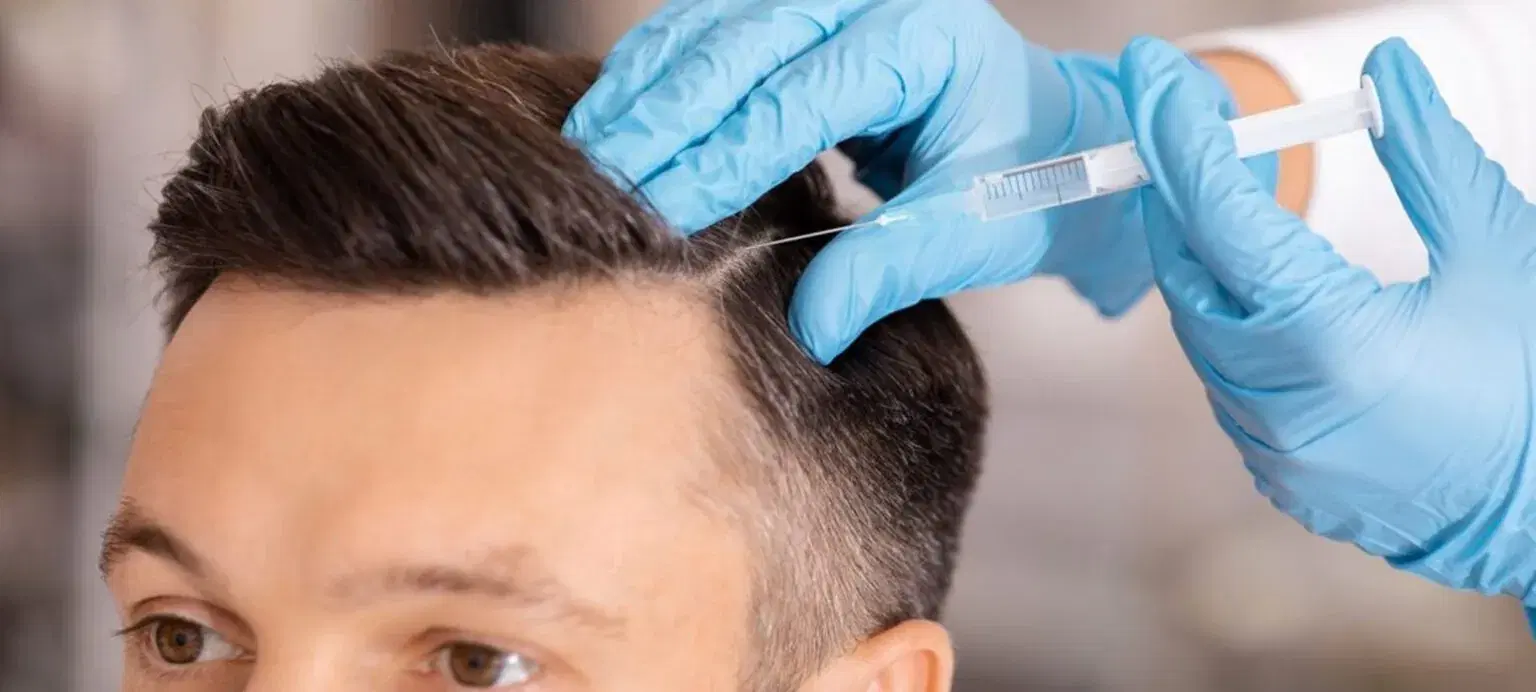
Blood is collected and processed through centrifugation to separate a platelet-rich component. This material contains platelets and signaling molecules involved in tissue repair. PRP can be injected into the recipient scalp or used during the transplantation process. Some research has also investigated PRP as a storage solution for harvested follicular grafts. The intended role is supportive rather than reconstructive. PRP does not create additional donor follicles and cannot replace technically successful graft extraction or implantation.
How Could PRP Support Transplanted Hair Follicles?
PRP may support transplanted follicles by delivering platelet-derived signaling molecules associated with angiogenesis, tissue repair, follicular activity, and maintenance of the growth phase.
After implantation, follicular units temporarily depend on the surrounding recipient tissue while vascular connections develop. PRP contains factors associated with vascular endothelial signaling and cellular repair. Experimental mechanisms also suggest stimulation of follicular cells and pathways involved in active hair growth. These biological effects make PRP a plausible postoperative adjunct. However, biological plausibility does not prove that every PRP preparation produces the same clinical benefit. Platelet concentration and preparation protocols vary substantially between treatment protocols.
Can PRP Improve Hair Transplant Graft Survival?
PRP may improve graft survival after hair transplantation, although existing transplantation studies are too small and heterogeneous to establish a precise survival advantage.
The most recent systematic review found improved follicular survival among outcomes associated with PRP-assisted transplantation. Earlier controlled work also reported faster recovery and higher early graft density in PRP-treated patients. Another randomized pilot study using PRP during graft storage reported improved density during six months of follow-up. However, none of these studies provide a reliable universal percentage increase in graft survival. Surgical technique, graft handling, hydration, storage time, and implantation trauma remain major determinants of follicular survival.
Can PRP Make Transplanted Hair Grow Faster?
PRP may accelerate the appearance of early transplanted hair growth, which is one of the more consistent findings reported in small controlled studies.
One prospective study found that new hair growth appeared earlier among patients receiving intraoperative PRP. A randomized pilot study also found faster recovery of active follicular growth from four weeks through three months. The systematic review published later found earlier initiation of growth across the included PRP studies. Faster early growth does not necessarily mean the final twelve-month result will contain more surviving follicles. Existing transplantation research has mostly measured outcomes during the first six months.
Can PRP Reduce Shock Loss After a Hair Transplant?
PRP may reduce or shorten early postoperative shedding, but evidence remains insufficient to prove that it reliably prevents shock loss after transplantation.
Temporary shedding occurs because transplanted shafts and nearby follicles can enter a resting phase following surgery. One randomized pilot study found faster recovery from postoperative shock effluvium when PRP was used during transplantation. Another controlled study reported reduced early loss of transplanted hairs during the catagen phase. These findings are encouraging, although both studies were relatively small. Shock loss also depends on recipient trauma, existing follicular miniaturization, implantation density, and the condition of surrounding native hair.
Does PRP Increase Final Hair Density After Transplantation?
PRP may increase early postoperative density, but current transplantation studies do not establish that it creates significantly greater final density after a full twelve-month growth cycle.
All three studies in the recent systematic review reported favorable density or follicular outcomes. However, follow-up ranged from only eight weeks to six months. None used standardized trichoscopic measurements across a full year. Separate studies of PRP for androgenetic alopecia support increased hair density, but those results cannot automatically be transferred to transplanted follicles. Therefore, evidence supports a possible density benefit while leaving uncertainty about the magnitude and durability of the final difference.
Does PRP Help the Scalp Heal Faster After Hair Transplantation?
PRP may support faster recipient-area recovery because platelet signaling participates in inflammation control, tissue repair, vascular development, and wound-healing processes.
One controlled transplantation study reported faster resolution of recipient-area redness among patients receiving PRP. Current reviews also identify improved tissue recovery as a possible benefit after transplantation. However, postoperative healing depends on many other factors. Recipient-site density, incision trauma, scalp vascularity, smoking, infection, and postoperative care can all affect recovery. PRP should therefore be viewed as a potential supportive treatment rather than protection against poor technique, excessive recipient trauma, or inadequate postoperative care.
What Benefits Have Been Reported With PRP After Hair Transplantation?
Research examining PRP alongside hair transplantation has reported several possible early benefits, although the strength of evidence differs between outcomes.
Earlier initiation of transplanted hair growth
Improved early graft density
Greater follicular survival in some studies
Faster recovery from postoperative shedding
Reduced early catagen loss
Faster improvement in recipient-area redness
Potential stimulation of surrounding miniaturized follicles
Possible improvement in overall postoperative hair density
These findings come from only a few controlled transplantation studies, so they should be interpreted as promising rather than definitive.
When Should PRP Be Done After a Hair Transplant?
PRP can be used during transplantation or during postoperative follow-up, but research has not established one optimal timing schedule.
The available transplantation studies used noticeably different protocols. Some applied PRP immediately during surgery, while others investigated different postoperative approaches. The 2025 systematic review identified timing variability as an important limitation preventing firm recommendations. This means there is no evidence-based rule stating that PRP must occur on one exact postoperative day. Timing should also avoid unnecessary mechanical trauma to newly implanted grafts during their vulnerable early healing period. Standardization remains one of the main research gaps in postoperative PRP treatment.
How Many PRP Sessions Are Needed After a Hair Transplant?
There is currently no scientifically established number of PRP sessions required after hair transplantation because controlled studies use different preparation and treatment schedules.
Broader androgenetic alopecia research often uses several sessions separated by weeks. Evidence also suggests treatment frequency may influence hair-density response. However, studies specifically involving transplantation remain too limited to establish a standard postoperative course. The latest transplantation review found substantial differences in blood volume, centrifugation, platelet concentration, and treatment timing. A fixed package of three or four sessions should therefore not be presented as a universally proven requirement for successful graft growth.
Is PRP Necessary After Every Hair Transplant?
PRP is not necessary for every successful hair transplant because follicular transplantation can achieve normal graft growth without postoperative PRP.
The fundamental requirements for success remain appropriate donor selection, careful extraction, atraumatic graft handling, controlled storage, correct recipient placement, and adequate postoperative healing. The recent systematic review describes PRP as an adjunct rather than a mandatory component of transplantation. Its potential value lies in improving early recovery or supporting follicular growth. A transplant should not be considered incomplete simply because PRP was not included. Current evidence is not strong enough to define PRP as a requirement for graft survival.
Is PRP Better Than Minoxidil After a Hair Transplant?
PRP cannot currently be considered clearly superior to minoxidil because they work differently and direct postoperative comparisons after transplantation are lacking.
PRP is an injectable autologous treatment aimed at stimulating follicular and tissue-repair pathways. Minoxidil is a continuing medical treatment used to support hair growth and preserve susceptible native follicles. A 2026 meta-analysis comparing both treatments in androgenetic alopecia found no clear difference in major outcomes including hair density and terminal hair count. Those studies did not specifically evaluate postoperative transplant patients. PRP and minoxidil should therefore not be treated as interchangeable based solely on general alopecia research.
Does PRP Work Differently After FUE and DHI?
There is insufficient evidence showing that PRP provides different benefits after FUE versus DHI because available controlled research primarily focuses on transplantation outcomes rather than implantation labels.
FUE describes how follicular units are extracted from the donor scalp. DHI generally refers to placing grafts with an implanter after extraction. PRP targets biological healing and follicular activity rather than the branding of the implantation technique. Existing transplantation evidence includes FUE-related protocols, but there are no robust comparative trials proving greater PRP benefit with DHI. Graft handling, ischemic time, recipient trauma, and follicular survival remain more relevant to the biological rationale for PRP.
What Are the Side Effects of PRP After Hair Transplantation?
PRP is generally associated with mild temporary side effects because the injected material is prepared from the patient's own blood.
Reported effects include scalp tenderness, injection pain, temporary redness, swelling, pinpoint bleeding, and headache. Infection remains possible whenever the skin is penetrated, although sterile technique reduces this risk. Broader PRP reviews describe adverse effects as generally mild, with local pain among the most common complaints. Because PRP is autologous, allergic reactions to the platelet preparation itself are less relevant than with foreign injectable materials. Additional ingredients or local anaesthetic agents can introduce separate risks.
Who May Benefit Most From PRP After Hair Transplantation?
PRP may be most relevant for patients seeking an adjunct to support early growth, healing, or remaining miniaturized native follicles alongside transplantation.
Broader androgenetic alopecia research suggests better responses in earlier-stage hair loss and indicates that treatment frequency and platelet characteristics may influence outcomes. Patients who still have substantial miniaturized native hair around the transplanted region may theoretically gain more from follicular stimulation than completely bald recipient areas. However, specific postoperative responder profiles have not been established reliably. PRP also cannot compensate for severely depleted donor supply, poor graft placement, or an unrealistic hairline design.
How Strong Is the Evidence for PRP After Hair Transplantation?
Evidence for PRP after hair transplantation is promising but still limited because only a few controlled studies have directly evaluated it alongside transplant surgery.
The latest systematic review included three eligible controlled studies with 217 participants. Two were randomized trials, while one was non-randomized. All reported favorable outcomes, but protocols differed significantly. None used standardized trichoscopic outcome assessment, and follow-up lasted no longer than six months. Broader PRP research supports increased hair density in androgenetic alopecia, yet substantial heterogeneity and inconsistent preparation remain recurring limitations. PRP is therefore a reasonable adjunct with emerging evidence, not a proven requirement for optimal transplantation results.