
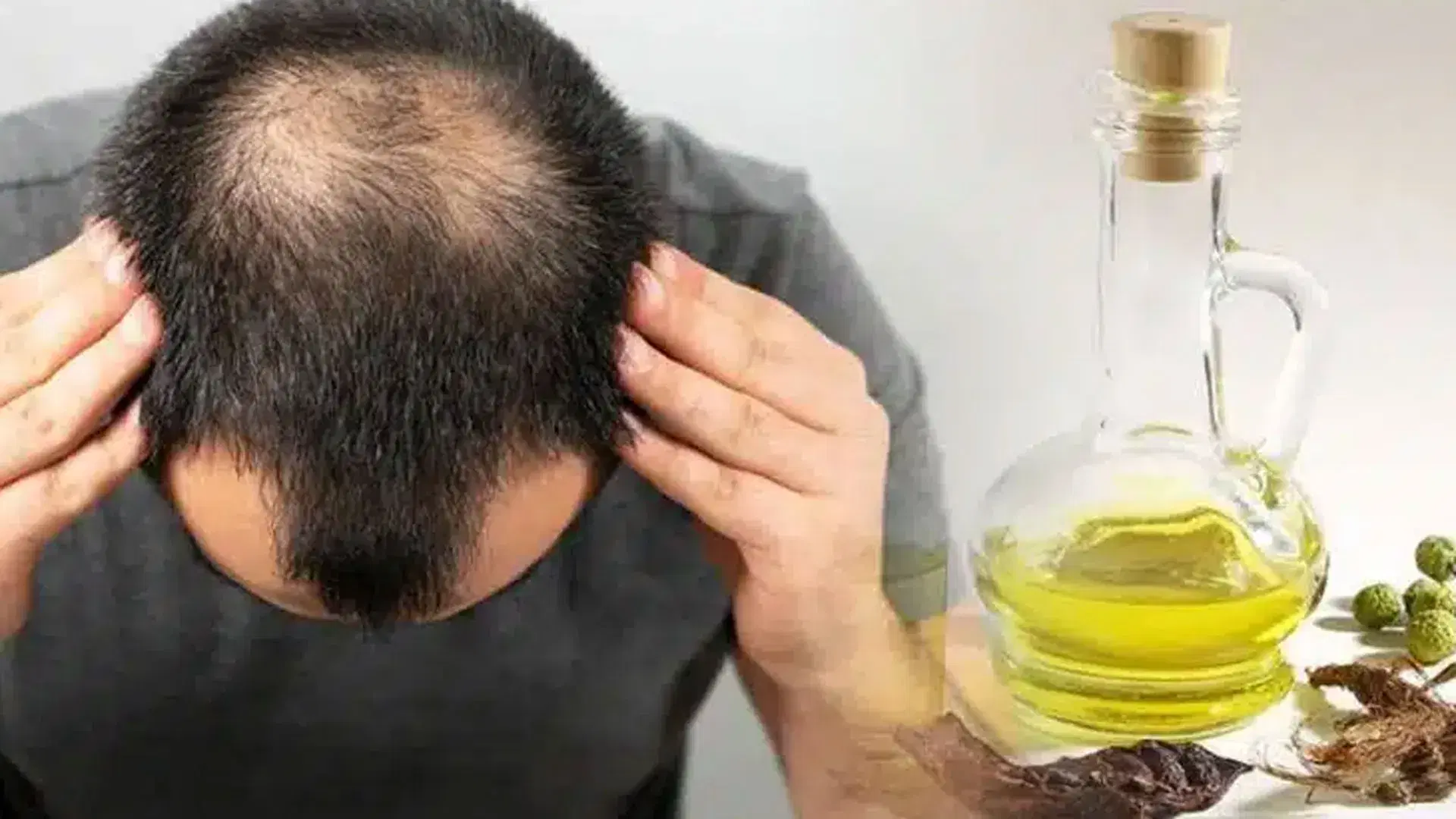
What Are the Most Effective Natural Hair Loss Treatments?
The most promising natural hair loss treatments include rosemary oil, pumpkin seed oil, correcting nutritional deficiencies, and supportive scalp care, although evidence remains weaker than established medical treatments.
Current research suggests several approaches may improve hair density or reduce shedding:
Rosemary oil has limited clinical evidence for androgenetic alopecia.
Pumpkin seed oil has shown improved hair counts in controlled studies.
Nutrient replacement can help when iron, vitamin D, or another deficiency exists.
Gentle scalp massage may modestly increase hair thickness.
Saw palmetto has promising but limited evidence.
Stress management may help when stress contributes to excessive shedding.
Treatment effectiveness depends heavily on the underlying cause of hair loss.
Does Rosemary Oil Help With Hair Loss?
Rosemary oil may help androgenetic hair loss, but current evidence comes from relatively limited clinical research and does not prove that it works for everyone.
A randomized study involving 100 people compared rosemary oil with topical minoxidil 2 percent for six months. Neither group showed significant hair-count improvement after three months. Both groups demonstrated increased hair counts after six months, without a significant difference between the groups. Later reviews continue to describe rosemary oil as promising while emphasizing the need for larger and better controlled trials. Concentrated essential oil should also be appropriately diluted because direct application can irritate sensitive scalp skin.
Does Pumpkin Seed Oil Help Hair Growth?
Pumpkin seed oil has shown potential for improving hair growth in men with androgenetic alopecia, although the clinical evidence remains limited.
One randomized controlled study followed 76 men with mild to moderate pattern hair loss for 24 weeks. Participants receiving 400 milligrams of pumpkin seed oil daily experienced a mean hair-count increase of approximately 40 percent. The placebo group showed an increase of about 10 percent. More recent analyses of dietary supplements have also identified pumpkin seed oil among products associated with improved hair-density measurements. However, available trials remain relatively small, so results should not be interpreted as guaranteed regrowth.
Can Saw Palmetto Reduce Hair Loss?
Saw palmetto may modestly improve androgenetic hair loss, but evidence supporting it remains less extensive than evidence for established pattern-hair-loss treatments.
Saw palmetto contains plant compounds that may influence pathways involving 5-alpha-reductase, an enzyme connected with dihydrotestosterone production. This mechanism has made it a popular ingredient in oral and topical hair supplements. Reviews of clinical research report potentially beneficial changes in hair growth or density among some participants. However, trials differ considerably in formulations, doses, treatment combinations, and measurement methods. These limitations make it difficult to define one reliable dose or predict results. Natural origin also does not eliminate the possibility of side effects or medication interactions.
Does Onion Juice Help Hair Regrowth?
Onion juice has limited evidence for promoting regrowth in alopecia areata, but it has not been established as an effective treatment for common pattern baldness.
A small controlled study investigated crude onion juice in people with patchy alopecia areata. Participants applied it twice daily, and researchers observed considerably more regrowth than within the control group during the study period. However, the trial involved relatively few participants and addressed alopecia areata rather than androgenetic alopecia. These conditions develop through different biological mechanisms, so results cannot automatically be applied to male or female pattern thinning. Onion juice can also irritate the scalp and cause odor, redness, or contact reactions in sensitive individuals.
Can Scalp Massage Help Hair Growth?
Scalp massage may modestly improve hair thickness, but current research does not establish massage as a reliable method for restoring significant lost hair.
A small study involving nine healthy men tested four minutes of standardized scalp massage each day for 24 weeks. Average hair thickness increased during the study, although hair density did not show a corresponding significant improvement. The very small participant group makes strong conclusions impossible. Massage may also support relaxation and provide a gentle way to care for the scalp. However, aggressive rubbing can increase hair breakage or irritate inflammatory scalp conditions. Massage should therefore be considered supportive care rather than a proven method for reversing follicle miniaturization.
Can Diet Reduce Hair Loss Naturally?
A balanced diet can reduce hair loss when inadequate nutrition contributes to shedding, but dietary changes cannot reverse every type of alopecia.
Hair follicles have high metabolic demands because they continuously produce new hair during the active growth phase. Insufficient calories, rapid weight loss, severe dietary restriction, and inadequate micronutrient intake can disrupt this process. A balanced eating pattern should provide protein, iron, zinc, essential fatty acids, and a range of vitamins. Supplementing individual nutrients without identifying a deficiency provides less predictable benefits. Pattern baldness is primarily influenced by genetic and hormonal factors, so excellent nutrition can support healthy follicles without removing the biological mechanism responsible for progressive miniaturization.
Does Protein Intake Affect Hair Loss?
Insufficient protein intake can contribute to diffuse hair shedding because hair shafts consist largely of keratin, a protein produced by active follicular cells.
Severe calorie restriction or diets containing inadequate protein can shift more follicles away from active growth. Shedding may then become noticeable several months after the nutritional disturbance begins. Correcting inadequate intake supports recovery when protein deficiency contributed to the problem. Eating excessive protein beyond normal nutritional needs has not been shown to produce proportionally faster hair growth. Useful dietary sources include eggs, fish, poultry, dairy products, legumes, soy foods, nuts, and seeds. The goal is consistent nutritional adequacy rather than unusually high protein consumption specifically for hair growth.
Can Vitamin D and Iron Help With Hair Loss?
Vitamin D and iron can support hair recovery when laboratory-confirmed deficiency contributes to shedding, particularly in people experiencing diffuse hair loss.
Recent pooled research found lower ferritin and vitamin D levels among people with telogen effluvium compared with control groups. Iron supports numerous cellular processes, while vitamin D receptors also participate in normal follicle biology. Correcting deficiency can therefore address a genuine factor contributing to poor hair growth. However, supplementation without deficiency does not guarantee additional growth. Excessive iron can be harmful, while unnecessarily high vitamin D intake can produce toxicity. Targeted nutritional correction is more appropriate than automatically combining high doses of multiple supplements whenever shedding appears.
Do Omega-3 Fatty Acids Help Hair Growth?
Omega-3 fatty acids may support general nutritional health, but evidence for omega-3 supplements as an independent hair-regrowth treatment remains limited.
Essential fatty acids contribute to normal cell membrane function and participate in inflammatory pathways throughout the body. Some multi-ingredient supplement studies have reported improvements in hair measurements when omega fatty acids were included. However, these products often contain several active ingredients, making the specific contribution from omega-3 difficult to determine. Foods such as oily fish, walnuts, flaxseed, and chia seeds can provide essential fatty acids within a balanced diet. Current evidence does not support treating omega-3 supplements as a direct replacement for therapies specifically targeting progressive androgenetic alopecia.
Does Coconut Oil Treat Hair Loss?
Coconut oil can protect hair shafts from protein loss and breakage, but evidence does not show that it reliably reverses follicular hair loss.
Its strongest role is therefore cosmetic hair protection rather than stimulation of new follicles. Coconut oil can penetrate the hair shaft and reduce some damage associated with washing, grooming, and environmental exposure. This may make hair feel smoother and reduce visible breakage. However, reducing broken strands is different from treating androgenetic alopecia, telogen effluvium, or alopecia areata. Someone may notice healthier-looking hair without gaining additional follicles. Coconut oil can also feel heavy on fine hair and may cause scalp irritation in people who react poorly to oily topical products.
Can Reducing Stress Help Stop Hair Loss?
Reducing significant stress may help hair recovery when psychological or physical stress contributes to telogen effluvium, but stress reduction cannot reverse every hair-loss condition.
A substantial stressor can influence the hair cycle and push more follicles toward the resting stage. Increased shedding usually appears later because resting hairs remain attached for a period before falling. Managing persistent stress may therefore remove one ongoing trigger while follicles gradually resume normal cycling. Exercise, relaxation practices, adequate nutrition, structured routines, and appropriate psychological support can contribute to stress management. Improvement remains slow because hair growth follows biological cycles. Genetic pattern baldness can continue despite successful stress reduction because its underlying mechanism is different.
Can Better Sleep Improve Hair Growth?
Adequate sleep supports overall physiological recovery, but additional sleep has not been proven to regrow hair independently in people with established pattern baldness.
Sleep influences stress regulation, hormonal rhythms, metabolism, and immune function. Chronic sleep disruption can therefore coexist with factors that negatively affect general health and potentially influence hair cycling. Improving sleep may be particularly relevant when severe stress and poor recovery contribute to diffuse shedding. However, sleeping longer cannot recreate follicles lost through scarring or directly reverse androgen-driven miniaturization. Maintaining a consistent sleep schedule supports a broader healthy routine rather than functioning as a standalone hair-loss treatment. Persistent thinning requires consideration of its specific cause rather than assuming sleep deficiency explains every case.
Are Essential Oils Safe for Hair Loss?
Essential oils can be used on the scalp, but concentrated products may cause irritation, allergic contact dermatitis, burning, or worsening inflammation.
Natural does not mean chemically inactive. Rosemary, peppermint, lavender, and other essential oils contain concentrated compounds that can irritate skin when used incorrectly. Dilution within an appropriate carrier is therefore commonly necessary for topical application. Patch testing can help identify obvious sensitivity before wider scalp exposure, although it cannot prevent every reaction. Increasing concentration does not guarantee stronger hair growth and can instead damage the scalp barrier. Persistent burning, redness, itching, scaling, or swelling after application should not be treated as evidence that a product is stimulating follicles.
How Long Do Natural Hair Loss Treatments Take to Work?
Natural hair loss treatments generally require at least three to six months before meaningful changes can be assessed because human hair grows through a slow biological cycle.
Visible improvement cannot occur immediately after a follicle enters active growth. A new strand must first develop and then grow enough to contribute noticeable scalp coverage. In the rosemary oil study, significant hair-count changes appeared at six months rather than three months. Pumpkin seed oil research also evaluated results after 24 weeks. This timeline demonstrates why judging a treatment after several days provides little useful information. Standardized photographs taken under consistent lighting offer a more reliable comparison than daily inspection in the mirror.
Can Natural Treatments Stop Pattern Baldness?
Natural treatments may modestly support hair density in androgenetic alopecia, but current evidence does not show that they reliably stop progressive pattern baldness in every patient.
Androgenetic alopecia develops through genetic susceptibility and progressive follicle miniaturization influenced by androgen signaling. Natural products such as rosemary oil, pumpkin seed oil, and saw palmetto have produced encouraging findings in selected studies. However, systematic reviews continue to highlight small sample sizes, inconsistent formulations, short follow-up periods, and limited high-quality trials. Natural approaches therefore have potential, but their effectiveness should not be overstated. A product producing modest improvement in one study is not equivalent to demonstrating permanent prevention of hereditary hair-loss progression.
When Are Natural Hair Loss Treatments Not Enough?
Natural hair loss treatments are not enough when hair loss is rapidly progressive, causes bald patches, involves scarring, or continues despite correcting identifiable nutritional and lifestyle factors.
Patterned recession at the temples or crown can indicate androgenetic alopecia, while smooth circular patches can represent a different condition. Redness, pain, pustules, heavy scaling, burning, or disappearing follicular openings can suggest scalp disease requiring specific treatment. Sudden diffuse shedding may also follow thyroid abnormalities, illness, medications, nutritional deficiency, or another systemic trigger. Continuing oils and supplements without identifying these causes can delay appropriate management. Natural methods are most useful when their purpose matches the actual mechanism responsible for the hair loss.