
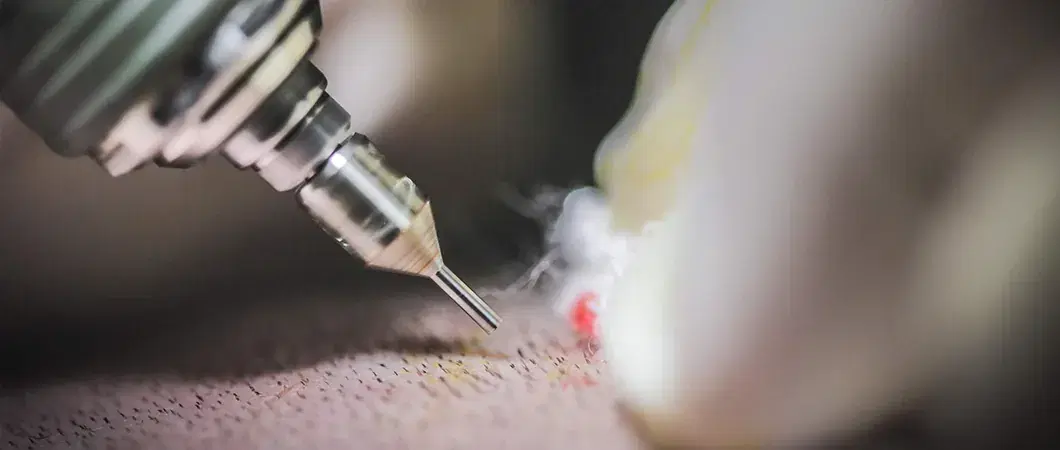
FUT and DHI compare different transplant stages, so they are not true opposites. FUT describes strip harvesting, while DHI usually describes graft placement with an implanter. Most DHI procedures still use FUE for donor extraction. FUT can provide many grafts efficiently, but it leaves a linear donor scar. DHI avoids that strip incision only when paired with FUE. Neither method guarantees better growth, density, or naturalness. Donor anatomy, graft handling, planning, and surgical skill usually matter more.
What Is the Real Difference Between FUT and DHI?
FUT and DHI describe different surgical stages, making direct comparison technically incomplete.
FUT hair transplant removes a narrow scalp strip from the donor region. Technicians then dissect that strip into follicular units under magnification. DHI usually places prepared grafts with a sharp implanter device. Most clinics pair DHI placement with FUE extraction, not strip harvesting. Therefore, DHI often competes with conventional FUE placement rather than FUT itself. This distinction matters because harvesting determines donor scarring. Placement mainly influences handling, angle, depth, spacing, and workflow. Patients should ask clinics to name both stages separately.
Can FUT Grafts Be Implanted With a DHI Pen?
Yes, surgeons can place FUT-harvested grafts using an implanter, including devices associated with DHI.
The strip method only determines how surgeons obtain donor follicles. After microscopic dissection, the team can place those grafts using several methods. Options include forceps, premade slits, stick-and-place techniques, or implanter pens. Published surgical literature discusses harvesting and implantation as separate decisions. Marketing labels often merge them, which creates misleading comparisons. A clinic claiming FUT versus DHI should explain its extraction and placement protocols. That explanation reveals what procedure patients are actually receiving.
Which Method Leaves More Visible Scarring?
FUT usually leaves one linear scar, while FUE-based DHI leaves many small circular scars.
Neither approach is scarless. Longer hairstyles often conceal a well-planned FUT scar. Very short hair may expose its line more easily. FUE-based DHI distributes tiny scars across a broader donor area. Excessive extraction can create patchy thinning or a moth-eaten appearance. FUT scar width depends partly on scalp elasticity, closure tension, and surgical planning. A clinical study linked greater elasticity with wider strip scars. Your preferred haircut should therefore influence the donor strategy.
Does DHI Produce Better Graft Survival Than FUT?
No reliable evidence proves DHI produces better graft survival than well-performed FUT.
Implanter devices can reduce forceps-related crushing when teams use them correctly. They can also control insertion angle, depth, and direction during placement. However, graft survival depends on hydration, temperature, handling, ischemia time, and tissue injury. FUT can yield robust grafts through microscopic strip dissection. DHI results still depend on how grafts were extracted and loaded. Published comparisons remain limited and technique-dependent. Therefore, advertised survival percentages should not replace clinic-specific outcomes and standardized photography.
Which Method Can Provide More Grafts?
FUT can often provide many scalp grafts efficiently when donor laxity supports strip harvesting.
Surgeons remove follicles from a concentrated donor strip. Microscopic dissection can preserve surrounding tissue and identify follicular units carefully. DHI does not determine graft supply because it addresses placement. When DHI uses FUE extraction, safe donor spacing limits one-session harvesting. Large FUE sessions may risk visible donor thinning when planning becomes aggressive. Some advanced cases combine FUT and FUE to maximize lifetime donor yield. Final graft numbers depend on density, laxity, hair caliber, and future loss.
Is Recovery Faster After DHI or FUT?
FUE-based DHI usually offers easier donor recovery, while FUT requires healing of a sutured strip incision.
FUT can cause more early donor tightness or discomfort. It also requires wound care and later suture or staple removal. DHI placement may create recipient punctures, swelling, crusting, and temporary redness. Recipient recovery still varies with graft count, density, bleeding, and technique. Studies comparing harvesting methods report different pain patterns, but individual experiences vary. Neither option prevents temporary shedding after surgery. Work return depends on appearance, occupation, and postoperative instructions.
Who Is Better Suited to FUT or DHI?
FUT suits some donor patterns, while FUE-based DHI suits different priorities.
FUT may suit patients needing substantial graft numbers with adequate scalp laxity.
FUT may also suit patients who comfortably maintain longer donor hair.
DHI may suit patients prioritizing shorter hairstyles without a linear scar.
FUE-based DHI requires sufficient donor density across a wider harvesting zone.
Poor scalp laxity can make strip closure less suitable.
Previous scars, future hair loss, and donor miniaturization can change either choice.
Medical assessment should determine candidacy, not the procedure’s marketing name.
What Should You Compare Before Choosing FUT or DHI?
The best choice depends more on the complete surgical plan than the FUT or DHI label.
Ask which method removes grafts and which method places them.
Request the planned graft count, donor boundaries, and long-term reserve estimate.
Review results from patients with similar hair loss, caliber, and skin contrast.
Examine donor photographs under consistent lighting and comparable hair length.
Confirm who performs extraction, recipient-site creation, loading, and implantation.
Discuss scar preferences, recovery limits, future sessions, and medical therapy.
Choose the team that explains trade-offs without promising guaranteed density.
References
Hair Transplantation: Surgical Technique
https://pubmed.ncbi.nlm.nih.gov/33915242/Hair Transplant With Strip Harvest
https://pmc.ncbi.nlm.nih.gov/articles/PMC8719948/Advancements in Graft Placement Techniques
https://pubmed.ncbi.nlm.nih.gov/37879353/A Practical Guide to Hair Graft Placement Using the Sharp Implanter Method
https://pmc.ncbi.nlm.nih.gov/articles/PMC10349607/Association Between Scalp Elasticity and Donor Strip Scar Width
https://pubmed.ncbi.nlm.nih.gov/28005630/Hair Transplant Practice Guidelines
https://pmc.ncbi.nlm.nih.gov/articles/PMC8611706/Review of Factors Affecting Hair-Graft Survival
https://pmc.ncbi.nlm.nih.gov/articles/PMC2956960/Comparison of Postoperative Pain According to Harvesting Method
https://pmc.ncbi.nlm.nih.gov/articles/PMC6536877/Complications of Hair Transplant Procedures
https://pmc.ncbi.nlm.nih.gov/articles/PMC8719980/