
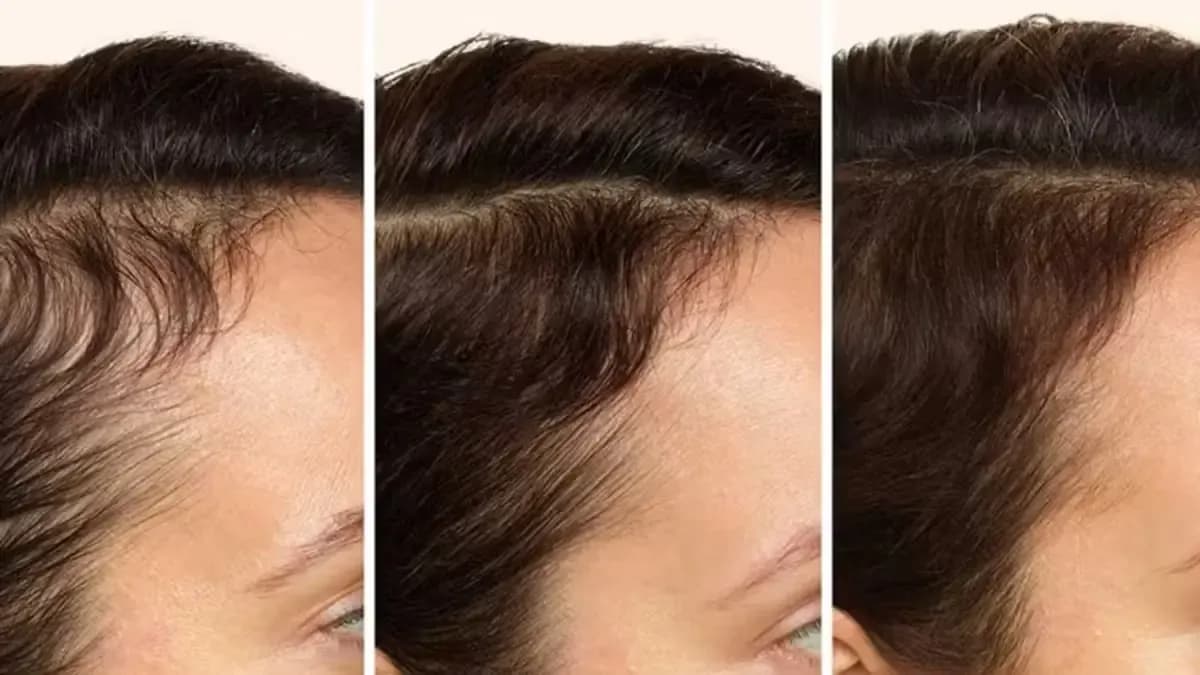
Hair density plays a central role in hair transplant planning because it influences how many grafts can be harvested, where they should be placed and how full the final result may appear. Understanding the difference between natural hair density, donor capacity and transplanted coverage helps explain why successful hair restoration involves more than transferring the largest possible number of follicles.
What Is Hair Density?
Hair density refers to the number of individual hairs growing within a particular area of the scalp, commonly measured in hairs per square centimeter. It provides an important indication of how much natural coverage a person has, although the number of hairs alone does not completely determine how thick the hairstyle looks.
Hair grows in natural groupings called follicular units, which typically contain one to four hairs. During transplantation, these units are usually extracted and implanted as individual grafts. This creates an important distinction between hair density, which counts individual strands, and follicular unit density, which counts the groups from which those strands grow.
For example, an area containing 70 follicular units per square centimeter may have approximately 140 individual hairs if each unit contains an average of two strands. Another area with the same number of follicular units could contain more hairs if a greater proportion of its units produce three or four strands.
Both measurements are valuable because the number of grafts does not automatically reveal the amount of hair those grafts will provide.
Why Hair Density and Hair Thickness Are Not the Same
People often describe thick hair and dense hair as though they mean the same thing, but these characteristics are different. Hair density describes how many strands occupy an area, while hair thickness, or caliber, refers to the diameter of each individual strand.
Someone with relatively low density and coarse hair may have a fuller-looking hairstyle than someone with more numerous but exceptionally fine strands. Thicker shafts cover more scalp, reducing the amount of skin visible between neighboring hairs.
Hair texture also affects this relationship. Wavy and curly strands can create greater overlap, while straight hair often lies closer to the scalp. Color contrast matters as well, because dark hair against a light scalp can make spaces between follicles more noticeable.
These characteristics help explain why equal graft counts can produce different cosmetic results. Hair transplant planning must account for the visual contribution of each strand rather than rely exclusively on a numerical density target.
How Is Hair Density Measured Before a Hair Transplant?
A proper density assessment involves examining the donor and recipient areas under magnification. Trichoscopy and specialized imaging tools allow follicular units to be counted within a defined scalp area while also revealing differences in strand diameter and signs of follicular miniaturization.
Measurements are particularly important across the back and sides of the head, where donor hair is usually collected. Density can differ between the central back of the scalp and the regions nearer the ears, so examining only one location may produce an incomplete picture.
The assessment also considers whether donor follicles appear stable. A region may look reasonably dense at first glance but contain numerous miniaturized hairs that are vulnerable to further thinning. These follicles may be less suitable for transplantation than healthy, thicker strands growing in a more stable area.
The recipient region requires a separate evaluation. Measuring the density of existing hair helps determine whether transplantation should focus on a completely bald area or add coverage between native follicles that are still producing hair.
Together, these measurements provide a more reliable basis for planning than estimating graft requirements from photographs alone.
Why Donor Hair Density Determines Transplant Capacity
Hair transplantation redistributes existing follicles rather than creating new ones. Every graft extracted from the donor area reduces the number of follicular units remaining in that location, which makes the original donor density one of the main limits on surgical planning.
A relatively dense donor region may provide more flexibility for treating several areas of thinning. A person with fewer available follicles may need to concentrate restoration within a smaller region rather than attempt extensive coverage across the entire scalp.
However, high donor density does not mean that every follicle can be removed safely. The remaining hair must continue providing acceptable coverage, particularly when the patient prefers shorter hairstyles that expose more of the scalp.
Excessive extraction can create visible gaps and an uneven appearance, sometimes described as overharvesting. These changes may become more noticeable after additional hair loss or when the donor region is clipped closely.
The hair transplant donor area guide explains how donor density, follicle characteristics and careful extraction planning influence the amount of hair available for restoration.
Preserving donor resources also leaves greater flexibility if untreated hair continues thinning in the future.
How Hair Density Affects the Number of Grafts Needed
The number of grafts required for a transplant depends partly on the size of the treatment area and the intended recipient density. However, the relationship is not as simple as multiplying the surface area by one standard graft count.
Consider two hypothetical procedures using 2,000 grafts. If those grafts are distributed across 50 square centimeters, the average placement density would be 40 follicular units per square centimeter. Distributing the same number across 100 square centimeters would reduce that average to 20 units per square centimeter.
These calculations describe graft placement, not guaranteed final hair density. The number of hairs within each graft, existing native hair and subsequent follicular growth all influence the mature result.
The distribution also matters because an even numerical density is not always the most natural or visually effective approach. Some parts of the scalp need carefully spaced single-hair units, while others benefit from greater concentration of multi-hair grafts.
For a closer look at how treatment areas influence surgical estimates, the guide to how many grafts are needed for a hair transplant explains the relationship between graft requirements, hair loss patterns and donor supply.
Hairline, Mid-Scalp and Crown: Why Density Distribution Matters
Different regions of the scalp contribute to the appearance of fullness in different ways. The frontal hairline frames the face and attracts attention during everyday conversation, making its shape and natural transition particularly important.
A convincing hairline usually begins with a softer, irregular arrangement of single-hair grafts. Placing densely packed multi-hair units directly along the leading edge can create an abrupt appearance, even when the overall number of transplanted hairs is high.
Farther behind the hairline, greater density and overlapping strands can help create a fuller appearance. The direction of hair growth also influences coverage, because carefully positioned strands may conceal more scalp without requiring an unnecessarily high concentration of grafts.
The crown presents another challenge. Hair grows around a whorl, changing direction as it moves outward, and this pattern can make the underlying scalp visible from several angles. Covering a large crown may consume substantial donor resources while producing less dramatic improvement in frontal appearance.
Effective planning therefore considers which regions benefit most from additional density and how the entire hairstyle will look as one connected result.
How Much Density Can a Hair Transplant Actually Achieve?
A hair transplant does not always need to reproduce the original natural density to create convincing coverage. Strategic placement can produce a substantial cosmetic improvement even when the number of transplanted hairs remains lower than the density present before hair loss began.
Trying to recreate maximum density across every thinning area may require more grafts than the donor region can safely provide. Implanting large numbers of grafts very close together also increases the technical demands of recipient-site preparation and graft handling.
The condition of the recipient skin, existing follicles and available blood supply must be considered when deciding how much transplantation is appropriate. A densely packed arrangement should not be pursued simply to produce an impressive graft count on the day of surgery.
For extensive hair loss, staged restoration may provide a more balanced strategy. Concentrating initial treatment on visually important areas can create meaningful coverage while preserving follicles for later decisions.
The objective is natural-looking density that remains compatible with the available donor supply, rather than a numerical target disconnected from the patient's existing hair characteristics.
How Future Hair Loss Changes Density Planning
Hair density is not necessarily stable throughout adulthood. Hereditary hair loss can progressively miniaturize native follicles, reducing coverage in areas that previously appeared healthy.
This creates an important long-term consideration after transplantation. The relocated follicles may continue growing while neighboring native hair becomes finer, eventually making the original graft distribution look less balanced.
A very low hairline or unusually dense frontal restoration may also consume donor follicles that could become useful if thinning develops farther back. Preserving a reserve allows future treatment options to remain available without excessively reducing donor coverage.
Medical treatments such as minoxidil and, for appropriate patients, finasteride may help maintain native hair affected by androgenetic alopecia. Their role is separate from transplantation because they address ongoing thinning rather than physically relocating follicles.
A durable restoration plan should therefore consider expected hair loss progression alongside current density measurements. The result should remain visually coherent as surrounding hair changes, not merely look impressive during the first year.
How to Evaluate Hair Density After a Hair Transplant
Hair transplant density develops gradually, making early photographs an unreliable measure of the final outcome. Many transplanted hair shafts shed during the first several weeks, while the underlying follicles enter a resting period before new growth becomes visible.
New strands often begin appearing around the third or fourth month. Coverage becomes more noticeable over the following months as additional follicles enter active growth and individual strands gain length and thickness.
By approximately twelve months, much of the frontal result has developed, although crown coverage and hair texture may continue maturing afterward. Evaluating density before these changes occur can make an otherwise normal recovery appear disappointing.
Photographs should be taken under consistent lighting, with similar hair lengths and camera positions. Wet hair, harsh overhead lighting and carefully arranged styling can substantially change the amount of scalp visible without changing the underlying follicular density.
A mature result should also be assessed from the sides and above, including the donor region. An attractive frontal appearance does not provide a complete assessment if excessive extraction has left the back of the scalp visibly depleted.