
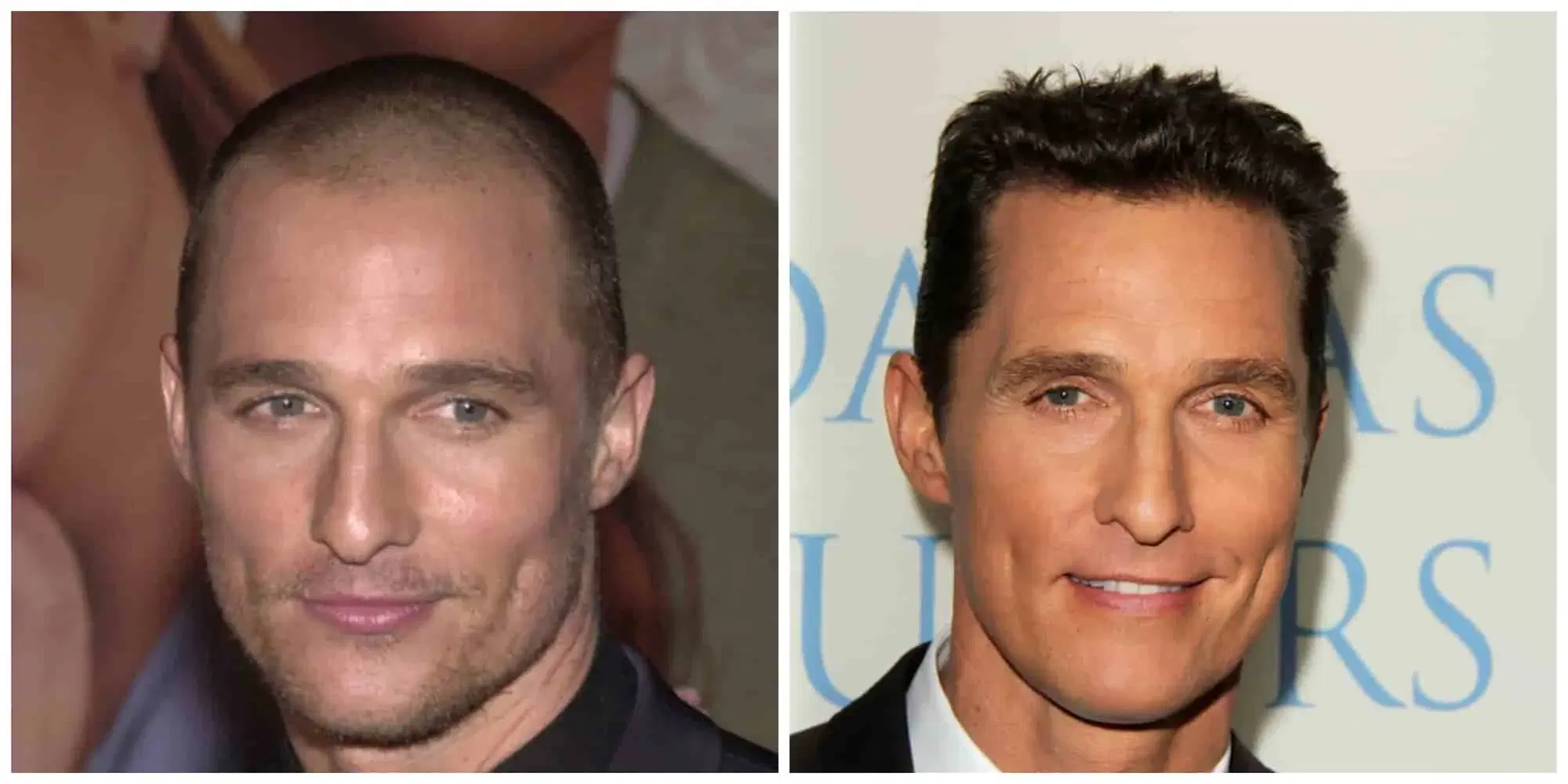
A famous actor’s fuller hairline has become one of the most talked-about celebrity hair stories because the change looked dramatic, natural, and long-lasting. The honest answer is that no one outside his personal circle can verify every detail, so the best approach is to separate what has been publicly discussed from what is medically plausible. This article looks at the conversation around How Matthew McConaughey got his hair back while using the topic as a practical guide to modern hair restoration options.
What do we actually know about the hair comeback?
The public conversation centers on visible thinning in earlier years, followed by a noticeably fuller appearance later on. The actor has publicly pushed back on the idea that surgery was responsible and has instead described a consistent topical routine as part of his story. At the same time, observers often speculate about other possibilities because hair density, styling, lighting, grooming, and restoration treatments can all create overlapping visual results.
That distinction matters. A celebrity transformation can be interesting, but it should not be treated as a medical case study. Without access to private records, it is not responsible to state that any single treatment definitely caused the result. A more useful question is what kinds of hair growth solutions could create fuller-looking hair for someone dealing with thinning.
The visible clues people tend to notice
Most online discussion focuses on three things: a thicker front hairline, more volume through the top, and a consistent look over many years. Those details can make people assume a surgical procedure took place, but they do not prove it. Well-maintained existing hair, strategic length, texture, color contrast, and styling products can make a significant difference in how dense hair appears.
Hair loss also does not always move in a straight line. Some people experience shedding, inflammation, stress-related changes, or scalp issues that improve with time and care. Others have progressive pattern hair loss that requires long-term management. Because different causes can look similar on camera, appearance alone is a weak diagnostic tool.
The phrase matthew mcconaughey hair restoration often appears in searches because people want a clean answer. The more accurate answer is layered: his public explanation points to a non-surgical routine, while speculation about surgical or cosmetic support remains just that—speculation.
Hair restoration is rarely one single trick
For most people, fuller hair comes from combining the right diagnosis with consistent maintenance. A person might use a topical product, improve scalp health, adjust styling, take prescribed medication, or consider a procedure. The best plan depends on whether the issue is genetic thinning, temporary shedding, traction, inflammation, nutritional factors, or another cause.
A realistic restoration plan usually includes:
Understanding the type of hair loss. Pattern thinning, shedding, and breakage require different approaches.
Protecting existing hair. Keeping the hair you still have is often easier than replacing what is already gone.
Improving scalp conditions. Irritation, buildup, and untreated scalp problems can make hair look thinner.
Choosing evidence-aware treatments. Some options are better supported than others, and expectations should be realistic.
Staying consistent. Many approaches require months of regular use before changes are noticeable.
Avoiding miracle thinking. A dramatic celebrity result does not mean the same outcome is available to everyone.
This is where the story becomes useful. Instead of copying a celebrity routine, readers should use the curiosity as a prompt to learn what actually works for their situation.
Could topical products really make hair look fuller?
Topical products can help some people, especially when they support scalp health, reduce breakage, improve hair shaft condition, or are part of a medically guided routine. However, a topical alone may not fully reverse advanced genetic hair loss, and marketing language can make results sound more universal than they are. The key is to distinguish between true regrowth, reduced shedding, thicker-looking strands, and better styling outcomes.
Many people use the word “regrowth” loosely. If a product makes hair less brittle, reduces flaking, or improves manageability, the hair may look fuller even if the number of follicles has not changed dramatically. If a treatment helps miniaturized hairs become stronger, that can also improve coverage. But if follicles are inactive or the area has been bald for a long time, topical care alone is less likely to create a dense result.
A sensible topical routine may include scalp cleansing, targeted leave-in products, and patience. It should also include caution. If a product claims to work for everyone, promises fast transformation, or avoids explaining who is and is not a good candidate, it deserves skepticism.
Understanding common hair transplant methods
Modern hair transplant methods are designed to move healthy follicles from denser areas of the scalp to thinner areas. The goal is not just more hair, but natural placement, appropriate density, and a hairline that still looks believable as a person ages. When performed well, transplantation can be difficult to detect; when planned poorly, it can look harsh or unnatural.
Two broad methods are commonly discussed:
Follicular unit transplantation. A strip of scalp is removed from a donor area, and follicular units are prepared and placed into thinning areas. This can allow many grafts in one session, but it typically leaves a linear scar.
Follicular unit extraction. Individual follicular units are removed directly from the donor area. This may avoid a single linear scar, though it can still create tiny dot-like scars and requires careful donor management.
Neither method is magic. A transplant redistributes hair; it does not create unlimited new follicles. Someone with ongoing hair loss may still need long-term maintenance to protect non-transplanted hair. Good planning considers donor supply, future thinning, hair texture, face shape, and the patient’s expectations.
This is why celebrity speculation can be misleading. A great result could come from surgery, non-surgical care, styling, or a combination. A viewer cannot reliably determine the method from photos alone.
Non-surgical hair growth solutions worth understanding
Non-surgical options are often the first step because they can support existing hair and may delay or reduce the need for procedures. They can also be used after a transplant to help maintain surrounding native hair. The right choice depends on the cause of thinning and the person’s tolerance for maintenance.
Common categories include:
Topical treatments These are applied to the scalp and may support density, shedding control, or scalp condition depending on the ingredients and the person’s diagnosis.
Prescription-based options Some people use medical therapies under professional guidance to slow pattern hair loss or support regrowth. These should be discussed with a qualified clinician because benefits and side effects vary.
Scalp health routines Cleansing, treating irritation, and managing buildup can improve the environment around existing hair. This may not reverse genetic loss, but it can improve appearance and comfort.
Low-level light devices Some people use light-based tools as part of a broader plan. Consistency and realistic expectations are important.
Cosmetic density boosters Fibers, powders, sprays, and styling techniques can make hair look fuller immediately. They do not treat the underlying cause, but they can be useful for confidence while other options take time.
Lifestyle and health review Sleep, stress, nutrition, medications, and underlying health conditions can influence shedding. Addressing these factors is not a guaranteed cure, but it can remove obstacles to healthier hair.
The role of styling in a fuller look
Hair can appear dramatically different depending on cut, length, wave pattern, color, and product choice. Longer hair can hide thinning in some areas, while shorter textured styles can reduce contrast between scalp and hair. Volume products can lift the roots, and matte finishes often make hair look denser than shiny products that separate strands.
Camera conditions also matter. Bright overhead lighting can expose thinning, while softer light and favorable angles can make hair look much fuller. Public figures often appear after professional grooming, which means the final look may include expert cutting, careful blow-drying, and product layering.
This does not mean a visible improvement is fake. It means appearance is a combination of biology, grooming, and presentation. For everyday readers, that is good news: even without dramatic restoration, the right haircut and styling routine can improve the look of thinning hair quickly.
What should you do if you want similar results?
If the goal is fuller-looking hair, start with a clear assessment rather than guessing from a celebrity example. The best first move is to identify the pattern, timeline, and possible triggers behind your thinning. From there, you can build a plan that protects existing hair, improves appearance, and explores treatment options at the right pace.
A practical starting checklist:
Take clear photos in the same lighting once a month so you can track changes honestly.
Notice whether thinning is at the temples, crown, part line, or all over the scalp.
Review recent stress, illness, medication changes, diet shifts, or scalp symptoms.
Avoid aggressive brushing, tight hairstyles, and harsh chemical routines if breakage is part of the issue.
Choose a hairstyle that works with your current density instead of fighting it.
Speak with a qualified professional before starting prescription options or planning surgery.
Be cautious with products that promise celebrity-level results without explaining limitations.
The most important lesson is consistency. Hair changes slowly, and most credible approaches require time. Jumping from product to product every few weeks can make it harder to know what is helping.
Separating inspiration from expectation
The fascination with How Matthew McConaughey got his hair back is understandable because hair loss can affect confidence, identity, and how people feel in photos or public settings. But a celebrity result should be treated as inspiration, not a template. Genetics, donor hair, budget, access to specialists, styling support, and the cause of thinning all influence what is possible.
It is also worth remembering that privacy matters. Public figures may choose to share parts of their grooming routine, but that does not give the public a full medical history. Respecting that boundary leads to a more honest conversation: here is what has been claimed publicly, here is what people speculate about, and here are the broader restoration paths available to anyone dealing with hair loss.
A balanced takeaway
The most responsible answer is that the actor has publicly credited a consistent topical approach, while many observers continue to discuss other possibilities such as styling, non-surgical treatments, or transplant-related options. None of those possibilities should be presented as confirmed private medical history. What can be said with confidence is that fuller-looking hair often comes from a combination of maintenance, scalp care, smart grooming, and sometimes professional treatment.