
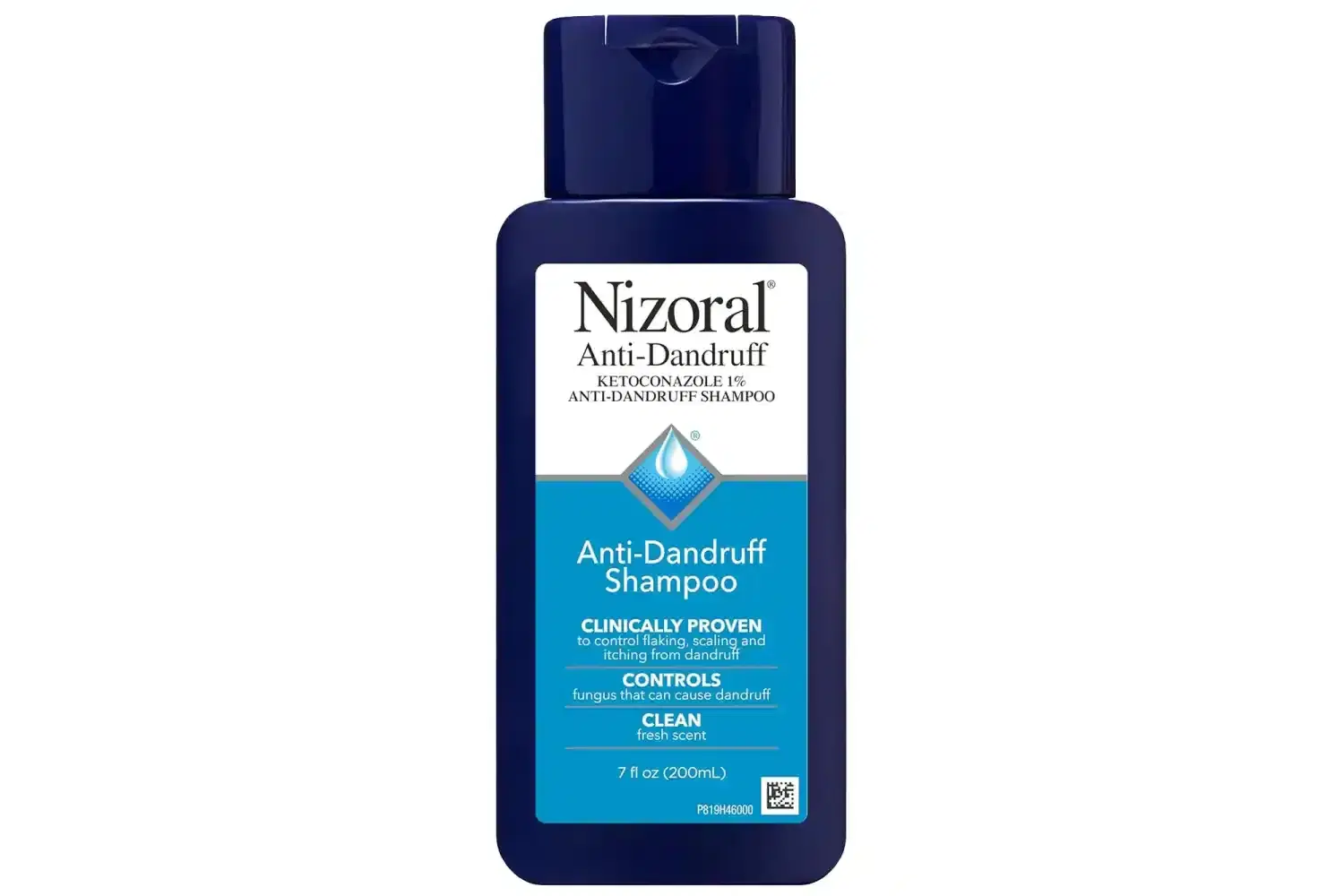
Nizoral shampoo is commonly associated with dandruff and seborrheic dermatitis, but it is also frequently discussed as a possible addition to hair-loss routines. Its active ingredient, ketoconazole, is an antifungal medicine that reduces the growth of certain yeasts on the scalp. By helping control flaking, itching and inflammation, it may create a healthier scalp environment for some people.
That does not make Nizoral a complete hair-loss treatment. It cannot restore follicles that have permanently stopped producing hair, and it does not correct every cause of shedding. If your hair loss is related to genetics, nutritional deficiency, thyroid disease, hormonal changes or an autoimmune condition, ketoconazole shampoo alone is unlikely to solve the problem.
Its value depends on why your hair is falling out. You may notice an improvement when excessive shedding accompanies an oily, itchy or flaky scalp. However, progressive thinning at the temples, hairline or crown usually requires a broader assessment and a treatment plan directed at the underlying condition.
What Is Nizoral Shampoo?
Nizoral is a brand name used for shampoo containing ketoconazole. Depending on the country and product, the concentration may be 1% or 2%, and availability may differ between non-prescription and prescription forms.
Ketoconazole works against fungi and yeasts, including microorganisms involved in dandruff and seborrheic dermatitis. Seborrheic dermatitis can cause greasy flakes, redness, irritation and persistent itching, particularly in oil-producing areas of the scalp.
The shampoo is designed to remain on the scalp for a short period before being rinsed away. It is not intended to act like a leave-in hair serum, conditioner or styling product.
Instructions vary according to the concentration and local product label. You should therefore follow the directions supplied with your own bottle rather than using a schedule recommended for a different formulation.
Does Nizoral Shampoo Stop Hair Loss?
Nizoral may reduce shedding when scalp inflammation is contributing to the problem. If itching causes you to scratch repeatedly, or heavy scaling affects the scalp around the follicles, treating the irritation may help reduce breakage and inflammation-related shedding.
The evidence is less certain when ketoconazole is used directly for genetic hair loss. Small studies have reported improvements in measures such as hair-shaft diameter and the proportion of actively growing hair. However, the available research is limited, and ketoconazole has not been established as a stand-alone treatment for androgenetic alopecia.
You should therefore view it as a possible supporting product rather than the central treatment. A person with dandruff and pattern hair loss may benefit from controlling both conditions, but the shampoo is unlikely to replace treatments specifically chosen for progressive follicle miniaturisation.
Visible improvement in dandruff can occur relatively quickly. Changes in hair density take much longer to evaluate because hair grows slowly and shedding naturally fluctuates.
How Can Dandruff Contribute to Shedding?
Dandruff itself does not usually destroy healthy hair follicles. However, an irritated scalp can make hair loss appear worse.
Seborrheic dermatitis may cause itching, inflammation and tightly attached flakes. Repeated scratching can break hairs or pull loose hairs from the scalp. Inflammation around follicles may also contribute to temporary shedding in susceptible people.
When the condition improves, you may notice less itching and fewer hairs coming away during washing. This does not necessarily mean that the shampoo has created new follicles. It may simply mean that the scalp is calmer and fewer hairs are being loosened through inflammation or scratching.
Ketoconazole shampoo has shown clear benefits for reducing the scaling and itching associated with dandruff and scalp seborrheic dermatitis.
If the scalp looks healthy but your hair continues to become thinner, another cause should be investigated.
Can Nizoral Help With Male or Female Pattern Hair Loss?
Male and female pattern hair loss develops when genetically susceptible follicles gradually become smaller. The hairs produced by these follicles become finer, shorter and less visible over time.
In men, thinning often appears around the temples, frontal hairline or crown. Women may notice widening of the central part and reduced density over the upper scalp, while the frontal hairline is often partly preserved.
Ketoconazole has attracted interest because of its anti-inflammatory effects and possible influence on the scalp environment. Laboratory and limited clinical research has suggested that it may support hair quality in androgenetic alopecia, but the evidence is not strong enough to treat it as an alternative to established therapies.
You may be advised to use it alongside another treatment when pattern hair loss occurs with dandruff, oiliness or seborrheic dermatitis. The important word is “alongside.” Shampoo remains on the scalp only briefly, and its main role is controlling the scalp condition.
A dermatologist may discuss topical minoxidil or other prescription options according to your diagnosis, sex, age, medical history and pregnancy plans. These treatments should be selected individually rather than added to a routine simply because they are popular online.
Which Types of Hair Loss Will Nizoral Not Treat?
Hair loss has many causes, and ketoconazole is not appropriate for all of them.
Telogen effluvium is a form of diffuse shedding that may occur after fever, surgery, emotional stress, rapid weight loss, childbirth or another physical strain. Nizoral will not correct the trigger unless scalp inflammation is also present.
Iron deficiency, thyroid disorders, restrictive diets and certain medicines can also produce widespread thinning. A shampoo cannot replace the medical investigation or nutritional treatment required in these situations.
Alopecia areata causes clearly defined bald patches and involves an immune reaction against the follicles. Scarring alopecias can permanently damage follicles and require early medical treatment. Ketoconazole shampoo may occasionally be included when scaling is present, but it does not control the underlying disease.
Nizoral is also unlikely to reverse hair loss caused by tight hairstyles, repeated bleaching, chemical burns or severe heat damage. These problems require reducing the physical or chemical stress placed on the hair and scalp.
How Should You Use Nizoral Shampoo?
Use the product on the scalp rather than concentrating only on the hair lengths. Wet your hair thoroughly, apply an appropriate amount and massage it gently over the affected skin.
Avoid scratching with your fingernails. Fingertips are sufficient to distribute the shampoo without creating small abrasions.
The product usually needs to remain on the scalp briefly before rinsing, but the exact contact time depends on the formulation. Follow the instructions provided with the bottle or the schedule given by your dermatologist.
Some treatment plans use ketoconazole shampoo several times a week during an active phase and less frequently for maintenance. Daily use is not automatically better. Excessive washing with a medicated shampoo may dry or irritate the scalp.
On other days, you can use a mild shampoo if needed. When your hair lengths become dry, apply conditioner mainly to the mid-lengths and ends rather than covering an oily or inflamed scalp with a heavy product.
Do not leave the shampoo on overnight. Keeping it in contact with the skin for longer than recommended may increase irritation without improving the result.
Can Nizoral Make Hair Loss Look Worse at First?
Some people notice more hair in the shower when they begin a medicated shampoo. Washing can release hairs that had already completed their growth cycle and were ready to shed. This does not necessarily mean that ketoconazole is damaging the follicles.
However, the product can occasionally cause dryness, irritation or changes in hair texture. If the hair becomes rough, it may break more easily during brushing.
Clinical trial information for ketoconazole shampoo has included reports of abnormal hair texture, dryness, oiliness, itching and increased normal hair loss in a small number of users.
Stop using the shampoo and seek advice if shedding increases substantially, your scalp becomes painful or a rash develops. Continuing a product that repeatedly irritates your skin is unlikely to help your hair.
What Are the Possible Side Effects?
Most people tolerate ketoconazole shampoo reasonably well when it is used as directed. Possible side effects include dryness, burning, itching, redness and local irritation.
Your hair may temporarily feel drier, oilier or harder to manage. Chemically treated, bleached or naturally dry hair may require gentler care between medicated washes.
Avoid getting the shampoo into your eyes. Rinse thoroughly with clean water if accidental contact occurs.
An allergic reaction is uncommon but requires prompt attention. Stop using the product if you develop significant swelling, blistering, widespread rash or worsening irritation. Breathing difficulty or swelling involving the lips, tongue or throat requires emergency medical care.
Do not apply the shampoo to open wounds or severely damaged skin unless a clinician has advised you to do so.
Can You Combine Nizoral With Minoxidil?
Nizoral and topical minoxidil are sometimes included in the same hair-loss plan because they serve different purposes. Ketoconazole mainly targets dandruff and scalp inflammation, while minoxidil is intended to support hair growth in suitable forms of pattern hair loss.
Using both products on an already sensitive scalp may cause dryness or irritation. Introducing several treatments at the same time also makes it difficult to identify which one caused a reaction.
You may find it more practical to use the shampoo during washing, rinse it thoroughly and apply any leave-in treatment only after the scalp has dried. The exact routine should follow the instructions for each product.
Minoxidil is not appropriate for every unexplained form of shedding. It can also cause temporary increased shedding during the early treatment period. A diagnosis should ideally be established before you begin long-term use.
How Long Does It Take to See Results?
Flaking and itching may begin to improve within a few weeks when ketoconazole is suitable for the scalp condition. Persistent seborrheic dermatitis often returns, so occasional maintenance use may be recommended.
Hair-related changes require more patience. You should not judge density after one or two weeks. Hair grows in cycles, and meaningful comparison generally requires several months.
Take photographs under the same lighting and from the same angle if you want to monitor thinning. Daily inspection in different mirrors can make normal variations look more dramatic.
If the dandruff improves but hair loss continues, do not simply increase the shampoo frequency. The ongoing shedding may have a separate cause.
Should You Use Nizoral After a Hair Transplant?
Do not use medicated shampoo on newly transplanted grafts unless your hair transplant doctor has approved it.
During early healing, the recipient area is sensitive, and the clinic may provide a specific washing product and technique. Strong rubbing or unsuitable products may irritate the scalp.
Ketoconazole might be introduced later when dandruff or seborrheic dermatitis needs control. The timing depends on healing, crusting and the condition of the donor and recipient areas.
A shampoo cannot improve graft survival once follicles have been damaged during surgery. The outcome depends more strongly on surgical planning, graft handling, circulation and aftercare.
When Should You See a Dermatologist?
Arrange an assessment if hair loss is sudden, severe or continuing for more than a few months. You should also seek help when thinning occurs without dandruff or when the scalp remains inflamed despite treatment.
Medical review is particularly important when you notice:
Clearly defined bald patches
Scarring or shiny areas on the scalp
Pus, pain or thick crusts
Loss of eyebrows or eyelashes
Rapid recession of the hairline
Persistent scalp burning
Fatigue, weight change or menstrual irregularity
Hair loss after starting a new medicine
A family history of early, progressive baldness
Early diagnosis matters because some conditions respond better before substantial follicle damage occurs.