
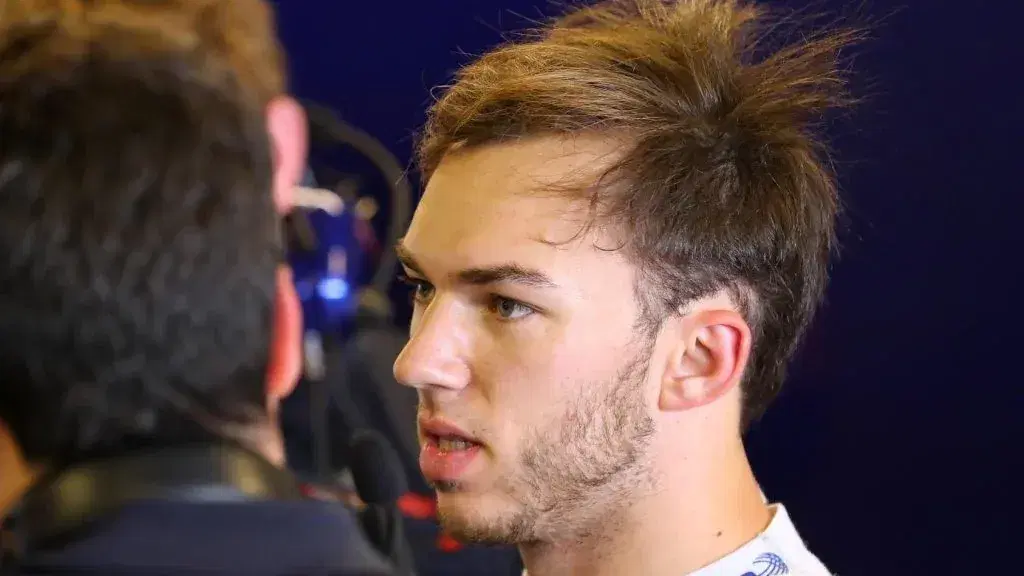
Pierre Gasly’s hair has attracted growing attention among Formula 1 fans, particularly when photographs from different seasons are placed side by side. In some images, his frontal hairline appears slightly higher and more open at the temples. In others, it looks fuller, softer and more evenly shaped. These visual changes have led to online speculation about a possible Pierre Gasly hair transplant.
There is currently no reliable public confirmation that Gasly has undergone hair restoration surgery. He has not openly announced a procedure, and no verified medical professional or clinic has confirmed treating him. Posts that confidently describe a surgery date, technique or graft count should therefore be viewed as speculation rather than established fact.
Photographs can raise questions, but they cannot provide a medical diagnosis. Hairstyle, lighting, hair length, helmet use, camera angle and natural changes in an adult hairline can all affect how the frontal area appears. A cautious analysis should separate what can be observed from what cannot be proven.
Did Pierre Gasly Have a Hair Transplant?
It is not possible to confirm that Pierre Gasly had a hair transplant from publicly available information. Some online discussions claim that his temples appear denser than they did in earlier photographs, but a visible difference does not automatically prove surgery.
A hair transplant can only be identified confidently through reliable confirmation or a detailed scalp examination. A specialist would look at the direction of the frontal hairs, the presence of extraction marks in the donor area and the distribution of density. Ordinary race-weekend photographs rarely show these details clearly.
Gasly has worn his hair in several different ways. At times, it has been short and brushed forward. In other appearances, it has looked longer, textured or pushed away from his forehead. A forward hairstyle can cover mild temple recession, while a close cut may reveal the natural outline of the hairline.
For these reasons, the most accurate conclusion is that the Pierre Gasly hair transplant claim remains unconfirmed.
Why Do People Think His Hairline Has Changed?
Celebrity hair transplant rumours often begin when a person’s hairline appears different from one year to the next. Gasly entered the public eye at a relatively young age, so fans have been able to observe his appearance over a long period.
A teenage or early-adult hairline is often lower and more rounded than the hairline seen later in adulthood. As the face matures, the frontal corners may become slightly more defined. This process does not necessarily indicate progressive baldness.
Early male pattern hair loss can produce a similar appearance, however. It often begins with gradual recession around the temples. The central section may remain relatively stable while the corners move backwards, creating an M-shaped outline.
The difference between a naturally mature hairline and early androgenetic alopecia cannot be established from a few photographs. Progression over time, family history, hair-shaft thickness and scalp examination are all relevant.
Can Photographs Prove That Surgery Took Place?
Before-and-after photographs can be misleading when they were not taken under controlled conditions.
Bright overhead lighting can pass through the hair and make the scalp look more visible. Softer lighting creates fewer shadows and may give the impression of greater density. Wet, oily or flattened hair also separates into sections, exposing more scalp than clean, textured hair.
The camera angle matters as well. A photograph taken from slightly above makes the frontal corners easier to see. A lower angle can hide recession and make the hairline appear straighter.
Hair colour and contrast create further differences. Darker hair against a light scalp may reveal gaps more clearly, while lighter or highlighted hair can soften the border between the scalp and strands.
Professional styling products may thicken the appearance of individual hairs. Hair fibres and cosmetic concealers can also reduce visible scalp without changing the follicles. None of these possibilities confirms that Gasly uses such products; they simply explain why photographs alone are unreliable.
Does Wearing a Racing Helmet Cause Hair Loss?
Formula 1 drivers spend long periods wearing helmets during practice sessions, qualifying, races and simulator work. This has led some people to assume that helmets cause permanent baldness.
A properly fitted helmet does not usually cause genetic hair loss. Male pattern baldness develops because genetically susceptible follicles gradually become smaller. Pressure from a normal racing helmet does not create that hormonal process.
Helmets can still affect the temporary appearance of the hair. Heat and perspiration may flatten the strands, while repeated removal can make the hair look untidy or expose the temples. Friction may contribute to breakage when the fit is poor or when hair is repeatedly pulled in the same area.
A helmet liner can also make hair appear less dense immediately after use because moisture causes strands to clump together. This may explain why a driver’s hairline looks different in paddock photographs taken shortly after a session.
Could Gasly Have Had a Small Temple Transplant?
If a person with Gasly’s apparent hair pattern wanted surgery, a limited temple restoration could be one possible option. This is a hypothetical explanation, not a claim that he received treatment.
A small procedure might focus on softening the frontal corners rather than lowering the entire hairline. The surgeon would place carefully selected follicles into the recessed areas while maintaining a natural adult shape.
Temple restoration requires precision. The hairs in this region usually grow at a flat angle and follow a slightly backward or downward direction. Grafts placed too upright can look unnatural, especially when the hair is cut short.
The new outline should also contain slight irregularities. A perfectly straight, densely packed line rarely resembles a natural male hairline. Fine single-hair grafts are generally preferred at the leading edge, with thicker follicular units placed behind them.
Which Technique Might Be Used?
Follicular unit extraction, commonly known as FUE, is widely used for small and medium-sized hairline procedures. Individual follicular units are removed from the back or sides of the scalp using small circular instruments.
The extracted grafts are then placed into recipient sites along the planned hairline. FUE leaves numerous small marks rather than one long linear scar. These marks can be difficult to notice when the extractions are distributed properly and the donor area is not overharvested.
Follicular unit transplantation, or FUT, is another established method. A narrow strip of hair-bearing skin is removed from the donor region and divided into individual grafts. The incision leaves a linear scar that is normally concealed by longer hair.
Either technique can produce a natural result. The quality of the outcome depends more on diagnosis, design, donor management and graft handling than on the marketing name attached to the procedure.
The term DHI is sometimes used to describe implantation with a pen-shaped device. It generally refers to how grafts are inserted rather than to a completely different source of donor hair.
How Many Grafts Would Be Needed?
Any exact graft estimate for Pierre Gasly would be unreliable without a scalp examination. Photographs cannot reveal donor density, miniaturisation or the actual surface area requiring treatment.
For a typical patient with mild recession limited to the frontal corners, the number may be considerably lower than the amount required for full frontal or crown restoration. The final plan depends on temple depth, hair thickness, curl, colour contrast and desired density.
A person with coarse, wavy hair may achieve stronger visual coverage with fewer grafts than someone with very fine, straight hair. The surgeon must also consider possible future thinning. Using too many follicles on a low hairline can leave insufficient donor supply for later procedures.
Responsible planning protects the donor area rather than chasing maximum density in a single session.
Could Medical Treatment Explain a Fuller Appearance?
Medical treatment can sometimes improve the appearance of thinning hair without surgery. This may happen when weakened follicles are still present but producing increasingly fine strands.
Topical minoxidil is commonly considered for suitable forms of male and female pattern hair loss. It may support growth and prolong the active phase of the hair cycle. Results vary, and continued use is generally required to maintain the benefit.
Finasteride may be discussed with suitable adult men. It targets a hormonal pathway involved in male pattern hair loss and may slow progression. Potential adverse effects and personal medical factors should be reviewed before treatment begins.
Medication cannot create a completely new hairline where follicles are no longer present. It may, however, thicken miniaturised hair and make the frontal region look denser.
There is no verified information showing whether Gasly has used any hair-loss medication.
Could Styling Alone Create the Difference?
A textured haircut can make a significant difference to the frontal hairline. Styling the strands forward helps conceal the temple corners, while volume at the roots reduces visible scalp.
Hair that is cut into a blunt, short fringe may create the impression of a lower and denser hairline. Longer layers can also be arranged to cover mild recession.
By contrast, pushing the hair backwards exposes the full frontal outline. A slick or wet style may separate the strands and make normal gaps appear larger.
These differences are particularly noticeable in public figures because photographs are taken in changing conditions. Studio portraits, television interviews, helmet photographs and casual social-media images should not be compared as though they were clinical records.
What Would Recovery Look Like After a Hair Transplant?
A small frontal transplant usually causes temporary redness, swelling and crusting. The transplanted hair shafts commonly shed during the first few weeks, while the follicles remain beneath the skin.
New growth generally begins gradually after several months. The initial hairs may appear fine and uneven. They usually become stronger as the result matures.
A convincing hairline cannot be judged immediately after surgery. Meaningful development takes time, and the final appearance may require close to a year.
For a professional athlete, scheduling would be important. The scalp must be protected from friction, heavy sweating and impact during early recovery. A racing helmet could place pressure on newly treated areas, so any procedure would need to be planned around medical guidance and the competition calendar.
What Makes a Hair Transplant Look Natural?
Natural results depend on more than density. The hairline must suit the person’s age, facial proportions and likely future pattern of loss.
Fine single-hair grafts should create a soft transition at the front. The angle and direction must follow the surrounding native hair. Temple points require particularly delicate placement because they frame the face and remain visible with short hairstyles.
The donor area also needs protection. Aggressive extraction may leave visible thinning or a moth-eaten appearance at the back of the head.
A successful transplant should remain believable as the patient grows older. An extremely low, straight hairline may look impressive in an early photograph but become difficult to maintain if thinning continues behind it.
What Can You Learn From the Pierre Gasly Hair Discussion?
The main lesson is that you should not diagnose your own hair loss by comparing yourself with a celebrity.
Your forehead shape, hair texture, family history and donor density are individual. Even when you admire another person’s hairline, copying it exactly may not produce a balanced result on your face.
A specialist should examine whether your hairline is naturally mature, actively receding or affected by another condition. Medical treatment may be more appropriate when thinning is still progressing. Surgery may be considered when the pattern, donor area and expectations are suitable.
You should also avoid clinics that use unconfirmed celebrity claims as advertising. A supposed celebrity graft count or surgical technique has little value when there is no reliable evidence that the procedure occurred.