
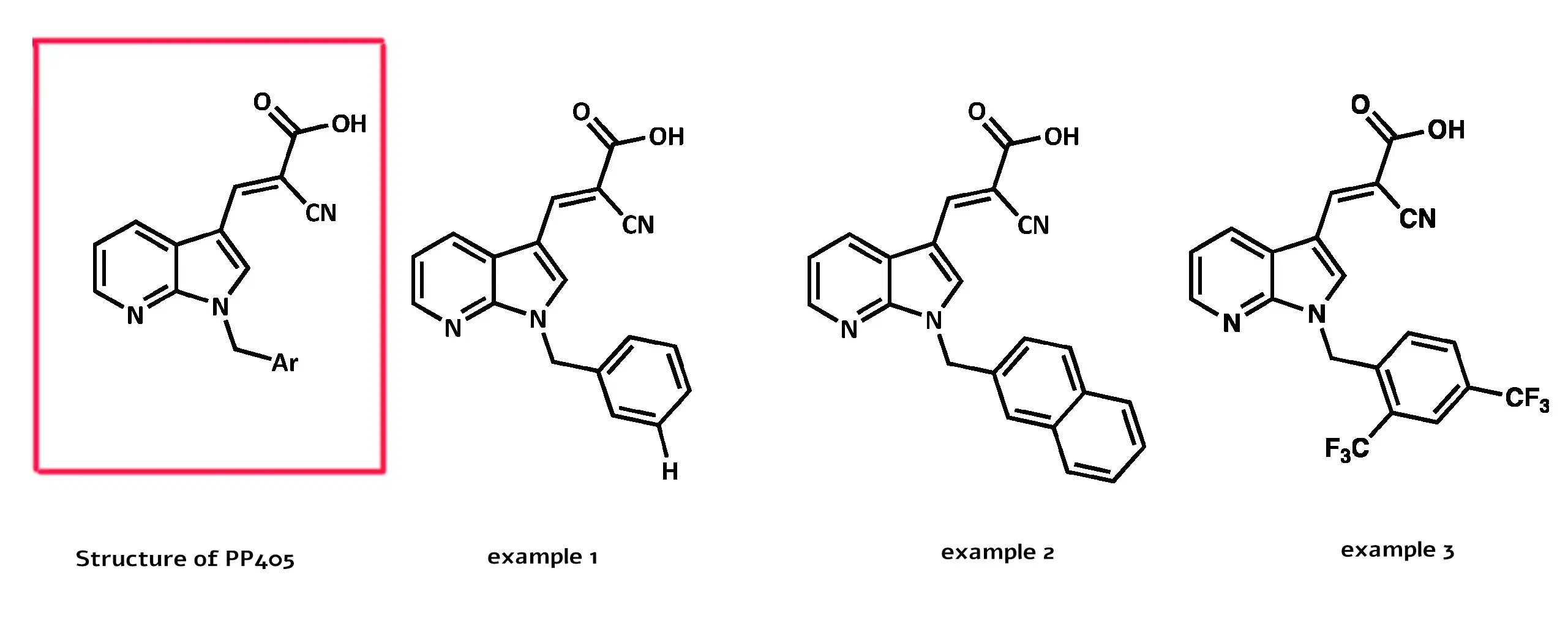
PP405 – What is it?
PP405 is an investigational, topical drug candidate intended to treat androgenetic alopecia by targeting metabolic activity in hair follicle stem cells.
Pelage Pharmaceuticals is developing the compound as a topical gel at 0.05%. PP405 is not a hair transplant. We don’t move hair follicles from one area of scalp to another. It works on follicles that are already there in areas affected by pattern hair loss.
Its development program is mainly focused on androgenetic alopecia, the progressive form of pattern hair loss in both men and women. The Phase 2a study was completed in 78 adults with the condition using a once daily scalp application. The registered trial was a randomized, vehicle-controlled trial with an open-label extension.
PP405 remains experimental. It’s not approved in the U.S. yet. Food and Drug Administration for the commercial treatment of hair loss and should not be confused with products marketed online under similar names.
How does PP405 work?
PP405 is designed to inhibit the mitochondrial pyruvate carrier, or MPC, with the aim of driving hair follicle stem cells from a dormant state toward activation.
Hair follicles also naturally cycle through resting phases. The follicle’s own stem cells can start a new growth phase, if the right biological signals are present.
Previous studies on PP405 have shown that hair follicle stem cells depend heavily on glycolytic metabolism and lactate generation. In experimental models, reduced entry of pyruvate into mitochondria resulted in increased lactate production and accelerated stem-cell activation and entry into the hair cycle.
This metabolic concept was the basis for the development of PP405. It is believed to work not by blocking androgens such as dihydrotestosterone but by switching a metabolic switch in follicular stem cells.
“It’s scientifically interesting how that mechanism works, but it’s not a matter of simplifying it to say PP405 simply ‘wakes up dead follicles.’ A dormant follicle that still has viable stem-cell structures is biologically distinct from a follicular unit that has been irreversibly damaged or destroyed.
There is still scientific uncertainty in the translation of MPC inhibition from experimental systems to treatment of the human scalp. Another MPC inhibitor was reported to induce metabolic stress and reduce proliferation under experimental conditions in a human hair-follicle laboratory study. That doesn’t prove that PP405 will fail, but it shows the importance of human clinical trials even when the underlying biological mechanism looks compelling.
What the PP405 Phase 2a Trial really showed
The Phase 2a trial generated encouraging early safety and efficacy signals but was too small and too short to show long-term effectiveness.
The registered study included 78 men and women with androgenetic alopecia. In the randomized phase, participants applied PP405 0.05% topical gel or vehicle once daily for 28 days. To provide additional safety information an open-label extension was subsequently added to the study. The trial is listed as completed with study completion date of October 2025, on ClinicalTrials.gov.
The most widely reported efficacy results to date come from the developer’s topline announcement, not from a full peer-reviewed publication or posted ClinicalTrials.gov results data set. That difference is crucial to understanding the numbers.
The company has reported several findings:
The study met its primary safety endpoint and PP405 was reported to be generally well tolerated in the randomized phase.
Pharmacokinetic assessment reported no presence of PP405 in participants’ blood.
In an exploratory subgroup of men with more advanced hair loss, 31% of PP405-treated participants achieved >20% increase in hair density at week 8 vs 0% in the corresponding vehicle group.
Evidence that terminal hairs emerged from follicular units that had no visibly growing hair before treatment, according to the company.
Such findings call for larger trials but the 31% figure should not be taken as a general success rate for PP405. It was based on a subgroup exploration and not the total trial population and treatment during the randomized phase was only 4 weeks long.
The study also does not yet determine how much visible cosmetic improvement the average patient would experience over one or several years.
Does PP405 Make Hair Grow in Bald Spots?
PP405 may be able to stimulate hair growth from some follicles that are not producing visible terminal hairs anymore, but it is not proven yet that it can restore every bald area.
It is one of the most important distinctions in the treatment.
Androgenetic alopecia is characterized by progressive miniaturization. So a follicle can slowly thin out thinner and thinner hairs before it eventually loses coverage that you can see. Even in the absence of visible normal terminal hair, the follicular structure and stem-cell population may persist for some time.
In Phase 2a testing the developer said that PP405 induced new terminal growth from previously inactive follicular units.
That observation does not prove that a scalp area that has been totally bald for many years will respond similarly. Neither does it establish a maximum period of baldness after which PP405 is no longer effective.
Thus, the clinical question is not just whether an area is bald, but whether there are sufficient viable follicular structures remaining to allow pharmacologic reawakening. Future trials will have to define this boundary.
Is PP405 a Stem Cell Therapy?
PP405 is directed at hair follicle stem-cell biology, but it is not a stem-cell transplant or stem-cell injection.
No stem cells are removed, cultivated or applied to the scalp. PP405 is a small molecule topical designed to change the metabolic microenvironment of stem cells already living in existing follicles.
If you don’t make that distinction, calling it a “stem cell hair treatment” can be misleading.
A better term would be a regenerative pharmacological approach trying to activate endogenous hair follicle stem cells.
This also implies that its potential is ultimately constrained by the biological structures already available in the scalp. It does not create new follicular units beyond the existing population of follicular units that the person has.
How is PP405 different from Minoxidil?
PP405 and minoxidil are both topical treatments for hair loss but are different drugs with different levels of clinical evidence and different proposed mechanisms.
Minoxidil is an established hair regrowth medication. Currently, topical minoxidil products are available in the U.S. for pattern hair loss; formulations and indications vary by product. Benefit usually needs to be maintained by continued use.
PP405, instead, targets the mitochondrial pyruvate carrier and follicular stem-cell metabolism. Its developers are investigating whether short exposure can trigger follicular activity that continues after treatment ends.
This possibility has been particularly interesting given the Phase 2a observation that changes in hair density were measured after four weeks of dosing. However, the trial was not designed to show that treatment with PP405 on an occasional or short course basis will keep hair permanently.
There are also no head-to-head clinical trials showing that PP405 causes more hair growth than minoxidil.
A new mechanism must not, therefore, be equaled to a demonstrated superiority.
PP405 vs Finasteride: What's the Difference?
The following text is a partial explanation of the program. You will be able to see the full explanation after you run the program. In its intended mechanism of action, PP405 is not hormonal. Finasteride is used to treat male pattern hair loss by decreasing formation of DHT via inhibition of 5-alpha-reductase.
Finasteride 1mg is FDA approved for male pattern hair loss in men and is usually taken on a long term basis to maintain its effect. Not indicated for women in the U.S. prescribing information.
PP405 does not try to reduce DHT. It acts, rather, downstream of the metabolism of follicular stem cells.
That difference raises an important question for the long term. Miniaturized follicle re-activation is not necessarily the reversal of the androgen-dependent process that led to the miniaturization.
If PP405 is to be used in the clinic, future research may need to determine if metabolic reactivation alone is sufficient for durable control, or if some patients may benefit from combination therapy.
There is currently no clinical evidence to support the use of PP405 as an alternative to finasteride.
Can PP405 Replace Hair Transplants?
PP405 may have the potential to reduce the need for transplantation in some patients if larger trials confirm meaningful regeneration. At present it is not considered an alternative to hair transplant surgery.
Hair transplantation addresses one biological problem, and PP405 addresses another.
A transplant involves the removal of follicular units from a donor area and the permanent transplant into areas of thinning or baldness. It does not rely on the activation of dormant recipient follicles.
PP405 does just the opposite. It does not give new hair follicles. Its prospects hinge on whether the existing follicles in the affected area can be restored to meaningful hair production.
This distinction is particularly important for advanced baldness A regenerative drug might be able to improve coverage without donor grafts in the case of viable but very small follicles. Even if functional follicular structures are lost, transplantation may have a different role.
It is too early to know where that clinical demarcation will fall.
Will PP405 Work for Women
PP405 is being developed for men and women suffering from androgenetic alopecia, but there is not enough publicly available efficacy data to quantify its effectiveness specifically in women.
They purposely included both genders in the Phase 2a trial, not just men. It also had different skin phototypes and hair textures.
This general approach to development may be important because treatment options for female pattern hair loss differ from those for men in several ways.
However, the most widely publicized response figure from Phase 2a, the 31% of participants exceeding a 20% density increase, was specifically reported from a subgroup of men with more advanced loss.
That percentage would, therefore, be incorrect for women.
Larger trials will have to report sex-specific response, durability and safety before the practical role of PP405 in female pattern hair loss can be judged.
Known Side Effects and Safety Information for PP405
Early trials have not revealed a major systemic safety signal but the safety database that does exist is still much smaller and shorter than would be required to establish routine long-term use.
In the randomized Phase 2a study, Pelage reported that PP405 was well tolerated and the compound was not detected in blood during pharmacokinetic testing.
Limited systemic exposure could be an important characteristic if confirmed in larger studies, since the treatment is designed to act locally within the scalp.
But “not detected in blood” doesn’t mean a drug has been shown to be without systemic risk. Detection depends on the analytical method, dose, duration and the population studied.
Likewise, a trial of dozens of people is not likely to detect very rare adverse events.
Long-term treatment might also raise questions that cannot be answered with a four-week randomized exposure, such as chronic scalp irritation, changing absorption with damaged skin, and the effects of multiple treatment courses.
The full safety profile will thus depend on larger late-stage studies.
How long would it take to use PP405?
The optimal duration of treatment and maintenance regimen for PP405 is unknown.
The Phase 2a was a randomized phase with once daily treatment for only 28 days with post dosing follow-up. Hair-density responses were reported at week 8, 4 weeks following the end of the randomized treatment period.
That design has raised interest in whether PP405 might ultimately be given in treatment cycles rather than continuously.
But that’s just speculation at this point.”
Androgenetic alopecia is a chronic disease and the fact that biological activity is still seen several weeks after dosing does not mean that the benefit lasts for years.
The dose, duration of treatment, retreatment interval and whether continued therapy is required to maintain new growth will need to be addressed in late-stage trials.
Is PP405 FDA Approved?
PP405 is not FDA approved and cannot be prescribed or sold as an approved hair loss medication at this time.
The completed PP405 study is listed on ClinicalTrials.gov as a U.S. phase 2a trial of a Investigational drug regulated by the FDA. The company has said it plans to move the program into late-stage development.
The latest publicly available company PP405 updates continue to show that late-stage studies are on track or upcoming as of September 9, 2026. A newly registered Phase 3 study (PP405) could not be identified in the public ClinicalTrials.gov records reviewed for this article .
This is an important distinction from claims that PP405 has already completed Phase 3 or is close to approval.
Even if there is a positive Phase 3 trial, regulatory approval would still require the submission and review of all evidence of efficacy, safety and manufacturing.
When Will PP405 Be Available?
No confirmed date for PP405 to enter commercial service.
Pelage had said it expected to begin Phase 3 or other late-stage trials in 2026 and the company had raised $120 million in 2025, in part to support ongoing development of the program.
Even a successful late-stage program still had to be completed, analyzed and filed with regulators before commercial sale could begin.
If the results do not meet the pre-defined endpoints, clinical trials may be delayed or redesigned as well.
Therefore any launch date predictions for PP405 should be seen as estimates not timelines.
Consumers should now be especially wary of websites claiming to sell authentic PP405. It is not to be assumed that an investigational compound marketed outside the controlled development program will have the same formulation, purity or safety profile as the clinical-trial product.
What patients should do while PP405 is still experimental?
Patients with hair loss should not delay diagnosis or proven treatment because of the possible future availability of PP405.
Androgenetic alopecia is progressive, and waiting several years for an investigational therapy may allow further miniaturization of susceptible follicles. Treatment decisions should therefore be based on the patient's current diagnosis, age, progression and medical circumstances.
PP405 may at best add a new therapeutic category and not replace everything that is already available.
The most important unanswered questions are no longer about whether the mechanism is biologically interesting. The following questions are clinical ones. How many people respond? How much cosmetically meaningful hair do they get back? How durable is that growth? Which stages of hair loss respond best and what treatment schedule is needed?
Until late-stage evidence can answer those questions, PP405 is best seen as a promising investigational treatment for androgenetic alopecia, not an approved cure for baldness.