
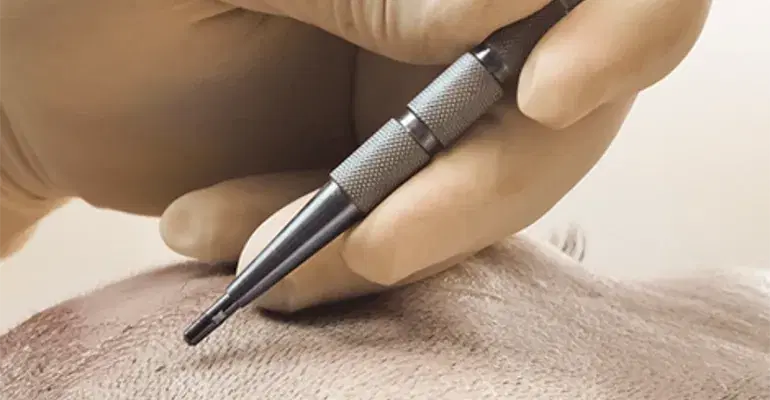
What Are Sapphire Blades Used in Sapphire FUE?
Sapphire FUE has become a widely recognised hair transplantation method because it combines modern follicular extraction techniques with precise channel-opening technology. The procedure takes its name from the sapphire blades used during one of the most important stages of hair transplantation: creating recipient channels in the scalp.
Although the term “sapphire blade” may sound like a marketing phrase, it refers to a specialised surgical instrument produced from synthetic sapphire. Hair transplant specialists use these blades to create small incisions where they later place the extracted hair follicles. The dimensions, direction and depth of these incisions can directly influence hair density, growth angle and the overall appearance of the final result.
Understanding how sapphire blades work can help you evaluate the Sapphire FUE technique more accurately and set realistic expectations before treatment.
What Is a Sapphire Blade?
A sapphire blade is a microsurgical blade made from laboratory-produced sapphire crystal. Manufacturers shape and polish the material to create a smooth, sharp surface suitable for delicate surgical applications.
Sapphire blades do not contain traditional metal cutting edges. Instead, their crystalline structure allows specialists to create controlled micro-incisions without relying on conventional steel blades. The blades come in different lengths and sizes so that the surgical team can select an appropriate option according to the thickness of the follicles, the treatment area and the planned hair density.
During Sapphire FUE, the surgeon uses the blade to open channels in the recipient area. These channels act as placement points for the harvested follicular units. Each incision must match the structure of the graft and follow the planned direction of hair growth.
The sapphire blade does not extract the hair follicles. The extraction stage usually involves a motorised or manual punch system. Sapphire technology mainly affects the channel-opening phase.
How Does Sapphire FUE Work?
Sapphire FUE follows the basic principles of Follicular Unit Extraction. The medical team removes individual follicular units from a donor area, usually located at the back or sides of the scalp. These areas often provide stronger follicles that show greater resistance to hereditary hair loss.
After administering local anaesthesia, the specialist loosens the follicles with a small punch. The team then carefully extracts, sorts and stores the grafts under controlled conditions.
Once the graft preparation stage finishes, the surgeon designs the recipient area. This design includes the hairline, density distribution and direction of growth. The specialist then uses sapphire blades to create microchannels in the areas affected by thinning or baldness.
Finally, the team places each follicular unit into a prepared channel. The grafts begin to settle into their new positions during the early healing period. Over the following months, they gradually produce new hair.
The success of this process depends on many factors, including donor quality, graft handling, surgical planning, aftercare and the experience of the medical team. Sapphire blades provide a precision tool, but they cannot replace clinical skill.
Why Are Sapphire Blades Used in Hair Transplantation?
Hair transplant surgeons use sapphire blades because channel creation requires a high level of control. A specialist must open thousands of small incisions while preserving the surrounding scalp tissue and maintaining a consistent pattern.
The sharp, smooth surface of a sapphire blade allows the surgeon to create compact channels with carefully controlled dimensions. Smaller and more precise incisions may help the medical team place grafts closer together when the patient’s donor supply, scalp condition and treatment plan allow higher density.
Sapphire blades also support detailed angle planning. Natural hair does not grow vertically from every part of the scalp. Hairline hairs often emerge at softer angles, while the crown follows a circular pattern. The surgeon must recreate these changes throughout the recipient area.
By controlling the angle of each channel, the specialist can guide the direction in which the transplanted hair will grow. This stage plays a major role in producing a result that blends with the existing hair.
Sapphire Blades and Traditional Steel Blades
Traditional FUE procedures may use steel instruments when creating recipient channels. Both steel and sapphire blades can produce successful results when experienced professionals use them correctly.
The main difference lies in the material and design of the blade. Sapphire blades have a highly polished crystalline surface, while conventional blades use surgical steel. Sapphire instruments often allow specialists to make narrow V-shaped incisions. Some steel blades create wider or differently shaped channels depending on their design.
Sapphire blades resist deformation and generally maintain their sharpness throughout the channel-opening process. Their rigid structure gives the surgeon consistent control during repeated incisions.
However, the material alone does not determine the quality of a hair transplant. A poorly planned procedure will not become successful simply because the clinic uses sapphire blades. Hairline design, donor management, graft survival and surgical experience remain more important than the name of the instrument.
Can Sapphire Blades Support Denser Hair Placement?
One of the most discussed advantages of Sapphire FUE involves the possibility of dense graft placement. Because sapphire blades can create small, precise channels, the surgeon may place follicular units within a compact recipient pattern.
Dense placement does not mean inserting the maximum possible number of grafts into every patient’s scalp. The medical team must protect blood circulation and avoid unnecessary tissue trauma. Placing grafts too closely can put pressure on the recipient area and may affect healing.
A responsible surgeon evaluates scalp elasticity, blood supply, existing hair, donor capacity and the degree of hair loss before deciding on density. The goal should involve balanced coverage rather than an unrealistic number of grafts.
When the conditions remain suitable, sapphire blades may help the surgeon build a refined channel pattern and distribute the grafts efficiently. This approach can improve visual fullness, especially around the frontal area.
Do Sapphire Blades Reduce Tissue Trauma?
Every surgical incision affects the tissue to some degree. Sapphire blades cannot make hair transplantation completely trauma-free. However, their sharp edges allow the surgeon to create clean and controlled openings.
Smaller incisions may limit unnecessary disturbance to the surrounding tissue. They may also reduce the amount of space required for each graft. This precision can support a more organised healing process when the procedure follows appropriate medical standards.
The extent of tissue trauma still depends on the surgeon’s technique. Excessive pressure, incorrect depth or poor spacing can damage the scalp regardless of the blade material. The specialist must adapt each incision to the patient’s skin structure and graft size.
Careful handling throughout the procedure matters just as much as the instrument itself.
How Do Sapphire Blades Affect Healing?
The scalp normally develops redness, mild swelling, sensitivity and small scabs after a hair transplant. These effects form part of the early recovery process.
The narrow channels created during Sapphire FUE may support efficient healing because they involve compact incisions. Many patients can return to routine daily activities within a relatively short period, although visible redness or crusting may continue for several days.
Healing time varies between patients. Skin sensitivity, the number of grafts, smoking habits, general health and adherence to aftercare instructions can all affect recovery.
You should avoid judging the final result during the first weeks. Transplanted hairs commonly shed after the procedure while the follicles remain beneath the skin. New growth usually develops gradually, and the appearance continues to change over several months.
Can Sapphire Blades Create a More Natural Hairline?
A natural hairline depends on design rather than blade material alone. Sapphire blades give the surgeon a precise tool, but the specialist must understand facial proportions, age-related hair patterns and individual follicle characteristics.
An effective hairline rarely follows a perfectly straight shape. It usually includes subtle irregularities, soft transitions and carefully placed single-hair grafts. The surgeon must also create channels at shallow angles so that the transplanted hair lies naturally against the scalp.
Sapphire blades can help with this detailed work because they allow controlled incision placement. The specialist can adjust direction and spacing across different sections of the hairline.
Still, artistic judgement remains essential. Two clinics may use the same sapphire instruments and produce very different results. The surgeon’s planning and experience ultimately shape the appearance.
Who May Be Suitable for Sapphire FUE?
Sapphire FUE may suit adults experiencing permanent hair loss who have a stable donor area. The technique can address receding hairlines, thinning frontal areas, crown loss and selected cases of scarring or uneven density.
Suitability does not depend only on the size of the bald area. The medical team must examine donor density, hair thickness, scalp condition, hair-loss pattern and future progression.
Patients with very limited donor reserves may not have enough grafts to achieve full coverage. Certain skin conditions, uncontrolled medical problems or active scalp infections may also affect eligibility.
A detailed consultation should include scalp analysis, medical history and realistic planning. The clinic should explain how many grafts the donor area can safely provide and what level of coverage you can reasonably expect.
Are Sapphire Blades Safer Than Other Instruments?
Sapphire blades are designed for precision, but no surgical instrument guarantees safety on its own. Sterilisation, medical supervision, surgical technique and patient selection determine the overall safety of the procedure.
A reputable clinic should use sterile, single-use or appropriately managed surgical instruments and follow established infection-control procedures. The medical team should also monitor the patient throughout the operation and provide clear postoperative guidance.
Choosing a qualified and experienced specialist remains more important than choosing a procedure based only on terminology. Sapphire FUE should take place in a suitable medical environment with proper planning and follow-up care.
What Results Can You Expect from Sapphire FUE?
Sapphire FUE can produce permanent-looking hair growth when the transplanted follicles survive and retain their natural resistance to hair loss. However, the treatment does not stop every form of future thinning.
Existing non-transplanted hair may continue to weaken over time. The surgeon should consider this possibility when designing the hairline and distributing the grafts. A conservative, long-term plan often creates a more sustainable result than an overly low or dense hairline.
Visible growth usually develops in stages. Early growth may appear thin or uneven before the hair becomes stronger. Texture and density can continue to improve throughout the maturation period.
Final outcomes vary according to graft quality, hair characteristics, scalp condition, aftercare and surgical expertise. Sapphire blades can improve incision precision, but successful hair transplantation requires a complete clinical approach.