
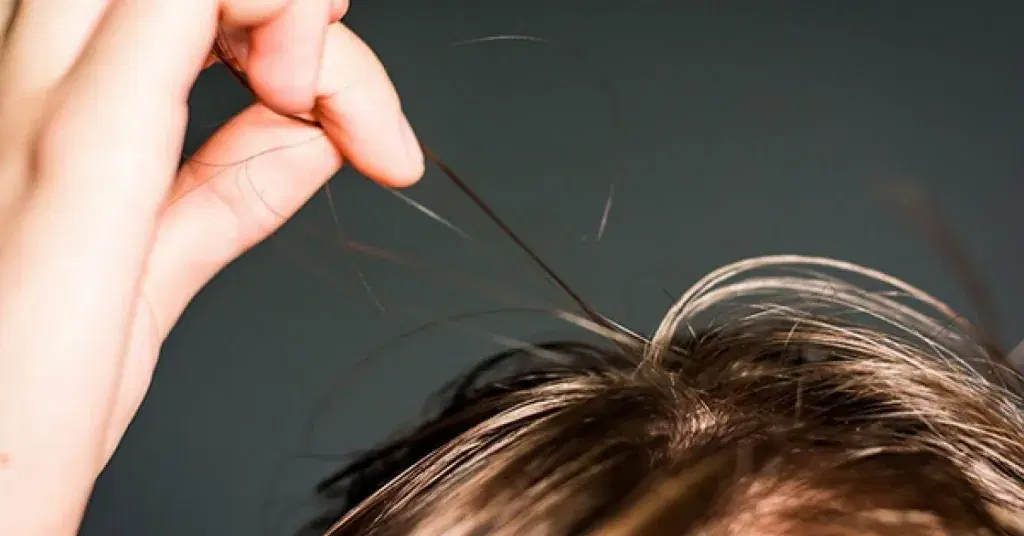
What Is Trichotillomania?
Trichotillomania is a condition marked by repeated hair pulling that leads to hair loss and emotional distress or functional difficulty. The pulling is not usually done for beauty, styling, or grooming. It happens because the person feels an urge, tension, discomfort, or automatic movement pattern that leads to pulling.
The hair may be pulled from one area or several areas. The scalp is common, but eyebrows and eyelashes are also frequently affected. Some people pull only certain textures of hair, such as coarse, curly, gray, uneven, or split hairs. Others search for a specific feeling at the root.
The behavior can be private and secretive. Many people cover the affected area with hairstyles, makeup, hats, scarves, false lashes, or eyebrow pencils. Because of embarrassment, they may avoid salons, swimming, bright lighting, intimacy, or medical appointments.
Why Does Trichotillomania Happen?
Trichotillomania happens for several reasons, and there is usually no single cause. It may involve genetics, brain-based habit circuits, emotional regulation, stress response, sensory sensitivity, anxiety, perfectionism, boredom, or learned behavioral patterns.
Some people feel tension before pulling and relief afterward. Others do not notice the urge until they see hair in their hand. The behavior may become attached to certain places, times, emotions, or routines.
It is important to avoid blaming the person. Hair pulling is not laziness or vanity. It is a repetitive behavior that can become deeply wired into daily life. Shame often makes it worse because the person may pull more when stressed, then feel guilty, then pull again.
Is Trichotillomania the Same as Hair Loss?
Trichotillomania is different from most medical hair loss conditions because the hair is removed by pulling. However, it can look similar to alopecia areata, traction alopecia, fungal infection, androgenetic alopecia, or breakage from hair damage.
A dermatologist may examine the scalp to identify broken hairs, irregular patches, different hair lengths, inflammation, or signs of pulling. In some cases, a mental health professional is also needed to assess urges, triggers, anxiety, shame, and behavior patterns.
Correct diagnosis matters. A person with trichotillomania may not need the same treatment as someone with genetic hair loss. Hair growth products alone usually do not solve the urge to pull.
What Are the Main Symptoms?
The main symptom is repeated pulling of hair. This may lead to thin patches, bald spots, missing eyelashes, sparse eyebrows, broken hairs, irritated skin, scabs, redness, or tenderness.
Emotional symptoms are also common. A person may feel embarrassed, frustrated, anxious, guilty, or out of control. They may promise themselves they will stop, then feel upset when the behavior returns.
Some people inspect, roll, bite, or chew the hair after pulling. A smaller group may swallow hair, which can be medically risky. Hair eating can lead to stomach problems and, rarely, a hair mass in the digestive tract. This needs medical attention.
Can Trichotillomania Affect the Scalp?
Yes, trichotillomania can affect the scalp in several ways. Repeated pulling can cause patchy hair loss, broken hairs, tenderness, bumps, crusting, or inflammation. The affected areas may have hairs of different lengths because some hairs are newly growing while others have been pulled recently.
If pulling continues for a long time, the follicles may become irritated. In many cases, hair can regrow when pulling stops or decreases. However, repeated trauma over years may increase the risk of scarring or incomplete regrowth in some areas.
A scalp evaluation can help determine whether follicles are still active. Patients should not assume the damage is permanent without proper examination.
Why Do People Pull Their Hair?
People pull hair for different reasons. Some pull to reduce tension. Some pull because the hair feels wrong, uneven, rough, or irritating. Some pull during boredom or deep concentration. Others pull automatically without realizing it.
Pulling can create a brief feeling of relief, satisfaction, or completion. That feeling reinforces the behavior, making it more likely to happen again. Over time, the brain learns a loop: trigger, urge, pulling, relief, regret. Therapy often works by interrupting this loop.
Understanding the reason behind pulling helps treatment. A person who pulls during stress may need coping skills. A person who pulls automatically may need awareness training and environmental changes. A person who pulls because of sensory discomfort may need replacement strategies.
Is Trichotillomania Related to Anxiety?
Trichotillomania can be related to anxiety, but it is not always caused by anxiety alone. Some people pull more during anxious periods, exams, conflict, work pressure, grief, or major life changes. Others pull when relaxed, bored, tired, or distracted.
Anxiety treatment may help if anxiety is a major trigger. However, treating anxiety alone may not stop hair pulling if the behavior has become a strong habit pattern. This is why behavioral treatment is often important.
A complete plan may include therapy for hair pulling, stress management, emotional regulation, sleep support, and treatment for anxiety or depression when present.
Can Children Have Trichotillomania?
Yes, children can have trichotillomania. In younger children, hair pulling may be more automatic and less shame-based. Some children pull while falling asleep, watching screens, or feeling tired. In teenagers, embarrassment and secrecy may become stronger.
Parents should respond calmly. Punishment, shouting, threats, or constant checking often increase stress and shame. A child may need support, not pressure.
Pediatric evaluation can help rule out scalp disease and guide treatment. Family involvement may be useful, especially when routines, triggers, school stress, or bedtime habits play a role.
How Is Trichotillomania Diagnosed?
Trichotillomania is diagnosed through clinical evaluation. A healthcare professional may ask about where the person pulls hair, how often it happens, what triggers it, whether the person tries to stop, and how it affects life.
A dermatologist may examine the skin and hair to rule out other causes of hair loss. A mental health professional may evaluate compulsive behaviors, anxiety, depression, obsessive thoughts, stress, and body-focused repetitive behaviors.
Diagnosis should be handled gently. Many people already feel ashamed. A supportive conversation makes it easier to be honest and start treatment.
Is Trichotillomania a Form of OCD?
Trichotillomania is related to obsessive-compulsive and related disorders, but it is not exactly the same as classic OCD. OCD usually involves intrusive thoughts and rituals done to reduce fear or prevent something bad from happening. Trichotillomania often involves urges, sensations, tension, automatic habits, or relief after pulling.
Some people can have both OCD and trichotillomania. Others have trichotillomania without obsessive fears. This distinction matters because treatment may differ.
A specialist can help identify whether the pulling is driven by anxiety, compulsions, sensory urges, habit loops, or emotional regulation. Treatment works best when it matches the pattern.
What Is Habit Reversal Training?
Habit reversal training is one of the most important behavioral treatments for trichotillomania. It helps the person become more aware of pulling patterns and replace the pulling movement with a competing response.
The first step is awareness. The person learns when, where, and how pulling starts. This may include noticing hand movements, emotional states, mirrors, screens, hair texture scanning, or bedtime routines.
The second step is replacement. Instead of pulling, the person uses another action that makes pulling harder, such as making a gentle fist, holding a stress ball, sitting on the hands briefly, using fidget tools, or changing posture. The goal is not willpower alone. The goal is building a new response before the pulling happens.
Can Cognitive Behavioral Therapy Help?
Yes, cognitive behavioral therapy can help many people with trichotillomania. It may address thoughts, emotions, triggers, shame, avoidance, and behavior patterns. Therapy can also help patients create practical plans for high-risk situations.
CBT may include habit reversal, stimulus control, self-monitoring, relaxation skills, emotion regulation, and relapse prevention. Some therapists use broader approaches designed for body-focused repetitive behaviors.
Therapy is most effective when it is specific. General supportive counseling may feel helpful, but trichotillomania often needs structured behavioral tools. Patients may want to ask whether the therapist has experience with hair pulling or body-focused repetitive behaviors.
What Is Stimulus Control?
Stimulus control means changing the environment to reduce pulling opportunities. It does not cure trichotillomania by itself, but it can make pulling less automatic.
Examples may include wearing finger covers during high-risk times, using fidget tools, keeping tweezers out of reach, covering mirrors, changing lighting, tying hair gently, using a barrier at bedtime, or moving to a different chair when pulling usually happens.
The goal is not to shame the person or restrict life. The goal is to create small barriers between the urge and the behavior. Even a few seconds of pause can help the person choose a different response.
Are Medicines Used for Trichotillomania?
There is no single medication that works for everyone with trichotillomania. Some medicines may be considered when the person also has anxiety, depression, OCD symptoms, severe distress, or other mental health conditions.
Medication decisions should be made by a qualified clinician. Some patients benefit from medication as part of a broader plan. Others do better with behavioral therapy alone. Supplements or medicines should not be started without guidance, especially in children, pregnancy, chronic illness, or complex medication use.
Patients should understand that medication may reduce urges or related symptoms, but skills and behavior changes often remain important.
Can Hair Grow Back After Trichotillomania?
Hair can often grow back if the follicles are not permanently damaged. Many people see regrowth when pulling decreases or stops. However, the timeline can be slow. Hair grows gradually, and areas affected by repeated pulling may need months to improve.
Regrowth may initially appear fine, short, or uneven. Some hairs may grow with different texture for a while. If pulling resumes, new hairs may be removed before they mature.
Long-term or aggressive pulling can damage follicles. If there is scarring, shiny skin, loss of follicle openings, or repeated inflammation, regrowth may be limited. A dermatologist can evaluate the scalp and discuss options.
Should Hair Transplant Be Considered?
Hair transplant is usually not the first treatment for trichotillomania. If the pulling behavior is active, transplanted hairs may also be pulled out. Surgery should only be considered after the behavior is well controlled and the scalp is stable.
In selected cases with long-term stable scarring or permanent loss, hair restoration may be discussed. However, the patient needs careful evaluation. Emotional readiness, pulling control, donor area quality, and realistic expectations matter.
Rushing into surgery can create disappointment. Treating the behavior first protects both natural hair and any future restoration result.
How Can Families Support Someone?
Families can help by reducing shame and increasing support. Statements such as just stop, why are you doing this, or you are ruining your hair usually do not help. They can make the person hide the behavior more.
Helpful support sounds calmer. Family members can ask what situations make pulling worse, what reminders feel supportive, and what tools help. For children and teens, parents can help create routines without turning the home into a place of constant monitoring.
Compassion matters. Trichotillomania is already emotionally heavy for many people. Support should make treatment easier, not more stressful.
What Should You Avoid Saying?
Avoid comments that focus only on appearance, blame, or shame. Saying your hair looks terrible, you need more self-control, or everyone can see it may increase distress. The person may already know the visible impact and feel deeply upset.
Also avoid turning every hand movement into a correction. Constant reminders can make the person feel watched and anxious. A better approach is to agree on helpful cues in advance.
Respect privacy. Some people want support, but they do not want the condition discussed in public or around others.
What Daily Strategies Can Help?
Daily strategies can reduce pulling when they are practical and consistent. Tracking high-risk times is a good start. Many people pull in predictable situations, such as studying, driving, working at a desk, watching shows, using the phone, or lying in bed.
Keeping hands busy can help. Fidget tools, textured objects, knitting, drawing, stress balls, or hand lotion may reduce automatic pulling. Changing hairstyles, covering the area temporarily, or using gentle barriers may also help.
Stress reduction can support recovery, but it should not be the only plan. Sleep, exercise, routine, and emotional support all matter, yet specific pulling strategies are usually needed.
Can Trichotillomania Come Back?
Yes, trichotillomania can come back, especially during stress, life changes, fatigue, boredom, or emotional pressure. Relapse does not mean failure. It means the plan needs adjustment.
Many people improve in stages. They may have good weeks, difficult weeks, and setbacks. The goal is to reduce severity, shorten relapses, protect regrowth, and build confidence over time.
A relapse prevention plan can include trigger tracking, therapy follow-ups, coping tools, environmental changes, and early action when urges increase.
When Should You Seek Professional Help?
Professional help is recommended when pulling causes visible hair loss, distress, shame, avoidance, skin damage, infections, or difficulty at school, work, or relationships. Help is also important if the person eats hair, has depression, anxiety, self-harm thoughts, or feels unable to control the behavior.
A dermatologist can assess hair and scalp health. A therapist with experience in body-focused repetitive behaviors can guide habit reversal and behavioral treatment. A psychiatrist may help when medication evaluation is needed.
Seeking help early can reduce damage and emotional burden. The person does not need to wait until the condition becomes severe.
What Questions Should You Ask a Specialist?
Useful questions include: Is this trichotillomania or another hair loss condition? Are my follicles still active? What triggers should I track? Do you offer habit reversal training? How can I manage automatic pulling? Should my family be involved? Do I need treatment for anxiety or depression? Are medications appropriate? How long does improvement usually take? What should I do during relapse?
Clear answers help the patient feel less lost. A good specialist should treat the condition with respect and without judgment.
What Are Common Mistakes?
A common mistake is trying to stop through willpower alone. Willpower may help briefly, but trichotillomania often needs structured behavior change. Another mistake is hiding the problem for years because of shame.
Some people spend money on hair growth products while the pulling continues. These products may not help if hairs are being removed repeatedly. Others shave the area without addressing the urge, which may or may not help depending on the person.
Another mistake is expecting perfect control immediately. Recovery usually takes practice. Small reductions are still progress.