
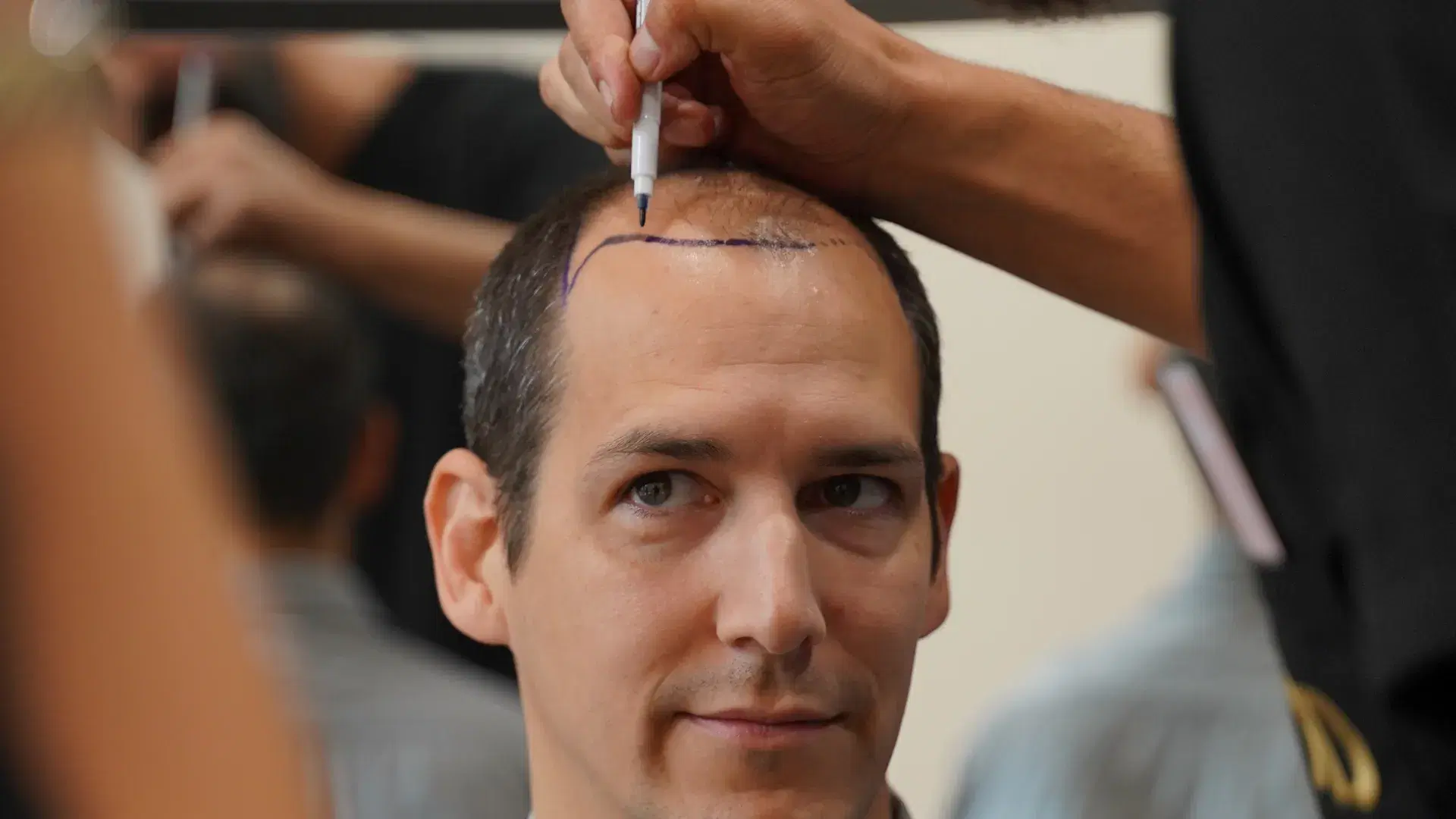
The best age for a hair transplant is not the same for everyone. A successful decision depends less on a birthday and more on whether hair loss has become predictable, whether the donor area is strong, and whether the treatment plan protects your long-term appearance. For many people, the right timing comes after the pattern of thinning is clear enough to design a result that still looks natural years later.
What is the best age for a hair transplant?
The best age for a hair transplant is usually when hair loss has stabilised enough for a specialist to understand where thinning is heading and how much donor hair can be used safely. In practical terms, many patients begin seriously considering surgery in their late twenties, thirties, or beyond, but age alone should never be the only deciding factor. Someone in their early twenties may be losing hair too unpredictably, while someone much older may be an excellent candidate if their health, expectations, and donor supply are suitable.
A hair transplant moves healthy follicles from a donor area, usually the back or sides of the scalp, into thinning or balding areas. Because those donor hairs are limited, timing matters. If surgery is done before the final hair loss pattern is understood, the transplanted hair may remain while surrounding native hair continues to thin, creating an uneven or unnatural look.
That is why a good age for hair transplant planning is the age at which your hair loss story is clear enough to make a responsible plan. The goal is not just to improve today’s hairline. It is to create a result that can still be managed as your hair changes.
Hair loss age and why timing matters
Hair loss age varies widely. Some people notice shedding or recession in their late teens or early twenties, while others keep a strong hairline until middle age or later. The earlier hair loss begins, the more important it is to be cautious, because early thinning may continue for many years.
A transplant does not stop future hair loss in untreated areas. It restores density in selected zones using existing donor hair. If the surrounding hair keeps thinning after surgery, the original result may need maintenance, medical management, or a second procedure later.
This is one reason younger patients are often advised to take time before committing. Waiting does not mean ignoring the problem. It can mean monitoring the pattern, using appropriate non-surgical options if recommended, and building a plan that avoids spending too much donor hair too soon.
For older patients, the situation can be different. A person in their forties, fifties, or sixties may have a more established pattern, making surgical planning more predictable. However, older age still requires careful assessment of scalp health, donor density, general health, and healing expectations.
Signs you may be ready for a transplant
A person may be closer to the right hair transplant age when several practical factors line up. These signs do not replace a clinical assessment, but they can help you understand whether a consultation is worth considering.
You may be ready if:
Your hair loss pattern is becoming clear. A stable or slower-changing pattern allows better placement of grafts and a more realistic hairline design.
Your donor area is strong. The back and sides of the scalp need enough healthy hair to support the planned coverage.
You have realistic expectations. A transplant can improve density and framing, but it cannot create unlimited hair.
You understand future maintenance. Ongoing thinning may require medication, lifestyle support, or further treatment depending on your situation.
You are comfortable with gradual results. Transplanted hair takes time to grow, mature, and blend with native hair.
You want a natural, age-appropriate result. The best hairline is not always the lowest hairline. It should suit your face now and later.
Readiness is partly emotional, too. Hair loss can affect confidence, but surgery should not be a rushed reaction to a stressful month or a sudden change in the mirror. A calm, informed decision usually leads to better satisfaction.
Is the early twenties too young for a hair transplant?
The early twenties can be too young for a hair transplant if hair loss is active, aggressive, or not yet clearly patterned. At this age, the future extent of thinning is often uncertain, so designing a permanent hairline too early can create problems later. Some young adults may still be considered in select cases, but conservative planning is especially important.
The biggest concern is long-term balance. A dense, low hairline may look appealing at twenty-two, but if the crown and mid-scalp thin significantly by thirty, the result can look disconnected. Donor hair used to create that early hairline cannot simply be replaced.
Younger patients may benefit from a staged approach. This might include documenting hair loss over time, assessing family history, discussing non-surgical treatments, and considering surgery only when the likely pattern is easier to predict. If surgery is appropriate, a mature hairline design is often safer than trying to recreate a teenage hairline.
This does not mean young people should dismiss their concerns. Early hair loss can feel isolating and frustrating. The key is to seek advice that protects your future options rather than chasing the fastest visual fix.
The thirties and forties often offer better planning clarity
For many people, the thirties and forties are a practical window for hair restoration because the pattern of loss is often more visible and easier to plan around. By this stage, recession, crown thinning, or diffuse loss may have shown its direction. That information helps a specialist decide where transplanted hair will make the biggest cosmetic difference.
In the thirties, the goal is often to restore framing around the face, strengthen thinning zones, or address early crown concerns without overusing the donor area. A conservative, well-designed transplant can make the hair look fuller while preserving options for the future.
In the forties, many patients have a clearer understanding of what they want. They may prefer a natural improvement rather than a dramatic change. This can be helpful because the most successful hair transplants usually respect age, facial structure, existing density, and likely future thinning.
Still, there is no automatic “perfect” decade. A person in their thirties with rapid ongoing hair loss may need caution, while a person in their late twenties with stable, limited recession may be more suitable than expected. The individual assessment matters most.
Hair transplants later in life can still be suitable
There is no universal upper age limit for a hair transplant. People in later adulthood may be suitable candidates if they are healthy enough for the procedure, have adequate donor hair, and want a realistic improvement. In many cases, mature patients have an advantage because their hair loss pattern has already declared itself.
The desired outcome may also be different. Instead of seeking a major transformation, older patients often want softer framing, better coverage in a visible area, or a more balanced look. These goals can be very appropriate for transplantation when the donor supply supports them.
However, planning must account for hair quality, scalp condition, medications, and general health. Healing capacity and expectations should be discussed clearly. A transplant is still a medical procedure, so the decision should be based on suitability rather than age pride or pressure.
Factors that matter more than age
Hair transplant age is only one part of the decision. A responsible plan looks at the full picture, including how your hair is changing and what can realistically be achieved.
Important factors include:
Stability of hair loss If thinning is rapidly progressing, it may be better to slow down and assess the trend before surgery.
Donor hair availability Donor hair is limited. A good plan uses it carefully so future options remain open.
Hair characteristics Hair colour, curl, thickness, and contrast with the scalp can affect the appearance of density.
Pattern of thinning A receding hairline, crown thinning, and diffuse thinning each require different planning.
Medical suitability General health, scalp conditions, and medication history can influence whether surgery is appropriate.
Expectations and lifestyle You need to understand recovery, growth timelines, styling limits, and the possibility of ongoing hair management.
Long-term design A natural hairline should still look suitable as you age. Overly aggressive designs can be difficult to maintain.
These factors explain why two people of the same age may receive different recommendations. One may be ready, while the other may be advised to wait, treat the underlying hair loss first, or consider a smaller procedure.
How to think about the right timing
Choosing the right time for a hair transplant is a balance between not acting too early and not waiting until hair loss feels emotionally overwhelming. The best approach is to gather information, observe your pattern, and make a plan before frustration pushes you into a rushed decision.
A helpful self-check includes asking:
Has my hair loss changed quickly in the last year?
Do I know which areas bother me most?
Am I hoping for improvement or perfection?
Would I accept a mature, natural hairline rather than a very low one?
Have I considered that future thinning may still happen?
Am I prepared for the time it takes to see final growth?
If your answers show urgency, uncertainty, or unrealistic expectations, it may be wise to slow down. If your answers show patience, clarity, and long-term thinking, you may be ready to explore a professional assessment.
A realistic conclusion on the best age
The best age for a hair transplant is the age when your hair loss pattern, donor supply, health, and expectations support a plan that will still make sense in the future. For many people, that happens after the early twenties, often once hair loss has become more predictable. But there is no single number that fits everyone.
A good age for hair transplant surgery is really a good stage: stable enough to plan, healthy enough to heal, and informed enough to choose a natural result. If you are unsure, the smartest next step is not to guess based on age alone. It is to get a careful assessment, understand your options, and protect the donor hair you may need for the years ahead.