
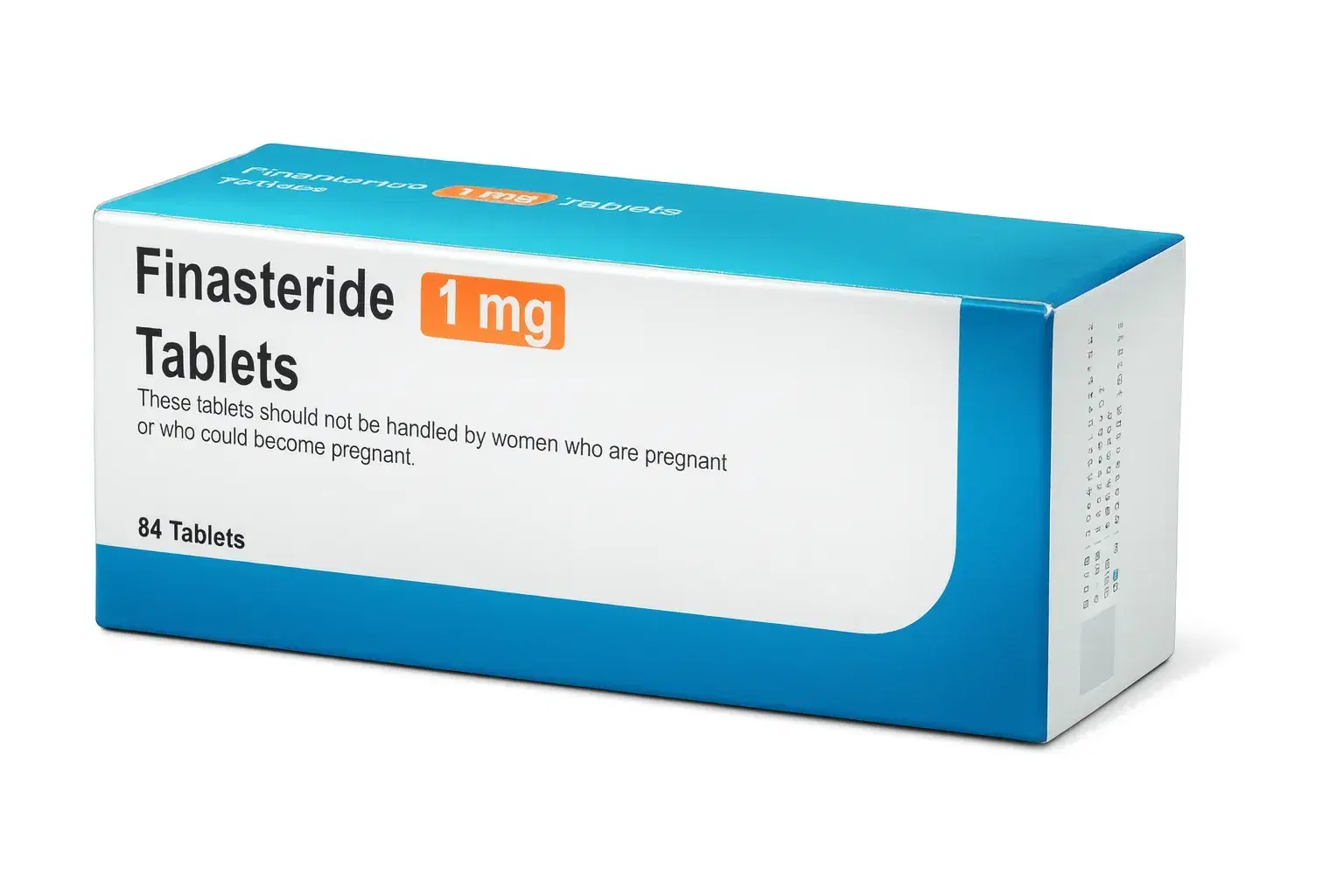
Finasteride is usually considered a hair-loss maintenance treatment, not a quick regrowth fix. The best time to consider it is when thinning first becomes noticeable, but “too late” depends less on age and more on whether the follicles in the thinning area are still alive and capable of producing hair. This guide explains the finasteride use timeline, what realistic finasteride results can look like, and when other options may make more sense.
When is it too late to start finasteride?
It may be too late for finasteride to restore hair in areas that have been completely bald, shiny, and smooth for a long time, because those follicles may no longer be able to produce visible hair. However, it may not be too late to use finasteride if you still have miniaturized hairs, diffuse thinning, a widening part, or a receding hairline with some fine hair remaining. In many cases, the realistic goal is slowing further loss and preserving what is still there, rather than fully rebuilding the hairline you had years ago.
That distinction matters. Finasteride works by reducing the effect of dihydrotestosterone, often shortened to DHT, which is one of the main hormones involved in male pattern hair loss. When DHT sensitivity causes follicles to shrink, hairs can become shorter, finer, and less pigmented over time. If treatment begins while follicles are miniaturized but still active, there is a better chance of stabilization and some thickening.
If an area has been bare for many years, finasteride may still help protect surrounding hair, but it should not be expected to create dense growth on a fully bald scalp by itself. That does not make the treatment useless; it simply changes the goal from “regrow everything” to “slow the pattern, keep more hair longer, and support other treatments if needed.”
The main factor is follicle activity, not your birthday
Many people ask the question as if there is a fixed age cutoff. In practice, the more useful question is what stage the hair loss has reached. Someone in their twenties with aggressive, advanced shedding may have fewer easy wins than someone older with slower, more diffuse thinning. Likewise, a person who has had a stable receding hairline for years may respond differently than someone losing density rapidly at the crown.
Signs that finasteride may still be worth discussing include:
You can see thin, wispy, or lighter hairs in the affected area.
Your crown looks see-through under bright light but is not fully bald.
Your hairline has receded, but the front still contains fine hairs.
Shedding has increased within the past several months.
Family history suggests progressive male pattern hair loss.
You want to preserve existing density before considering cosmetic procedures.
Signs that expectations should be more cautious include:
The scalp has been completely bare in one area for many years.
The skin looks smooth and shiny with no visible small hairs.
Hair loss may be caused by scarring, inflammation, medication, illness, or another non-pattern cause.
You are expecting a juvenile hairline to return from medication alone.
You are not willing to continue treatment long term if it works.
A clinician can examine the scalp and help determine whether the thinning pattern fits androgenetic alopecia, the type of hair loss finasteride is commonly used for. That step is important because not all hair loss is driven by DHT, and the wrong treatment plan can waste time.
What does the finasteride timeline usually look like?
The finasteride timeline is gradual because hair grows in cycles. Even when the medication is doing what it is supposed to do internally, visible change can lag behind by months. Most people should think in terms of a year-long trial rather than a few weeks, unless side effects or medical concerns require stopping sooner.
A practical finasteride use timeline often looks like this:
Month 0: Baseline and expectations Before starting, take clear photos from the front, temples, crown, and top under consistent lighting. Wet-hair and dry-hair photos can both be useful because early changes are hard to judge in the mirror. This is also the time to discuss medical history, current medications, fertility plans, mood history, and prostate screening considerations with a healthcare professional.
Months 1 to 3: Little visible change Many users do not see obvious improvement early on. Some may feel shedding is unchanged, while others notice fluctuations. This stage can be frustrating, but it is too early for most people to judge finasteride results fairly.
Months 3 to 6: Stabilization may begin Reduced shedding or a slower rate of thinning may become noticeable. For some, the first “result” is not regrowth but the sense that hair is no longer worsening as quickly. Photos are more reliable than daily mirror checks, which can be distorted by styling, lighting, hair length, and anxiety.
Months 6 to 12: Visible results are easier to assess If finasteride is helping, this is often when improved density, thicker-looking miniaturized hairs, or better crown coverage may be easier to notice. Results vary. Some people mainly maintain, some improve modestly, and some do not respond enough to continue.
After 12 months: Review the plan A full year gives a clearer view of whether treatment is stabilizing loss. If the hair is stable, that may count as success, especially with a progressive condition. If thinning continues, a clinician may discuss adherence, diagnosis, additional treatments, or other options.
Realistic finasteride results are about preservation first
Finasteride results are often misunderstood because before-and-after images online tend to show dramatic cases. Those examples may be real, exaggerated, selectively chosen, or influenced by other treatments, lighting, hair length, styling products, or procedures. A more balanced expectation is that finasteride is primarily used to slow or stop progression, with possible thickening in areas where follicles are still active.
The crown often responds better than a long-bald frontal hairline, although individual outcomes vary. Diffuse thinning may show cosmetic improvement if many miniaturized hairs thicken at the same time. Deep temple recession, especially when the area is bare, is usually harder to reverse with medication alone.
It also helps to define success before starting. For one person, success might mean less hair in the shower drain. For another, it might mean holding onto enough density to delay or support a future hair transplant. For someone with early thinning, success may simply mean looking the same in photos a year later rather than noticeably worse.
When finasteride may not be the right next step
Finasteride is not appropriate for everyone, and “too late” is not the only reason to pause. Some people should avoid it, consider alternatives, or use it only with careful medical guidance. This is especially true for anyone with relevant medical conditions, concerns about sexual side effects, mood changes, fertility questions, breast changes, liver issues, or medication interactions.
It may also be the wrong first move if the cause of shedding is unclear. Sudden heavy shedding can happen for many reasons, including illness, stress, nutritional deficiency, thyroid problems, scalp inflammation, or recent medication changes. In those cases, treating presumed male pattern hair loss without checking the bigger picture may miss the real cause.
Use this checklist before deciding:
Have you confirmed the type of hair loss?
Are there visible miniaturized hairs in the thinning areas?
Are you prepared to wait at least several months before judging results?
Do you understand that stopping usually means losing the benefit over time?
Have you discussed possible side effects and warning signs?
Are you taking baseline photos instead of relying on memory?
Are your expectations based on maintenance, not guaranteed regrowth?
If several answers are “no,” it may not mean finasteride is wrong. It may simply mean you need better information before starting.
What if you start after years of hair loss?
Starting after years of hair loss can still be worthwhile if your goal is to protect remaining hair. Someone with a receded hairline and thinning crown may not recover the original hairline, but stabilizing the crown and mid-scalp can still make a meaningful cosmetic difference. Even if a transplant is being considered, maintaining non-transplanted hair can be an important part of the overall plan.
The key is to separate three goals:
Maintenance: slowing future loss and keeping existing coverage.
Thickening: improving the appearance of miniaturized hairs that still grow.
Restoration: replacing hair in areas where follicles no longer produce visible hair.
Finasteride is most aligned with the first two goals. For the third, people often discuss options such as hair transplantation, cosmetic camouflage, shaving, hair systems, or combination therapy. The right choice depends on budget, tolerance for maintenance, medical suitability, and personal preference.
Tips for giving finasteride a fair trial
If a healthcare professional says finasteride is reasonable for you, consistency matters. Hair treatments are easy to abandon too early because progress is slow and uneven. A structured approach makes the process less emotional and easier to evaluate.
Helpful habits include:
Take photos once a month, not every day.
Keep lighting, angle, hair length, and hairstyle as consistent as possible.
Track shedding trends, but do not treat every shed hair as failure.
Avoid changing several treatments at once unless advised, because it becomes harder to know what helped.
Report concerning side effects promptly rather than ignoring them.
Reassess at sensible milestones, especially around 6 and 12 months.
Patience does not mean pushing through serious concerns. It means giving the medication enough time to show whether it can help while staying attentive to your health.
The takeaway
It is usually too late to expect finasteride to regrow hair where follicles have long stopped producing visible strands, but it may not be too late to preserve thinning hair that remains. The best candidates are often people who still have miniaturized hairs and realistic expectations about the finasteride timeline.
If you are asking, “When is it too late to start finasteride?” the safest answer is: get evaluated before deciding the window has closed. Even when full regrowth is unlikely, slowing future loss can still be valuable, especially when the plan is built around your stage of hair loss, health profile, and long-term goals.