
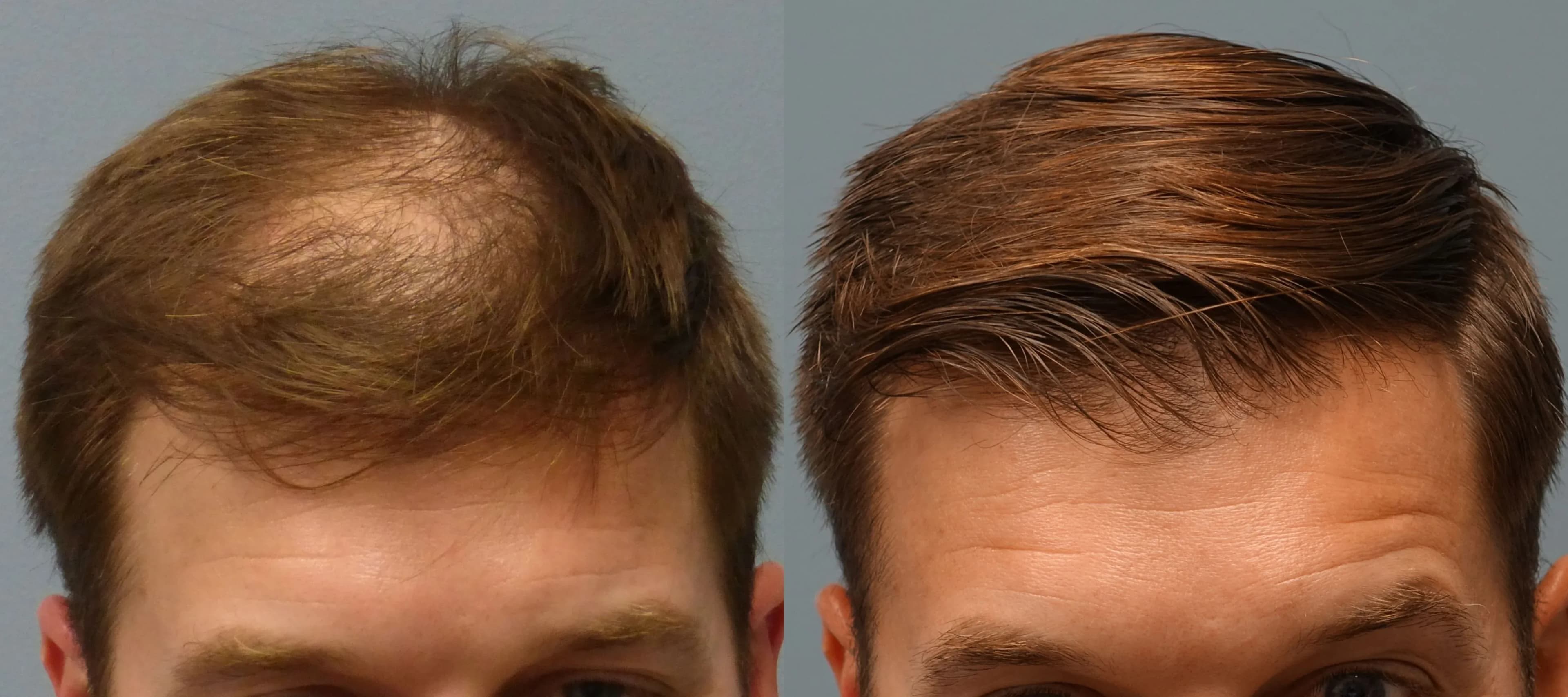
What Is a Widow’s Peak Hairline?
A widow’s peak is a distinctive hairline pattern in which the central portion of the frontal hairline extends farther down the forehead than the surrounding areas. This creates a subtle or pronounced V-shaped outline that can appear in both men and women. Some people have a sharply defined central point, while others display a softer curve that becomes noticeable only when their hair is pulled backward.
The shape is a normal variation in human hair growth rather than a medical condition. Hairline characteristics are influenced by several inherited factors, and a widow’s peak should not be described as a trait controlled by one simple dominant gene. Its appearance can also become more noticeable with age as the surrounding hairline changes.
A naturally occurring widow’s peak does not require treatment. Hair transplantation becomes relevant when someone wants to change its appearance, restore surrounding hair or recreate a central point that has become less visible because of thinning.
Is a Widow’s Peak the Same as a Receding Hairline?
A widow’s peak and a receding hairline can produce similar outlines, but they are not the same condition. A widow’s peak describes the natural shape of the frontal hair boundary, whereas a receding hairline involves the gradual movement or thinning of hair around the forehead and temples.
The distinction becomes particularly important in men experiencing androgenetic alopecia. As the frontotemporal corners recede, the central hairline may remain relatively intact, creating a more pronounced V-shaped or M-shaped appearance. This can resemble a strong widow’s peak even when the original hairline was relatively straight.
A stable central point that has looked similar for many years is different from a hairline whose corners are progressively moving backward. Photographs taken over several years can help reveal whether the shape is an inherited feature or the result of ongoing hair loss.
For a clearer understanding of these changes, the guide to receding hairlines and their treatment options explains how progressive thinning differs from naturally occurring variations in hairline shape.
Can a Hair Transplant Change a Widow’s Peak?
Hair transplantation can change the appearance of a widow’s peak by adding follicles to selected areas along the frontal hairline. Depending on the desired outcome, the procedure may preserve an existing central point, make it more defined or reduce its prominence by filling the surrounding areas.
The process involves extracting healthy follicular units from a suitable donor region and implanting them into a planned recipient area. Once the transplanted follicles establish themselves, they can produce hair that contributes to the new frontal outline.
However, transplantation adds hair rather than removing the follicles responsible for an existing widow’s peak. This distinction determines which changes are achievable through graft placement alone and which may require a different approach.
A successful result should improve the relationship between the central point, forehead and temples rather than simply create the straightest or lowest possible hairline.
Should You Keep or Remove a Widow’s Peak?
The decision to preserve or soften a widow’s peak depends on how the feature complements the rest of the face. A well-proportioned central point can provide distinctive facial framing, while an unusually prominent peak surrounded by significant recession may create an appearance that someone wishes to change.
Preserving a Natural Widow’s Peak
Keeping an existing widow’s peak can produce a particularly convincing hair transplant result when the central point remains healthy. Instead of replacing the entire frontal outline, transplantation can restore lost density along the sides and create a smoother transition toward the temples.
This approach retains a recognizable feature of the original hairline while improving areas affected by recession. It can also reduce the number of grafts required, since healthy central follicles do not need to be replaced.
Preserving natural characteristics often supports a more individualized result than copying a completely different hairline shape.
Softening a Pronounced Widow’s Peak
A strongly pointed hairline can be made less prominent by transplanting follicles into the regions immediately beside the central projection. Filling these areas creates a broader frontal curve and reduces the contrast between the central point and surrounding hair.
This technique does not physically remove the widow’s peak. Instead, it changes the visible outline by adding hair around it, which may require a substantial number of grafts when the surrounding recession is extensive.
The resulting hairline should retain subtle irregularities rather than form an unnaturally straight border. The amount of reshaping must also remain compatible with available donor follicles and expected future hair loss.
Who Is a Suitable Candidate for Widow’s Peak Hair Transplantation?
Hair transplantation may be appropriate for individuals with a stable donor area who want to reconstruct an uneven frontal hairline, restore receding corners or change the visible shape of a widow’s peak. The procedure can also address localized thinning when enough healthy follicles remain available for extraction.
However, having a widow’s peak does not automatically make someone a candidate for surgery. The existing hairline may already complement the face, and transplantation may provide little meaningful improvement when the main concern involves a normal anatomical feature.
People experiencing active hair loss require additional assessment because the surrounding native follicles may continue thinning after the procedure. Medical evaluation can also help distinguish androgenetic alopecia from traction-related loss or inflammatory conditions that require different treatment.
The objective is to establish whether adding follicles can create a lasting improvement without unnecessarily altering healthy hair or exhausting the donor supply.
How Is a Natural Widow’s Peak Hairline Designed?
Hairline design begins with the relationship between the forehead, central hairline, temples and overall facial proportions. A widow’s peak can appear natural at different heights, so determining its ideal position requires more than measuring a fixed distance from the eyebrows.
The central point should blend gradually into the surrounding frontal hair rather than resemble a sharply drawn triangle. Natural hairlines contain slight variations in height and density, and these irregularities help conceal the boundary between the forehead and the transplanted region.
Hairline Height and Forehead Proportions
Lowering the hairline can reduce the apparent height of the forehead, but placing it excessively low may create proportions that become less suitable with age. It also increases the surface area that must be covered with transplanted follicles.
When reshaping a widow’s peak, the height of the surrounding hairline often matters as much as the position of the central point. Filling the corners can dramatically change the appearance without moving the central projection very far forward.
A conservative design helps preserve a natural relationship between the forehead and the rest of the face.
Natural Irregularity and Hair Growth Direction
The frontal hairline should not consist of a perfectly uniform row of follicles. Individual hairs emerge at slightly different positions and angles, producing a soft transition toward the denser hair farther back.
Growth direction also varies around a widow’s peak because the central hairs may follow a different pattern from those along the frontal corners. Implanting every follicle at the same angle can create an artificial appearance, particularly when the hair is short or styled away from the forehead.
Careful attention to these details allows the transplanted hair to blend with the existing central point rather than making it appear artificially reconstructed.
Why Are Single-Hair Grafts Important for Widow’s Peak Restoration?
Natural hairlines usually contain finer, individually emerging hairs along the leading edge. Reproducing this appearance requires careful follicular-unit selection, especially when creating a central point that remains visible from different angles.
Single-hair grafts are generally preferred at the frontal boundary because they create a softer transition between bare forehead skin and denser scalp hair. Placing thick multi-hair grafts directly at the tip of a widow’s peak can produce conspicuous clusters that make the result look unnatural.
Behind this transition zone, suitable follicular units containing additional hairs can contribute greater visual density. The number and distribution of these grafts should increase gradually rather than producing a sudden change in thickness.
Hair shaft texture, color and diameter also influence the final appearance. Fine strands may create a more delicate border, while thicker donor hairs require especially careful placement to maintain a believable outline.
How Is a Widow’s Peak Hair Transplant Performed?
The procedure begins with an examination of the existing frontal hairline and donor region. The intended shape is planned according to forehead proportions, remaining native hair and the amount of reconstruction needed around the central point.
Healthy follicles are typically collected from the back or sides of the scalp using follicular unit extraction, commonly known as FUE. The grafts are then prepared and selected according to their characteristics, with finer single-hair units generally reserved for the most visible parts of the new hairline.
During implantation, recipient sites are created or grafts are placed using an appropriate implantation instrument. The follicles must follow the natural emergence angles and changing direction of the surrounding hair, particularly where the central point transitions toward the frontal corners.
FUE and DHI can both be involved in this process, but neither technique automatically produces a more natural widow’s peak. The quality of hairline planning, graft selection and implantation remains more important than the name of the method.
How Many Grafts Are Needed to Reshape a Widow’s Peak?
The number of grafts required depends on the size of the area being treated and the degree of change desired. A minor refinement around an existing central point may require relatively few follicles, while rebuilding deeply recessed corners can involve a substantially larger treatment area.
Hair characteristics also influence the number of grafts needed to create visual coverage. Thicker strands may provide greater coverage per follicular unit, whereas finer hair can require a different distribution to achieve the same apparent density.
Simply transplanting more follicles does not guarantee a better result. Excessive graft concentration along the leading edge can produce an abrupt appearance and use donor hair that may be needed for future restoration.
An effective plan therefore focuses on strategic placement and balanced density rather than maximizing the graft count.
Widow’s Peak Hair Transplants for Men and Women
Widow’s peaks occur in both men and women, but the surrounding hairline anatomy and patterns of thinning often differ. Men may develop deeper frontotemporal recession as androgenetic alopecia progresses, making the central point appear more pronounced over time.
For men, transplantation often involves restoring the frontal corners while maintaining an age-appropriate degree of temporal recession. Creating an excessively rounded or low hairline can look unnatural if the surrounding hair continues thinning.
Women may seek a softer, more rounded frontal contour, particularly when a pronounced widow’s peak makes the central hairline appear uneven. However, female hairlines also have naturally occurring central points, lateral curves and subtle asymmetry that should not automatically be eliminated.
Women experiencing diffuse hair loss require careful donor assessment because widespread thinning can limit the availability of stable follicles. In both men and women, the most convincing result comes from working with individual facial anatomy rather than applying a fixed hairline template.
Can a Widow’s Peak Return After a Hair Transplant?
Transplanted follicles collected from a stable donor region can continue producing hair for many years. However, the surrounding native hair may still be affected by progressive hereditary thinning, which can change the apparent shape of the hairline over time.
For example, a person who receives grafts to soften a central point may later experience additional recession behind the transplanted areas. The hairline can then appear uneven again, even when the original transplanted follicles remain healthy.
This possibility makes long-term planning essential, particularly for younger individuals whose eventual pattern of hair loss remains uncertain. A conservative design preserves donor resources and provides more flexibility if additional restoration becomes necessary.
Hair transplantation changes the location of follicles, but it does not eliminate the biological processes responsible for future thinning in susceptible native hair.
Recovery and Hair Growth After Widow’s Peak Transplantation
Recovery begins with the healing of small surgical openings in the recipient and donor areas. During the first several days, mild redness, swelling and crusting can develop around the implanted follicles, making gentle scalp care particularly important.
Many transplanted hair shafts shed during the following weeks as the follicles enter a temporary resting phase. This shedding does not automatically mean that the grafts have failed, since surviving follicles can remain beneath the skin until the next growth phase begins.
New growth commonly becomes noticeable around the third or fourth month, although the central hairline may initially appear uneven as individual follicles begin producing strands at different times. Density and hair length generally improve throughout the following months.
The final appearance is usually assessed after approximately twelve months, with further maturation possible beyond that point. The guide to natural-looking frontal hairline results after transplantation explains why hair direction, density transitions and follicular characteristics remain important during this process.
What Are the Risks of Changing a Widow’s Peak Surgically?
Widow’s peak transplantation carries the general risks associated with hair restoration, including infection, temporary swelling, folliculitis, donor-area thinning and unsuccessful graft growth. However, aesthetic complications deserve particular attention because the frontal hairline is one of the most visible regions of the scalp.
An excessively sharp central point, poorly matched graft thickness or incorrect implantation angles can create an appearance that remains noticeable even when the transplanted hair grows successfully. Correcting these problems may require additional surgery and consume more donor follicles.
Aggressively lowering the hairline can create another long-term concern. If surrounding hair continues receding, an unusually low or dense frontal border may become disconnected from the remaining native hair.
Careful planning should therefore prioritize a natural appearance that remains appropriate with age, rather than attempting to achieve the most dramatic possible change during one procedure.
Are There Alternatives to Hair Transplantation for a Widow’s Peak?
Not everyone who wants to change a widow’s peak needs surgery. Hairstyling can alter how prominently the central point appears, particularly when bangs, side-swept styles or layered cuts soften the outline of the forehead.
People who wish to reduce the visibility of a naturally pointed hairline may also consider cosmetic techniques that change how the hair is arranged. These approaches do not permanently alter follicular placement, but they avoid the limitations associated with surgical graft redistribution.
Removing an existing central point is different from transplanting around it. Hair removal procedures may reduce unwanted growth, but they can create an irreversible change to a naturally occurring feature and require careful consideration of skin effects and future hairline appearance.
When hair thinning is responsible for the apparent peak, treating the underlying hair loss may be more appropriate than changing the original central shape.