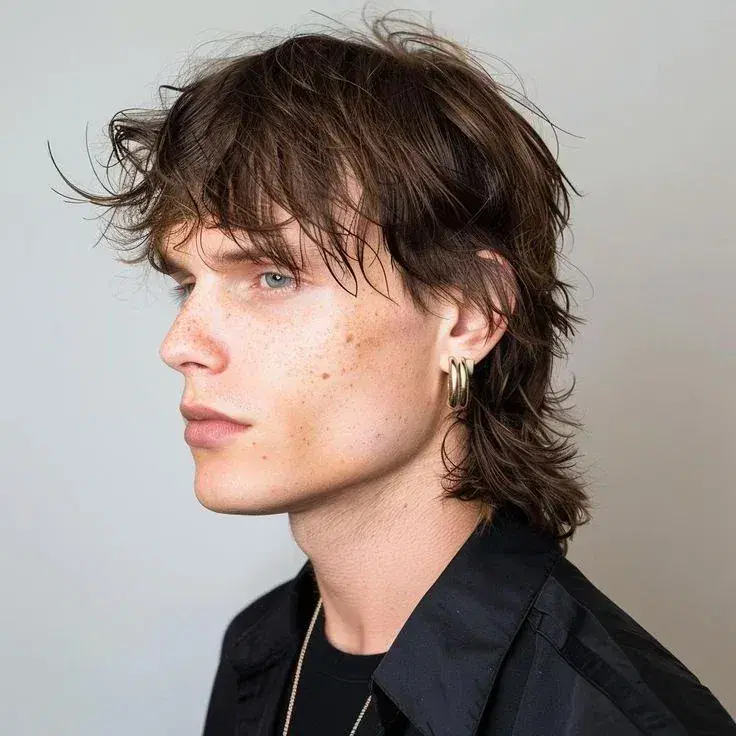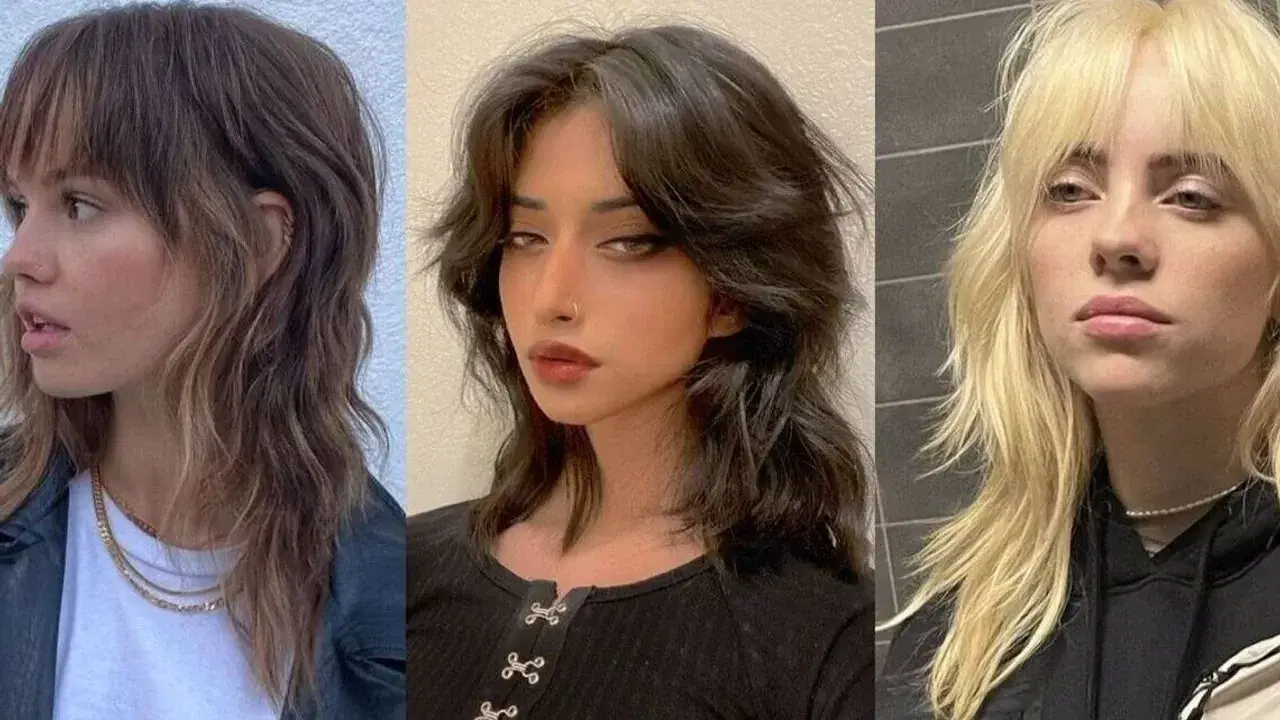
The wolf cut hairstyle blends the textured shape of a shag with the longer outline of a modern mullet. It usually features shorter layers around the crown, more volume near the top of the head, and longer sections through the back. The result can look soft and relaxed or sharper and more dramatic, depending on how the layers are cut.
Although the wolf cut is often associated with a deliberately messy finish, it is not one fixed hairstyle. It can be adapted for long, medium, or short hair and adjusted for different textures, densities, and face shapes. Some versions include curtain bangs, while others use a short fringe or leave the forehead open.
The main appeal of the cut is movement. Instead of creating one solid line, the layers separate the hair and make its natural texture more visible. However, the haircut needs to be planned carefully. Too many layers can make fine hair appear thinner, while poor weight distribution can leave thick or curly hair difficult to manage.
What Is a Wolf Cut Hairstyle?
A wolf cut is a layered haircut with a fuller crown and lighter lengths. The upper sections are usually shorter than the back, creating a visible difference between the top and lower parts of the hair.
The cut often includes:
Short or medium layers around the crown
Face-framing pieces
Longer hair at the back
Texture through the ends
Curtain bangs or a shaped fringe
A slightly undone finish
The name does not describe one technical cutting method. One stylist may create a soft, blended version, while another may use stronger disconnection between the layers.
A subtle wolf cut may resemble a traditional shag with long face-framing sections. A more dramatic version can have very short crown layers, a fuller fringe, and a longer tail at the back.
The best result depends on the starting length, natural texture, density, and how the client usually styles the hair.
How Is a Wolf Cut Different From a Shag?
The wolf cut and shag share several features, including crown volume, face-framing layers, and textured ends. The main difference is usually the overall silhouette.
A shag tends to distribute layers more evenly through the hair. The wolf cut often creates a stronger contrast between the short upper sections and the longer back.
Some wolf cuts also borrow from the mullet, particularly when the sides are shorter and the back remains noticeably longer. However, the transition is often softer than in a classic mullet.
In practice, the names overlap. A salon consultation is more useful than relying on the haircut label alone. Reference photographs can help show whether the desired result is soft, choppy, heavily layered, or close to a modern mullet.
Who Does the Wolf Cut Suit?
The wolf cut can be adapted to many people, but it is not automatically suitable in the same form for everyone.
People with thick hair may find that the layers remove some weight and allow the hair to move more freely. Shorter crown sections can also prevent the shape from looking heavy or flat.
Fine hair can gain volume near the roots, but the stylist needs to preserve enough density through the ends. Aggressive thinning or too many short layers may make fine hair look sparse.
Medium-density hair often works well with the cut because it can support visible layering without becoming too bulky or too thin.
Lifestyle matters as much as hair type. Someone who prefers air-drying may need a version that works with the natural pattern. A person who enjoys blow-drying, diffusing, or using styling tools may be comfortable with a more structured cut.
Wolf Cut for Straight Hair
A wolf cut can add movement and shape to straight hair, especially when the hair usually falls flat.
Because straight hair reveals the structure of the haircut clearly, the placement of the layers is important. Uneven or poorly blended sections may be more visible than they would be on wavy hair.
Fine, straight hair usually benefits from longer layers and less thinning. This keeps the lower sections from appearing too light. A soft curtain fringe can add shape without creating a severe contrast.
Thicker straight hair can support shorter crown layers and stronger texture. Removing selected weight may help the hair sit closer to the intended silhouette.
Styling may involve mousse, root spray, or a lightweight texture product. A round brush can lift the crown, while a small amount of paste can separate the ends. Heavy creams and oils may reduce volume.
Wolf Cut for Wavy Hair
Natural waves often suit the wolf cut because the layers make the existing texture more visible. Removing some weight can encourage waves to form more clearly, particularly around the crown and face.
The cut may also reduce the triangular shape that sometimes develops when wavy hair has one solid length. Strategic layers distribute volume more evenly.
Wavy hair can usually be styled with a lightweight leave-in conditioner, mousse, or gel. Scrunching the hair while it is wet may help the waves group together.
Air-drying can create a relaxed finish, while diffusing may provide more root volume. The hair should not be handled too much while drying, as repeated touching can separate the wave pattern and increase frizz.
Wolf Cut for Curly Hair
A curly wolf cut can create a rounded, layered shape with movement through the top and sides. It may help dense curls feel lighter and allow individual sections to form more freely.
Shrinkage needs to be considered before cutting. Curly hair can look much shorter when dry than when wet. Crown layers that appear moderate during the haircut may rise significantly once the curls contract.
A stylist should also avoid removing too much internal weight. Excessive thinning can disrupt the curl pattern, create uneven sections, or make the ends appear weak.
Some curly clients prefer a dry cut so the stylist can see how each curl sits. Others choose a wet cut for structure and balance. Both approaches can work when the stylist understands curl behaviour.
For styling, leave-in conditioner, curl cream, or gel may be applied in sections. Diffusing on low or moderate heat can support definition without stretching the shape too much.
Does Face Shape Matter?
Face shape can help guide the placement of the fringe and face-framing layers, but it should not be treated as a strict rule.
A round face may appear more balanced with volume at the crown and longer layers around the cheeks. A very short, wide fringe may add width, so curtain bangs or longer front pieces may feel more suitable.
A long face can work well with fuller sides, eyebrow-length bangs, or layers around the cheekbones. Too much height at the crown may make the face appear longer.
A square or angular face may suit soft, curved layers around the jaw. Choppy pieces can also work, but their placement should be considered carefully.
An oval face can usually support several versions of the cut, from soft and long to short and heavily layered.
Personal preference remains more important than a fixed face-shape rule. The haircut should also suit the hairline, forehead, density, and usual styling habits.
How to Ask for a Wolf Cut at the Salon?
Simply asking for a wolf cut may not provide enough detail. The term covers many different shapes, so clear communication is useful.
Explain how much length you want to keep and where you want the shortest layer to begin. Mention whether you prefer a soft transition or a more disconnected shape.
It also helps to discuss:
The amount of crown volume you want
Whether you want curtain bangs or a full fringe
How much texture you prefer
Whether you usually air-dry or heat-style
How often you are willing to trim the cut
Whether you want to preserve thickness at the ends
Bring photographs showing both what you like and what you do not like. The stylist should still adapt the reference to your own hair rather than trying to copy it exactly.
Ask how the haircut will look without styling. A shape that works only after daily heat styling may not be practical for someone who prefers a simple routine.
How to Style a Wolf Cut at Home?
The styling method depends on the hair texture and the desired finish.
For a relaxed look, apply a small amount of product to damp hair and allow the layers to dry naturally. Scrunching can help create texture, particularly on wavy hair.
For more volume, apply mousse or root spray near the crown. Blow-dry the roots in different directions rather than keeping them flat against the scalp.
A round brush can lift the front sections and shape curtain bangs. The ends can be turned inward, outward, or left slightly irregular.
On dry hair, a small amount of texture spray or styling paste can separate selected pieces. Use the product mainly on the mid-lengths and ends. Applying too much near the roots may make the hair look greasy.
For curly hair, style while the hair is wet. Work in sections if needed, then use a diffuser or allow the curls to air-dry.