
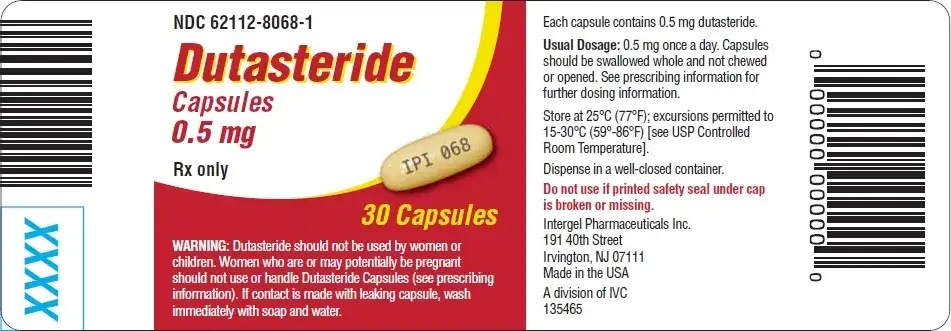
Dutasteride is a prescription medication that blocks the conversion of testosterone into dihydrotestosterone, also known as DHT, and it is often discussed in hair loss treatment because DHT plays a major role in androgenetic alopecia. In medical use, dutasteride is best known as a 5-alpha reductase inhibitor used for benign prostatic hyperplasia in men. In hair restoration, it may be considered by doctors for selected patients with pattern hair loss, especially when DHT-driven miniaturization is a major concern.
Dutasteride is not a simple hair vitamin, cosmetic product, or quick fix. It changes androgen activity in the body by inhibiting both type 1 and type 2 5-alpha reductase enzymes. This makes it more powerful in DHT suppression than finasteride in many comparisons, but stronger action also means the decision to use it should be more careful.
For hair loss, dutasteride should always be approached as a medical treatment. The patient needs a correct diagnosis, clear explanation of risks, realistic expectations, and follow-up. It may help some people slow hair loss, improve density, or stabilize miniaturized follicles, but it is not suitable for everyone.
What Is Dutasteride?
Dutasteride is a medication from the 5-alpha reductase inhibitor group. These medications reduce the activity of enzymes that convert testosterone into DHT. Since DHT is strongly linked to prostate enlargement and androgenetic alopecia, reducing DHT can have important effects in selected conditions.
Dutasteride is commonly available as an oral capsule. In some hair loss practices, topical or mesotherapy-based forms may also be discussed, but these uses depend on local regulations, physician experience, and available evidence.
The most important point is that dutasteride is not a general wellness supplement. It affects hormone pathways. For this reason, patients should not start it casually, share it with others, or buy it from unreliable sources.
How Does Dutasteride Work?
Dutasteride works by blocking 5-alpha reductase enzymes. These enzymes convert testosterone into DHT. DHT then binds to androgen receptors in sensitive tissues, including genetically vulnerable hair follicles.
In androgenetic alopecia, DHT contributes to follicle miniaturization. The follicle gradually becomes smaller, the growth phase shortens, and thick terminal hairs become thinner, shorter, and weaker. Over time, the scalp becomes more visible.
By lowering DHT levels, dutasteride may reduce the hormonal pressure on sensitive follicles. This can help slow progression and, in some patients, improve hair thickness. However, follicles that have been inactive for many years may not respond as strongly.
Why Is DHT Important in Hair Loss?
DHT is important because it is one of the main drivers of pattern hair loss in genetically sensitive people. The problem is not simply having DHT. DHT is a natural hormone with roles in the body. The problem is how certain scalp follicles respond to it.
In men, DHT-related hair loss often appears as temple recession, a receding hairline, thinning at the crown, or progressive loss across the top of the scalp. In women, it may appear as widening of the part, diffuse thinning over the top, or reduced density without complete bald patches.
Dutasteride targets this pathway directly. That is why it is often discussed when hair loss clearly follows an androgenetic pattern.
Is Dutasteride Used for Hair Loss?
Dutasteride may be used for hair loss in selected patients, but its approval status varies by country and indication. In many places, it is officially approved for prostate enlargement, while hair loss use may be off-label. Off-label use means a doctor may prescribe it based on clinical judgment, but it is not the primary approved indication in that setting.
This distinction matters. Patients should know why the medication is being recommended, what evidence supports it, what alternatives exist, and what risks may apply.
Dutasteride is usually considered when a patient has androgenetic alopecia and needs stronger DHT reduction than other approaches may provide. It may also be discussed when finasteride does not provide enough stabilization, but switching or combining medications should only happen under medical supervision.
Dutasteride vs Finasteride: What Is the Difference?
Dutasteride and finasteride both reduce DHT, but they are not identical. Finasteride mainly inhibits type 2 5-alpha reductase. Dutasteride inhibits both type 1 and type 2 forms of the enzyme. Because of this broader effect, dutasteride often produces stronger DHT suppression.
This can be an advantage for hair loss control in selected patients. However, it can also raise concerns about side effects, duration of action, and long-term suitability. Dutasteride also has a longer half-life than finasteride, meaning it remains in the body longer.
A stronger medication is not automatically the better choice for every patient. Some people do well with finasteride, minoxidil, or other options. Others may need dutasteride after careful evaluation. The decision should be personal, not trend-based.
Who May Be a Good Candidate?
A good candidate for dutasteride is usually an adult patient with confirmed androgenetic alopecia, ongoing miniaturization, and no major contraindications. Men with progressive hairline recession, crown thinning, or strong family history may be considered.
Women may be considered only in selected cases under specialist care, especially because pregnancy-related safety concerns are significant. Women who are pregnant, planning pregnancy, or able to become pregnant without reliable precautions should not use dutasteride unless a qualified physician specifically evaluates the risk and legal medical context.
Patients with liver disease, complex medication use, fertility concerns, sexual side effect concerns, mood history, or prostate-related monitoring needs should have a detailed conversation before starting.
Who Should Avoid Dutasteride?
Dutasteride should be avoided by people with known allergy to the medication or its ingredients. It is not appropriate for pregnant individuals because exposure may affect male fetal development. Capsules should not be handled by pregnant individuals if they are leaking or damaged.
Patients with liver problems need caution because the medication is processed in the body over time. People taking multiple medications should check for interactions. Anyone with a history of severe side effects from 5-alpha reductase inhibitors should discuss alternatives.
Dutasteride should not be used without diagnosis. If hair loss is caused by thyroid disease, iron deficiency, alopecia areata, telogen effluvium, scalp infection, traction, or scarring alopecia, dutasteride may not address the main cause.
What Results Can Patients Expect?
Patients may expect stabilization first, not instant regrowth. The main early goal is often to reduce ongoing miniaturization and slow further thinning. Visible improvement, if it happens, usually takes months.
Hair grows slowly. A fair evaluation may require six to twelve months or longer. Some patients notice reduced shedding first. Others see thicker-looking hair later. Some only maintain what they have, which can still be a valuable result in progressive hair loss.
Dutasteride does not create new donor follicles. It works on existing follicles that are still biologically active. Severely bald areas with long-inactive follicles may need hair transplant surgery if restoration is desired.
How Long Does Dutasteride Take to Work?
Dutasteride may take several months before visible changes appear. Because hair follicles move through growth cycles slowly, the scalp does not respond overnight. Patients should not judge the treatment after a few weeks.
During the first months, shedding may fluctuate. This does not always mean failure. Hair cycles can shift when treatment begins, and existing weakened hairs may shed before stronger growth becomes visible.
A consistent review with photographs is useful. The same lighting, same angle, same hair length, and same styling conditions help compare progress more accurately.
Can Dutasteride Cause Shedding?
Dutasteride may be associated with temporary shedding in some patients, especially during the early phase of treatment. This may happen as follicles adjust and hair cycles shift. Early shedding can be stressful, but it does not always mean the medication is worsening hair loss.
However, not every shedding episode is related to dutasteride. Stress, illness, surgery, rapid weight loss, thyroid imbalance, iron deficiency, scalp inflammation, and medication changes can also trigger shedding.
If shedding is severe, sudden, patchy, painful, or persistent, the patient should contact a doctor. A correct diagnosis prevents unnecessary treatment changes.
What Are the Possible Side Effects?
Possible side effects of dutasteride can include decreased libido, erectile dysfunction, ejaculation changes, breast tenderness, breast enlargement, mood changes, and allergic reactions. Some patients may also worry about fertility effects, semen parameters, or long-lasting symptoms after stopping.
Not everyone experiences side effects. Many patients tolerate the medication well, but the risks must be discussed before treatment. The decision should include both medical facts and the patient’s comfort level.
Any breast lump, nipple discharge, severe mood change, allergic reaction, swelling, or troubling sexual side effect should be reported promptly. Patients should not ignore symptoms because they feel embarrassed.
Does Dutasteride Affect Fertility?
Dutasteride may affect semen parameters in some men, although the clinical importance can vary. Patients trying to conceive or planning fertility treatment should discuss this before starting. Because dutasteride stays in the body for a long time, timing matters.
Men with fertility concerns may need baseline evaluation, semen analysis, or alternative treatment planning. Some doctors may prefer other options depending on the patient’s goals.
Fertility is personal and should not be treated casually. A patient who may want children soon should raise this topic during the consultation, even if the doctor does not ask first.
Is Dutasteride Safe for Women?
Dutasteride use in women requires special caution. It is generally avoided in pregnancy and in people who may become pregnant because of potential risk to male fetal development. For postmenopausal women with specific types of hair loss, some specialists may consider it in selected circumstances, but this requires careful medical oversight.
Women with hair loss should first receive a proper diagnosis. Female hair thinning can involve iron deficiency, thyroid disease, menopause, polycystic ovary syndrome, stress, nutritional issues, medication effects, and inflammatory scalp disease.
Dutasteride should never be used as a casual beauty treatment. In women, the risk-benefit discussion is especially important.
Can Dutasteride Be Combined With Minoxidil?
Dutasteride can be combined with minoxidil in some treatment plans, but only when appropriate. The two work differently. Dutasteride targets DHT-related miniaturization, while minoxidil helps support hair growth through a separate pathway.
This combination may be useful for patients who need both stabilization and growth support. For example, dutasteride may reduce hormonal pressure, while minoxidil may help active follicles produce stronger hair.
However, combining treatments also makes it harder to know which product is helping or causing side effects. A doctor should guide timing, dosing, and follow-up.
Can Dutasteride Be Used After Hair Transplant?
Dutasteride may be used after hair transplant in selected patients to help protect native hair from continued androgenetic thinning. Transplanted hairs are usually more resistant to DHT, but surrounding original hairs may continue to miniaturize.
This matters because a patient may have a successful transplant but later lose non-transplanted hair around it. The result can look thinner over time unless future loss is managed.
Dutasteride is not required for every transplant patient. Some may use finasteride, minoxidil, other treatments, or no medication depending on their case. The decision should be part of a long-term hair restoration plan.
Is Topical Dutasteride Effective?
Topical dutasteride is discussed as a way to deliver the medication to the scalp while potentially reducing systemic exposure. Some clinics offer topical formulas or localized applications, but evidence, absorption, formulation quality, and dosing standards are less settled than for established oral use.
The idea sounds attractive, but patients should be cautious. Topical does not always mean risk-free. Medication can still absorb through the skin, especially if the scalp is irritated or used with certain carriers.
Patients should ask what formulation is being used, what evidence supports it, how often it should be applied, what side effects may occur, and how progress will be measured.
What Dose Is Used?
Dutasteride dosing depends on the medical indication, country, formulation, and physician judgment. For prostate enlargement, a common oral capsule strength is 0.5 mg. Hair loss protocols may vary, especially when used off-label.
Patients should not copy dosing plans from forums or social media. The right dose depends on age, sex, diagnosis, medical history, side effect risk, other medications, and treatment goals.
Because dutasteride remains in the body for a long time, dose decisions should be made carefully. Increasing frequency or dose without supervision can raise risk without guaranteeing better hair growth.
What Should Be Checked Before Starting?
Before starting dutasteride, the patient should have a clear hair loss diagnosis. Scalp examination, pattern assessment, family history, and sometimes dermoscopy can help confirm androgenetic alopecia. Blood tests may be needed if shedding is diffuse or sudden.
The doctor may ask about sexual health, mood history, fertility goals, liver health, prostate history, medications, supplements, and family planning. This information helps determine whether dutasteride is suitable.
Good treatment begins with honest conversation. Patients should share concerns openly so the plan fits their health and priorities.
How Should Progress Be Tracked?
Progress should be tracked with standardized photos and follow-up visits. Useful views include front hairline, temples, mid-scalp, crown, and part line. Photos should be taken with similar lighting, hair length, and styling.
Daily mirror checks are not reliable. Hair can look different depending on washing, oiliness, lighting, humidity, and haircut. A month-to-month record gives a clearer picture.
The doctor may also use magnification to assess miniaturization and hair shaft diameter. Stabilization can be a positive result even if dramatic regrowth does not occur.
What Happens If You Stop Dutasteride?
If dutasteride was helping maintain hair, stopping it may allow DHT activity to affect sensitive follicles again. Hair that was preserved by treatment may gradually miniaturize over time.
This does not usually happen overnight. Changes may appear over months. Patients should not stop suddenly without discussing the reason with their doctor, especially if they are stopping due to side effects, fertility planning, or lack of visible improvement.
A transition plan may include switching to another treatment, adjusting dose, adding minoxidil, or monitoring closely. The best approach depends on why treatment is being stopped.
What Mistakes Should Patients Avoid?
One common mistake is starting dutasteride without diagnosis. Another is using it only because it appears stronger than finasteride. Stronger does not automatically mean more appropriate.
Patients should also avoid buying medication from unverified sources. Counterfeit or poorly stored medication can be unsafe. Another mistake is ignoring side effects or being afraid to discuss them.
Some patients stop too early because they do not see results in a few weeks. Others keep taking it despite clear problems. Both extremes can be harmful. A balanced plan with follow-up is safer.
What Questions Should You Ask Your Doctor?
Patients should ask: Is my hair loss truly androgenetic alopecia? Why are you recommending dutasteride instead of finasteride or minoxidil? Is this use approved or off-label in my case? What side effects should I watch for? How long should I try it before judging results? What happens if I stop? Could it affect fertility? Do I need blood tests? Can I combine it with minoxidil? Is topical dutasteride an option?
These questions make treatment more transparent. A good consultation should explain benefits, risks, alternatives, and realistic outcomes.