
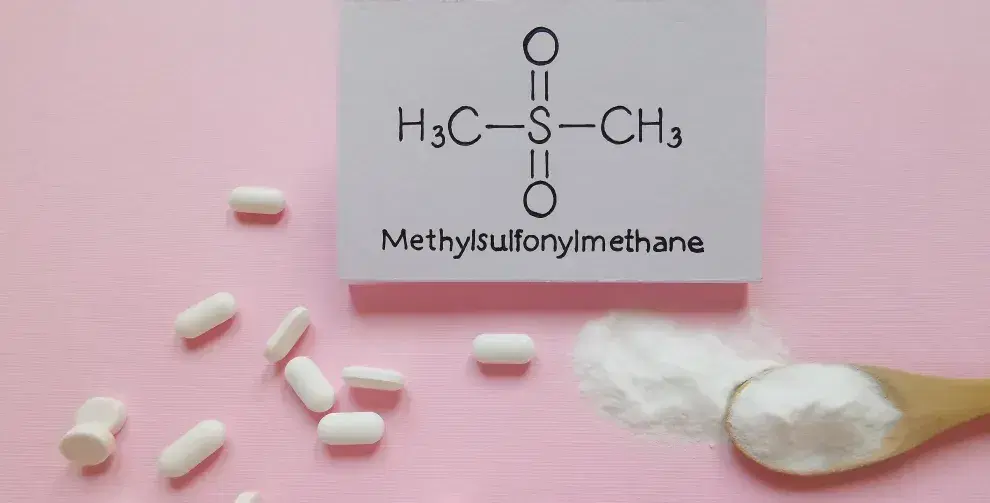
What Is Methylsulfonylmethane MSM?
Methylsulfonylmethane, commonly called MSM, is a naturally occurring sulfur-containing compound. It is found in small amounts in fruits, vegetables, grains, milk, and other foods. As a supplement, it is often used for joint comfort, recovery support, skin health, nail strength, and hair wellness.
MSM is not a vitamin or a hormone. It is a sulfur donor that may support certain biological processes in the body. In wellness products, it is often combined with ingredients such as biotin, collagen, vitamin C, zinc, silica, hyaluronic acid, or amino acids.
For hair growth, MSM is usually marketed as a way to support keratin production and improve the strength of the hair shaft. This idea is reasonable from a structural point of view, but clinical proof remains limited. Patients should understand the difference between supporting hair quality and treating a medical hair loss condition.
Why Is MSM Linked to Hair Growth?
MSM is linked to hair growth because sulfur is involved in the formation of keratin. Keratin is the main structural protein in hair, and sulfur-containing bonds help give hair its firmness, flexibility, and resilience.
When hair is weak, brittle, dull, or prone to breakage, people often look for nutritional support. MSM may be included in this conversation because it provides sulfur in a supplement form. Some users report that their hair feels stronger or grows longer with less breakage after using MSM consistently.
However, stronger hair strands are not the same as new follicle growth. A person may feel that hair grows faster because breakage decreases. The hair may retain length better, but that does not necessarily mean the scalp is producing more hairs. This distinction is important for realistic expectations.
Can MSM Actually Make Hair Grow Faster?
MSM may help some people notice healthier-looking hair, but there is not enough strong evidence to say it reliably makes scalp hair grow faster in everyone. Hair growth speed is controlled by follicle biology, genetics, hormones, age, health status, and the hair cycle.
Most scalp hair grows slowly and steadily. Visible changes usually take months. If someone starts MSM and sees improvement after a few weeks, the change may be related to reduced breakage, better nutrition, improved hair care, or normal growth rather than a direct growth acceleration effect.
A realistic way to describe MSM is that it may support the conditions needed for healthy hair growth. It should not be presented as a guaranteed hair growth booster. People with visible thinning should first understand why the hair is thinning.
Is MSM a Hair Loss Treatment?
MSM is not a primary medical treatment for hair loss. It may be used as a supportive supplement, but it does not replace treatments for androgenetic alopecia, alopecia areata, telogen effluvium, thyroid-related shedding, iron deficiency, scalp infection, or scarring alopecia.
Hair loss is a symptom, not a single condition. A person with male pattern hair loss usually needs a different plan than someone losing hair after illness or childbirth. A patient with scalp redness and scarring needs urgent dermatology care rather than a beauty supplement.
Using MSM without diagnosis can delay proper treatment. This delay may not matter much for mild breakage, but it can matter greatly for progressive or inflammatory hair loss. A correct diagnosis gives patients a better chance of choosing the right solution.
Who Might Consider MSM for Hair?
MSM may be considered by people who want general hair support, especially if they are focused on hair strength, shine, texture, or breakage rather than severe hair loss. It may also interest people who already use wellness supplements and want a sulfur-based option.
However, MSM is not suitable as the only plan for everyone. Patients with sudden shedding, bald patches, widening part, receding hairline, scalp pain, itching, scaling, redness, or family history of strong hair loss should seek professional evaluation first.
People with chronic illnesses, pregnancy, breastfeeding, medication use, kidney or liver concerns, allergies, or upcoming surgery should ask a healthcare professional before taking MSM. Supplements can still have side effects and interactions.
How Does MSM Support Keratin?
Keratin strength depends partly on sulfur-containing amino acids. These amino acids form bonds that help hair keep its shape and resist damage. MSM may contribute sulfur that supports related biological pathways, although the body still needs adequate protein and overall nutrition.
This means MSM cannot work well if the rest of the diet is poor. Hair follicles need amino acids, iron, zinc, vitamin D, B vitamins, essential fatty acids, and enough calories. A person eating too little protein or following a restrictive diet may continue shedding even with MSM.
A supplement should support a healthy foundation, not replace it. Strong hair begins with stable health, balanced nutrition, and a healthy scalp.
Does MSM Help With Hair Thickness?
MSM may improve the appearance of hair thickness in some people if it reduces breakage or improves strand quality. Hair may look fuller when it is less brittle, better hydrated, and easier to manage.
True hair thickness can mean several things. It may refer to strand diameter, number of hairs on the scalp, density per square centimeter, or how full the hair looks after styling. MSM is more likely to influence perceived quality than to dramatically increase follicle count.
If the scalp is becoming more visible, the part is widening, or the crown is thinning, the issue may be follicle miniaturization or shedding. In that case, MSM alone is unlikely to be enough.
Can MSM Help With Androgenetic Alopecia?
MSM is not a proven treatment for androgenetic alopecia. Androgenetic alopecia happens when genetically sensitive hair follicles gradually miniaturize under androgen influence. In men, this often affects the hairline and crown. In women, it may appear as diffuse thinning over the top of the scalp.
This condition usually requires targeted treatment. Options may include minoxidil, DHT-related therapies, low-level laser therapy, platelet-rich plasma in selected cases, or hair transplant surgery for suitable patients.
MSM may support general hair quality, but it does not directly solve DHT sensitivity in a proven way. Relying only on MSM may allow androgenetic alopecia to progress.
Can MSM Help With Telogen Effluvium?
Telogen effluvium is a type of diffuse shedding that can happen after stress, illness, fever, surgery, childbirth, medication changes, rapid weight loss, or nutritional deficiency. MSM is not a direct cure for telogen effluvium.
Recovery usually depends on identifying and removing the trigger. If the trigger was low protein intake, iron deficiency, thyroid imbalance, or severe stress, those issues need to be addressed. Hair then needs time to return to its normal cycle.
A person may take MSM while telogen effluvium naturally improves and assume MSM caused the recovery. This may or may not be true. Tracking the timeline and checking underlying causes provides a clearer picture.
Is MSM Better Than Biotin?
MSM and biotin are different. MSM provides organic sulfur, while biotin is a B vitamin involved in certain metabolic processes. Both appear in hair supplements, but neither is a guaranteed solution for hair loss.
Biotin is helpful mainly when a person has a deficiency, which is not common in everyone. High-dose biotin can also interfere with some lab tests. MSM is usually discussed for sulfur support and hair structure, but strong evidence for hair regrowth is limited.
One is not automatically better than the other. The right choice depends on the person’s health, diet, diagnosis, and goals. In many cases, testing and medical evaluation matter more than choosing between popular supplements.
Should MSM Be Taken With Vitamin C?
Some formulas combine MSM with vitamin C because vitamin C supports collagen formation and antioxidant protection. This combination is common in beauty supplements for skin, hair, and nails.
For hair growth, vitamin C may help indirectly by supporting overall tissue health and iron absorption from plant foods. However, adding vitamin C does not turn MSM into a guaranteed hair growth treatment.
Combination supplements can be useful, but they also make it harder to know which ingredient is helping or causing side effects. Patients should check the full label instead of focusing only on MSM.
What Dose Is Used for Hair Growth?
There is no universally accepted MSM dose specifically for hair growth. Supplement labels vary, and many products use MSM as one ingredient in a broader formula. Some wellness products use lower doses, while joint support products may use higher amounts.
Because people differ in health status, medication use, and tolerance, dose decisions should be cautious. More is not always better. Higher doses may increase the chance of digestive discomfort, headache, or skin reactions.
Anyone with medical conditions or regular medication use should ask a healthcare professional before starting MSM. This is especially important for pregnant or breastfeeding individuals and people preparing for surgery.
How Long Does MSM Take to Work?
If MSM improves hair quality, visible changes may take at least several months. Hair grows slowly, and new growth must move from the follicle through the scalp before it can be seen. Existing damaged hair will not fully change because of a supplement.
Most people should not judge results after only a few days or weeks. A more realistic observation period may be three to six months, provided there are no side effects and no worsening hair loss signs.
Progress should be tracked with consistent photos. Daily checking can create anxiety and may not show meaningful change. Hair appearance changes with lighting, washing, styling, humidity, and length.
What Side Effects Can MSM Cause?
MSM is tolerated by many users, but side effects can happen. Possible complaints include bloating, nausea, diarrhea, headache, tiredness, skin rash, itching, or allergic-type reactions. Some people may simply feel that it does not suit them.
Side effects may be more likely when the dose is high, when MSM is combined with many other supplements, or when the person has underlying sensitivities. A new rash, breathing symptoms, swelling, or severe reaction needs prompt medical attention.
Because supplement quality varies, choosing a reputable product matters. Poor-quality products may contain incorrect dosing, contaminants, or unnecessary additives.
Can MSM Cause Shedding?
MSM is not commonly taken with the expectation that it will cause shedding, but any new supplement can coincide with hair changes. If shedding begins after starting MSM, the timing should be reviewed carefully.
The shedding may be unrelated. Hair loss often appears weeks or months after a trigger. Stress, illness, diet change, medication change, thyroid problems, iron deficiency, or hormonal shifts may be responsible.
If shedding is heavy, persistent, or visible, stop guessing and seek evaluation. A supplement timeline can help, but diagnosis should look at the full health picture.
What Should a Quality MSM Supplement Include?
A quality MSM supplement should clearly list the amount of MSM per serving, the serving size, added ingredients, allergen information, and usage instructions. It should avoid exaggerated claims such as guaranteed regrowth, rapid baldness reversal, or permanent thickening.
Third-party testing can add confidence when available. A simple formula may be preferable for people with sensitivities because it reduces the chance of reacting to unnecessary additives.
Patients should be cautious with products that combine many ingredients at high doses. Large formulas can look impressive but may create more side effect risk and make results harder to interpret.
Who Should Avoid MSM?
People who are pregnant, breastfeeding, trying to conceive, managing chronic disease, taking blood thinners, using multiple medications, or preparing for surgery should ask a healthcare professional before using MSM.
People with a history of supplement reactions, allergies, liver disease, kidney disease, or autoimmune conditions should also be cautious. Children should not take MSM for hair growth without pediatric guidance.
A supplement may be available without prescription, but that does not mean it is appropriate for every person.
Can Diet Support Sulfur Naturally?
Yes, sulfur-containing nutrients can come from food. Protein-rich foods such as eggs, fish, poultry, meat, dairy, beans, and lentils provide amino acids that support keratin. Vegetables such as garlic, onions, broccoli, cabbage, kale, and Brussels sprouts also contain sulfur compounds.
A balanced diet often supports hair better than relying on one supplement. Hair follicles need stable nutrition every day. Crash dieting, low protein intake, and rapid weight loss can trigger shedding even when a person takes hair supplements.
Good nutrition is not an instant fix, but it creates the foundation for healthier growth.
When Should You See a Doctor Instead?
A doctor or dermatologist should be consulted if hair loss is sudden, severe, patchy, painful, itchy, scaly, or associated with redness, sores, or scarring. Medical review is also important if the hairline is receding, the crown is thinning, the part is widening, or shedding continues for more than a few months.
Blood tests may be needed when thyroid disease, iron deficiency, vitamin deficiency, hormonal imbalance, or inflammatory conditions are possible. Scalp examination may identify androgenetic alopecia, alopecia areata, dermatitis, fungal infection, or scarring alopecia.
MSM may be considered later as support, but diagnosis should come first when hair loss is active.
How Should Progress Be Measured?
Progress should be measured calmly and consistently. Take photos every four to six weeks in the same lighting, with similar hair length and the same parting pattern. Useful views include front hairline, temples, part line, crown, and overall scalp.
Track shedding, breakage, scalp symptoms, diet, stress, sleep, illness, medication changes, and supplement use. This record can help identify whether MSM is truly helping or whether another factor is responsible.
Hair improvement is slow. A stable trend over months is more meaningful than one good or bad hair day.
What Mistakes Should Be Avoided?
The most common mistake is expecting MSM to reverse every type of hair loss. It may support hair quality, but it cannot replace medical treatment for androgenetic alopecia, autoimmune hair loss, scarring alopecia, thyroid disease, or nutritional deficiency.
Another mistake is combining too many supplements at once. This can increase cost, side effects, and confusion. Patients may not know which product helped or harmed them.
High-dose use without guidance is also risky. Taking more MSM does not guarantee faster growth. A careful, realistic approach is safer.
What Questions Should You Ask Before Using MSM?
Before using MSM for hair growth, ask practical questions. Why is my hair thinning? Is the problem shedding or breakage? Is my scalp healthy? Do I have a deficiency? Am I taking medications that could interact? What dose is appropriate? How long should I try it? What side effects should I watch for? How will I measure progress?
These questions help turn supplement use into a thoughtful plan rather than guesswork. Hair growth decisions are easier when they start with the cause.