
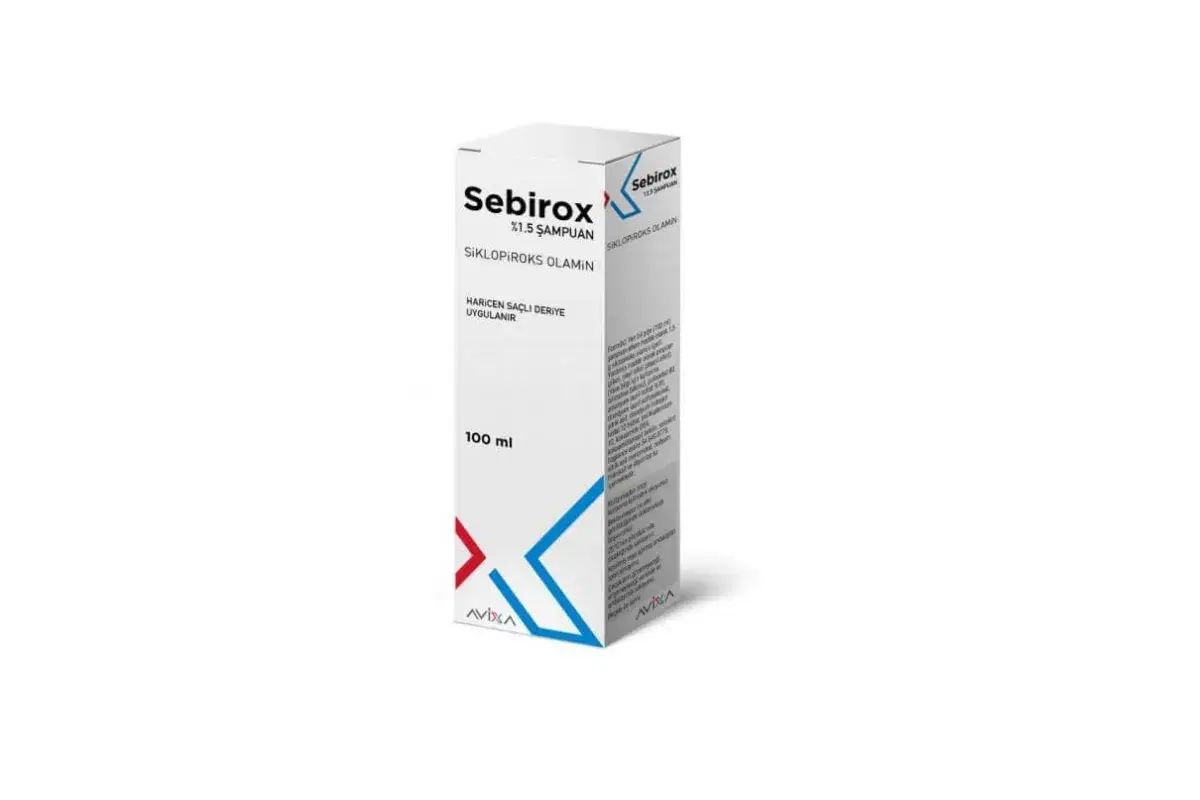
What Is Sebirox Shampoo?
Sebirox Shampoo is a medicated scalp shampoo used to help control dandruff-like scaling, itching, and seborrheic dermatitis symptoms. Depending on the country and product formulation, it is associated with antifungal scalp care, most often discussed around ciclopirox olamine-based treatment.
A medicated shampoo differs from a regular shampoo because its purpose is not only to clean hair. It is designed to act on the scalp. The active ingredient needs enough contact time with the skin to help reduce the organisms and inflammation involved in flaking and irritation.
People should check the exact label of the product they have, because formulations can vary by market. The active ingredient, strength, frequency, age suitability, and warning instructions should always be read before use. When Sebirox Shampoo is prescribed, the doctor’s directions should come first.
What Is Sebirox Shampoo Used For?
Sebirox Shampoo is mainly used for scalp conditions involving flaking, itching, redness, and oily scale. These symptoms are common in seborrheic dermatitis and persistent dandruff.
Seborrheic dermatitis often affects areas where oil glands are active. On the scalp, it may cause greasy scales, white flakes, yellowish crusts, itching, and irritation. Some people also notice flakes on dark clothing or redness around the hairline. Symptoms may worsen with stress, cold weather, sweating, harsh hair products, or inconsistent treatment.
Sebirox Shampoo may help reduce scalp symptoms by targeting yeast-related activity and calming the environment that contributes to scaling. It may be used alone in mild cases or as part of a broader plan in more persistent cases.
How Does Sebirox Shampoo Work?
Sebirox Shampoo works by helping reduce fungal activity on the scalp and supporting control of inflammation and scaling. In seborrheic dermatitis, a yeast that normally lives on the skin can contribute to irritation in sensitive people. The scalp reacts with flaking, redness, itching, and excess scale.
The shampoo needs direct contact with the scalp to work properly. Applying it only to the hair length may not provide enough benefit. The scalp should be gently massaged so the product reaches affected areas. After an appropriate contact time, it is rinsed thoroughly.
The effect is not always immediate. Itching may improve first, while scaling may take longer to settle. Consistent use according to directions is usually more effective than occasional use only when symptoms become severe.
Is Sebirox Shampoo Only for Dandruff?
Sebirox Shampoo is often used for dandruff, but dandruff and seborrheic dermatitis exist on a spectrum. Mild dandruff may appear as dry or oily flakes without much redness. Seborrheic dermatitis usually includes more inflammation, itching, redness, and recurring scale.
If flakes are mild and occasional, a standard anti-dandruff shampoo may be enough. If the scalp is itchy, red, greasy, irritated, or repeatedly flares despite ordinary shampoos, a medicated shampoo such as Sebirox may be considered.
However, not every flaky scalp is dandruff. Psoriasis can cause thicker plaques. Contact dermatitis can follow hair dye or product irritation. Fungal infection may cause broken hairs or patches. Scarring conditions may cause pain, redness, and permanent hair loss risk. Persistent symptoms deserve proper diagnosis.
How Should Sebirox Shampoo Be Used?
Sebirox Shampoo should be used exactly as directed on the label or by a healthcare professional. In general, medicated scalp shampoos are applied to wet hair and massaged into the scalp. The product is usually left on for a short contact period before rinsing.
The contact time matters because the active ingredient needs time to work on the scalp. Rinsing immediately may reduce effectiveness. On the other hand, leaving the shampoo on longer than recommended may increase dryness, irritation, or burning.
Patients should avoid aggressive scratching while applying it. Fingertips can be used gently, but nails should not scrape the scalp. After rinsing, the hair can usually be washed or conditioned as recommended, depending on the product instructions and scalp sensitivity.
How Often Should You Use Sebirox Shampoo?
The correct frequency depends on the product instructions, severity of symptoms, scalp sensitivity, and medical advice. Some medicated shampoos are used several times per week during an active flare, then less often for maintenance. Others have a specific treatment schedule.
Using Sebirox Shampoo too often may dry or irritate the scalp in some people. Using it too rarely may allow symptoms to return quickly. The goal is to find the right balance between control and tolerance.
If symptoms improve, patients should not always stop suddenly without guidance, especially if seborrheic dermatitis tends to return. A maintenance routine may help reduce future flares. If the scalp becomes very dry, tight, or irritated, the frequency may need review.
Can Sebirox Shampoo Help With Itchy Scalp?
Sebirox Shampoo may help itchy scalp when the itching is related to dandruff or seborrheic dermatitis. By reducing the factors that contribute to flaking and inflammation, the scalp may feel calmer over time.
Itching can also come from other causes. Dry scalp, eczema, psoriasis, allergic reactions, lice, fungal infection, hair dye sensitivity, product buildup, or nerve-related irritation can all cause itching. If itching continues despite treatment, the diagnosis may need to be reconsidered.
Warning signs include intense burning, pain, sores, oozing, swelling, thick crusts, patchy hair loss, or symptoms spreading beyond the scalp. These signs should be checked by a doctor rather than treated only with shampoo.
Does Sebirox Shampoo Stop Hair Loss?
Sebirox Shampoo is not a direct hair loss treatment. It does not treat genetic hair loss, pattern baldness, or follicle miniaturization. However, it may indirectly support scalp health when inflammation, itching, and scaling are contributing to shedding or hair breakage.
Seborrheic dermatitis can make the scalp uncomfortable and may increase rubbing, scratching, and irritation. In some people, active inflammation can make shedding seem worse. Controlling the scalp condition may reduce irritation-related hair fall, but it does not replace treatment for androgenetic alopecia or other medical hair loss conditions.
If hair is thinning at the temples, crown, or part line, a dermatologist should evaluate for pattern hair loss. If hair loss appears in patches, with pain or scarring, medical assessment becomes more urgent.
Can Sebirox Shampoo Cause Hair Shedding?
Sebirox Shampoo is not usually expected to cause true hair loss, but some people may notice shedding while using it. This does not always mean the shampoo is damaging follicles. Hair shedding may already be happening because of stress, illness, seborrheic dermatitis, androgenetic alopecia, nutritional deficiency, or seasonal changes.
Still, any medicated shampoo can irritate sensitive skin. If the scalp becomes redder, more painful, very dry, swollen, or rash-like after use, irritation or allergy may be present. Increased scratching from irritation can also worsen breakage.
If shedding clearly increases after starting the shampoo and the scalp feels irritated, stop guessing and contact a healthcare professional. The product may need to be changed, used less often, or replaced with another treatment.
What Side Effects Can Sebirox Shampoo Have?
Possible side effects may include scalp dryness, irritation, burning, stinging, redness, itching, or changes in hair texture. Some people may notice that the hair feels drier after medicated shampoos, especially when used frequently.
Allergic reactions are less common but possible. A rash, swelling, severe burning, hives, or breathing symptoms require prompt medical attention. Product should not be used on broken or severely inflamed skin unless a doctor has advised it.
People with sensitive scalps should introduce medicated shampoos carefully. It is also wise to avoid combining too many strong scalp treatments at once, such as exfoliating acids, harsh anti-dandruff products, essential oils, and medicated lotions without guidance.
Should You Use Conditioner With Sebirox Shampoo?
Conditioner may be helpful if the hair becomes dry after using Sebirox Shampoo. However, conditioner should mainly be applied to the hair lengths and ends rather than directly to an oily or inflamed scalp, unless the product is specifically designed for scalp use.
Some conditioners contain oils, fragrances, or heavy ingredients that may irritate sensitive scalps or worsen greasiness. A lightweight, gentle conditioner may be better for people prone to seborrheic dermatitis.
The key is to let the medicated shampoo contact the scalp first, then use conditioner in a way that does not interfere with scalp treatment. If dryness remains a problem, a doctor or pharmacist can suggest a gentler routine.
Can Sebirox Shampoo Be Used With Other Treatments?
Sebirox Shampoo may be used with other treatments when advised by a healthcare professional. People with seborrheic dermatitis may sometimes use medicated lotions, topical anti-inflammatory treatments, antifungal creams, or maintenance shampoos depending on the affected areas.
However, combining treatments without guidance can irritate the scalp. Using multiple anti-dandruff shampoos on the same day, adding strong essential oils, applying alcohol-based tonics, or using harsh exfoliants may make redness and itching worse.
If a patient also uses minoxidil, hair growth serums, topical steroids, or other scalp medications, timing should be discussed. Applying several products too close together can reduce comfort and increase irritation.
Is Sebirox Shampoo Suitable for Everyone?
Sebirox Shampoo may not be suitable for everyone. People with known allergy to any ingredient should avoid it. Children, pregnant or breastfeeding individuals, and people with severe scalp wounds or unusual skin conditions should seek medical advice before use.
Patients with long-term scalp disease should not rely on shampoo alone. If the scalp has thick plaques, bleeding, pus, painful bumps, patchy hair loss, scarring, or persistent redness, diagnosis is important.
Medicated shampoos work best when the condition is correctly identified. Using Sebirox for the wrong scalp problem may delay proper care.
What If Sebirox Shampoo Does Not Work?
If Sebirox Shampoo does not improve symptoms after appropriate use, several possibilities exist. The diagnosis may be different, the shampoo may not be used often enough, contact time may be too short, the condition may require combination treatment, or the scalp may be reacting to another product.
Some patients need maintenance care because seborrheic dermatitis tends to return. Others may need a different active ingredient, such as ketoconazole, selenium sulfide, zinc pyrithione, salicylic acid, or prescription anti-inflammatory treatment depending on the case.
If symptoms persist, a dermatologist can examine the scalp and adjust the plan. Repeating the same shampoo for months without improvement is not the best strategy.
Can Sebirox Shampoo Be Used Long Term?
Long-term use depends on the diagnosis, response, and tolerance. Seborrheic dermatitis is often chronic and can flare repeatedly, so some people need maintenance routines. However, this does not always mean using the medicated shampoo frequently forever.
A doctor may recommend using it more often during flares and less often once symptoms are controlled. Overuse can dry or irritate the scalp, while underuse can allow symptoms to return.
A long-term plan should be practical. It should control flakes and itching while keeping the scalp comfortable and the hair manageable.
How Can You Improve Results?
Results may improve when Sebirox Shampoo is used consistently and correctly. Apply it to the scalp, not only the hair. Leave it for the recommended time. Rinse well. Avoid scratching. Use gentle hair products between treatments. Reduce heavy styling products that build up on the scalp.
Lifestyle factors may also affect flares. Stress, poor sleep, sweating, cold weather, harsh products, and irregular washing can worsen symptoms in some people. Keeping a simple scalp routine often works better than switching products constantly.
Patients should also avoid applying oils to an inflamed scalp without advice. Heavy oils may worsen greasiness or irritation in some cases.
When Should You See a Doctor?
A doctor or dermatologist should be consulted if scalp symptoms are severe, painful, spreading, or not improving. Medical advice is also important if there is hair loss, pus, sores, bleeding, thick plaques, swelling, fever, or signs of infection.
Patients should seek evaluation if they need medicated shampoo continuously but still flare often. This may mean the treatment plan needs adjustment.
Scalp conditions can look similar, but treatments differ. A correct diagnosis helps prevent wasted time and unnecessary irritation.
What Questions Should You Ask Before Using It?
Useful questions include: What is causing my flakes? Is this dandruff or seborrheic dermatitis? How often should I use Sebirox Shampoo? How long should I leave it on? Can I use conditioner? Should I avoid other scalp products? What side effects should I watch for? When should I stop and call the clinic? Do I need another treatment for redness or itching?
Clear instructions are important because medicated shampoos work best when used properly. A few small changes in technique can affect results.
What Mistakes Should Be Avoided?
Common mistakes include rinsing the shampoo too quickly, applying it mostly to the hair instead of the scalp, using it irregularly, scratching aggressively, combining it with harsh products, or stopping treatment as soon as symptoms improve.
Another mistake is assuming all flakes are the same. Dandruff, seborrheic dermatitis, psoriasis, eczema, fungal infection, and allergic reactions can overlap visually. If the scalp does not respond as expected, the diagnosis should be reviewed.
Patients should also avoid expecting Sebirox Shampoo to treat every type of hair loss. It can support scalp health in suitable cases, but it is not a replacement for hair loss diagnosis or treatment.