
Send your photos on WhatsApp — receive your personal plan and all-inclusive quote within 24 hours.
Stem cell hair therapy may use processed tissue, cell suspensions, conditioned media, secretomes, or products marketed as exosomes.
The exact material varies considerably between clinics, making careful clarification especially important. Some approaches process small samples collected from your own tissue. Other treatments use laboratory-prepared products obtained from different biological sources. These options are not interchangeable because their contents, processing methods, and evidence differ. Therefore, you should request the product name, origin, preparation method, and quality documentation. You should also confirm whether living cells are actually present within the treatment. Research continues across several regenerative approaches, while standard protocols remain under development.
Suitable candidates usually have early thinning, functioning follicles, healthy scalp tissue, and realistic expectations about uncertain outcomes.
Your specialist should first identify the cause and progression of your hair loss. Early pattern thinning may offer more responsive follicles than long-standing smooth baldness. Diffuse thinning may also require medical investigation before regenerative treatment becomes appropriate. Your health history, medications, scalp condition, and previous treatments can influence suitability. Active infections or uncontrolled scalp problems may require treatment before any injections. Additionally, certain medical conditions may affect healing or procedure safety. A personalized evaluation helps determine whether this approach matches your needs without promising guaranteed density or permanent regrowth.
Stem cell therapy may address selected cases of pattern thinning, diffuse density loss, and weakened follicle activity.
The treatment generally depends on having follicles that remain present within affected scalp areas. Androgenetic alopecia may be considered when miniaturized follicles still produce visible strands. However, diffuse shedding requires careful diagnosis because nutritional, hormonal, or medical factors may contribute. Scar-related hair loss may respond differently because damaged tissue can limit follicle activity. Likewise, completely bald areas may offer limited potential without surgical follicle transplantation. Therefore, your medical team should identify the specific hair loss pattern before recommending treatment. Accurate diagnosis supports appropriate expectations and prevents unsuitable regenerative procedures.
A stem cell therapy session usually includes scalp assessment, treatment preparation, and controlled application across thinning areas.
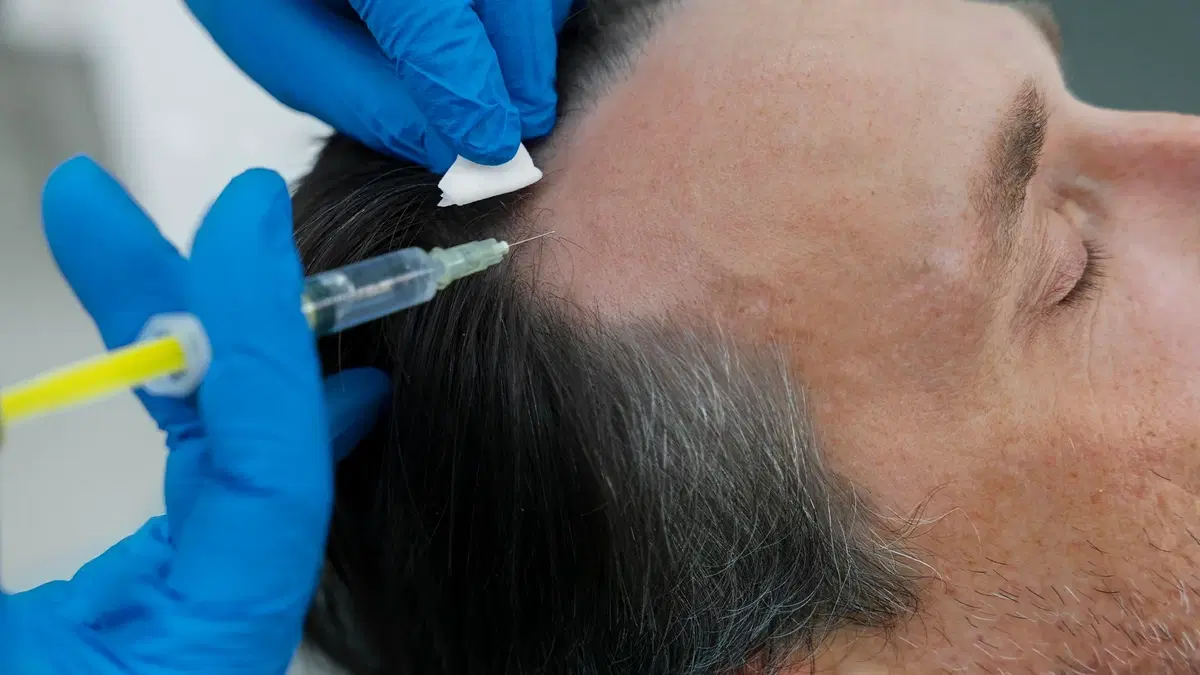
Your appointment begins with reviewing the planned zones and confirming your treatment protocol. If your own tissue is required, collection occurs before processing the regenerative material. Other protocols may use a prepared product with documented handling requirements. Your specialist then cleans the scalp and applies the material through several small injections. Injection placement should follow your individual thinning pattern and treatment objectives. The session length depends on material preparation, coverage size, and application method. Afterwards, you receive specific instructions covering washing, activity, products, and temporary scalp sensitivity.
The number of stem cell therapy sessions depends on the protocol, hair loss severity, product type, and individual response.
Some treatment plans use one procedure followed by scheduled progress reviews. Other approaches recommend several sessions separated by planned intervals. Because standardized schedules remain limited, clinics may follow different treatment programs. Therefore, you should ask why your recommended schedule suits the proposed material. You should also understand which measurements will determine whether additional sessions are justified. Photographs, density assessments, and strand thickness comparisons may support progress evaluation. A responsible plan should avoid guaranteeing improvement after a fixed appointment number. Your schedule should reflect clinical findings rather than a standard package alone.
Potential benefits include stronger existing strands, improved density appearance, reduced shedding, and healthier scalp conditions.
These improvements depend on remaining follicle activity and your biological response. Early changes may involve hair quality rather than dramatic visible regrowth. Thicker strands can make existing coverage appear fuller across selected thinning areas. Additionally, some patients may notice improved consistency within their hair growth cycle. However, benefits vary because treatment materials and application protocols differ substantially. The procedure cannot guarantee restoration within areas lacking active follicles. Therefore, your consultation should define measurable goals based on your current density. Realistic planning helps separate possible support from exaggerated expectations about complete hair regeneration.
Stem cell therapy may cause mild discomfort because multiple injections are placed within sensitive scalp areas.
The sensation can include brief pressure, pinching, stinging, or temporary tenderness. Your comfort level depends on individual sensitivity and the number of treated zones. Appropriate comfort measures may be used according to the clinic’s medical protocol. Tissue collection can create additional discomfort when your treatment requires an autologous sample. However, many procedures remain manageable without a lengthy recovery period. Mild soreness may continue temporarily after the session. Discussing pain sensitivity beforehand helps your specialist prepare suitable comfort measures. Clear expectations also make the treatment experience easier to manage.
Recovery is usually brief, although the exact timeline depends on tissue collection and the application method.
Your scalp may show temporary redness, tenderness, swelling, or minor pinpoint marks. These effects often decrease gradually during the first recovery period. When tissue collection occurs, that donor site may require separate aftercare and additional healing. You should avoid scratching, rubbing, or applying unnecessary pressure to treated areas. Intense exercise, heat exposure, swimming, and strong hair products may require temporary restriction. Your clinic should explain when washing and styling can safely resume. Following personalized instructions supports comfort while reducing avoidable irritation after treatment.
You should protect your scalp, follow washing instructions, and avoid irritating products after stem cell hair therapy.
Your clinic may recommend delaying washing for a specific period after application. When cleansing resumes, gentle movements help prevent unnecessary sensitivity around injection points. You should avoid scratching even when temporary itching develops during recovery. Strong chemicals, hair coloring, and heat-based styling may require short-term postponement. Direct sunlight and excessive sweating can also increase irritation during early healing. If your procedure included tissue collection, follow separate instructions for that area. Contact your medical team when unexpected pain, discharge, fever, or prolonged swelling develops.
Stem cell therapy results may become noticeable after several months because hair follicles follow gradual growth cycles.
Early improvement may involve reduced shedding or stronger strand quality. Visible density changes generally require more time because new growth develops slowly. Your progress should be evaluated using consistent photographs and objective scalp measurements. Without standardized documentation, lighting and hairstyle differences can create misleading comparisons. Individual results vary according to age, diagnosis, follicle condition, and treatment protocol. Research suggests possible improvements with several regenerative approaches, although available studies remain limited and varied. Therefore, your expected timeline should remain personalized and cautious.
Stem cell hair therapy results are not guaranteed to be permanent because underlying hair loss can continue progressing.
The treatment may support existing follicles without permanently changing every cause of thinning. Genetic hair loss can continue affecting untreated or surrounding follicles over time. Therefore, initial improvement may require monitoring and additional management. Some clinics recommend maintenance sessions, although ideal schedules remain uncertain. Your long-term plan should depend on documented response rather than assumptions. Other suitable treatments may also help manage continued hair loss. Regular evaluations allow your specialist to identify changes and adjust recommendations. Realistic expectations should include possible improvement, limited response, temporary benefit, or no visible change.
Stem cell therapy uses cellular or cell-derived materials, while PRP uses concentrated platelets prepared from your own blood.
PRP preparation usually begins with a standard blood sample and centrifuge processing. Stem cell approaches may involve tissue collection, laboratory products, conditioned media, or other regenerative preparations. Therefore, the two treatments differ in source, processing, regulation, and supporting evidence. Both aim to improve conditions surrounding follicles rather than transplant new hair. Their costs, risks, and treatment schedules may also differ considerably. You should request a precise explanation before comparing treatment names alone. Understanding the actual material helps you evaluate whether the proposed procedure matches your expectations and medical needs.
Stem cell therapy cannot reliably replace hair transplantation when bald areas require new follicles and structural coverage.
Hair transplantation physically moves healthy donor follicles into selected recipient areas. Stem cell therapy instead attempts to support follicles already present within thinning regions. Therefore, advanced hair loss may still require transplantation for visible and lasting coverage. Regenerative treatment might complement a broader plan when suitable follicles remain nearby. However, it should not be presented as guaranteed follicle creation within completely bald scalp. Your donor capacity, hair loss pattern, and density goals determine the appropriate approach. A detailed assessment should compare realistic outcomes before recommending either treatment.
Stem cell therapy in Mexico may be safe under controlled conditions, but risks depend heavily on the exact product.
Possible concerns include infection, inflammation, contamination, allergic reactions, tissue injury, and unsuitable product handling. Autologous materials may reduce compatibility concerns, but they do not remove every procedural risk. Exosomes and other marketed regenerative products also require careful evaluation because approval and evidence vary. International safety alerts have documented serious complications involving some unapproved regenerative products. Therefore, you should verify physician oversight, sterility, traceability, product origin, and emergency procedures. You should also receive clear consent explaining uncertainties, alternatives, risks, and expected limitations.
Stem cell therapy costs in Mexico depend on the material, preparation method, session number, and included clinical services.
Treatments requiring tissue collection and processing may cost differently from prepared regenerative products. Broader scalp coverage can also increase application time and overall pricing. Some packages include consultations, scalp analysis, photographs, medication, transfers, or follow-up appointments. However, a higher price does not automatically demonstrate better quality or stronger evidence. You should compare the exact protocol rather than reviewing package labels alone. Ask whether laboratory processing, physician fees, aftercare, and additional sessions appear within the quotation. A personalized assessment provides the clearest estimate for your proposed treatment.
Esthetic Hair Mexico offers personalized evaluation for regenerative hair treatment based on your scalp condition and restoration goals.
Your consultation should begin with identifying the hair loss pattern and remaining follicle activity. The proposed treatment must clearly state which material will be used and how it is prepared. You should also receive information about session timing, recovery, limitations, and expected monitoring. Progress photographs can support consistent comparison during follow-up appointments. This structured approach helps you evaluate realistic benefits without relying on broad treatment promises. Esthetic Hair Mexico can also compare regenerative options with other suitable approaches. Your final plan should reflect clinical suitability, transparent information, and informed decision-making.
Stem cell therapy in Mexico is a regenerative procedure intended to support weakened hair follicles and scalp conditions. The treatment may use cells, cell-derived preparations, conditioned media, or related biological materials. However, clinics may describe different products using the same general treatment name. Therefore, you should confirm exactly what substance your proposed procedure includes. These treatments aim to support existing follicles rather than create guaranteed new follicles. Current research shows promising signals, although methods and reported outcomes remain inconsistent. Consequently, stem cell therapy for hair loss is generally considered an emerging treatment rather than an established cure.
Stem cell therapy aims to support follicle activity by delivering regenerative cells or cell-derived signals into thinning scalp areas. Your treatment may involve small injections across carefully selected regions of the scalp. The applied material may contain cellular components, growth signals, or proteins associated with tissue communication.
These elements are intended to improve conditions surrounding weakened but functioning follicles. Therefore, the treatment usually targets thinning areas where some follicular activity remains. It cannot reliably restore dense hair within every completely bald region. Your response depends on hair loss type, follicle condition, treatment preparation, and individual biology. A detailed assessment should determine whether your scalp offers realistic potential for improvement.
Stem cell therapy for hair loss can offer a natural and effective option to improve hair density and scalp health.
10+ years international experience
Operation, hotel, transfers
Consultants reply in minutes
Direct flights across the Americas