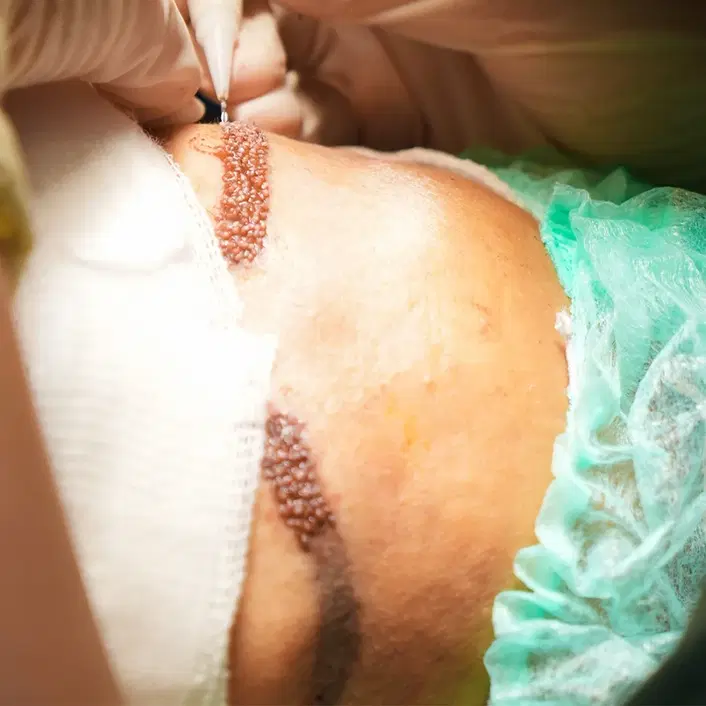
Who Is Suitable for an Eyebrow Transplant in Mexico?
Suitable candidates have stable eyebrow thinning, healthy donor follicles, suitable skin, and realistic expectations about density.
Your specialist evaluates the cause of eyebrow loss before confirming treatment. Patients with naturally sparse brows, overplucking damage, scars, or stable thinning may benefit. Your donor area must provide follicles with suitable texture and strength. The eyebrow skin should also remain healthy enough to support implantation and healing. Active skin conditions may require treatment before transplantation can proceed. A detailed consultation helps determine whether surgery matches your needs. This assessment also clarifies the possible shape, graft count, density, and expected long-term appearance.
What Causes Eyebrow Hair Loss?
Eyebrow hair loss can result from overplucking, genetics, scarring, ageing, medical conditions, or previous cosmetic treatments.
The underlying cause influences whether transplantation can provide stable and natural-looking results. Overplucking may permanently weaken follicles after repeated removal over many years. Genetic factors can also create naturally thin or uneven eyebrow growth. Scars may prevent hair growth within specific areas, leaving visible gaps. Ageing can gradually reduce eyebrow density and strand thickness. Certain health conditions may cause broader or changing hair loss patterns. Therefore, your specialist should evaluate the reason before preparing a transplant plan. Stable loss usually allows clearer design and more predictable coverage.
Which Techniques Are Used for Eyebrow Transplantation?
Eyebrow transplantation commonly uses FUE or DHI techniques for individual follicle extraction and precise eyebrow placement.
FUE removes selected follicles separately from the donor area using a small surgical instrument. The specialist then prepares tiny recipient openings before placing each graft. DHI uses an implantation pen to control the depth, angle, and direction of placement. Both methods can support natural eyebrow restoration when performed with careful planning. The chosen technique depends on your skin, donor characteristics, graft requirements, and preferred design. Your medical team should select the method that supports shallow implantation while protecting nearby eyebrow hairs and delicate facial skin.
Where Does Donor Hair for Eyebrow Transplantation Come From?
Donor hair for an eyebrow transplant usually comes from the back or sides of your scalp.
These areas often provide healthy follicles with reliable long-term growth characteristics. Your specialist selects finer strands that can resemble natural eyebrow hair more closely. Single-hair grafts are generally preferred because eyebrows require delicate and controlled density. Thick or multi-hair grafts may create an unnatural appearance when placed along visible borders. The donor area must also provide enough follicles without developing noticeable thinning. Careful graft selection supports smoother blending after growth begins. However, transplanted scalp hair keeps growing longer and therefore requires regular trimming after recovery.
How Is the Eyebrow Shape Designed?
The eyebrow shape is designed around your facial proportions, natural growth, preferred style, and existing eyebrow structure.
Your specialist first evaluates the position of each brow, including the inner section, arch, and tail. The proposed outline should complement your eyes, forehead, nose, and overall facial balance. Existing eyebrow hairs help guide the natural direction and density of new grafts. You can discuss whether you prefer subtle filling, stronger definition, or broader reshaping. However, the final design must remain achievable with your donor supply. Balanced planning also considers possible facial asymmetry, because identical shapes may not always produce the most natural appearance.
Can an Eyebrow Transplant Correct Asymmetry?
An eyebrow transplant can improve asymmetry by adding follicles to areas with uneven shape, position, or density.
Your specialist compares both eyebrows before creating a balanced treatment plan. One brow may require additional grafts around the arch, tail, or inner section. The opposite eyebrow may need lighter adjustments to maintain natural facial harmony. Precise design matters because small placement differences can noticeably affect expression. Existing bone structure and muscle movement also influence how both brows appear. Therefore, the treatment aims for visual balance rather than perfect geometric matching. Careful graft distribution can produce a more even appearance while preserving your natural facial character.
How Many Grafts Are Needed for an Eyebrow Transplant?
An eyebrow transplant usually requires a personalized graft count based on existing density, shape, and desired coverage.
Small gaps may need fewer follicles than complete reconstruction of both eyebrows. Broader reshaping can require additional grafts across the inner brow, arch, and tail. Your specialist measures the treatment zones before estimating the required number. Existing eyebrow hairs can reduce graft needs because transplantation only fills selected spaces. However, greater density should remain balanced with the available donor supply. Excessive placement can also create an unnatural or heavy appearance. Therefore, the final graft count should support your design while preserving soft and realistic eyebrow borders.
How Long Does an Eyebrow Transplant Take?
An eyebrow transplant usually takes several hours, depending on graft numbers, design complexity, and implantation technique.
The procedure begins with detailed eyebrow marking and donor area preparation. Follicle extraction then proceeds carefully because fine single-hair grafts are often preferred. The medical team examines and protects each graft before implantation. Placement may require additional time because eyebrow directions change across very small areas. Every follicle must follow the planned angle and orientation. This precision supports natural blending and avoids upright or irregular growth. Your exact procedure duration becomes clearer after the final design and graft estimate are confirmed during consultation.
How Long Is Recovery After an Eyebrow Transplant?
Most patients resume light daily activities within several days after an eyebrow transplant in Mexico.
Temporary redness, swelling, tenderness, and small scabs may appear around the treated eyebrows. These effects usually decrease gradually while the skin heals and grafts settle. The donor region also recovers as the small extraction points begin closing. You should avoid rubbing, scratching, or applying pressure around the eyebrows. Following the recommended cleansing routine helps maintain hygiene without disturbing new follicles. Visible signs may remain briefly, although their appearance usually improves as scabs separate naturally. Careful aftercare supports secure graft healing during the earliest recovery stage.
How Should You Care for Transplanted Eyebrows?
You should protect transplanted eyebrows, follow cleansing instructions, and avoid unnecessary contact during early healing.
Your medical team will explain when and how the eyebrow area should be cleaned. Gentle application prevents sudden pressure around newly implanted follicles. You should avoid scratching scabs because early removal can irritate skin and disturb grafts. Makeup, skincare products, and strong cleansers may require temporary restriction near the treated area. Direct sunlight, heavy sweating, and intense exercise may also need short-term limitation. Sleeping carefully can prevent accidental contact during the earliest days. As healing progresses, normal skincare and grooming can resume after medical approval.
When Do Eyebrow Transplant Results Become Visible?
Eyebrow transplant results usually become noticeable after several months and continue improving throughout the first year.
Temporary shedding often occurs after the implanted hairs complete their initial growth phase. This expected stage does not mean the transplanted follicles have failed. New strands then appear gradually as follicles enter an active growth cycle. Early hairs may look fine, uneven, or longer than natural eyebrow strands. Density improves as more follicles begin producing visible growth. Your individual timeline depends on healing, hair characteristics, and natural growth speed. Regular trimming and careful grooming help maintain the desired shape while the eyebrows continue developing.
Will Eyebrow Transplant Results Look Natural?
Eyebrow transplant results can look natural when grafts follow the correct angle, direction, shape, and density.
Natural eyebrows do not grow in one uniform direction across the entire brow. Inner hairs often rise slightly, while central hairs follow a flatter outward pattern. Tail hairs usually grow more horizontally and require especially shallow placement. Your specialist must adjust each graft according to these changing directions. Single-hair follicles also support softer borders and more realistic density. The eyebrow design should complement your existing hairs and facial proportions. When these details remain coordinated, transplanted strands can blend naturally as growth develops.
Are Eyebrow Transplant Results Permanent?
Eyebrow transplant results are generally long lasting because implanted follicles retain their donor-area growth characteristics.
Once established, the transplanted follicles continue producing hairs through their normal growth cycles. These hairs can be shaped, trimmed, and groomed like your natural eyebrows. However, scalp-derived follicles usually grow longer than original eyebrow hairs. Regular trimming therefore becomes necessary after the transplanted hairs mature. Individual density and strand thickness can vary according to donor characteristics. Proper graft handling and implantation also influence successful growth. Although transplanted follicles remain durable, existing natural eyebrow hairs may change with age or future health conditions.
Does an Eyebrow Transplant Leave Scars?
An eyebrow transplant usually leaves tiny scattered donor marks rather than one long visible scar.
Individual follicles are removed through small openings within the scalp donor area. These marks generally become less noticeable as healing progresses and surrounding hair grows. The eyebrow area may show temporary redness and small scabs during early recovery. These signs usually fade while the skin heals and grafts settle. However, every surgical procedure can create some degree of tissue change. Skin type, healing response, extraction size, and implantation technique influence final visibility. Careful placement and donor management help reduce noticeable marking in both treated areas.
Is an Eyebrow Transplant in Mexico Safe?
An eyebrow transplant in Mexico is generally safe when qualified professionals follow suitable medical and hygiene standards.
Your treatment should begin with a review of your health, skin condition, and eyebrow loss pattern. This assessment helps identify factors that could affect healing or treatment suitability. Sterile conditions support safety during follicle extraction and eyebrow implantation. Controlled graft handling also protects delicate follicles while reducing unnecessary skin irritation. Clear postoperative instructions help you manage swelling, scabbing, and temporary sensitivity. Choosing an experienced medical team remains important because eyebrow transplantation requires highly precise placement within small and visually prominent facial areas.
How Much Does an Eyebrow Transplant in Mexico Cost?
Eyebrow transplant costs in Mexico depend on graft numbers, design complexity, technique, clinic standards, and included services.
Small gap correction usually requires fewer follicles than complete reconstruction of both eyebrows. Detailed reshaping may increase operating time because each graft needs precise direction and placement. The selected technique can also influence staffing, equipment, and procedure duration. Some treatment packages include consultation, medication, transfers, accommodation, or postoperative support. You should review included services before comparing different prices. A personalized eyebrow assessment provides the clearest estimate because every existing shape, donor area, and desired density requires an individual treatment plan.
Why Choose Esthetic Hair Mexico for an Eyebrow Transplant?
Esthetic Hair Mexico provides personalized eyebrow transplant planning based on your facial proportions, donor quality, and preferred shape.
Your consultation focuses on existing eyebrow growth, asymmetry, density goals, and suitable follicle selection. The treatment plan also considers the changing hair directions across the inner brow, arch, and tail. Careful design supports natural integration rather than creating rigid or overly dense eyebrows. Your medical team explains the proposed graft count, technique, recovery, and expected growth process before treatment. This structured approach helps align the final design with your facial features. Postoperative guidance also supports healing while the transplanted eyebrows gradually develop.