
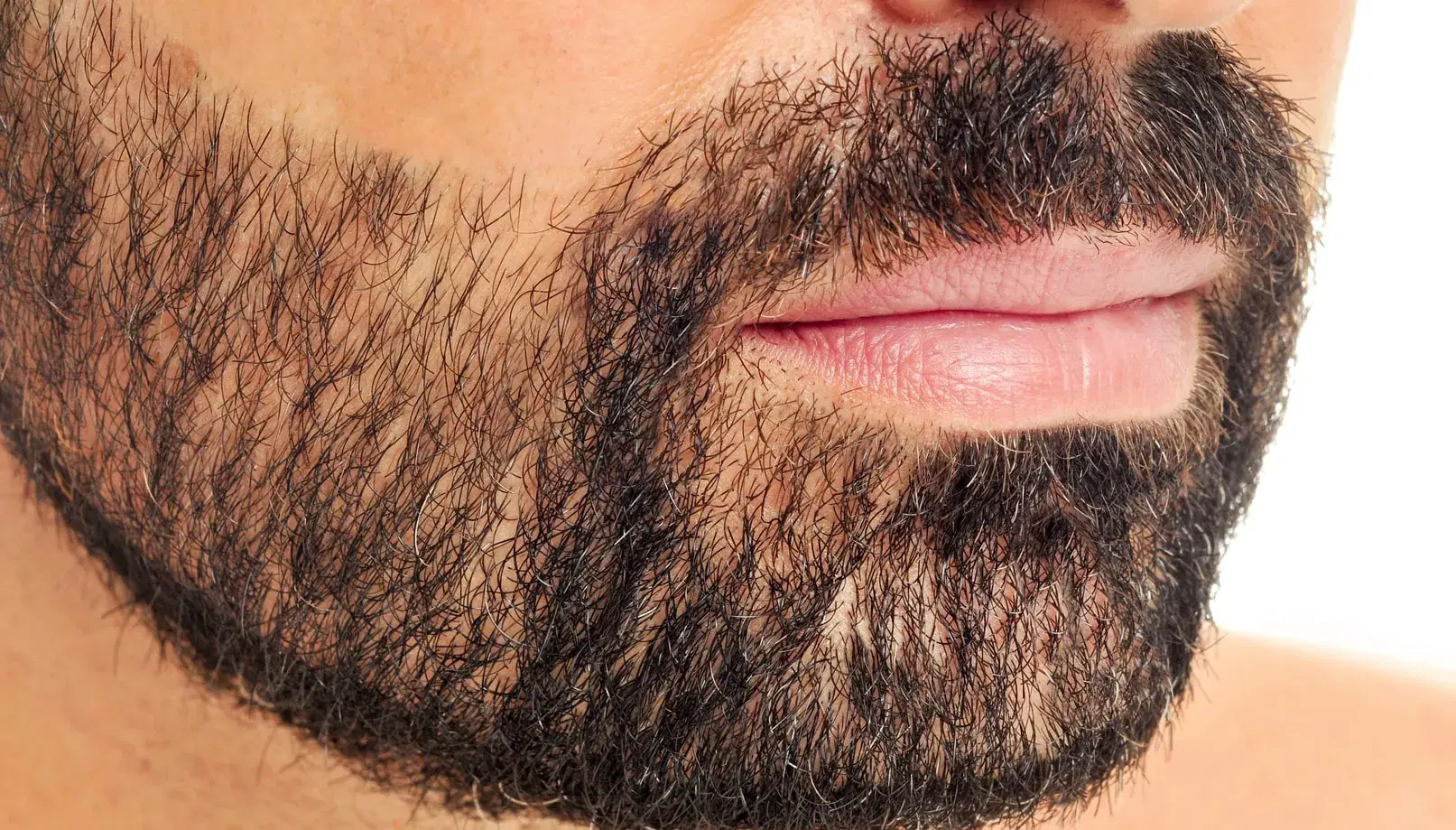
Can Beard Hair Be Used for a Hair Transplant?
Beard hair can be used for a hair transplant, most often as a supplementary donor source when the scalp donor area cannot provide enough grafts on its own. Surgeons extract individual beard follicles, usually from areas under the chin and along the neck, and transplant them to the scalp, where they continue to grow.
This approach belongs to a broader group of procedures known as body hair transplantation. Among body hair sources, many surgeons consider beard hair the most useful, because it tends to be thick, plentiful and closer in strength to scalp hair than hair from the chest, arms or legs.
Beard hair rarely replaces scalp hair entirely. In most cases, the surgeon combines it with grafts from the scalp, using scalp hair for the areas that need the most natural appearance and beard hair to add density and coverage elsewhere. The goal is to make the most of every available follicle when the main donor supply is limited.
What Is a Weak Donor Area?
A weak donor area is a section of the scalp at the back and sides of the head that cannot supply enough healthy, stable follicles to meet a person's restoration needs. The donor zone usually provides all the grafts for a hair transplant, so its quality and size set the limits of what surgery can achieve.
Several factors can weaken a donor area. Some people naturally have low hair density at the back of the scalp or fine hair that covers less area per follicle. Others have advanced pattern hair loss that requires far more grafts than the donor area can provide without visible thinning. Previous transplants can also reduce the supply, especially if earlier procedures removed a large number of follicles.
In certain types of hair loss, the donor area itself thins over time, which makes it less reliable as a source. A surgeon needs to identify this before planning any transplant, because grafts taken from unstable hair may not last.
What Are the Signs of a Weak Donor Area?
A surgeon looks for several signs during the consultation to decide whether the donor area can support a transplant on its own:
Low visible density at the back and sides of the scalp, where the skin shows through the hair more clearly than usual, especially when the hair is cut short.
Fine or thin individual hairs that cover little of the scalp, even when the number of follicles appears adequate.
Signs of miniaturization in the donor zone, where some hairs grow thinner and weaker than others, which suggests that this area may also be affected by hair loss.
Thinning or patchiness from previous procedures, including visible extraction marks or an uneven appearance after earlier FUE sessions.
A large area of hair loss on the top of the head that would need more grafts than the donor zone can safely provide.
How Does Beard Hair Differ From Scalp Hair?
Beard hair and scalp hair grow from similar follicles, yet they differ in several ways that affect how beard grafts look and behave once transplanted:
Thicker and coarser strands: Beard hair usually has a larger diameter than scalp hair, so each graft covers more scalp but may feel rougher to the touch.
Mostly single-hair follicles: Beard follicles often contain one hair, while scalp follicles commonly hold two to four hairs in each natural grouping.
Different texture and curl: Beard hair tends to be wavier or curlier and more wiry than scalp hair, which can affect how it blends with the surrounding hair.
Shorter maximum length: Beard hair usually does not grow as long as scalp hair, which matters for people who want to wear their hair long.
Different color in some people: Beard hair can be lighter, darker or redder than scalp hair, and it may also turn gray at a different pace.
Where Does Beard Hair Work Best on the Scalp?
Beard hair works best in areas of the scalp where coverage matters more than fine detail, such as the crown, the mid-scalp and the space behind the hairline. In these regions, its thickness becomes an advantage, because each strand hides more of the scalp beneath it.
The Crown and Mid-Scalp
The crown and mid-scalp often need a large number of grafts to look full, which can exhaust a limited scalp donor supply quickly. Beard grafts help fill these areas while saving scalp grafts for more visible zones. Since hair at the crown grows in a spiral pattern and people usually view it from a distance, small differences in texture are less noticeable there.
Adding Density Behind the Hairline
Surgeons sometimes place beard grafts behind the front hairline, mixed with scalp grafts, to build density in the zone that gives the hair its overall body. Here, the coarser beard hair adds bulk underneath, while finer scalp hair at the front keeps the edge soft and natural.
Camouflaging Donor Scars
Beard hair can also help hide scars in the scalp donor area, such as the linear scar from a previous strip procedure or areas left thin by earlier extractions. Transplanting beard follicles into scar tissue adds hair to the region and reduces the contrast between the scar and the surrounding scalp.
Why Is Beard Hair Rarely Used for the Front Hairline?
Surgeons rarely use beard hair for the front hairline because its thickness, texture and curl can look too coarse at the edge of the face, where people notice the smallest details. A natural hairline relies on fine, soft single hairs that gradually increase in density as they move back, and beard hair usually lacks that delicate quality.
The hairline also sets the tone for the whole result. If coarse, wiry strands sit at the very front, they can catch the light differently and look out of place, even when the rest of the transplant blends well.
For these reasons, most surgeons reserve fine scalp hair, sometimes from the nape of the neck, for the front hairline and the temples. Beard hair then supports the result from behind, where its bulk adds coverage without drawing attention.
How Do Surgeons Extract Beard Grafts?
Surgeons extract beard grafts with follicular unit extraction, removing individual follicles one by one with a small punch. They usually take grafts from areas hidden beneath the jawline, such as under the chin and along the upper neck, where any small marks are less visible and the beard remains full from the front.
Before extraction, the patient grows the beard for a short period so the surgeon can see the direction and angle of each hair. This helps reduce damage to the follicles during removal. Beard hair grows at a sharp angle to the skin, which makes extraction more demanding than in the scalp, so surgeons often work slowly and adjust their technique to protect each graft.
The procedure takes place under local anesthesia. Surgeons usually spread extractions evenly across the area to avoid creating thin patches, and they may combine beard extraction with scalp extraction in the same session or plan them as separate stages.
What Happens to the Beard After Extraction?
After extraction, the beard area usually heals within a short period, leaving small dot-like marks that the remaining beard hair helps conceal. In the first days, the skin may look red, slightly swollen or covered with tiny scabs, and these signs gradually fade as the area recovers.
Since surgeons take grafts mainly from hidden zones under the jaw and spread them out, most people keep a beard that looks full from the front. People who usually wear a clean-shaven look may notice the small marks more clearly, especially if their skin tends to heal with lighter or darker spots.
Removing too many follicles from one area can leave the beard patchy, which is why surgeons limit how many grafts they take. Anyone who values a dense beard should discuss with the surgeon how the extraction might affect their preferred beard style before going ahead.
What Are the Limitations and Risks of Beard Hair Transplants?
Beard hair transplants have several limitations, and the most important is that beard hair cannot fully match the look and feel of scalp hair. Its coarser texture, curl and shorter length can create a visible difference if a surgeon places it in the wrong area or uses too much of it in one place.
Some surgeons find that beard grafts can be more demanding to extract and may grow less predictably than scalp grafts, partly because of their sharp angle and single-hair structure. The result can take longer to mature, and patients need realistic expectations about the density beard hair can add.
The beard donor area carries its own risks, including redness, small scars, changes in skin color and, in some cases, ingrown hairs or inflammation around the extraction sites. As with any hair transplant, infection and swelling in the recipient area are possible, so following aftercare instructions closely matters for both sites.
Who Is a Good Candidate for Beard-to-Scalp Transplantation?
Good candidates for beard-to-scalp transplantation are usually men with advanced hair loss or a limited scalp donor supply who also have a thick, dense beard. The beard needs enough follicles to provide meaningful coverage without leaving visible thinning on the face or neck.
The person's hair loss should also be stable or well understood, so the surgeon can plan where beard grafts will sit in the long term. Patients who have used up much of their scalp donor area in earlier procedures and still want more coverage at the crown or mid-scalp often benefit most from this approach.
People with fine or sparse beard growth, or those who prefer to keep a very full beard, may be less suitable. A careful examination of both the scalp and the beard allows the surgeon to judge whether adding beard hair would make a real difference to the overall result.
What Should You Ask Before Using Beard Hair as a Donor?
A few clear questions help you understand whether beard hair suits your case and how it would fit into your overall plan:
How strong is my scalp donor area, and how many grafts can it still provide before beard hair becomes necessary?
Where would you place the beard grafts, and how will they blend with my scalp hair in texture, color and length?
How will extraction affect my beard, and which areas of the face and neck would you take grafts from?
What results have you seen with beard grafts, and can you show cases where beard hair was used in similar areas?
Would other options suit me better, such as medical treatment, scalp micropigmentation or a different distribution of scalp grafts?
Finding a Surgeon Experienced in Body Hair Transplants
Beard-to-scalp transplantation demands specific skills, from extracting angled beard follicles to placing them where their texture works in the patient's favor. Look for a qualified hair restoration surgeon who has performed body hair transplants, explains clearly how beard hair will complement your scalp grafts and gives an honest assessment of what both donor areas can achieve.