
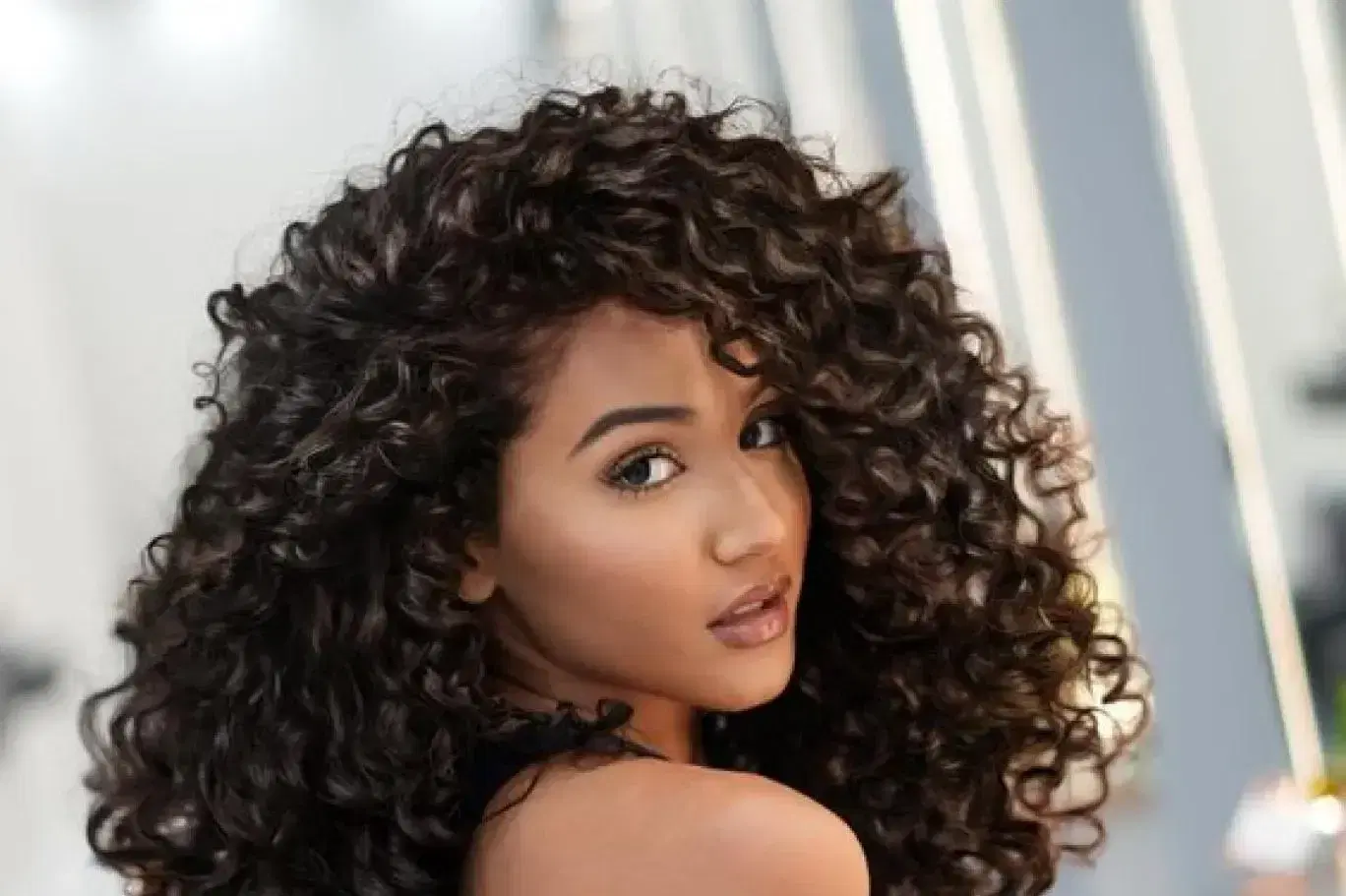
Latino hair does not follow one universal texture, and people from Latin American backgrounds can have straight, wavy, curly or tightly coiled hair depending on individual genetics and ancestry. For patients with naturally curly hair, transplantation can offer excellent visual coverage, but the same curl that creates fullness above the scalp can also make follicle extraction more technically demanding beneath the skin. This becomes especially important during FUE, where the surgeon must follow the hidden direction of each follicular unit while protecting the donor area. So, how does curly Latino hair affect a hair transplant, and what should patients know before planning surgery?
Is Curly Latino Hair Suitable for a Hair Transplant?
Curly Latino hair can be highly suitable for hair transplantation when the donor area is healthy and the surgical plan accounts for the shape of the follicles beneath the skin.
Curly hair often creates strong visual density because each shaft occupies more space as it bends and overlaps surrounding hairs.
This can be advantageous when restoring a frontal hairline, mid-scalp or crown.
However, the extraction stage may require more technical care than with straight follicles.
The visible curl above the scalp does not always reveal the exact direction of the follicle below the skin, so successful transplantation depends on understanding individual follicular anatomy rather than applying one technique to every patient.
Why Is Latino Hair So Diverse?
Latino hair is highly diverse because Latino identity describes cultural and geographic background rather than one biological hair type.
People from Mexico, the Caribbean, Central America and South America can have very different combinations of European, Indigenous American, African, Middle Eastern and Asian ancestry.
As a result, one Latino patient may have fine straight hair while another has thick waves, loose curls or tightly coiled Afro-textured hair.
This diversity matters in transplantation.
A surgeon cannot predict follicle shape, hair caliber or curl pattern simply from ethnicity.
The scalp and donor area need direct evaluation because two patients who both identify as Latino may require completely different extraction and implantation strategies.
How Does Curly Hair Change Hair Transplant Planning?
Curly hair changes transplant planning because its shape affects extraction, graft handling, visual coverage and the direction in which transplanted hairs should be implanted.
Important considerations include:
Degree of curl above the scalp
Curvature of the follicle beneath the skin
Hair-shaft thickness
Number of hairs within each follicular unit
Donor density
Direction of growth
Hairline texture
Crown whorl pattern
Degree of existing miniaturization
Risk of future hair loss
Contrast between hair and scalp
Whether the hair becomes tighter or looser at different lengths
The surgical plan should therefore focus on the patient's individual follicular anatomy rather than using a standard graft number based solely on the size of the bald area.
Why Are Curly Hair Follicles Harder to Extract?
Curly follicles can be harder to extract because the follicular unit may follow a curved or angled path beneath the skin instead of travelling downward in a relatively straight line.
During FUE, a small punch enters the skin around the follicular unit.
If the surgeon assumes the follicle travels straight downward when it actually curves, the punch can cut across the lower portion of the follicle.
This is called transection.
The challenge becomes greater with tightly curled or coiled hair because the root may bend considerably beneath the surface.
For this reason, punch angle, depth and extraction technique may need frequent adjustment during the procedure rather than remaining identical across the entire donor region.
Does Curly Hair Increase the Risk of Graft Transection?
Curly hair can increase the risk of transection during FUE when the surgeon cannot accurately follow the hidden direction of the follicle.
Transection means cutting through part of the follicular unit during extraction.
A damaged graft may be unsuitable for transplantation or may have a lower chance of producing healthy growth.
The risk is not the same for every person with curly hair.
Loose curls may have only moderate follicular curvature, while tightly coiled hair can curve much more dramatically below the skin.
Experienced extraction technique can substantially reduce the problem.
A careful surgeon may begin with test extractions to assess how the follicles travel before deciding the most appropriate punch size and angle.
Is FUE Suitable for Curly Latino Hair?
FUE can work very well for curly Latino hair when the surgical team has experience extracting curved follicles.
The technique removes individual follicular units rather than taking a strip of scalp.
This can avoid a long linear donor scar and offers flexibility when the patient prefers shorter hairstyles.
The main challenge comes during extraction.
Curved follicles require careful alignment, controlled punch depth and sometimes specialized punches.
FUE should therefore not be judged only by whether a clinic offers the technique.
The more important question is how frequently the team works with curly or coiled follicles and whether they adjust the extraction method according to the patient's actual anatomy.
Is DHI Better for Curly Latino Hair?
DHI is not automatically better for curly Latino hair because it mainly changes the implantation stage rather than solving the difficulty of extracting curved follicles.
In most DHI procedures, follicles are still harvested individually with an FUE-style extraction method.
The challenging part for many curly-haired patients therefore happens before implantation.
Implanter pens can offer precise control over placement angle and direction, which may be useful in selected areas.
However, pre-made recipient sites can also create natural results when designed correctly.
The outcome depends more on accurate extraction, healthy graft handling, appropriate density and correct curl direction than on the name of the implantation technique.
DHI should not be presented as a universal solution for curly follicles.
Does Curly Hair Provide Better Coverage?
Curly hair can provide stronger visual coverage than equally thick straight hair because the bends in each shaft create more apparent volume above the scalp.
A curly hair does not lie flat against the skin.
Instead, it curves through space and can overlap neighbouring hairs, reducing how easily light reaches the scalp.
This characteristic can make transplanted density look impressive even when the numerical graft density is moderate.
The advantage becomes particularly noticeable in the mid-scalp, where overlapping curls can create substantial visual fullness.
However, curl alone does not guarantee excellent coverage.
Hair caliber, colour contrast, graft survival and the size of the treatment area remain equally important.
Do Curly-Haired Patients Need Fewer Grafts?
Curly-haired patients may sometimes achieve good visual coverage with fewer grafts than a person with very fine straight hair, but curl does not automatically reduce the required graft number.
The actual requirement depends on several variables.
A patient with thick, curly, dark hair and low scalp contrast may gain substantial coverage from each graft. Another person may have loose curls but very fine shafts that provide less opacity.
The size of the bald area also matters.
A large crown cannot be fully restored with a small graft count simply because the hair is curly.
Graft planning should therefore use donor density, hair caliber, follicular-unit composition and treatment area rather than assuming all curly-haired patients need fewer follicles.
How Should the Donor Area Be Evaluated?
The donor area should be evaluated for both quantity and quality because curly hair can create the impression of greater density than the actual follicular count.
Assessment should include:
Donor density per square centimetre
Hair-shaft caliber
Degree of curl
Follicular-unit composition
Number of one-, two- and three-hair grafts
Safe donor boundaries
Miniaturization within the donor area
Previous FUE extraction
Visible scarring
Hair contrast with the scalp
Expected future hair loss
Whether the patient prefers short hairstyles
Visual fullness alone should never determine how many grafts can safely be removed.
A curly donor area can look very dense while still requiring conservative harvesting.
Can Beard Hair Be Used With Curly Latino Hair?
Beard hair can sometimes supplement the scalp donor area when a patient needs additional grafts, particularly in advanced hair loss or previous transplant cases.
Beard follicles are often thicker than scalp hairs and can add considerable visual coverage.
They are generally more suitable for the mid-scalp or crown than the very front of a soft hairline.
Texture matching matters.
Some Latino patients have beard hair that blends relatively well with their scalp curls, while others have a noticeable difference in thickness or curl pattern.
The beard should therefore be considered an additional donor source rather than a perfect substitute for scalp hair.
Overharvesting can also leave visible patchiness beneath the jaw or on the neck.
How Should a Natural Latino Hairline Be Designed?
A natural hairline should be designed around the patient's face, age, original growth pattern and future hair-loss risk rather than around a fixed ethnic template.
There is no single Latino hairline.
Some patients naturally have relatively straight frontal contours, while others show pronounced temporal peaks or irregular transitions.
Curly hair also behaves differently at very short lengths.
The leading edge usually benefits from softer, carefully spaced single-hair grafts rather than dense rows of thick multi-hair follicles.
Direction is especially important because curls can exaggerate poor placement when neighbouring grafts rotate in conflicting directions.
A successful design should still look believable when the patient wears the hair short rather than only when the curls are long.
Is Crown Transplantation Different With Curly Hair?
Crown transplantation requires careful direction control in curly hair because the natural whorl already creates a complex rotational pattern.
Straight hair can be challenging in the crown, but curl adds another layer of visual movement.
The surgeon needs to reproduce the direction of the existing whorl while accounting for how each transplanted shaft will curve as it grows.
Curly hair can provide excellent visual coverage in this region once mature.
However, the crown can consume large numbers of grafts because the hairs radiate outward rather than overlapping in one direction.
For patients with progressive frontal loss, using too many follicles in the crown early can limit future restoration options.
Does Hair Caliber Matter as Much as Curl?
Hair caliber can matter just as much as curl because thicker shafts block more light and create stronger visual density.
A coarse, loosely curled hair may produce better coverage than a very fine, tightly curled hair depending on the surrounding scalp contrast.
Follicular-unit size also matters.
A donor area containing many two- and three-hair units can generate greater total hair numbers from the same graft count.
This explains why two patients receiving 2,000 grafts may achieve very different visible results.
Graft count measures follicular units, not total hair volume.
Curvature, shaft diameter and hairs per graft together determine how much coverage the transplant can realistically create.
Can Afro-Latino Hair Be Transplanted Successfully?
Afro-Latino hair can be transplanted successfully, but tightly coiled follicles often require additional technical expertise during extraction.
The visible shaft may curl immediately above the scalp, while the follicle beneath the skin follows an even more curved pathway.
This anatomy can increase transection risk during FUE.
A surgeon familiar with coiled follicles may modify punch size, depth and movement after test extractions.
Afro-textured hair can also provide excellent cosmetic coverage because each curl occupies significant visual space.
Scar history deserves attention as well.
Patients who previously developed hypertrophic scars or keloids should mention this before surgery so the treatment plan can account for individual healing characteristics.
What Should Be Checked Before Surgery?
Preoperative assessment should confirm both the diagnosis of hair loss and whether the donor area can support the desired restoration.
Before surgery, important points include:
Pattern and stability of hair loss
Family history of future thinning
Donor density
Degree of follicular curvature
Hair caliber
Scalp condition
Previous transplant history
Existing FUE scars
History of keloid or hypertrophic scarring
Hairline goals
Crown involvement
Current medications
Medical causes of sudden shedding
Expected graft requirement
Long-term donor reserve
A transplant treats permanent areas of reduced density, but it should not automatically be used for temporary diffuse shedding before the underlying cause is understood.
What Does Recovery Look Like With Curly Hair?
Recovery after transplantation of curly hair follows the same broad biological stages seen with other hair textures.
The scalp can develop redness, swelling and crusting during the early period. Transplanted hair shafts may then shed over the following weeks while the follicles remain beneath the skin.
New growth develops gradually over several months.
Curly hair can initially grow in uneven directions or appear straighter when it is extremely short.
Its familiar texture often becomes more obvious as the shaft gains length.
Patients should avoid judging curl quality too early.
Short new hairs do not yet have enough length to form the same bends and coils seen before transplantation, so texture can appear temporarily different.
Can Curly Hair Grow Differently After Transplantation?
Transplanted hair generally retains the characteristics of the donor follicle, including much of its original curl pattern and shaft thickness.
Moving a follicle from the back of the scalp to the hairline does not normally transform curly hair into permanently straight hair.
However, early regrowth may look different.
Fresh hairs can initially emerge finer, shorter or less organized before maturing.
The angle of implantation can also influence how the curl presents visually.
A correctly transplanted curly follicle should integrate naturally once sufficient length develops.
Poor direction, by contrast, may become more obvious as the hair grows because the curl can push the strand away from neighbouring hairs.
What Can Affect the Final Result?
The final result depends on far more than the fact that the patient has curly hair.
Important influences include:
Correct diagnosis before surgery
Safe donor harvesting
Low transection during extraction
Appropriate graft storage and handling
Natural hairline placement
Correct implantation angle
Respect for the patient's curl direction
Adequate blood supply in the recipient area
Realistic graft density
Protection of the donor reserve
Control of ongoing native hair loss
Individual healing
Time allowed for full maturation
Curly hair can create excellent cosmetic density, but the same natural advantage cannot compensate for poor extraction or an unrealistic donor plan.
Is Curly Latino Hair More Difficult to Transplant?
Curly Latino hair can be more technically demanding to transplant when the follicles curve strongly beneath the skin, but it can also produce excellent visual results.
The challenge is concentrated mainly in extraction.
Once healthy grafts have been safely removed, their curl can become a cosmetic advantage by creating fullness and reducing visible scalp.
There is no reason to treat Latino hair as one uniform category.
Loose curls, tight curls and Afro-Latino coils all require different levels of extraction adjustment.
The best plan comes from examining the patient's own donor anatomy, hair caliber, curl pattern and long-term hair-loss risk rather than choosing graft numbers or surgical techniques based only on ethnicity.