
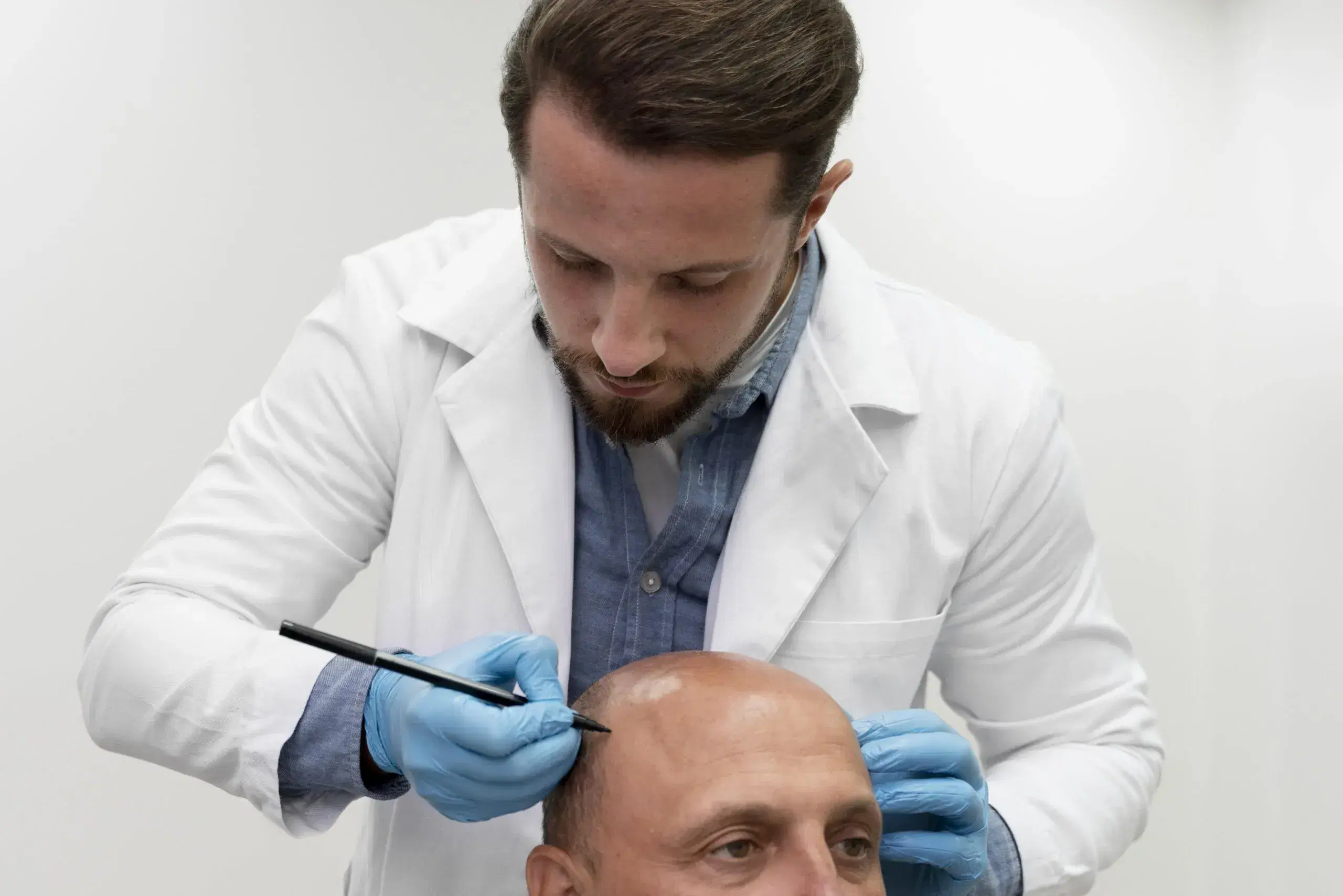
Checking a hair transplant clinic’s credentials involves verifying its medical license, the qualifications of the operating surgeon, facility authorization, and the responsibilities of the surgical team. These checks help patients distinguish properly authorized healthcare providers from businesses that rely primarily on advertising, promotional claims, or unverified professional credentials.
Why Is Checking Hair Transplant Clinic Credentials Important?
Hair transplantation is a surgical procedure that involves extracting healthy follicles from a donor area and implanting them into regions affected by hair loss. Although modern techniques use small incisions and generally allow patients to return to everyday activities relatively quickly, the procedure still requires medical judgment, technical precision, and appropriate safety measures.
An improperly performed hair transplant can lead to complications such as infection, visible scarring, excessive donor hair removal, poor graft survival, or an unnatural hairline. Some problems become apparent shortly after surgery, while others only become noticeable as the transplanted hair begins growing over several months.
A clinic's advertising, social media presence, or treatment volume cannot independently establish that it meets appropriate medical standards. Verifiable credentials provide a more reliable starting point for assessing whether the facility and the people performing the procedure are properly qualified.
How to Verify a Hair Transplant Clinic's Medical License
The first step in checking a hair transplant clinic is confirming that the facility has legal authorization to provide medical services at its operating location.
Healthcare facilities generally require registration or licensing through the relevant national, regional, or state health authority. Certain jurisdictions also require specific authorization for surgical procedures or dedicated hair transplantation units.
A clinic should be able to provide its registered healthcare facility name, physical address, license information, and details of the authorization under which it performs hair transplantation.
Check the Official Medical Registry
Medical licensing authorities often maintain public registers containing information about authorized healthcare facilities and licensed professionals.
Search the official registry using the clinic's legal name rather than relying exclusively on the commercial name displayed on its website. Compare the registered address with the location where the surgery will actually take place.
Pay particular attention to the current authorization status and whether the permitted medical activities include the proposed procedure.
A certificate displayed on a website may be outdated, belong to another facility, or cover services unrelated to hair transplantation. Independent verification helps identify these discrepancies before treatment begins.
Confirm the Clinic's Actual Operating Address
Some hair restoration businesses operate through marketing offices or consultation centers while performing surgery at separate medical facilities.
This arrangement makes it particularly important to identify the institution legally responsible for the operation. The address provided during booking should correspond with an appropriately authorized treatment facility, and the relevant surgical services should fall within its permitted activities.
A recognizable brand name does not replace confirmation of the licensed institution where medical care will be delivered.
How to Check a Hair Transplant Surgeon's Qualifications
A qualified hair transplant surgeon should hold an active medical license and possess appropriate education, practical training, and experience in surgical hair restoration.
The physician's full name and professional registration details should be available before the procedure is scheduled. Patients can use the relevant medical regulator's official database to confirm the professional's identity and current license status.
In countries where professional registration information is publicly accessible, the record may also contain details about qualifications, disciplinary restrictions, and the physician's permitted scope of practice.
Review Medical Education and Specialist Training
Hair transplantation requires knowledge of scalp anatomy, hair growth disorders, donor-area preservation, surgical techniques, and postoperative complications.
Relevant professional backgrounds may include dermatology, plastic surgery, or other medical specialties supplemented by appropriate hair restoration training.
However, holding a medical degree alone does not establish advanced expertise in transplant surgery. Practical experience with follicular unit extraction (FUE), follicular unit transplantation (FUT), donor assessment, and natural hairline design contributes to the surgeon's ability to plan and perform these procedures.
The evaluation should therefore consider both formal qualifications and demonstrated experience in hair restoration.
Check for Professional Restrictions or Disciplinary Actions
When medical regulators publish disciplinary records, these can provide additional context about a physician's professional standing.
Look for active restrictions, suspensions, or relevant findings involving professional conduct and patient safety. A complaint does not automatically establish wrongdoing, so the nature and outcome of any formal proceedings should be distinguished carefully.
The absence of a published disciplinary record is reassuring but does not independently prove surgical competence or guarantee successful treatment.
Are Hair Transplant Certifications and Memberships Reliable?
Professional certifications can demonstrate additional education or assessment, but not every certificate carries the same significance.
Some credentials require physicians to document experience and complete formal examinations, while others simply confirm attendance at a training event. Professional society membership may indicate an interest in continued development without necessarily involving an independent assessment of surgical ability.
The most useful approach involves examining who issued the credential, what requirements were necessary to obtain it, and whether its current status can be verified.
A qualification should always be connected to the individual physician who holds it. Certificates displayed under a clinic's commercial name do not automatically establish that every member of its surgical team has completed the same training.
Who Actually Performs the Hair Transplant Procedure?
Identifying the operating physician is one of the most important parts of verifying a clinic's credentials. Hair transplantation involves several stages, and the professional responsible for each stage should be clearly identified.
Medical assessment, hairline planning, donor harvesting, recipient-site creation, and graft implantation all influence the final result. Surgical incisions require appropriately qualified professionals working within the legal scope of practice established in the treatment location.
Support staff can perform permitted assisting tasks under appropriate supervision, but the presence of a physician somewhere within the facility does not establish who is actually carrying out the operation.
The named physician should remain accountable for medical assessment, treatment planning, and the management of surgical complications. Any proposed delegation of clinical duties should be transparent and consistent with applicable professional regulations.
How to Verify a Hair Transplant Clinic's Accreditation
Medical accreditation and facility licensing are related but distinct concepts. Licensing generally establishes legal authorization to operate, whereas accreditation may involve an additional assessment of healthcare quality, organizational processes, or patient safety systems.
Not every legitimate surgical facility holds international accreditation, and an accreditation certificate does not automatically prove that every surgical procedure receives appropriate supervision.
When a clinic advertises accreditation, check the issuing organization's official directory and confirm that the credential applies to the actual operating facility.
The certificate should be current, and its scope should be relevant to the services being offered. Accreditation held by a parent company, unrelated branch, or affiliated institution should not be presented as proof of approval for every location.
What Safety Standards Should a Hair Transplant Clinic Meet?
A properly equipped hair transplantation facility should maintain appropriate infection-control procedures, sterilization systems, medical equipment, and protocols for responding to complications.
Because transplantation involves repeated skin incisions, maintaining sterile instruments and hygienic surgical conditions is essential for reducing avoidable infection risks.
The facility should also have procedures for monitoring patients, responding to adverse reactions, and arranging emergency treatment when necessary.
Before surgery, the medical team should review relevant health conditions, medications, allergies, and factors that may increase procedural risks.
Clear explanations of anesthesia, infection prevention, postoperative care, and emergency arrangements demonstrate that the facility has considered the broader responsibilities associated with surgery rather than concentrating exclusively on the cosmetic outcome.
How to Evaluate a Hair Transplant Consultation
A meaningful consultation should involve more than reviewing photographs and estimating the number of grafts required.
Hair restoration planning begins with identifying the cause and pattern of hair loss, assessing scalp health, and examining the available donor hair. The consultation should also consider age, existing hair density, progressive thinning, and the likely appearance of the hairline in future years.
A treatment recommendation based only on a photograph may overlook important medical or anatomical details.
A responsible assessment should explain whether transplantation is suitable, what density can realistically be achieved, and how the proposed procedure may affect the remaining donor area.
The discussion should also address alternatives, potential complications, and the possibility of continued native hair loss after surgery.
Can Before-and-After Photos Prove a Clinic's Experience?
Before-and-after photographs can provide useful information about aesthetic results, but they should not serve as the only evidence of surgical expertise.
Lighting, camera angles, hairstyle, hair length, and image editing can substantially influence the appearance of hair density. Photographs taken immediately after surgery are especially limited because transplanted hair typically undergoes temporary shedding before new growth becomes visible.
More meaningful comparisons show the same patient from consistent angles after sufficient time has passed for hair growth and maturation.
Images involving hair loss patterns similar to the prospective patient's condition may offer additional context. Nevertheless, photographic results cannot independently verify the qualifications of the surgical team or establish how the operation was performed.
How Reliable Are Online Reviews of Hair Transplant Clinics?
Patient reviews offer information about communication, appointment organization, comfort, and postoperative support. However, high ratings do not automatically establish medical competence.
Many reviews are written shortly after surgery, when transplanted follicles have not yet completed their growth cycle. Positive comments about transportation, accommodation, or staff friendliness may describe a satisfactory service experience without providing meaningful evidence about long-term hair restoration results.
Reviews become more informative when they describe the entire treatment process, including consultation, surgery, healing, and later follow-up.
Repeated concerns about unclear physician involvement, unexpected charges, unanswered medical questions, or poor complication management deserve particular attention.
Checking Credentials When Traveling Abroad for Hair Transplant Surgery
International hair transplantation requires additional verification because medical licensing systems and professional regulations differ between countries.
Before traveling, patients should confirm the legal identity of the healthcare facility, the authorization under which it provides transplantation services, and the registration of the physician responsible for treatment.
Medical tourism permits and surgical operating licenses may represent separate authorizations. Approval to receive international patients should not be confused with proof that an individual professional is permitted to perform every surgical task.
Written communication should also clarify postoperative arrangements, particularly for complications that may arise after returning home.
A treatment package that includes transportation and accommodation does not replace the need for verified medical responsibility and an accessible follow-up plan.
What Are the Warning Signs of an Unreliable Hair Transplant Clinic?
Certain practices should prompt closer investigation, especially when a provider is unwilling to supply basic information about its medical operations.
One significant warning sign is refusing to identify the physician responsible for surgery. Similar concerns arise when staff provide inconsistent explanations about professional qualifications, operating locations, or the delegation of surgical duties.
Promises of guaranteed graft survival, completely scar-free surgery, or unlimited graft extraction should also be treated cautiously. Hair transplantation has biological limitations, and every surgical procedure carries potential risks.
High-pressure sales tactics, unusually short booking deadlines, or requests for large deposits before providing written medical information can make informed decision-making more difficult.
A professional healthcare provider should be able to explain its credentials, treatment process, risks, and financial terms without relying on exaggerated promises.
What Documents Should You Request Before Booking?
Credential verification becomes more useful when important information is documented rather than discussed only during promotional consultations.
Patients should obtain the facility's registered name and authorization details, the operating physician's identity, and confirmation of the professionals responsible for major surgical stages.
A written treatment plan should describe the proposed technique, estimated graft count, donor-area considerations, potential limitations, and postoperative arrangements.
The financial agreement should identify the complete treatment cost, included services, cancellation conditions, and any additional charges.
Informed consent documents should explain reasonably foreseeable risks and alternatives before the patient commits to surgery.
Keeping copies of these records provides a clear reference if questions arise during treatment or recovery.
Frequently Asked Questions About Hair Transplant Clinic Credentials
The following questions address common concerns about medical licensing, surgeon qualifications, and the reliability of clinic certifications.
How can I confirm that a hair transplant clinic is legally licensed? The most reliable approach involves checking the facility's registered legal name and operating address through the relevant official healthcare registry. The record should confirm active authorization for the medical services provided, while any separate surgical or hair transplantation permits should also be verified when required by local regulations.
Does a board-certified surgeon guarantee a successful hair transplant? Professional certification can demonstrate that a physician has completed defined training or assessment requirements, but it does not guarantee graft survival, natural hairline design, or a particular cosmetic outcome. The surgeon's practical experience, treatment planning, donor management, and actual involvement in the procedure remain important considerations.
Can a hair transplant clinic operate with technicians instead of surgeons? Trained healthcare professionals may assist with certain stages of hair transplantation when their duties fall within the applicable legal scope of practice and appropriate medical supervision is provided. However, a clinic should not substitute unqualified personnel for professionals legally authorized to perform surgical procedures, and patients should know who carries out each stage before treatment begins.
Final Thoughts on Verifying Hair Transplant Clinic Credentials
Checking a hair transplant clinic's credentials requires independent verification of medical licensing, surgeon qualifications, facility authorization, and the responsibilities of the operating team. Professional certifications, patient reviews, and treatment photographs can provide additional context, but none should replace confirmation through official records.
A transparent treatment plan, appropriate safety standards, clear medical accountability, and reliable postoperative arrangements are equally important. Taking the time to verify these details helps patients evaluate hair transplant providers more carefully and make informed decisions about surgical hair restoration.