
Is There One Latino Hair Type?
There is no single Latino hair type because Latino populations include people with widely different combinations of Indigenous American, European, African, Middle Eastern, Asian, and mixed ancestry.
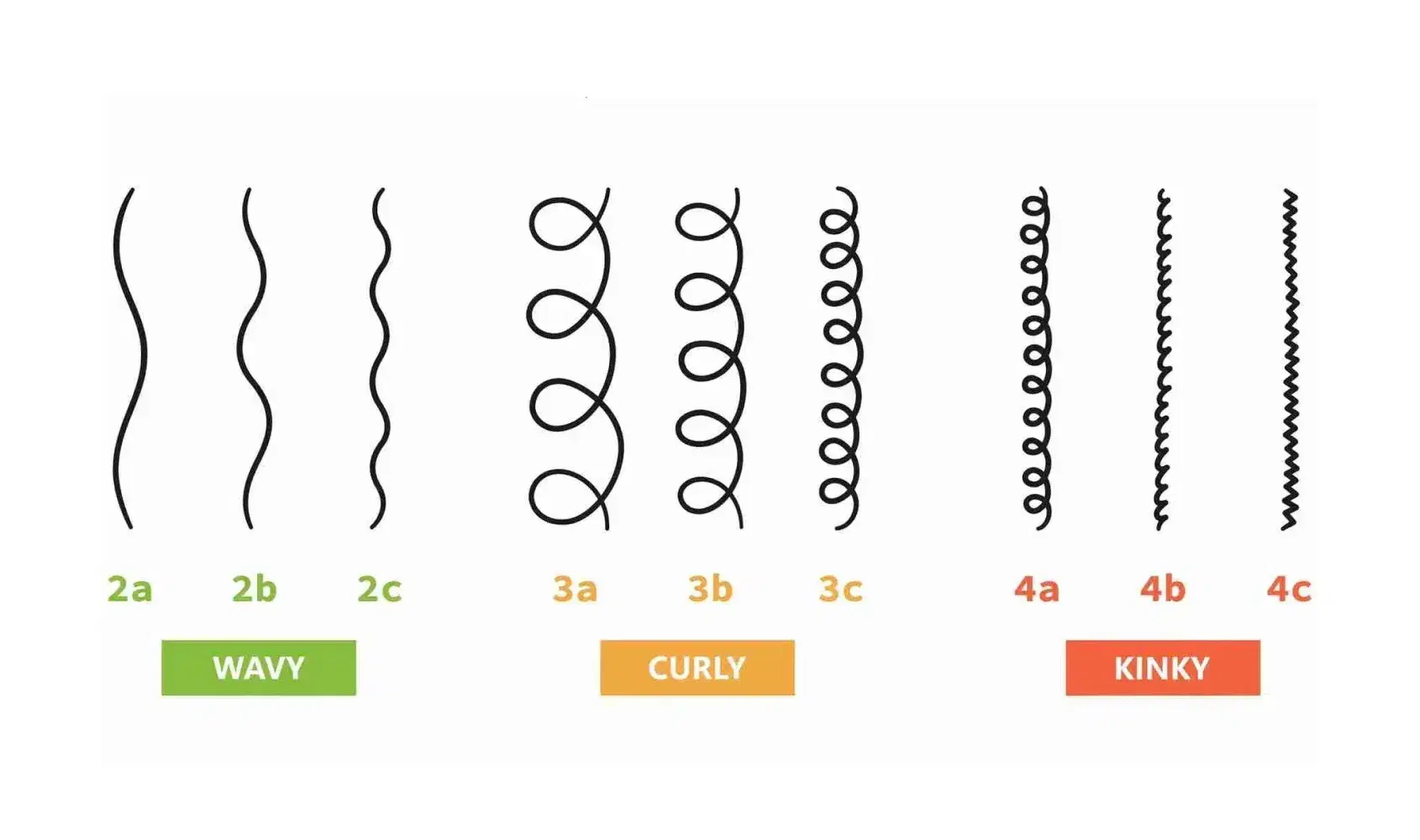
That diversity produces an equally broad range of hair characteristics. One person may have fine straight hair, while another has dense waves, loose curls, tight coils, or several textures on the same scalp.
For hair-loss assessment, this matters because texture affects coverage, styling, breakage, and how easily the scalp becomes visible.
Using Latino as if it described one biological hair structure can therefore obscure the individual features that actually influence diagnosis and treatment.
What Hair Textures Are Common Among Latino People?
Latino hair may be straight, wavy, curly, coily, fine, coarse, dense, sparse, or somewhere between these categories, often with more than one texture present at the same time.
Common variations include:
Fine straight hair
Thick straight hair
Loose waves
Strong S-shaped waves
Loose curls
Tight curls
Coily or Afro-textured hair
Mixed curl patterns
Fine strands with high density
Coarse strands with lower density
Different textures between the temples, crown, and back of the scalp
These differences affect styling and visual coverage, but they do not by themselves determine whether someone will develop hair loss.
Does Ethnic Background Affect Hair Structure?
Ancestry can influence hair diameter, curl pattern, follicle shape, density, and growth characteristics, but individual variation remains much greater than any simple ethnic label suggests.
Curly and coily hair tends to emerge from more curved follicles, while straighter hair grows from follicles with a more symmetrical shape. Hair diameter and density can also vary independently of curl pattern.
A person with tightly curled hair may have fine individual strands, while someone with straight hair may have very coarse shafts.
For clinical hair assessment, measuring or observing the actual strand and follicle characteristics provides more useful information than making assumptions based on ethnicity alone.
Can Hair Texture Change How Hair Loss Looks?
Hair texture can dramatically change how thinning appears because curl, diameter, volume, and styling all influence the amount of scalp that remains visible.
Curly hair often creates substantial visual coverage because individual strands occupy more space as they bend and overlap. Early density loss can therefore remain hidden longer than it would with straight, fine hair.
Straight hair tends to lie flatter against the scalp, especially when oily or wet, making small changes in density easier to notice.
Neither texture changes the number of follicles being lost, but it changes how quickly the cosmetic effect becomes visible.
Which Types of Hair Loss Commonly Affect Latino Patients?
Latino patients can develop the same major forms of hair loss seen across other populations, although the appearance and contributing styling factors may differ from person to person.
Common possibilities include:
Male pattern baldness
Female pattern hair loss
Telogen effluvium
Alopecia areata
Traction alopecia
Hair breakage from chemical processing
Scalp inflammation
Iron-related shedding
Thyroid-related hair changes
Postpartum hair loss
Medication-related shedding
Scarring alopecia in selected patients
More than one cause can occur together, so identifying the pattern is more useful than assuming ethnicity explains the problem.
Can Latino Men Develop Male Pattern Baldness?
Latino men can develop male pattern baldness, also called androgenetic alopecia, when genetically susceptible follicles gradually miniaturise under androgen influence.
The process commonly affects the temples, frontal hairline, and crown while preserving stronger growth around the back and sides of the scalp.
Texture changes how the condition looks. Curly or coarse hair can maintain visual fullness despite declining follicle density, while fine straight hair may expose the scalp sooner.
The important signs are progression and miniaturisation rather than ethnicity.
A steadily receding hairline, expanding crown, or increasing number of fine hairs usually deserves evaluation for androgenetic hair loss.
Can Latina Women Develop Female Pattern Hair Loss?
Latina women can develop female pattern hair loss, which often appears as gradual central thinning, reduced density around the part, or a less full ponytail rather than complete baldness.
The frontal hairline may remain relatively intact even while the central scalp becomes easier to see.
Hormonal history, age, genetics, iron status, thyroid function, major illness, weight changes, and postpartum shedding can complicate the picture.
Curly or voluminous styling may hide density loss for some time, while straightened hair can reveal it more clearly.
The diagnosis should therefore consider both the natural texture and how the hair is usually worn.
Does Curly Hair Make Thinning Harder to Notice?
Curly hair can delay the visible appearance of thinning because each strand occupies more three-dimensional space and often creates greater apparent density.
Someone may lose a meaningful amount of density before the scalp becomes obvious, particularly when the curls remain well defined and the hair is worn with natural volume.
The opposite can happen when curls lose definition through damage or heavy product buildup.
Hair may suddenly look flatter and thinner even without a major change in follicle count.
Tracking the width of the part, temple density, and standardized scalp photographs often gives a clearer picture than judging fullness from the hairstyle alone.
Can Straight or Fine Hair Make Hair Loss Look Worse?
Straight or fine Latino hair can make early thinning appear more noticeable because the strands lie closer together and provide less visual coverage over the scalp.
Fine hair also reflects light differently, which can exaggerate scalp visibility under bright overhead lighting.
This does not necessarily mean the hair loss is more severe.
Two people can have the same number of follicles per square centimetre but look very different because one has thick, curly strands and the other has fine, straight strands.
When assessing progression, changes in strand diameter, part width, and density over time matter more than comparing appearance with another person's hair.
Is Traction Alopecia More Relevant for Certain Hairstyles?
Traction alopecia develops when repeated tension pulls on the same follicles over time, making hairstyle choice more important than ethnicity itself.
Styles that can create problems when worn very tightly include braids, ponytails, extensions, tightly secured buns, and other looks that place prolonged tension around the hairline.
The earliest signs may include tenderness, small bumps, broken hairs, or thinning around the temples.
If tension continues for long enough, some follicles can become permanently damaged.
The risk increases when tight styling combines with chemical processing, heat, or already fragile hair, so loosening the style early can make a meaningful difference.
Can Chemical Straightening Increase Breakage?
Chemical straightening can increase breakage when treatments weaken the protein structure of the hair shaft, especially if they are repeated frequently or combined with bleaching and heat.
The damage occurs along the exposed hair fibre rather than inside the follicle.
That distinction is important because broken hair can create dramatic loss of length and volume without true root-based alopecia.
Processed curly or coily hair may become particularly fragile at the line where newly grown natural texture meets previously straightened lengths.
Gentle handling, spacing chemical treatments, and reducing overlapping applications can help limit cumulative damage, although severely damaged strands cannot fully return to their original structure.
Does Heat Styling Cause Hair Loss or Hair Breakage?
Heat styling mainly causes hair-shaft damage and breakage rather than permanent follicular hair loss, particularly when very high temperatures are used repeatedly.
Flat irons, curling tools, and blow-drying can reduce moisture, damage the cuticle, and weaken the internal structure of the strand.
The hair may then snap at different lengths, making overall density appear lower.
Heat can be especially damaging when used on bleached or chemically straightened hair because those strands have already lost some structural resilience.
Using lower temperatures and avoiding repeated passes over the same section reduces risk without requiring someone to completely avoid heat styling.
Can Scalp Conditions Make Latino Hair Look Thinner?
Scalp conditions can make any hair type appear thinner when inflammation, scaling, itching, or repeated scratching increases shedding or causes breakage close to the scalp.
Seborrheic dermatitis, psoriasis, contact reactions, and other inflammatory conditions can affect Latino patients with any texture.
Dense curls can sometimes make scalp examination more difficult, particularly when products accumulate near the roots.
The scalp should therefore be assessed directly rather than assuming flaking comes from dryness alone.
Persistent burning, pain, thick scale, pustules, or areas where follicle openings disappear deserve more careful evaluation because they may indicate a condition beyond ordinary dandruff.
How Can You Tell Breakage From Root-Based Hair Loss?
Breakage and true hair loss look different once the fallen strands, scalp pattern, and remaining hair lengths are examined carefully.
Breakage usually creates shorter hairs, uneven lengths, frayed ends, and reduced volume through the mid-lengths. Root-based shedding more often produces complete strands and changes visible scalp density.
A widening part, receding temple, or increasingly sparse crown points more strongly toward follicular hair loss.
Both problems can happen together.
For example, someone with female pattern hair loss may also straighten and bleach the hair, creating breakage that makes the overall thinning appear considerably worse than the underlying follicle loss alone.
Does Afro-Latino Hair Require Different Hair Loss Planning?
Afro-Latino hair may require additional attention to curl pattern, follicle curvature, styling history, and the possibility of traction or certain scarring conditions during hair-loss assessment.
Highly curved follicles produce tightly curled strands and can make both examination and transplantation more technically demanding.
The visible scalp may also remain well covered despite reduced density because coils create substantial volume.
Styling practices deserve careful discussion, especially when chronic tension has affected the temples or frontal edge.
The goal is not to treat Afro-Latino hair as a separate diagnosis, but to recognize the specific anatomical and styling factors that influence how hair loss appears and how treatment should be planned.
Can Hair Density Differ Even With the Same Curl Pattern?
Hair density can differ substantially between people who share the same curl pattern because texture and follicle number are separate characteristics.
One person may have tight curls with high scalp density, while another has the same curl shape but considerably fewer follicles per square centimetre.
Hair diameter adds another layer.
Coarse strands can create strong visual coverage even at moderate density, while fine curls may reveal scalp sooner despite appearing voluminous when styled.
This explains why curl typing alone provides limited information during hair-loss assessment.
Density, shaft diameter, miniaturisation, donor strength, and the distribution of thinning all need to be evaluated separately.
What Hair-Care Habits Help Protect Latino Hair Types?
Protective hair care should respond to the actual texture and processing history rather than following one routine for every Latino hair type.
Helpful habits include:
Avoid prolonged tension around the hairline
Space chemical straightening treatments appropriately
Limit overlapping bleach or relaxer applications
Use conditioner on dry or curly lengths
Detangle gently from the ends upward
Reduce unnecessary high-temperature styling
Avoid repeatedly brushing tightly curled hair when dry
Keep the scalp clean enough to assess irritation
Address persistent dandruff or inflammation
Protect fragile ends from friction
Track density changes with consistent photographs
Avoid supplements without evidence of deficiency
These measures reduce preventable damage but do not replace treatment for true follicular hair loss.
When Should Hair Loss Be Medically Evaluated?
Hair loss deserves medical evaluation when density keeps declining, the pattern becomes clearly progressive, or scalp symptoms suggest inflammation or scarring.
A widening central part, temple recession, expanding crown, smooth bald patches, or rapidly increasing shedding all provide useful reasons for assessment.
Scalp pain, burning, pustules, thick scale, or loss of visible follicle openings deserves particular attention.
Systemic symptoms can matter as well.
Hair loss accompanied by fatigue, unexplained weight change, menstrual irregularity, recent severe illness, or significant nutritional restriction may point toward a broader medical cause rather than a problem limited to the hair itself.
Can Hair Transplantation Work for Latino Hair Types?
Hair transplantation can work well for Latino patients when the hair loss pattern is suitable and the donor area contains enough stable follicles for redistribution.
Hair texture can influence both surgical technique and visual coverage.
Curly and wavy grafts may create strong apparent density, while very fine straight hair can require different distribution to achieve the same visual result.
Highly curved follicles can also make FUE extraction more technically challenging because the path beneath the skin may not match the visible direction above it.
Successful planning therefore depends on donor anatomy, follicle shape, hair calibre, future loss, and realistic graft allocation rather than ethnicity alone.
What Matters Most When Treating Hair Loss in Latino Patients?
The most important principle is to treat the individual's actual hair biology, scalp condition, styling history, and diagnosis rather than assuming Latino identity predicts one hair type or one form of hair loss.
A person with straight fine hair requires different cosmetic planning from someone with dense coils, even when both identify as Latino.
Similarly, traction alopecia, androgenetic alopecia, telogen effluvium, and breakage require different solutions despite sometimes producing similar complaints.
The best approach separates texture from disease, distinguishes shaft damage from follicular loss, and builds treatment around the pattern that is actually present on the scalp.